French Baking, Part 1: Éclair

So what about French pastries?  Are they really as good as their reputation?  The answer is:  Absolutely!

Going to a real pâtisserie is an amazing experience.  One of the modern laments in France in that neighborhood bakeries are getting fewer and fewer because of the growing number of supermarkets and that many bakeries attempt to be both a pâtisserie (pastry bakery) and boulangerie (bread bakery.)   It is a commonly held belief that a pâtissier (pastry chef) and a boulanger (baker), while both well-respected as professionals, have totally different skill sets.  Purists argue a good boulanger cannot also be a good pâtissier.  Visiting dedicated pâtisseries and trying their pastries have made me a believer of that assertion.

Pâtisserie
Pâtisserie

I thought I would discuss the classic French pastry, the éclair, first.  An éclair is made with pâte à choux, a light pastry dough.  The reason a pâtisserie’s expertise is required is that éclairs are baked without using any rising agent.  The pâtisserie uses only the moisture in the pâte à choux dough to create steam that “puffs” the pastry.

I visited my neighborhood pâtisserie saw and smelled some incredible treats on display.  The window had large empty spaces from early rising shoppers.
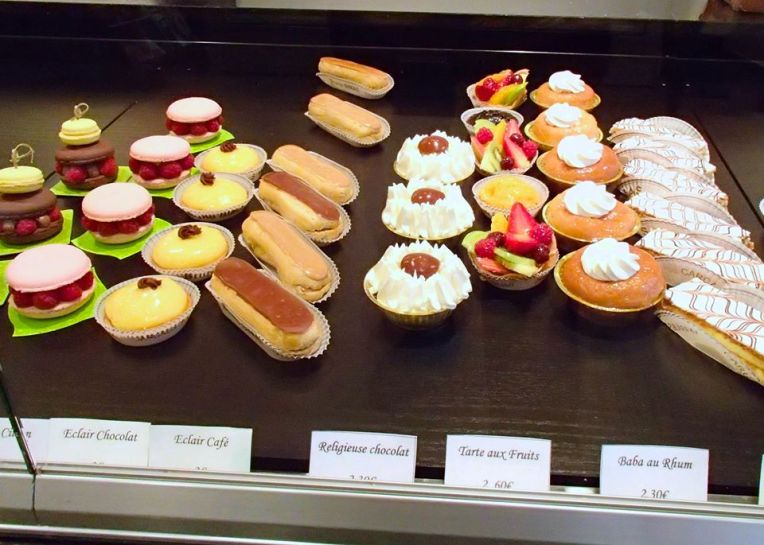
Pâtisserie Display
Pâtisserie Display
Pâtisserie Display
Pâtisserie Display

I purchased two éclairs and the pâtisserie proceeded to carefully box and wrap the pastries, in Tracy’s words, “like a Christmas gift from Nordstroms.”
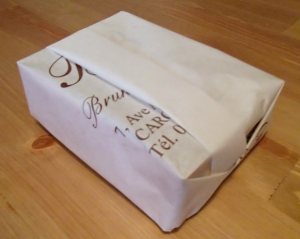
Éclair Box
Éclair Box

So how do they taste? Incredibly good!  The  éclair’s exterior is tan and crisp with layers of soft pastry inside.  The filling is actually custard, rich and thick, not whipped cream or pudding.  Chocolate and coffee iced éclairs are the most common with matching chocolate and coffee custard filling inside.  The richness of the pastry and custard make a single éclair a complete treat.  Melt in your mouth delicious.
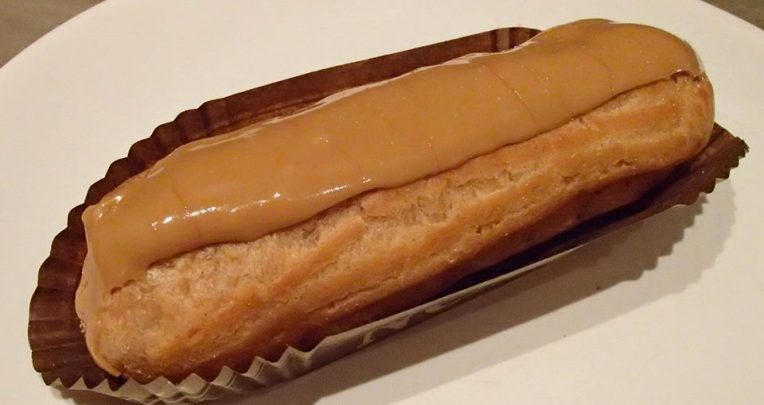
Éclair
Éclair

French Beverages, Part 5: Martini Blanc and Martini Rouge

No, these are not my beloved gin Martini (two ounces Bombay Sapphire Gin, scant capful of Martini & Rossi Dry Vermouth, shaken until freezing cold, with three blue cheese stuffed olives added) or James Bond’s famous vodka Martini ( . . . with a thin slice of lemon, shaken, not stirred.)

These classic French before-dinner drinks are simply a glass of white or red vermouth.  While vermouth is most commonly just a mixer in the US, in Europe it is also served as a stand alone aperitif of 2 to 3 ounces (6 to 9 centilitre) either neat, chilled, or over ice.  Vermouth is a fortified wine (13-24% alcohol content), that has been aromatized by infusing it with botanicals: spices and herbs, the most notable of which is wormwood.  The modern version of vermouth was created in Turin, Italy in 1768.  Vermouth quickly became a popular drink at the Turin Royal Court and its popularity spread throughout Europe from there.

Martini Blanc (Martini White)

Martini Blanc
Martini Blanc

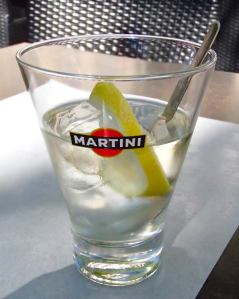
Here in Carcassonne I am served two ounces of Martini Bianco vermouth over ice with a slice of lemon with a small spoon in a specific Martini Logo glass.  The spoon is used to stir the drink to cool the vermouth.  This is sweet vermouth with a slightly bitter citrus taste and an undertaste of vanilla.

Martini Rouge (Martini Red)

Martini Rouge
Martini Rouge

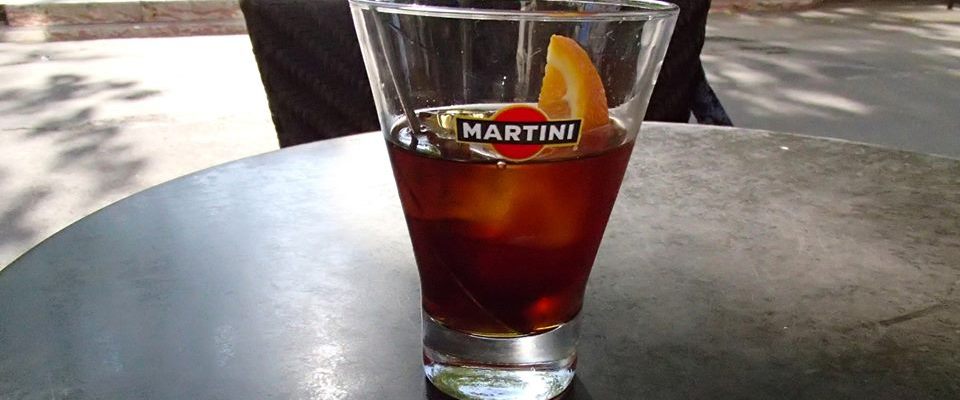
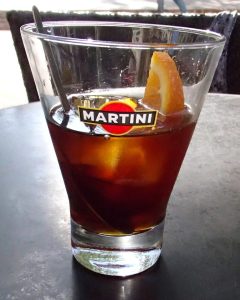
The Rouge version of the Martini has two ounces of Martini Rosso vermouth poured over ice with a slice of orange.  Like the Blanc, it is served in a Martini Logo glass with a small spoon.  Another sweet vermouth, but this one has notes of slightly bitter orange.

The Italian vermouth Cinzano and French vermouth Noilly Prat are widely available in France.   There are also straw-colored dry and rosé vermouths choices available.

So what do I think?  I would be happy to accept a Martini Rouge from a host as an aperitif at a gathering.  It’s pleasant, refreshing, and I would prefer the Rouge to the Blanc.  The Rouge has more of a “wine-like” quality to its flavor than the Blanc.

I enjoyed both drinks, although while having them it brought back the memory of the pained look on Bill Murray’s face in the film “Groundhog Day” when he is forced to drink Andie MacDowell’s character’s favorite drink, “Sweet vermouth on the rocks with a twist.”  These would not be my “go to” beverages.

With all said and done,  I really prefer to have my vermouth as a few drops of dry vermouth added to a traditional gin Martini.  In order to get that classic Martini cocktail in France one must specifically order a “Dry Martini” or a Martini sec.

Gin Martini
Gin Martini

Carcassonne: Equiaude Parade and Cheval en Fête (Horse Festival)

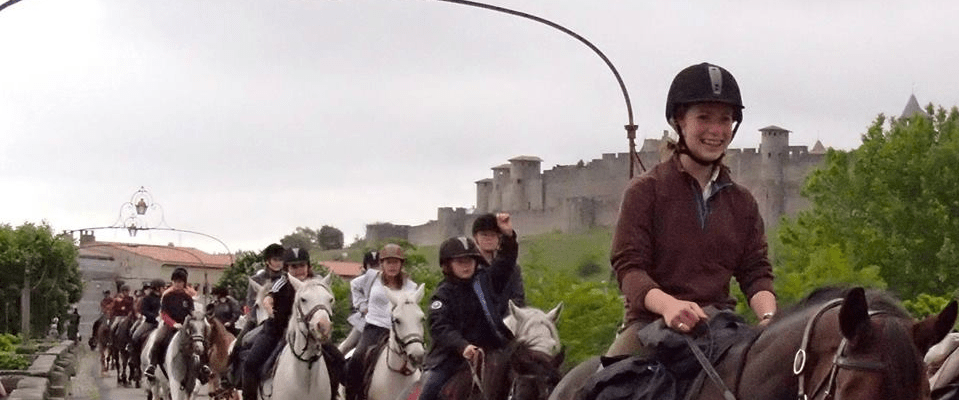
We had a great time at the Cheval en Fête (Horse Festival) today.  We watched more than 100 riders participate in the Equiaude Equestrian Parade.  The cavaliers rode from the medieval citadel of la Cité de Carcassonne, down and across du Pont Vieux (the Old Bridge), around Square Gambetta, through the streets of Carcassonne, and ending at the Hippodrome de la Fajeolle.

Equiaude Equestrian Parade passing over the Pont Vieux (Old Bridge) with la Cité de Carcassonne in the background.

The participants ranged from mature to the very young.  There appeared to be several riding schools with groups of young people in matching shirts singing together as they rode.  Riders were using western saddles, dressage saddles, Australian saddles, and jumping saddles and there was a couple of horse-drawn carriages also participating.  With the municipal police taking front and rear of the procession for safety, the parade passed through town with the children happily waving to spectators.

The parade is part of a two-day equestrian competition at Carcassonne’s hippodrome.  The Equiaude Parade (Equi = equestrian, Aude = our department in France) is anticipated in Carcassonne like the annual Reno Rodeo Cattle Drive.

Equiaude Equestrian Parade

It was odd not to see iconic American Mustangs or Quarter Horses among the horses, but there were some beautiful Arabians and Thoroughbreds, with ponies and horse/mule hybrids for the children.  While I’ve been in a saddle fewer times than I have fingers, Tracy is a former horsewoman who explained tack and horses breds as they passed.

The part we enjoyed the most was the smiles and laughter of all the young riders as they enjoyed being the center of the attention while waving to the spectators and singing in unison.

This slideshow requires JavaScript.

Carcassonne: Monet-Goyon Vintage Motorcycle

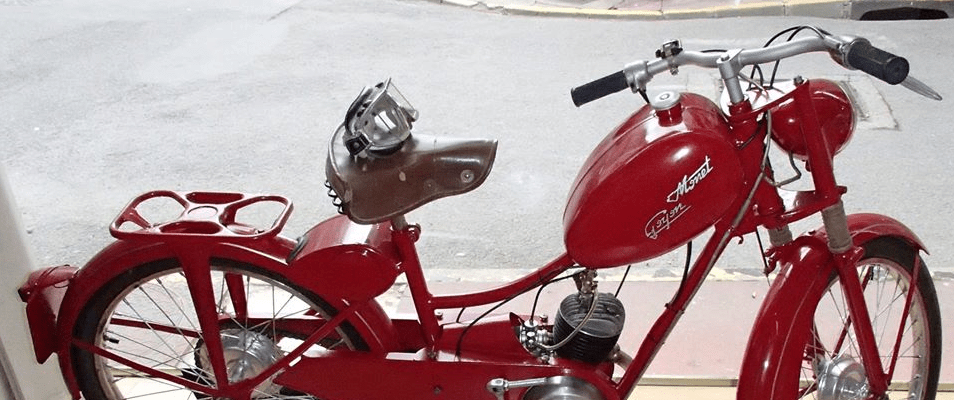
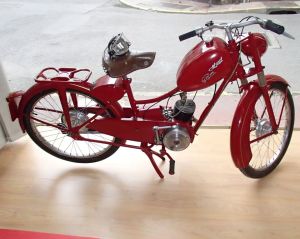
There I was “walking around the neighborhood” when I spotted this vintage Monet-Goyon motorcycle in the window of an insurance agency. I knew I had to get photos for my brother, Gary, who has always been a motorcycle enthusiast.   After a bit of a struggle getting the proprietor to understand my inadequate French, he was happy to let me take some photos of this beautifully restored classic motorcycle.  The insurance agency apparently is also a sponsor of the Circuit des Remparts, a race for classic Grand Prix and Formula 2 cars in Angoulême.  The annual event also hosts a Concours d’Élégance gathering of  vintage and prestigious cars, a “Hot August Nights” event for classic French and European cars.

Monet-Goyon 100 cc Motorcycle, circa 1954

Monet-Goyon motorcycles were made in France from about 1917 to 1959.  The factory was located in Mâcon, in the department of Saône-et-Loire in the region of Burgundy.

After researching online and getting information from Gary, I learned that Monet-Goyon motorcycles were widely used in France.  The Mâcon factory  (which also built Koehler Escoffier motorcycles) produced numerous Villiers (British brand 2 stroke engines) and MAG (Swiss brand 4 stroke engines) powered motorcycles up until 1939.  After the end of World War II, Monet-Goyon resumed production of small displacement motorcycles and scooters until finally closing its doors at the end of the 1950’s.

I believe this model is a Monet-Goyon 100cc S2G-1954G.  Fun little discovery and I’ve added the Circuit des Remparts and its Concours d’Élégance to my list of “Events to Attend” in France.

This slideshow requires JavaScript.

Carcassonne: Fête du Pain (Bread Festival)

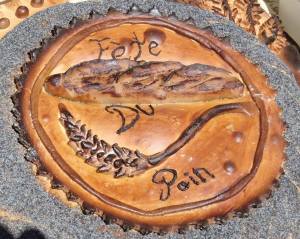
Carcassonne seems to have special events every week.  This week was la Fête du Pain (the Bread Festival) sponsored by a local professional baking college, Saint Honoré Academy.  (Saint Honoré is the patron saint of bakers.)  All the events in Carcassonne reminds us of all the special event we used to experience in Reno, Nevada.  French people really do take fresh baked bread seriously and we have found that in France, “Bread is king.”

The school set up both wood-fired and electric ovens in event tents on the perimeter of Square Gambetta We could smell freshly baked bread and hear the DJ’s music as we walked the block from our apartment to the Square.  A dozen artisan bakers and apprentices were busy baking baguettes, breads, croissants, cakes, bread sculptures, and pies for exhibition and sale to the public.  Many of the breads were created using the French twice-baked technique that makes that especially crusty bread that France is well-known for serving.

Fête du Pain
Fête du Pain
Fête du Pain
Fête du Pain
Fête du Pain - Baker working the wood fired oven
Fête du Pain – Baker working the wood fired oven

Tracy and I tried the pain au chocolat (chocolate croissant), a favorite of ours, and watched the bakers perform for the crowds.  There was an area for children to decorate cookies and an inflatable “bounce house” with multiple food and craft vendors along the Square to visit as well.

This slideshow requires JavaScript.

Carcassonne: Gendarmerie Motorcycle Rally

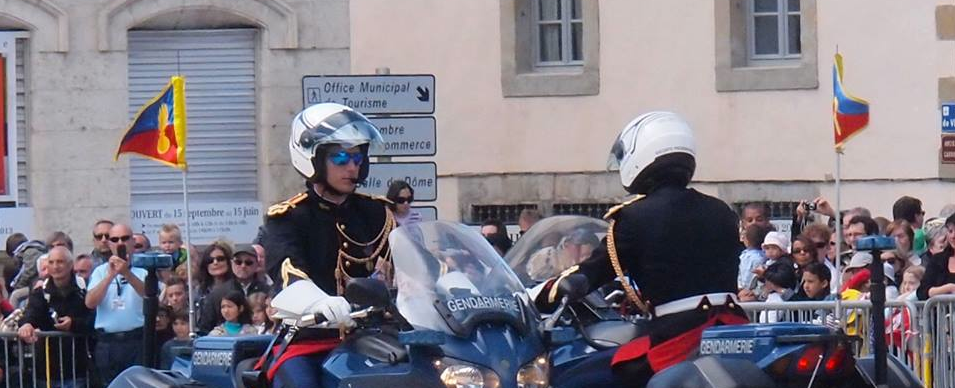
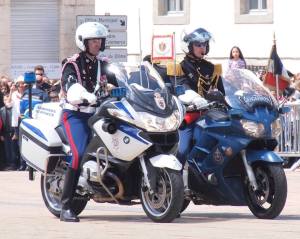
We attended the “Rallye Motocycliste Organis Par la Gendarmerie de l’Aude,” the Second Annual Motorcyclist Rally Sponsored by the Gendarmerie of Aude.

The free event in Square Gambetta included fast paced precision drills by motorcycle officers from the Republican Guard unit (presidential escort unit) of Gendarmerie Nationale of France and the Compagnie des Carabiniers du Prince of Monaco (royal family escort unit), amazing motorcycle stunts by the Republican Guard, music from a French Naval pipes and drums band, and a dramatic helicopter hoist delivery of a gendarme and his canine followed by a canine demonstration.  There were also driving safety exhibits, vendor displays, and recruiting by the Gendarmerie Nationale.

In addition to the local dignitaries, Prince Pierre of Monaco attended the event to observe his royal motorcycle escorts perform with the Gendarmerie Nationale Republican Guard.

Tracy and I both had to shake our heads at the French Naval pipe and drum band playing “Scotland the Brave” and the Disney symphony type music to entertain the crowd before the rally began, but especially at the segment when cowboy hat wearing country line dancers joined in and danced to the bagpipes and drums!

Monégasque Carabiniers on white bike and French Gendarmerie on blue bike
Gendarmerie Nationale Republican Guard Stunt Team

This slideshow requires JavaScript.

French Beverages, Part 3: Coffee

In my younger days I was generally known as one of the only three cops in America that didn’t drink coffee.  That didn’t change in my  academic career.  It took visiting Italy and France and their excellent espresso to convert me into a dedicated coffee drinker.

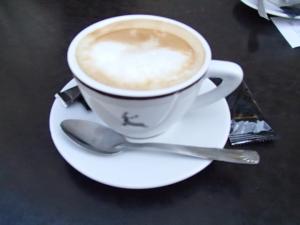
For breakfast in Carcassonne Tracy and I enjoy Café Crème (Ca-fay Khrem), like an Italian cappuccino, a large steaming cup of espresso with steamed milk and a topping of foamed milk.  Unlike Italian cappuccino or cafe latte there is no artistic patterns on top, just rich creamy coffee with a dollop of foam.  In France the norm is not having a big breakfasts so Café Crème is often a meal unto itself or maybe with a croissant or a pain au chocolat (a flakey chocolate-filled viennoiserie pastry that is a favorite here in Southwest France.)

Café crème
Café crème

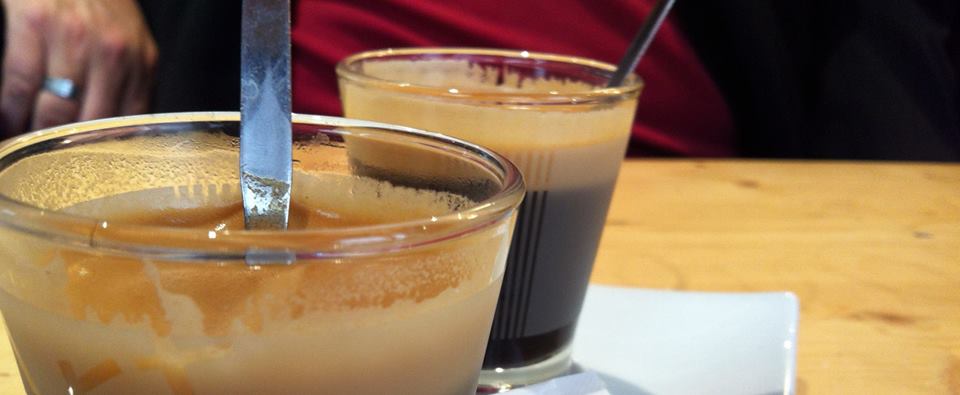
After 10:00 or 11:00 in the morning there is Café (Ca-fay) to enjoy (although many will enjoy Café for breakfast.)  Café (also called Café Noir or Café Express) is drawn from an espresso machine just like an Italian espresso and rich with dark reddish-brown foam called “crema,” and served in a demitasse cup or small glass.  In France and Italy milky coffee drinks like Café Crème are only consumed in the early morning, Café can be enjoyed all day long.

Café
Café
Café
Café

Coffee in France is always served with sugar (sucre (Coo-khruh), real sugar, either granulated or sugar cubes.  (Although a person could also request artificial sweetener, edulcorant  [Ay-doohl-co-hrahn].)  There is frequently a small ginger cookie or small chocolate to accompany  your coffee in our part of France.

There are many cultural expectations to having coffee in France.  Like I previously said, Café Crème, is not ordered after breakfast time.  There are seldom paper “go cups” available, coffee is meant to be savored slowly, not to be drunk on the run.  Coffee is not served during a meal (there is wine for that); coffee is reserved for after the meal is finished as a capstone to the event.  If you enter a restaurant only for coffee, either sit at a table without place settings or stand at the counter.  Drinking coffee while standing normally cost less than coffee while sitting at a table.

While our coffee drinking normally includes just Café Crème and Café there are some other coffee choices.

Noisette  (Nwah-zett) is an Café with a dash a cream.  Noisette is French for “hazelnut” and refers to the color of the coffee.  A noisette is similar to a small Italian Macchiato coffee.

Café au Lait (Ca-fay a lay), coffee with cream.  Depending who you talk to, this either this is an acceptable synonym for Café Crème or is a phrase only used in a restaurant by tourists.  I’ve also been told Café au Lait is a term only used by a French person in their own kitchen.

Café Allongé (ah-lohn-zhay), “extended coffee,” is espresso with additional hot water to make a more traditional American-style cup of coffee.

There is an option to order your Café as déca (Day-kah) or décaféiné (Day-kah-fay-uhn-ay) for a decaffeinated coffee.  This is something Tracy strongly believes cancels a major reason for coffee in the first place and is perhaps is even a venial sin.

And for non-coffee drinkers there is Chocolat chaud (Shah-ko-lah show),  hot chocolate that is normally made with rich, top-quality chocolate and is often served in demitasse cup.

France is definitely a “coffee culture” where few activities are as relaxing as sitting in the town square, sipping your café, and watching the world go by.  “Un autre café, s’il vous plaît.”  Another coffee, please.

Kiara’s Nemisis

Kiara has had a very busy day today.

We were on our way to lunch at Al Dente, and decided that Kiara would love to get out of the house (in her red and black sweater with the white skull and crossbones on the back) and enjoy a sunny but breezy day.

On our way to the restaurant we let her run through the grassy area at Square Gambetta. She was enjoying running through the clover at the far end of the square — Kiara loves clover. She always does this petite little bow and rubs her whole face in the clover.

She’s been dealing with allergies and has been eating baby food for the last couple of weeks, but we still can’t keep her from rubbing her face in the clover.

Today for the first time ever, she noticed another animal was in the park with her . . . a pigeon. Kiara doesn’t believe that she is a dog and has never shown any interest in another single species of the animal kingdom that didn’t walk upright and speak. But today she noticed the pigeon, and for the very first time in her whole life, she chased a pigeon.

In less than two seconds, she went from being the tiniest thing in the entire square to being one badass dog. Not only was her entire attitude different, but she got really brave and braced two more pigeons. Alan and I were laughing out loud, watching our adorable little girl who is nervous around her own food dish, now chasing a bird.

Then she spotted the rest of the flock at the square, about 12 of them . . . and yep, she ran right over and chased them too. Only three of them took flight, but she didn’t even notice that the rest of them just looked at her and went back to eating. She came running back over so that Mom and Dad could say “Good Girl!”

Yup, two whole pounds of badass chihuahua in a red sweater with a skull on the back!

Then we took her to her favorite park after lunch. She was running in huge wide circles around Alan and I as we walked through the manicured landscape of her favorite park. There is lots of clover there as well so a few stops had to be made to rub her face in the clover.

Then she fell into her regular routine, running in big circles, stop to smell a flower, run in a big circle, catch up to Dad, run in a circle, wait for Mom, run in a big circle, stop to smell a flower.

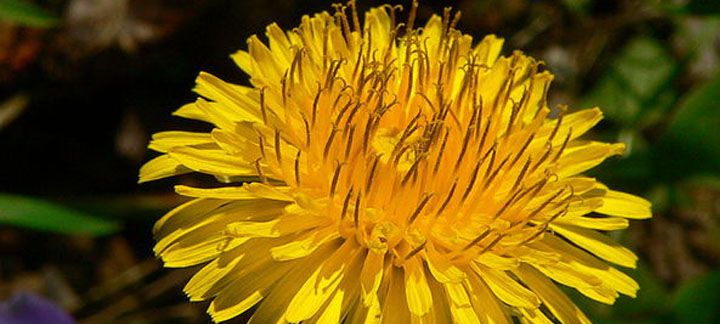
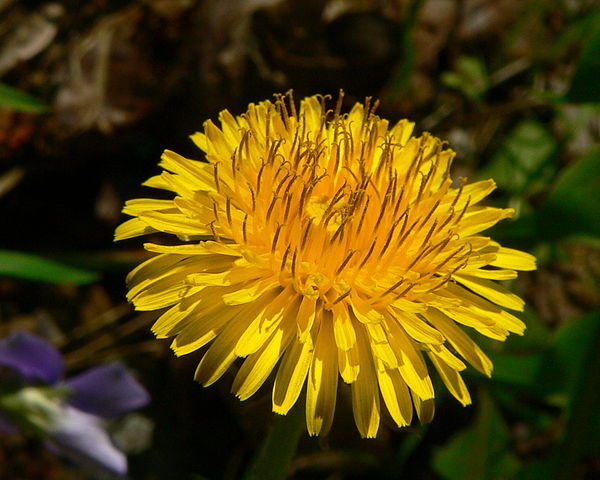
She has a thing about flowers, she likes to smell the flowers and sticks her little nose right on top of them. Especially dandelion flowers, which we think might be causing a bit of allergy symptoms for her, but she will stop to stick her tiny nose into the flowers anyway. Today we are a bit more certain that this bright yellow flower is the culprit. She threw up tiny yellow petals all over my sleeve after she ate one of the stupid things.

Kiara, our two-pound, badass, pigeon chasing dog . . . taken down . . . by a flower. The look on her tiny, expressive face told it all . . . “Flowers committed biological warfare Mommy, not my fault!”

Kiara's nemisis: wanted for suspicion of biological warfare on a two-pound chihuahua
Kiara’s nemisis: wanted for suspicion of biological warfare

French Beverages, Part 2: Languedoc-Roussillon’s Vin de France and Vin de Pays

“You know, every glass of wine here is French wine.”  Me sharing the extremely obvious with Tracy.

The Languedoc-Roussillon region in Southwest France, where we are living, is the largest area in France in terms of vineyard acreage.  The region is known for its Blanquette de Limoux, the world’s oldest sparkling wine, and many high quality red wines like Corbières, Cotaeux du Languedoc, Côtes du Roussillon, Fitou, Minervois, Saint Chinian, and Costières de Nimes.

Languedoc-Roussillon (Wikimedia Commons)
Languedoc-Roussillon
(Wikimedia Commons)

Languedoc-Roussillon is also known as the “Wine Lake” of France where the majority of inexpensive wines in France are produced. So much wine is produced in Languedoc-Roussillon that France worries the “Wine Lake’s” surplus drives down the export price of French table wine.  More than 1/3 of all grapes grown in France are grown in the Languedoc-Roussillon region.

The everyday wines are called Vin de France, (previously called “Vin de Table“) the lowest level of the three tiers in the current wine classification system in France.  But don’t let the term “lowest level” deceive you, these are flavorful wines that enhance any meal or are enjoyable simply by the glass.  Any wine in France is all about its terroir:  the environment, climate, soil, geography, and weather that makes up the intangibles that combined with the variety of grapes and the skill of the winemaker creates the final taste of the wine.

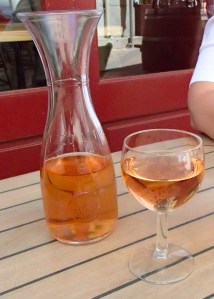
Pichet de Vin
Pichet de Vin

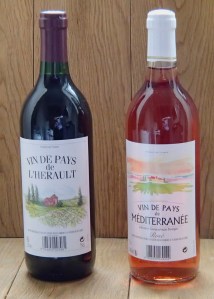
The mid-level category of French wines are Indication Géographique Protégée wines (IGP), an intermediate category basically replacing the former Vin de Pays (“country wine”) category.  These IGP/Vin de Pays wines are simple varietal French wines that include Vin de Pays d’Oc from Languedoc-Roussillon. Vin de Pays d’Oc is the largest portion of all Vin de Pays wines produced in France.

Vin de Pays
Vin de Pays

Appellation d’Origine Protégée (AOP) is the highest category of French wine replacing the previously used category of Appellation d’Origine Contrôlée (AOC) wines.  We look forward to touring some of the local vineyards in the near future and tasting some of these top-tier AOP wines.  Restaurants in Carcassonne offer high quality AOC wine lists in addition to their basic house wines.

AOP Seal (Wikimedia Commons)
AOP Seal
(Wikimedia Commons)

Most of Tracy and my wine consumption has been Vin de France and Vin de Pays.  These inexpensive reds, white, and rosé wines have proven to be delicious.  “Un demi-pichet de vin,” (a half litre carafe of a restaurant’s vin de France) has never been a bad experience.  Restaurants carefully choose even the house wine with their reputations in mind.  Rosé wines are a respected wine choice and hold a prominent place in many of France’s major wine regions, including Languedoc-Roussillon.
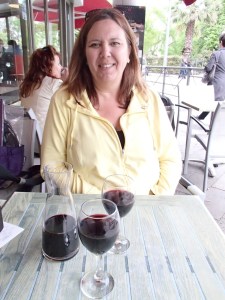
Tracy enjoying "un pichet of vin rouge."
Tracy enjoying “un pichet of vin rouge.”

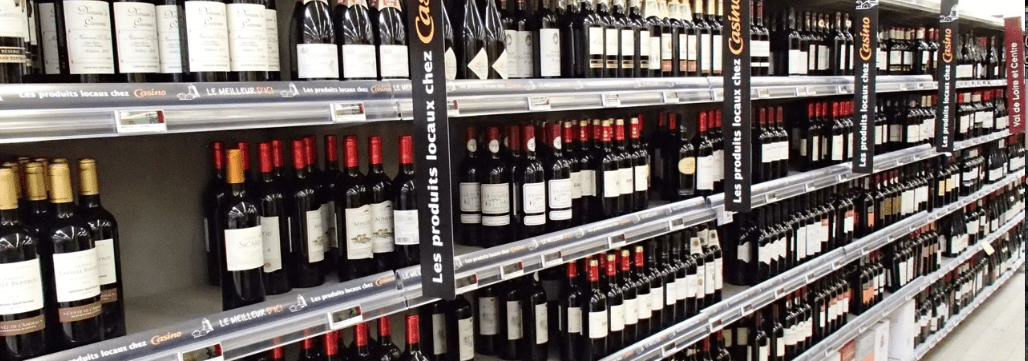
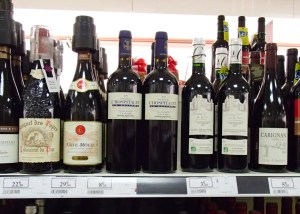
Shopping for wine is an embarrassment of riches.  The wine section in every store offers a huge range of quality, varieties, and price points.  It is difficult to narrow down your choices from so many offerings.  I was stunned to even see “boxed” vin de France meant for inexpensive table wine. Two of our most recent purchases, a red and a rosé, were both under 2 Euro and they were delicious!

Shelves of Wines
Shelves of Wines
Shelves of Wines
Shelves of Wines
Shelves of Wines
Shelves of Wines
Varied wines and prices

Tracy and I greatly enjoy our new tradition of a glass of wine with lunch and dinner.  And there is nothing like a leisurely afternoon, sitting in the town square of Place Carnot, and  lingering with a carafe of wine as Tracy and I just enjoy the view, conversation, and people watching.