Training: Camino de Santiago de Compostela Pilgrimage

With about three weeks to go until we leave for Saint-Jean-Pied-de-Port, Tracy and I are stepping up our training for the Camino de Santiago.

We have been adding weight to our backpacks and extending our daily training walk.  Our maximum had been 20 and 30 pounds respectively for a 7.5 mile walk.  We have also been taking Kiara the Chihuahua in her carrier to get both us and her used to the process.  (Kiara is now bored with the concept and usually just relaxes and watches the view from the window of her carrier or dozes.)

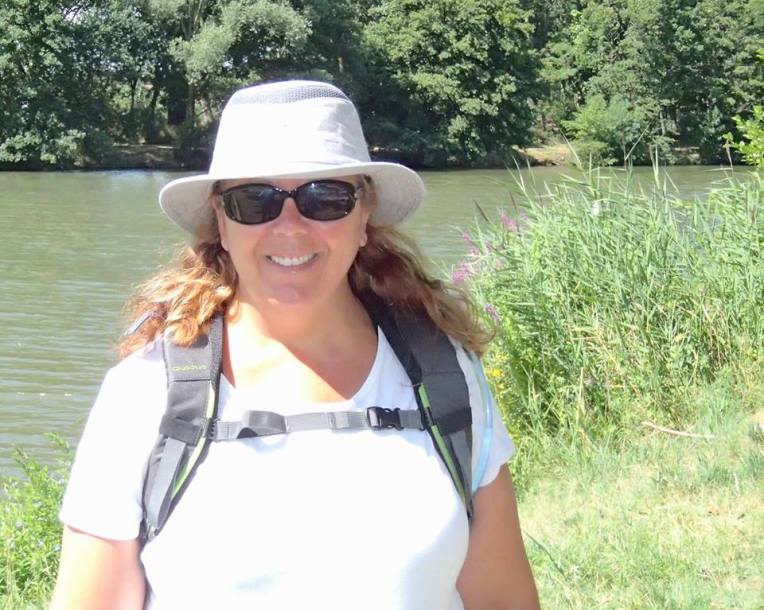
Tracy training for the Camino de Santiago
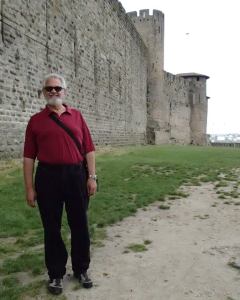
Alan training for the Camino de Santiago

We intend to publish an equipment list soon, but we are still “tweaking” our lists.  The biggest advice we read from pilgrims that have already completed the Camino is to minimize – minimize – minimize the weight.  500 miles is way too long a distance to carry miscellaneous items and extra weight  “just in case.”  We will probably keep working on minimizing our equipment until the day we leave.  We are currently considering the projected temperatures for the end of August and September and thinking if we need a jacket the first of October it might be better to buy one rather than carry one for 475 miles before we actually wear one.  Of course, weather is unpredictable so we will just have to (to borrow a quote from Hunter S. Thompson), “Buy the ticket, take the ride.”  The training and equipment is all part of the challenge of walking the Camino de Santiago.

We’re getting anxious to start and are sure our departure date will be here before we know it.

Barcelona: La Pedrera, Cripta de la Colònia Güell, Sagrada Família, and Parc Güell

One of our goals for our trip to Barcelona was to explore the art and architecture of Antoni Gaudí.

Antoni Gaudí i Cornet was born June 25, 1852 in Reus, in the Catalonian region of Spain.  Gaudi is renowned as the leader of Catalan Modernism.  A true free-thinker, Gaudi’s original and innovative style of art and architecture is concentrated in Barcelona, including his masterpiece, the Basílica y Templo Expiatorio de la Sagrada Familia (Sagrada Familia), which is still under construction today.  Gaudi’s passions of religion and nature are reflected in all his works.

With limited time in Barcelona we made use of a tour company to have the service of a English-speaking tour guide and an air-conditioned bus to quickly reach several Gaudí locations.

Our first stop was Casa Milà, better known as La Pedrera (the Quarry) located on Passeig de Gràcia in Barcelona.  Built between 1906 and 1912, it was declared a UNESCO World Heritage in 1984.  La Pedrera is a famous example of the Modernista or Catalan Art Nouveau style and one of Gaudí’s most ambitious works. The facade is curving white limestone looking like undulating waves of the ocean with wrought iron balconies invoking an image of the spray at the tips of waves.  Gaudí designed the building as well as innovative furniture, fixtures, and textiles.

Casa Milà, better known as La Pedrera. (Wikimedia Commons)
Casa Milà, better known as La Pedrera.
(Wikimedia Commons)
Adam, Liz, and Tracy on the roof of Casa Milà, better known as La Pedrera

This slideshow requires JavaScript.

Our next example of Gaudí’s work involved a half-hour drive from Barcelona to Colònia Güell in the town of Santa Coloma de Cervelló, another UNESCO World Heritage site.  Colònia Güell was originally built in 1890 as a self-contained textile mill and “company town” complete with homes, schools, and stores. Gaudí was commissioned to build the town’s church.  By 1914, the lower nave of the church had been completed, but the Güell family facing business set-backs were forced to stop funding the construction before the church’s completion. The church, now known as Cripta de la Colònia Güell (Church of Colònia Güell), included many of Gaudí’s architectural innovations being used for the first time. The Church is designed with catenary arches, the outer walls and vaults in the shape of hyperbolic parabolas, decorative broken mosaic tiling called “trencadís”, and the use of re-purposed, recycled, and local natural materials. The bell tower was added later by the towns people who still use the church today.

The Church of Colònia Güell (Catalan: Cripta de la Colònia Güell) is an unfinished work by Antoni Gaudí.

This slideshow requires JavaScript.

Our next exploration is considered to be the crowning glory of Gaudí’s achievements, the Basílica y Templo Expiatorio de la Sagrada Familia (the Basilica of the Holy Family) or more commonly known simply as Sagrada Familia. The Basilica is a UNESCO World Heritage site and in 2010 Pope Benedict XVI consecrated Sagrada Familia and proclaimed it a minor basilica.

Sagrada Familia.  View of the Passion Façade (Western side) in September 2009 (cranes digitally removed) (Wikimedia Commons)
Sagrada Familia. View of the Passion Façade (Western side) in September 2009
(cranes digitally removed)
(Wikimedia Commons)
Sagrada Familia
Sagrada Familia
Tracy, Liz, and Adam in front of Sagrada Familia

Although the construction of Sagrada Família had already started in 1882, Gaudí took over leadership of the project in 1883, combining Gothic and his own unique curvilinear Catalan Art Nouveau style.  Gaudí supervised the construction until his sudden death at age 73 in 1926.  Less than 25% of the Basilica was completed at the time of Gaudí’s death. The construction of Sagrada Família’s has progresses slowly due to its reliance solely on private donations and construction was stopped completely during the Spanish Civil War.  The current anticipated completion date is 2026, the centennial anniversary of Gaudí’s death.

Tracy and I have wanted to visit Sagrada Família for years and Adam and Liz had studied Sagrada Família in their Spanish classes and were anxious to finally see the Basilica in person.  It did not disappoint.   Sagrada Família was absolutely astonishing and breathtaking.  Its size, unique organic elements, colors, innovative architecture was stunning.  Our only regret was our limited time.  A person could spend days picking out and appreciating all the details in the Basilica’s design and construction.

This slideshow requires JavaScript.

On our final day in Barcelona, Adam led us to Parc Güell (Park Güell) in the Gràcia district.  We took a quick ride on the subway with a pleasant stop at a Barcelona dog park for Kiara.

Liz, Adam, Tracy, and Kiara at the Dog Park

Parc Güell was built between 1900 and 1914 by Gaudí’s frequent patron Count Eusebi Güell in an effort to duplicate the English garden city movement for a housing development.  Today the park is a public municipal park and listed as a UNESCO World Heritage site. Colorful and whimsical, Gaudí’s work here is reminiscent of a synthesis of Dr. Seuss and Disneyland.

Liz and Adam pose with "El Drac" Gaudí's multicolored mosaic salamander
Liz and Adam pose with “El Drac” Gaudí’s multicolored mosaic salamander
Alan, Tracy, Adam, Liz, and Kiara at the entrance stairs of Park Güell

This slideshow requires JavaScript.

As our whirlwind trip concluded I realized I only shared a small part of our experience in Barcelona.  There were beautiful neighborhoods, excellent Sangria (and more Sangria), tapas, Adam and Liz demonstrated amazing Spanish language skills from their college Spanish studies, Kiara the Chihuahua continues to make new friends where ever she goes, Adam and Liz – our vegetarians- found some amazingly delicious vegetarian and Hindu restaurants in the midst of a meat loving culture – Adam even had a chance to try vegetarian paella, and there were many wonderfully friendly people.

We had a taste of Barcelona, which created the desire to return in the future and experience more.  There is so much more to see and do in this vibrant city.

Liz, Adam, and Tracy on the Barcelona subway

Barcelona: Parc del Laberint, Passeig de Gràcia, Plaça de Catalunya, and La Rambla

One reason we wanted to retire to Europe was to have a central place from which to “springboard” to explore many different cities in Europe.  With Adam and Liz visiting we decided to do just that and spent a few days in Barcelona, Spain.  We found that Adam and Liz share our interest the work of Antoni Gaudí so it was time to make some hotel and train reservations and head to Barcelona. It is only about a three-hour train ride to Barcelona from Carcassonne.  The TER (Transport Express Régional) to Narbonne, the high-speed TVG (Train à Grande Vitesse) to the Figueres Vilafant train station (just inside the Spanish border) to switch into a RENFE (ReNacional de los Ferrocarriles Españoles – Spanish National Railway Network) high-speed AVE (Alta Velocidad Española – Spanish High Speed) train.  The RENFE train was beautiful and we enjoyed the use of the club car for ice-cold Spanish beer.

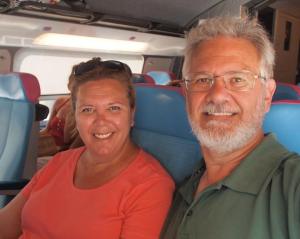
Adam and Liz on the TER train out of Carcassonne.
Tracy, Alan, and Kiara on the TGV enroute to Spain.
A Spanish RENFE AVE Siemens Velaro (left) and a French SNCF TGV Duplex (right) at Figueres-Vilafant Station (Wikimedia Commons)
A Spanish RENFE AVE Siemens Velaro (left) and a French SNCF TGV Duplex (right) at Figueres-Vilafant Station
(Wikimedia Commons)

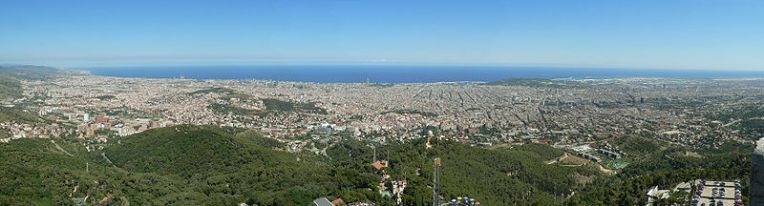
In very little time we were in Barcelona, sharing a pitcher (or two) of sangria.  Sitting on the Mediterranean Sea with about five million residents, Barcelona is the second largest city in Spain, the sixth most populated urban area in the European Union.

A panoramic view of Barcelona (Wikimedia Commons)
A panoramic view of Barcelona
(Wikimedia Commons)

We decided that while Paris is beautiful, Barcelona is gorgeous.  Stunningly gorgeous.

This slideshow requires JavaScript.

Adam led us to Parc del Laberint d’Horta (Labyrinth Park of Horta) in the Horta-Guinardó district in Barcelona.  The park is the oldest of its kind in the city. Located in the former estate of the Desvalls family, next to the Serra de Collserola ridge, the park combines an 18th century neoclassical garden and a 19th century romantic garden.  In 1967 the Desvalls family donated the park to the city of Barcelona, who opened to the public in 1971.  Liz had always wanted to explore a maze and was looking forward to exploring the labyrinth, so we lined up behind her and had her lead the way.

This slideshow requires JavaScript.

Returning to our hotel room and realizing that it wasn’t cooling off very quickly, we decided to take an evening walk through Passeig de Gràcia, Plaça de Catalunya, and La Rambla.  Passeig de Gràcia is one of the major avenues in Barcelona, it is compared to the Champs-Élysées, Fifth Avenue, and Rodeo Drive and is one of  the most important shopping and business areas of Barcelona containing many of the city’s most celebrated pieces of architecture. Passeig de Gràcia is regarded as the most expensive street in Barcelona and in Spain.

Plaça de Catalunya (Catalonia Square) is Barcelona’s large city square and is considered to be the city center and the place where the old city and the modern city meet.

La Rambla is located off Plaça de Catalunya.  The tree-lined pedestrian mall stretches for 1.2 kilometers between Barri Gòtic and El Raval, connecting Plaça de Catalunya with the Monumento a Colón (Christopher Columbus Monument) at Port Vell (the Old Harbor.)  Even in the middle of the week there is tremendous energy and activity in the “Heart of Barcelona.”

This slideshow requires JavaScript.

The following day was all about exploring Gaudi’s art and architecture and his contributions to Barcelona.

Paris: The Louvre, “Love Locks,” Arc de Triomphe, and Moulin Rouge

Off and rolling to the Louvre with pre-paid tickets in hand.  The Musée du Louvre  (the Louvre Museum or simply The Louvreis one of the world’s largest museums with nearly 35,000 objects from prehistory to the 21st  century exhibited over 652,300 square feet.   Located on the Right Bank of the River Seine in the 1st arrondissement, the Louvre receives more than 8 million visitors a year.  The Louvre is the world’s most visited museum.

Like the Smithsonian Institute, it would take days to see everything in the Louvre, we elected to see specific galleries in order to see more of the rest of Paris.   That makes a good reason to return to the Louvre again (and again . . . and again.)

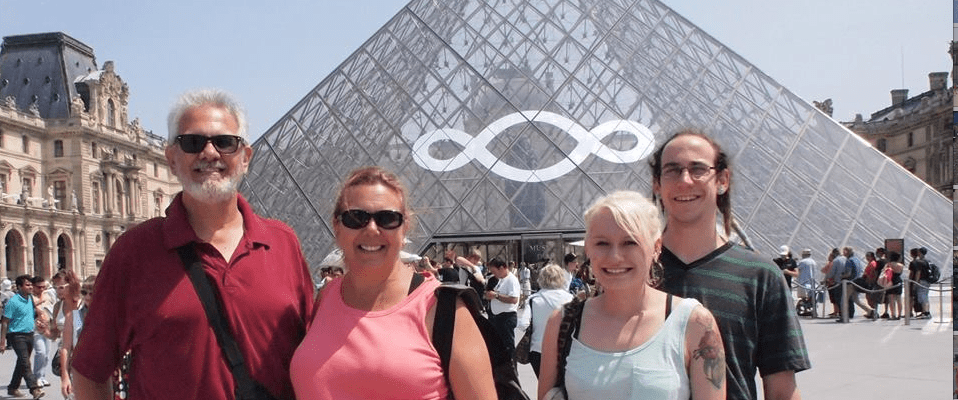
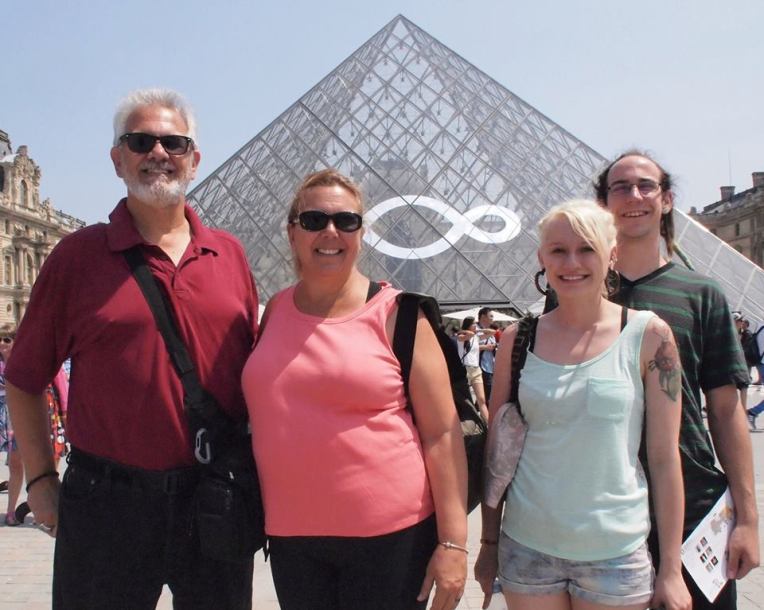
Alan, Tracy, Liz, and Adam in front of the Louvre pyramid.

What hasn’t been said about one of the world’s seminal museums that is located in a former royal palace and holds many of the world’s iconic pieces of art?  The Louvre is amazing in its depth of art, artists, media, and history.

After accessing the Louvre’s entrance through the underground Carousel du Louvre shopping mall (with a minor delay when security screening were briefly bewildered by Adam’s juggling balls), Adam was our guide through the Louvre.  So hard to narrow down choices, but included in our visit was (of course) the Mona Lisa, the Winged Victory of Samothrace, the Venus de Milo, and the Code of Hammurabi.  We visited the art of Ancient Greece, Mesopotamia, and the Renaissance.

This slideshow requires JavaScript.

Adam and his fiancée Liz participated in Europe’s growing “Love Lock” phenomenon. Spreading across Europe is the new tradition of leave a padlock, often engraved or marked with lovers’ names to a famous landmark.  On the Pont des Arts bridge across the River Seine, Adam left a lock to commemorate his and Liz’s visit to the “City of Lights.”

Adam putting a lock on the Pont des Arts bridge to memorialize his and Liz's trip to Paris.
Adam putting a lock on the Pont des Arts bridge to memorialize his and Liz’s trip to Paris.

This slideshow requires JavaScript.

Now the Métro to the Avenue des Champs-Élysées, Paris’ most famous street.  A cross between Rodeo Drive, Fifth Avenue, Regent Street, and Saville Row; lined with chestnut trees leading west to the Arc de Triomphe de l’Étoile.  The Arc de Triomphe (Triumphal Arch) is dedicated to those who fought and died for France in the French Revolution and Napoleonic Wars with the names of all French victories and generals inscribed on its surfaces. Beneath  the Arch is the Tomb of the Unknown Soldier from World War I.  Access to the Arc de Triomphe is by underground passage under the traffic circle surrounding Place Charles De Gaulle.

Tracy, Liz, and Adam under the Arc de Triomphe and in Front of the Tomb of the Unknown Soldier

This slideshow requires JavaScript.

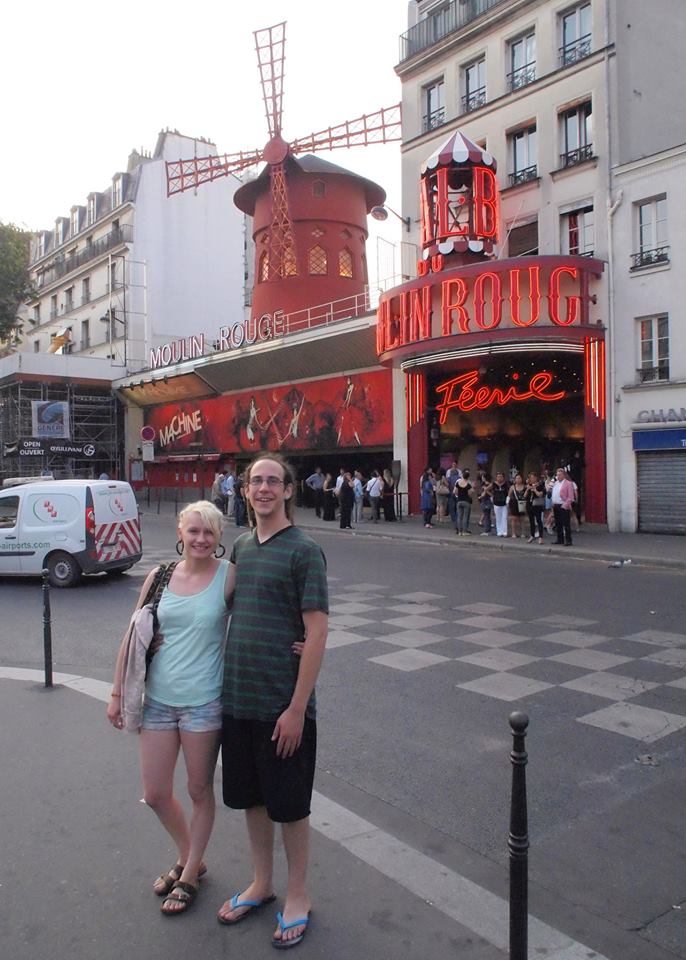
End of a long day and back to the Montmartre district for dinner.  We tour down the Boulevard de Clichy and see both elegant and dive establishments along the lane.  We have dinner across the street from the famous Moulin Rouge (Red Windmill) cabaret, famous for the Can-Can, Toulouse-Lautrec, and the 2001 Academy Award winning movie of the same name.

Liz and Adam in front of the Moulin Rouge

This slideshow requires JavaScript.

After dinner it was off to see the view of Paris from Sacré-Cœur Basilica at the top of Butte Montmartre . All in all a great day for everyone with frequent stops along the way to sample some of the wonderful Parisian wines at local bistros throughout the city.

Paris: CDG, Notre-Dame, Les Invalides, and Eiffel Tower

We needed to pick up Adam and Liz from Aéroport Paris–Charles de Gaulle (Charles de Gaulle – Paris Airport – CDG).  We  were off on the Métro de Paris (subway) to the RER (Réseau Express Régional – Regional Express Network) “B” line to its final stop at the International Terminal at CDG.  The airport is a city unto itself,  it is the seventh busiest airport in the world, the second busiest in Europe, and handles in excess of  61 million passengers annually.  Our fear was that we had never met anyone arriving at CDG before and had visions of Adam and Liz wandering in “airport limbo” for hours until we could locate them.  However the airport staff was very helpful and we simply waited at the arrival gate for Delta for Adam and Liz to clear Customs and Passport control.  Thirty minutes after their plane set down we saw their happy, jet-lagged faces.

Liz and Adam on the Paris Métro
Métro de Paris (Subway) Sign

There are many approaches to dealing with jet-lag.  Adam and Liz wanted to power through the day.  So back on the RER and Métro to the hotel to drop off bags and then back on the Métro to Île de la Cité, the island the River Seine, to explore Cathédrale Notre-Dame de Paris (Notre-Dame Cathedral).

This slideshow requires JavaScript.

Notre-Dame is celebrating its 850 year anniversary.  Cathédrale Notre-Dame de Paris (French for “Our Lady of Paris” – Notre-Dame Cathedral) is a historic Roman Catholic Marian cathedral located on the Île de la Cité.  The cathedral is widely considered to be one of the finest examples of French Gothic architecture and is among the largest and well-known churches in the world.  The cathedral’s treasury is notable for its reliquary which houses some of Catholicism’s most important relics including the purported Crown of Thorns, a fragment of the True Cross, and one of the Holy Nails.

This slideshow requires JavaScript.

The Cathedral’s stained glass windows were amazing and the quality of the colors has to be experienced to be believed.  The Flying Buttresses on the exterior walls were graceful and added to the beauty of the exterior.  We could have spent days exploring the architecture and art inside Cathédrale Notre-Dame de Paris.

After a quick lunch and several glasses of wine to fortify ourselves, we started walking along the Left Bank of the Seine heading toward Les Invalides.  In retrospect the Métro would have been faster and easier on our feet, but every block held amazing architecture or public art.

This slideshow requires JavaScript.

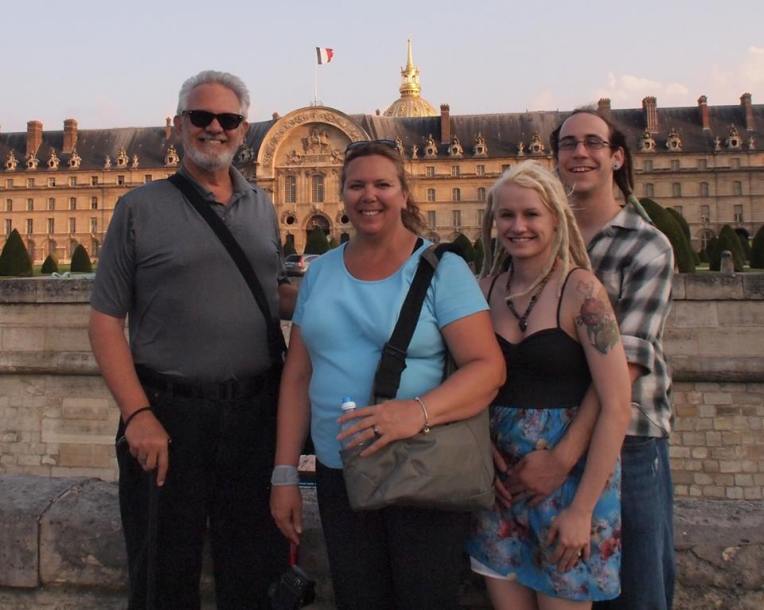
Finally reaching L’Hôtel National des Invalides (The National Residence of the Invalids), informally known simply as Les Invalides,  we find a large park and series of buildings dedicated to French Military history and veteran.  The complex’s name comes from its original purpose as a hospital and retirement home for war veterans.  There are three museums on the grounds, the Musée de l’Armée (Army Museum), Musée des Plans-Reliefs (museum with three-dimensional models of battles), and the Musée d’Histoire Contemporaine (Museum of Contemporary History which started as the Library-Museum of the War.)  Located on the site are the graves for many of France’s war heroes, including Napoleon Bonaparte.

Alan, Tracy, Liz, and Adam in front of L'Hôtel National des Invalides
Alan, Tracy, Liz, and Adam in front of L’Hôtel National des Invalides

This slideshow requires JavaScript.

From Les Invalides we could see La Tour Eiffel (the Eiffel Tower) through the surrounding buildings, our next stop.  We had made reservations to go up into the tower for this evening as it was the only time available.  Reservations fill very quickly to go to up to the observation areas.

Eiffel Tower seen from the 7th arrondissement

The wrought iron Eiffel Tower is named for engineer Gustave Eiffel who built the tower as an attraction to the 1889 World’s Fair.  Originally intended to be a temporary attraction, but it quickly became the iconic symbol of France and Paris that remains today.  The Tower is the tallest structure in Paris and the second tallest in France.  At 1,063 feet it is taller that the Washington Monument (555 feet) and Space Needle (605 feet) and was the tallest structure in the world for 41 years until the Chrysler Building was completed in New York in 1930.   (With its current communication antenna the Eiffel Tower is currently 17 feet taller than the Chrysler Building.)  “Impressive” and “awe-inspiring” are perfect descriptions as the tower is much larger than we expected.  We arrived at twilight to be able to watch night fall over the “City of Light” from the observation platform.  At 11 pm we were also treated with light show of lights sparkling all over the Eiffel Tower.

This slideshow requires JavaScript.

Adam and Liz had by now been awake about 48 hours straight, so it was now time to head to the Métro to get them some well deserved rest.  Passing dozens of unlicensed souvenir hawkers, each offering the same wonderfully cheesy, glowing, blinking Eiffel Tower models, we finally made it back to our hotel in the Montmartre district. The “last chance to get a blinking Eiffel Tower” had already become the humorous theme to the kids’ trip. It would continue until they left, with a comment about maybe being able to get one of the most desired souvenirs in Paris before they got on the plane to return home.

Paris: Travel and Sacré-Cœur Basilica

Adam and Liz were flying into Aéroport Paris–Charles de Gaulle (Charles De Gaulle Airport – Paris) so we needed to travel to the other side of France to meet them.  Tracy and I elected to not get a car when we moved to France and because we were traveling with Kiara the Chihuahua using RyanAir or EasyJet (the discount airlines) was not an option.  So we made use of SNCF’s (Société Nationale des Chemins de fer Français – French National Railroad Company) regional trains and the newly available Ouigo high-speed train.  The Ouigo is a subsidiary of SNCF and is basically a stripped TGV (Train à Grande Vitesse) high-speed train without a club car designed to compete with the discount airlines.  The trains happily accept Kiara which made her and us very happy.  The Ouigo was comfortable and quiet and we enjoyed a very rural view of France that reminded us of Kansas and Nebraska with lots of grain fields and vineyards.

SNCF Train
SNCF Train
Tracy and Alan traveling by rail
Tracy and Kiara waiting for the train

Another reason for the Ouigo’s discount fare is its use of secondary train stations.  We arrived at the train station at Marne-la-Vallée – Chessy outside Paris only to realize that Marne-la-Vallée is the station for Disneyland-Paris.  We hadn’t realized that walking out the station door would put us immediately at the entrance to Disneyland.  We caught the RER (Réseau Express Régional – Regional Express Network) commuter train from Marne-la-Vallée to Paris and then the famous Paris Métropolitain (subway) to our hotel in the Montmartre district of Paris in the 18th arrondissement, a Right Bank arts neighborhood.

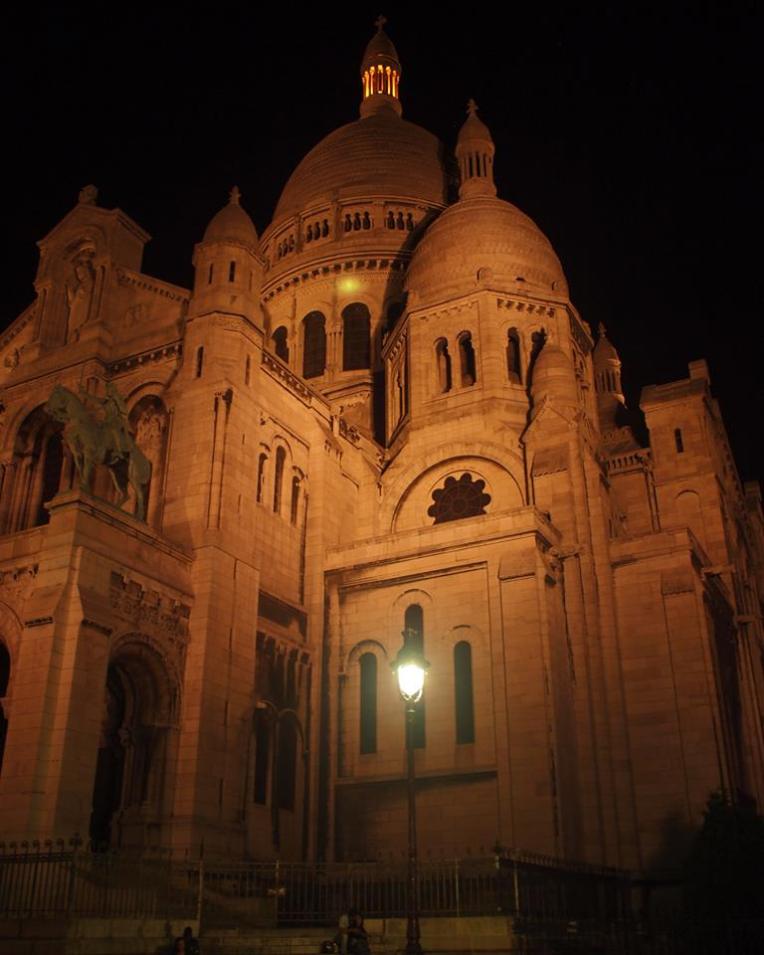
We arrived a day earlier than Adam and Liz’s arrival, so we did an evening stroll to visit Sacré-Cœur Basilica.  Located at the summit of the Butte Montmartre, the highest point in the Paris, the Basilica of the Sacred Heart of Paris, more commonly called Sacré-Cœur Basilica, is a Roman Catholic church and minor basilica, dedicated to the Sacred Heart of Jesus.  Built of white travertine stone, the Basilica is brilliantly illuminated and stunning at night.

Sacré-Cœur Basilica
Sacré-Cœur Basilica
Sacré-Cœur Basilica
Sacré-Cœur Basilica

The Basilica complex has a large garden area and  a fountain. There is an amazing panoramic view overlooking Paris from the Basilica and garden.  The Basilica complex is a favorite meeting place for young people with more than a hundred on the grounds socializing as we explored. To reach the top of Butte Montmartre there is a steep series of stairs with over 300 steps or a funicular railway.  The funicular has two parallel tracks with one car on each: one car going up counter-balancing the other car coming down.  In a minute and a half the funicular travels 354 horizontal feet and climbs the 35% gradient 118 vertical feet to the top of Butte Montmartre.  It is well worth the cost of one Métro ticket to enjoy a ride to the top.  The funicular transports about two million passengers each year.

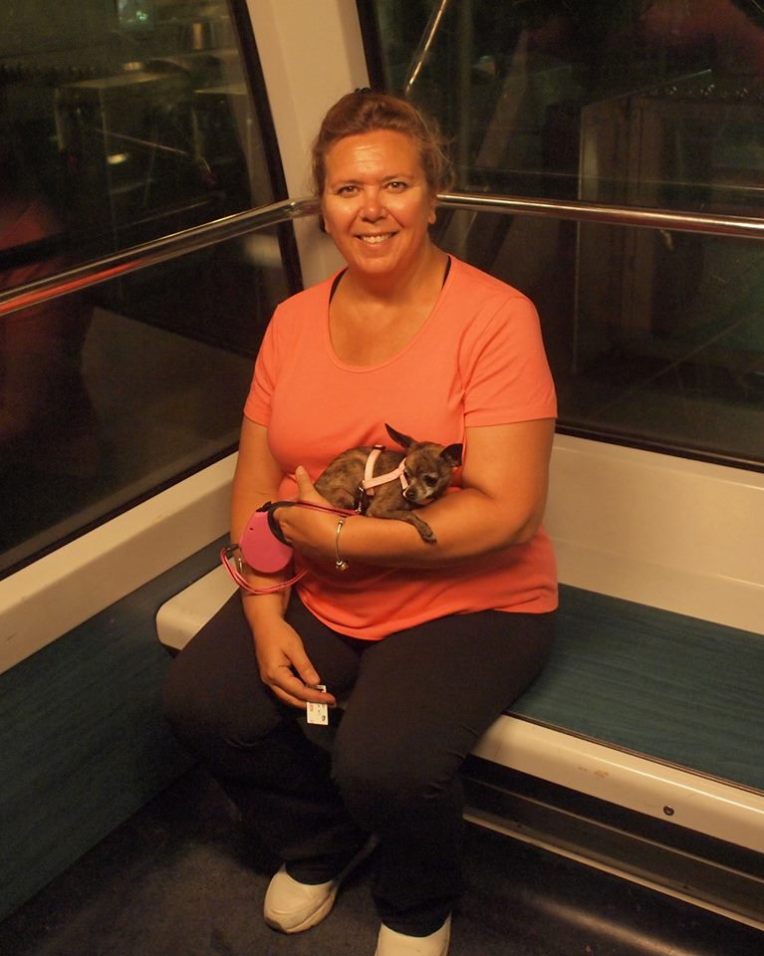
Tracy and Kiara on the Montmartre Funicular
Montmartre Funicular

With Sacré-Cœur Basilica around the corner from our hotel enjoyed the beauty of the Basilica on the hill above us and we later returned to share the sight with Adam and Liz.

View of Paris from Sacré-Cœur Basilica (Wikimedia Commons)
View of Paris from Sacré-Cœur Basilica
(Wikimedia Commons)

Credencials: Camino de Santiago de Compostela Pilgrimage

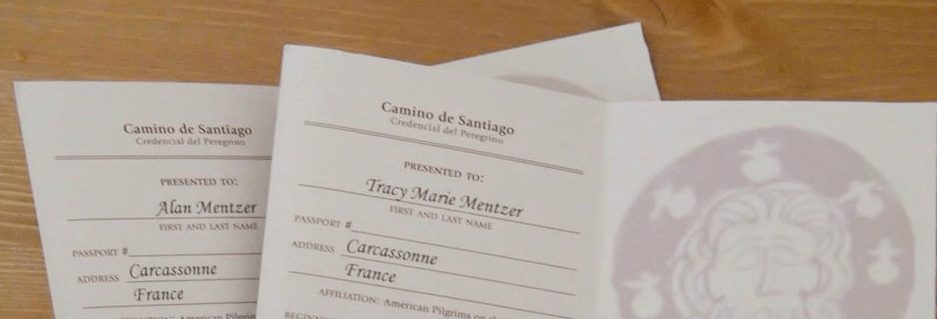
Tracy and I received our Credencials del Peregrino (Pilgrims’ Passports) this week from American Pilgrims on the Camino, a non-profit organization that facilitates and assists North American pilgrims, particularly those in the United States. (http://www.americanpilgrims.com/)  Credencials are also available from other authorized organizations, confraternities, and at pilgrims offices on the route.

Credencial del Peregrino

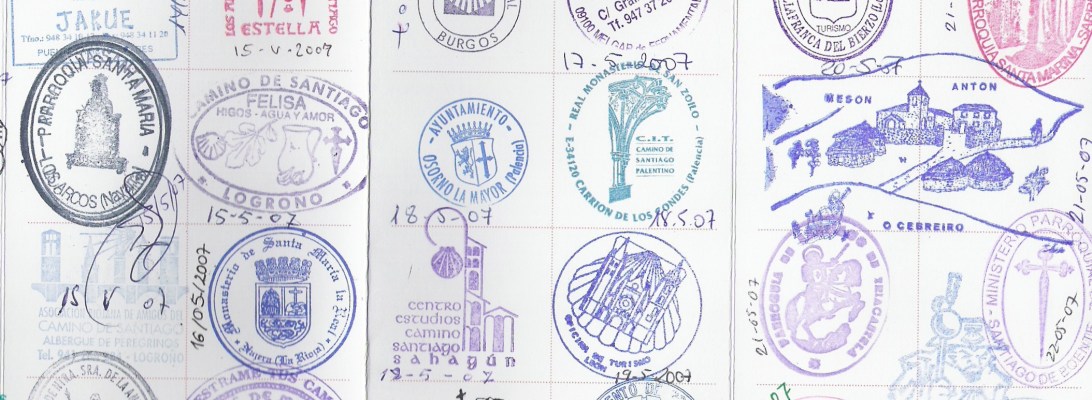
The credencials are part of the thousand-year old tradition of the Camino de Santiago.  The credencial is a modern version of letters of safe-conduct letters or letters of introductions carried by medieval pilgrims.  The document shows that you are a bona fide pilgrim and entitled to have access to low-cost albergues and refugios (hostels.) The credencial is also used to authenticate your process by dated sellos (stamps, similar to a passport stamps) being added along the way.

Sello Stamps  (Wikimedia Commons)
Sello Stamps
(Wikimedia Commons)

Pilgrims normally need to obtain one sello per day from alburgues, churches, town halls, or police stations to document their progress. To ensure pilgrims are actually walking the route and not making use of motor transportation, over the last 100 kilometers pilgrims are required to get two sellos each day.  (Pilgrims using bicycles or horses must obtain two sellos daily from 200 kilometers outside Santiago de Compostela.)  We are hoping walk enough miles daily on our 500 mile (800 kilometers) trek as to not run out of room for sellos and require us having to obtain a second credencial to allow for additional sellos.

Credencial del Peregrino

At the conclusion of the pilgrimage and reaching Santiago de Compostela we will need to present ourselves at the Cathedral’s Pilgrims Office to have our credencials reviewed prior to being awarded a Compostela. The Compostela is a certificate of accomplishment that is presented to pilgrims who complete at least the last 100 kilometers of the Camino de Santiago and have undertaken the pilgrimage for spiritual or religious motivations.  The Compostela dates back to the early middle ages and its text is still in the original Latin.  There are over 100,000 Compostelas awarded every year to pilgrims from more than 100 countries.  For those pilgrims completing the Camino, but not for spiritual or religious reasons, a Certificate of Completion is alternatively issued in Spanish.

We are now about eight weeks out from our departure date and we are getting very anxious to start walking the Camino.

Getting Ready: Camino de Santiago de Compostela Pilgrimage

Ten weeks until departure.

Sometimes the universe presents a chain of events that require that you “make a leap of faith” and embrace it.

Recently fate led us to being on one of the secondary routes of the Camino de Santiago de Compostela pilgrimage trail. While living in Carcassonne we slowly realized that the start of the  Chemin du Piémont Pyrénéen branch of  Les Chemins de Saint-Jacques-de-Compostele (the French name for the Camino de Santiago de Compostela) was right at the end of our block.

Chemin du Piémont Pyrénéen

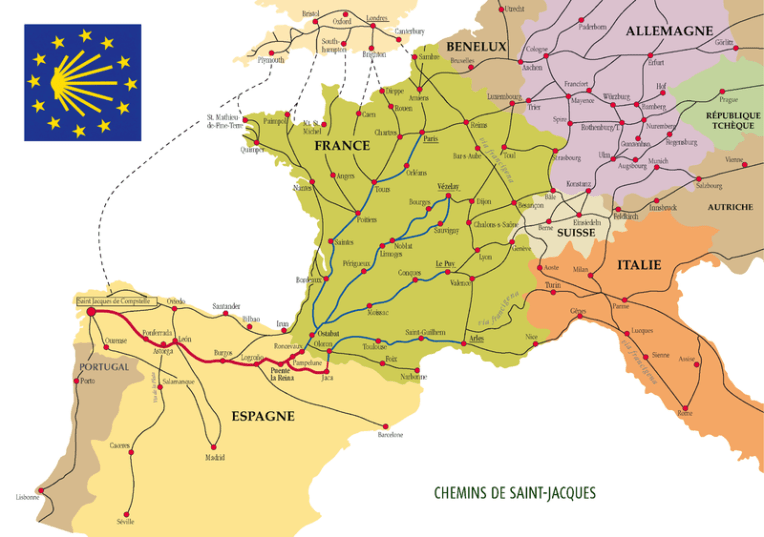
El Camino de Santiago de Compostela or The Way of Saint James is a series of pilgrimage trails across Europe all leading to Santiago de Compostela Cathedral in Galicia, Spain which Christian tradition holds is the resting place for Saint James the Greater, one of Jesus of Nazareth’s disciples.  Dating back 1,200 years, pilgrims of all faiths and backgrounds have been walking the Santiago de Compostela for religious, spiritual, or cultural reasons; for enlightenment; as penance; or as a personal challenge.

Map of Camino de Santiago - Chemins de Saint Jacques  From Wikimedia Commons
Map of Camino de Santiago – Chemins de Saint Jacques
From Wikimedia Commons

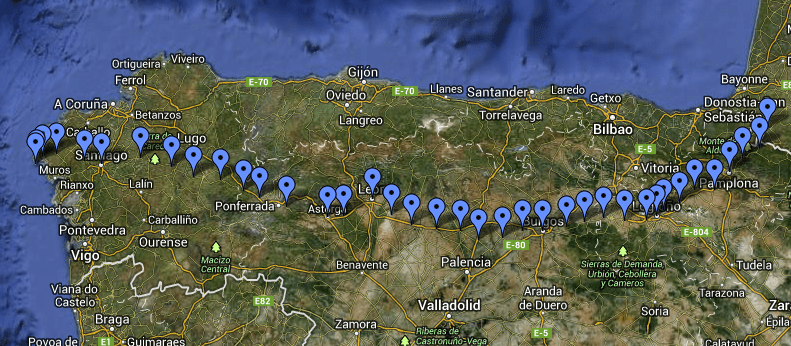
Tracy and I (with Kiara the micro-dog) have decided starting August 26 we will begin the pilgrimage and backpack the 500 miles (800 kilometer) path from Saint-Jean-Pied-de-Port on France’s Western border; over the Pyrenees Mountains and through Basque country; passing through the cities of Pamplona (famous for the “Running of the Bulls and Hemingway’s “The Sun Also Rises”), Logroño, Burgo, and León; across the Meseta plains; into the green hills of Galicia; and ending at the UNESCO World Heritage Site of the city of Santiago de Compostela and its cathedral.  The trek should take us a minimum of five weeks.

Camino de Santiago - The French Route (Google Maps)
Camino de Santiago – The French Route
(Google Maps)
Our preparations so far:
1.  Our hiking equipment has been obtained, most importantly our boots.  The number one issue we hear from every guidebook, website, and blog is to have shoes appropriate for you and to break those shoes in thoroughly.  I’m an old Boy Scout who has sprained his ankles frequently in the past so I’m an advocate of wearing boots for ankle support although there are many supporter of wearing lightweight hiking shoes for the Camino.  The hiking gear we didn’t bring to France was purchased at Decathlon Sports in Carcassonne (a French sports megastore.)  Many of the products we obtained are made by Quechua, a French version of “The North Face.”  We will post our final equipment list in a later blog.
Tracy's Camino Gear
Tracy’s Camino Gear
2.  We requested our credencial, our pilgrim’s passport, from American Pilgrims on the Camino (http://www.americanpilgrims.com), the United States’ confraternity for Camino pilgrims.  The credencial allows us to stay at pilgrim albergues and refugio (hostels along the route) and to authenticate our progress with sellos stamps (like a passport stamps) at albergues, churches, town halls, and police stations along the way.
3.  We researched and obtained guidebooks that explain the various routes, history, and provide maps of the Camino.  We selected John Brierley’s A Pilgrim’s Guide to the Camino de Santiago, the Confraternity of Saint James’ The Camino Francés: St-Jean-Pied-de-Port to Santiago de Compostela, and CaminoGuide.net’s Camino Francés.  We wanted some alternative views but  plan to only bring one guide with us on the Camino.  We have been reading blogs and forums about walking the Camino, we both greatly enjoyed and recommend http://www.girlsontheway.com/.
4.  We selected the Camino Francés as our route (Saint-Jean-Pied-de-Port, France to Santiago de Compostela, Spain across the entire Northern end of Spain), picked our departure date as the last week in August, and made hotel and train reservations for Saint-Jean-Pied-de-Port where we will start the journey.  We decided on a final night in a hotel to be well rested before our departure.  The hotel is located near the Pilgrim’s Office so we can arrange our final details before leaving.
5.  We have started a daily training regimen that includes walking the biggest hill nearby, the road to the medieval city of la Cité de Carcassonne.  The training is also part of our process to “break in” our boots and get acclimatized to carrying backpacks, something I did all through my youth and young adulthood but an activity I haven’t done in more than a decade.
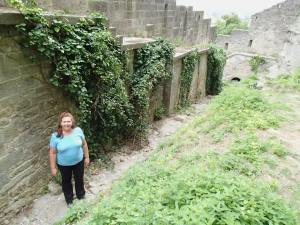
Tracy hiking the barbicane at la Cité de Carcassonne
Alan hiking the bailey in la Cité de Carcassonne

6.  We obtained a chest carrier for Kiara.  Yes, Kiara the Chihuahua is traveling the Camino with us.  We understand that many albergues do not allow dogs, but we intend to camp whenever that occurs.  Kiara will do some daily walking, but most of her traveling will be as a passenger on her “beasts of burden” (the two of us) like the horseback pilgrims who also travel the Camino.

So our Camino preparations continue and we will post more updates as we go.

Tracy's boot over the scallop shell sign marking the Camino
Tracy’s boot over the scallop shell sign marking the Camino

Going for a Little Walk . . .

People say that the Camino finds you. We believe this to be true. Both Alan and I were aware of the Santiago de Compostela cathedral, in Spain. I even have a friend who took some amazing photos on a vacation once. But neither of us had never heard about the pilgrimage from St. Jean Pied-du-Port to Santiago de Compostela until right before we moved to France.

We were (and would be still if it were available here) major Rick Steve’s junkies, our DVR was full of 30 minute episodes from his trips all over Europe that we would watch over two or three nights – I kept falling asleep at about the 10 minute mark each night. During an episode when he was in Spain, he mentioned the Camino de Santiago de Compostela and the French Route from St. Jean Pied-du-Port. We found the episode interesting and then promptly forgot all about it in our rush to finish our pre-move checklist and goodbyes.

Upon arriving in France, we noticed that the little park up the street where we walk Kiara had signs that we couldn’t quite figure out. Blue background with yellow lines joined at the left and radiating out like a child’s drawing of the sun, or rather 1/3 of it. For weeks we couldn’t figure it out and eventually tuned it out as an oddity.

500px-Muszla_Jakuba

The other thing we noticed around the city was a stripe of white over a stripe of red. This pattern is found everywhere and with rather odd placement. Posts, railings, trashcans, trees, power poles, corners of buildings. It can be found painted, as reflective tape or decals. We reasoned that perhaps it had something to do with parking or some other obscure city ordinance that we would never figure out.

Way-Marker

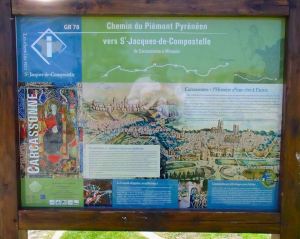
Then two weeks ago, a construction crew was putting up a large signboard in Kiara’s park on the path that follows the Aude River. A few days later, we wandered over to take a look at it. It is a signboard that explains that the Arles Route (Arles to Toulouse) of the Camino de Santiago de Compostela runs through Carcassonne. The sign has great graphics showing the route through town.

We were both surprised to find out a couple of things: 1) the Camino doesn’t start just in St. Jean Pied-du-Port (there are a lot of starting points all over Europe) and 2) it literally runs right in front of our apartment.

I remembered a month ago while sitting in the window seat and having my morning coffee that a hiker with a scallop shell on his backpack walked up the street. I knew that the scallop shell meant that the person was walking or had walked the Camino from the Rick Steve’s episode I had seen a few months earlier. I figured that he had done it once before and thought “cool” and promptly put it out of my mind. Seeing him made total sense after seeing the signboard.

Alan did a little Google research about the Camino and found that Emilio Esteves had done an Indy film in 2010 called “The Way.” I found it in iTunes and downloaded it. We watched it last week and it took less than an hour for us to look at each other and say “Let’s do it.”

As I mentioned earlier, they say the Camino finds you and for us that is definitely true — since it is literally right outside our front door. So rather than waiting for “someday” we’ve decided to listen to the universe and go for a walk.

Currently we’re planning a pilgrimage to Santiago de Compostela in Spain. 500 miles over mountains and plains from St. Jean Pied-du-Port in France to Santiago, Spain.

There are three pilgrimages that all Catholics are encouraged to make in their lifetime, St. Peter’s in Rome (which we’ve done — in addition, the Bishop’s Office in Rome also encourages you to visit all four of the major basilicas while in Rome — you’re there any way — so we did in 2011), Santiago de Compostela (which we are planning) and Jerusalem (which has been on both our wish lists for sometime).

The Camino de Santiago can be done as a religious or non-religious pilgrimage. We discussed it and decided to do this as a religious one — technically religious/cultural. Alan isn’t Catholic, but I have been since my first breath, albeit non-practicing most of the time. I think God will overlook my absences since we’re usually on pretty good terms regardless of whether or not I sit in a pew on Sundays.

Pilgrims are given a special passport — a “credential” — that you get stamped along the way and a “compostela” upon arrival. The paper and printing methods have changed but the design of the document has remained unchanged for over a thousand years.

All pilgrims are encouraged to carry the symbol of St. James (who is buried in the church in Santiago) which is a scallop shell, we are getting a special one for Kiara for her carrier. We will have ours attached to our backpacks like all the other pilgrims. Additionally, Camino charms are sold in many of the towns along the way — Kiara will probably end up with new jewelry too.

There are auberges (pilgrim hotels) along the way which charge very little for dinner, a bed, breakfast and a place to shower, usually between 5 and 15 euro ($8 to $18 roughly). Most have washers and dryers so that you can keep your clothes clean on the journey. A few do not allow dogs, hence the need for the tent!

Our route will take us through the Pyrenees mountain range, starting on day one! We want to complete it in 5 weeks so we’ll need to hike an average of about 15 miles a day with a day of rest once or twice along the hike, but since we are retired we’re not too worried if we need extra time.

We have spent the last two days purchasing good hiking shoes, tent, sleeping bags and packs. We’ve loaded them up and weighed them. We are astonished at the new fabrics and technology in design that keeps everything weighing very little. Alan’s pack weighs under 20 pounds, mine weighs under 14. It’s still boggles my mind a bit! Kiara will be coming along in her special chest carrier that we purchased while we were still in Reno, I will be carrying her sweater, blanket and food. The plan includes letting her walk a little each day so she can do a “mini-Camino” or as we call it, a “Chi-Camino.”

We are now setting up a training schedule for the next 10 weeks, working up to the 15 miles a day that we’ll need to average in order to complete our little walk in five weeks. The Camino de Santiago de Compostela from St. Jean Pied-du-Port is 800 kilometers or roughly 500 miles.

Alan will be posting additional information in the next few days for anyone interested in learning more about the Camino. We are batting around ideas about how to do updates along the way, or whether we should just do one big update when we arrive home, we’ll let everyone know what we decide before we leave.

Buen Camino!