French Beverages, Part 5: Martini Blanc and Martini Rouge

No, these are not my beloved gin Martini (two ounces Bombay Sapphire Gin, scant capful of Martini & Rossi Dry Vermouth, shaken until freezing cold, with three blue cheese stuffed olives added) or James Bond’s famous vodka Martini ( . . . with a thin slice of lemon, shaken, not stirred.)

These classic French before-dinner drinks are simply a glass of white or red vermouth.  While vermouth is most commonly just a mixer in the US, in Europe it is also served as a stand alone aperitif of 2 to 3 ounces (6 to 9 centilitre) either neat, chilled, or over ice.  Vermouth is a fortified wine (13-24% alcohol content), that has been aromatized by infusing it with botanicals: spices and herbs, the most notable of which is wormwood.  The modern version of vermouth was created in Turin, Italy in 1768.  Vermouth quickly became a popular drink at the Turin Royal Court and its popularity spread throughout Europe from there.

Martini Blanc (Martini White)
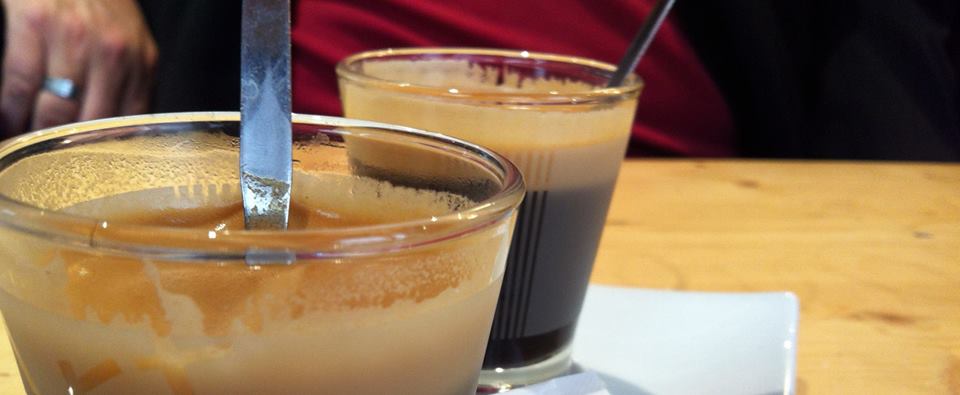
Martini Blanc
Martini Blanc

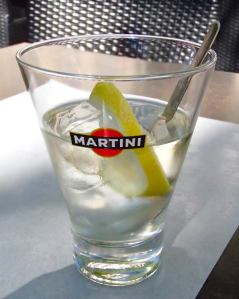
Here in Carcassonne I am served two ounces of Martini Bianco vermouth over ice with a slice of lemon with a small spoon in a specific Martini Logo glass.  The spoon is used to stir the drink to cool the vermouth.  This is sweet vermouth with a slightly bitter citrus taste and an undertaste of vanilla.

Martini Rouge (Martini Red)
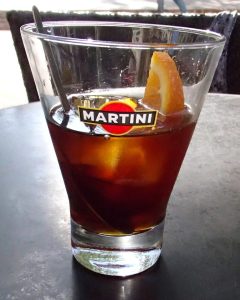
Martini Rouge
Martini Rouge

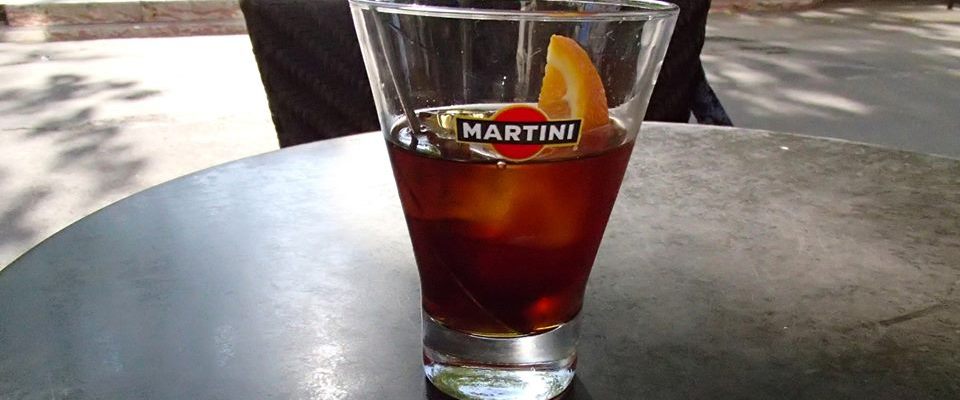
The Rouge version of the Martini has two ounces of Martini Rosso vermouth poured over ice with a slice of orange.  Like the Blanc, it is served in a Martini Logo glass with a small spoon.  Another sweet vermouth, but this one has notes of slightly bitter orange.

The Italian vermouth Cinzano and French vermouth Noilly Prat are widely available in France.   There are also straw-colored dry and rosé vermouths choices available.

So what do I think?  I would be happy to accept a Martini Rouge from a host as an aperitif at a gathering.  It’s pleasant, refreshing, and I would prefer the Rouge to the Blanc.  The Rouge has more of a “wine-like” quality to its flavor than the Blanc.

I enjoyed both drinks, although while having them it brought back the memory of the pained look on Bill Murray’s face in the film “Groundhog Day” when he is forced to drink Andie MacDowell’s character’s favorite drink, “Sweet vermouth on the rocks with a twist.”  These would not be my “go to” beverages.

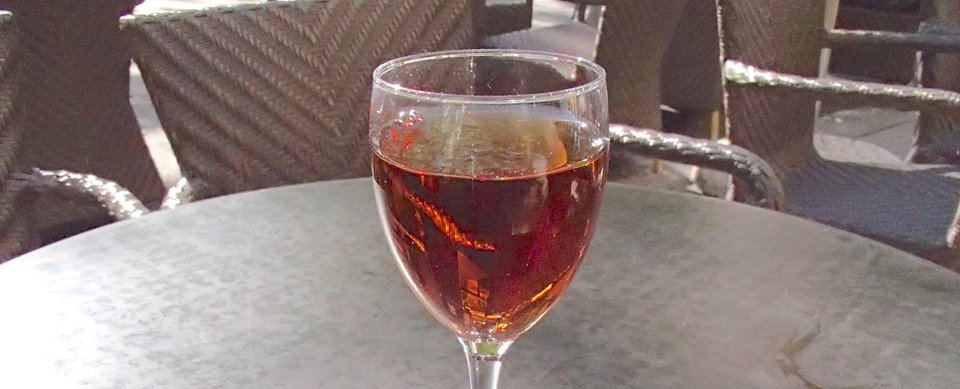
With all said and done,  I really prefer to have my vermouth as a few drops of dry vermouth added to a traditional gin Martini.  In order to get that classic Martini cocktail in France one must specifically order a “Dry Martini” or a Martini sec.

Gin Martini
Gin Martini

French Beverages, Part 4: Kir

One of the iconic French cocktails is Kir (pronounced “keer”.)

Light and refreshing, it is considered the perfect summer aperitif.

The back story to the drink was that the mayor of Dijon, Felix Kir (a Catholic priest and hero in the French resistance during WWII), wanted to promote Dijon’s local products during the post-World War II economic recovery.  But the Nazis had previously confiscated the entire production of Burgundy wine for which Dijon is well-known and there was left a surplus of the then-unknown Aligoté dry white wine.  In a marketing coup, Mayor Kir invited delegations from around the country to receptions in Dijon and served them a cocktail he created using the Aligoté wine and Crème de Cassis, a sweet, dark blackcurrant liqueur that was also produced locally.  The Crème de Cassis‘ sweetness offset and balances the acidity and dryness of the Aligoté wine. Mayor Kir’s cocktail was a big hit and resulted in huge sales of both Aligoté wine and Crème de Cassis liqueur.

Kir Cocktail
Kir Cocktail

Today you may order the classic Kir with Crème de Cassis (blackcurrant), Kir de Mûre (blackberry), Kir de Framboise (raspberry), Kir de Pêche (peach), or you can “up the ante” to a Kir Royal made with champagne.

Most Kir cocktails today will be made using a local dry white wine and mixed one part Crème de Cassis to four parts wine-producing a deep blush color. Kir is served in a white wine glass and Kir Royal is presented in a champagne flute.

What do I think?  I like it. It’s very refreshing on a sunny afternoon, but it’s a little too reminiscent of a wine cooler to me.  It might be a nice change of pace, but I think I’d rather just have a good glass of wine (or a carafe of wine) to enjoy the afternoon.

Kir Cocktail
Kir Cocktail

French Beverages, Part 3: Coffee

In my younger days I was generally known as one of the only three cops in America that didn’t drink coffee.  That didn’t change in my  academic career.  It took visiting Italy and France and their excellent espresso to convert me into a dedicated coffee drinker.

For breakfast in Carcassonne Tracy and I enjoy Café Crème (Ca-fay Khrem), like an Italian cappuccino, a large steaming cup of espresso with steamed milk and a topping of foamed milk.  Unlike Italian cappuccino or cafe latte there is no artistic patterns on top, just rich creamy coffee with a dollop of foam.  In France the norm is not having a big breakfasts so Café Crème is often a meal unto itself or maybe with a croissant or a pain au chocolat (a flakey chocolate-filled viennoiserie pastry that is a favorite here in Southwest France.)

Café crème
Café crème

After 10:00 or 11:00 in the morning there is Café (Ca-fay) to enjoy (although many will enjoy Café for breakfast.)  Café (also called Café Noir or Café Express) is drawn from an espresso machine just like an Italian espresso and rich with dark reddish-brown foam called “crema,” and served in a demitasse cup or small glass.  In France and Italy milky coffee drinks like Café Crème are only consumed in the early morning, Café can be enjoyed all day long.

Café
Café
Café
Café

Coffee in France is always served with sugar (sucre (Coo-khruh), real sugar, either granulated or sugar cubes.  (Although a person could also request artificial sweetener, edulcorant  [Ay-doohl-co-hrahn].)  There is frequently a small ginger cookie or small chocolate to accompany  your coffee in our part of France.

There are many cultural expectations to having coffee in France.  Like I previously said, Café Crème, is not ordered after breakfast time.  There are seldom paper “go cups” available, coffee is meant to be savored slowly, not to be drunk on the run.  Coffee is not served during a meal (there is wine for that); coffee is reserved for after the meal is finished as a capstone to the event.  If you enter a restaurant only for coffee, either sit at a table without place settings or stand at the counter.  Drinking coffee while standing normally cost less than coffee while sitting at a table.

While our coffee drinking normally includes just Café Crème and Café there are some other coffee choices.

Noisette  (Nwah-zett) is an Café with a dash a cream.  Noisette is French for “hazelnut” and refers to the color of the coffee.  A noisette is similar to a small Italian Macchiato coffee.

Café au Lait (Ca-fay a lay), coffee with cream.  Depending who you talk to, this either this is an acceptable synonym for Café Crème or is a phrase only used in a restaurant by tourists.  I’ve also been told Café au Lait is a term only used by a French person in their own kitchen.

Café Allongé (ah-lohn-zhay), “extended coffee,” is espresso with additional hot water to make a more traditional American-style cup of coffee.

There is an option to order your Café as déca (Day-kah) or décaféiné (Day-kah-fay-uhn-ay) for a decaffeinated coffee.  This is something Tracy strongly believes cancels a major reason for coffee in the first place and is perhaps is even a venial sin.

And for non-coffee drinkers there is Chocolat chaud (Shah-ko-lah show),  hot chocolate that is normally made with rich, top-quality chocolate and is often served in demitasse cup.

France is definitely a “coffee culture” where few activities are as relaxing as sitting in the town square, sipping your café, and watching the world go by.  “Un autre café, s’il vous plaît.”  Another coffee, please.

French Beverages, Part 2: Languedoc-Roussillon’s Vin de France and Vin de Pays

“You know, every glass of wine here is French wine.”  Me sharing the extremely obvious with Tracy.

The Languedoc-Roussillon region in Southwest France, where we are living, is the largest area in France in terms of vineyard acreage.  The region is known for its Blanquette de Limoux, the world’s oldest sparkling wine, and many high quality red wines like Corbières, Cotaeux du Languedoc, Côtes du Roussillon, Fitou, Minervois, Saint Chinian, and Costières de Nimes.

Languedoc-Roussillon (Wikimedia Commons)
Languedoc-Roussillon
(Wikimedia Commons)

Languedoc-Roussillon is also known as the “Wine Lake” of France where the majority of inexpensive wines in France are produced. So much wine is produced in Languedoc-Roussillon that France worries the “Wine Lake’s” surplus drives down the export price of French table wine.  More than 1/3 of all grapes grown in France are grown in the Languedoc-Roussillon region.

The everyday wines are called Vin de France, (previously called “Vin de Table“) the lowest level of the three tiers in the current wine classification system in France.  But don’t let the term “lowest level” deceive you, these are flavorful wines that enhance any meal or are enjoyable simply by the glass.  Any wine in France is all about its terroir:  the environment, climate, soil, geography, and weather that makes up the intangibles that combined with the variety of grapes and the skill of the winemaker creates the final taste of the wine.

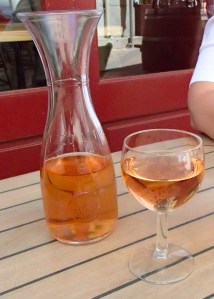
Pichet de Vin
Pichet de Vin

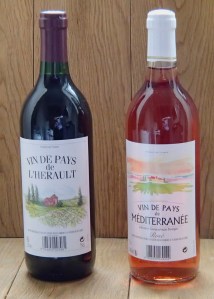
The mid-level category of French wines are Indication Géographique Protégée wines (IGP), an intermediate category basically replacing the former Vin de Pays (“country wine”) category.  These IGP/Vin de Pays wines are simple varietal French wines that include Vin de Pays d’Oc from Languedoc-Roussillon. Vin de Pays d’Oc is the largest portion of all Vin de Pays wines produced in France.

Vin de Pays
Vin de Pays

Appellation d’Origine Protégée (AOP) is the highest category of French wine replacing the previously used category of Appellation d’Origine Contrôlée (AOC) wines.  We look forward to touring some of the local vineyards in the near future and tasting some of these top-tier AOP wines.  Restaurants in Carcassonne offer high quality AOC wine lists in addition to their basic house wines.

AOP Seal (Wikimedia Commons)
AOP Seal
(Wikimedia Commons)

Most of Tracy and my wine consumption has been Vin de France and Vin de Pays.  These inexpensive reds, white, and rosé wines have proven to be delicious.  “Un demi-pichet de vin,” (a half litre carafe of a restaurant’s vin de France) has never been a bad experience.  Restaurants carefully choose even the house wine with their reputations in mind.  Rosé wines are a respected wine choice and hold a prominent place in many of France’s major wine regions, including Languedoc-Roussillon.

Tracy enjoying "un pichet of vin rouge."
Tracy enjoying “un pichet of vin rouge.”

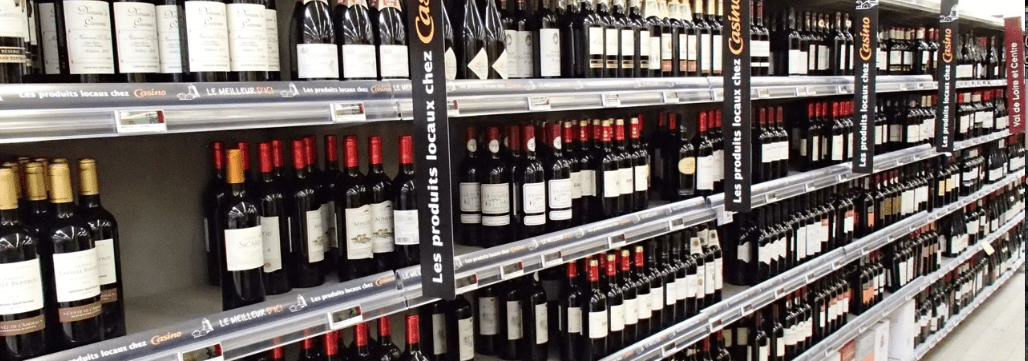
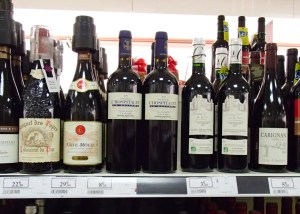
Shopping for wine is an embarrassment of riches.  The wine section in every store offers a huge range of quality, varieties, and price points.  It is difficult to narrow down your choices from so many offerings.  I was stunned to even see “boxed” vin de France meant for inexpensive table wine. Two of our most recent purchases, a red and a rosé, were both under 2 Euro and they were delicious!

Shelves of Wines
Shelves of Wines
Shelves of Wines
Shelves of Wines
Shelves of Wines
Shelves of Wines
Varied wines and prices

Tracy and I greatly enjoy our new tradition of a glass of wine with lunch and dinner.  And there is nothing like a leisurely afternoon, sitting in the town square of Place Carnot, and  lingering with a carafe of wine as Tracy and I just enjoy the view, conversation, and people watching.

French Beverages, Part 1: Pastis

Pastis is an anise-flavored liqueur and popular aperitif in France.

Ricard is the number one pastis beverage in the world, its recipe unaltered since its creation by Paul Ricard in 1932. A refreshing apperitif, Ricard is a long-time favorite in France, especially in the southern regions of the country. Over 130 million liters of pastis is sold each year in France, more than two liters per inhabitant.  The name “pastis” originally comes from the regional dialect occitan’s word, pastís, meaning “mash-up.”

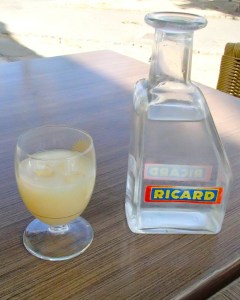
Ricard Pastis
Ricard Pastis

Pastis’ popularity grew following the French ban on absinth. One reason for the popularity of pastis can be attributable to the demand for anise flavored drinks created by absinthe decades earlier. There is also an old tradition in the Mediterranean of anise-based liquors like Sambuca, Ouzo, Arak, and Mastika.

The principal ingredients of Ricard is star anise, a rare spice that grows in southern Chinese and in the north of Vietnam, licorice from Syria, and aromatic herbs from Provence. Pastis is not absinthe and does not does not contain grand wormwood (artemisia absinthium), the herb from which absinthe gets its name. Absinthe obtains its base flavor from green anise, not the star anise which Ricard uses. Pastis’ flavor comes from licorice root which is not used in absinthe. Also, absinthes are normally bottled at 45 to 74% ABV, while pastis is typically bottled at 40 to 50% ABV. Finally, unlike absinthe, pastis is classified as a liqueur  because it contains sugar.

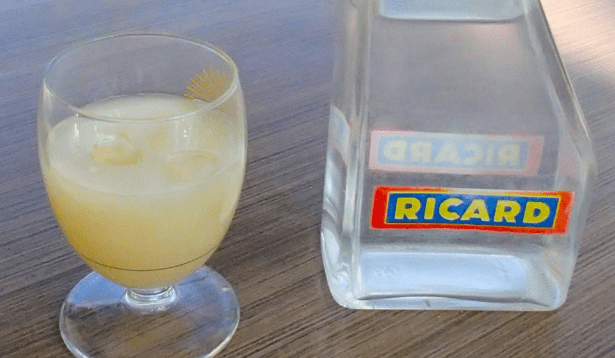
Pastis is normally served with the liqueur presented in one glass and accompanied by carafe of cold water.

The liqueur is diluted with the water according to the drinker’s preference, traditionally about 5 parts water to 1 part Ricard. Diluting the liqueur creates the “French Milk” effect as the water is added. The combination of liqueur and water ‘louches,’ and turns the diluted beverage cloudy and white in appearance. The drink is then consumed cold and is considered a refreshing beverage for hot days. Ice cubes may be added after diluting the pastis.

Pastis before dilution with water
Pastis after dilution with water and 'louching' starting
Pastis after dilution with water and ‘louching’ starting

Flavor Hell

A few weeks ago I posted an article titled “Funny French Foods” where I had found some cute and/or funny foods in the grocery store. Today’s article is dedicated solely to potato chips. Some of you who know me well will know that I love potato chips and believe that chip/sandwich pairing is a real art. I cannot even enjoy a sandwich unless there are potato chips on the plate, and of course, I have my own favorite combinations: tuna sandwich with crunchy cheetos, roast beef and provolone sandwich with sour cream and onion potato chips, etc.

Image the horror of walking into the “Walmart of France” Geant Casino and finding the following assortment of chip flavors.
cream-blackpepper and light

Cream and Black Pepper (the ones on the right are Light chips)

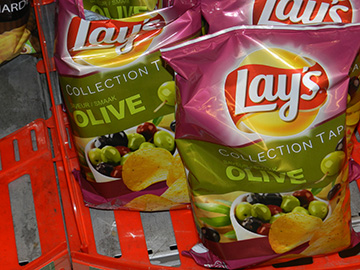
olive

Collection of Tapas Olives – I like olives, but in a potato chip?

mustard-pickle

Mustard and Pickle [raised eyebrows] hmmmm

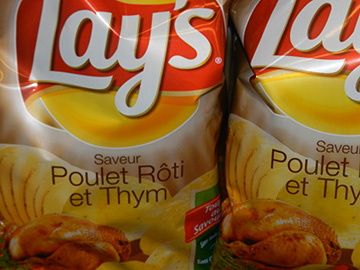
roast chicken and thyme

Roasted Chicken with Thyme (not quite chicken ‘n waffles)

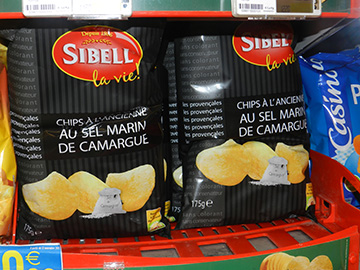
sea salt from the Camargue

Sea salt from the Camargue (located south of Arles, France between the Mediterranean Sea and the two arms of the Rhone River Delta – I looked it up on Wikipedia)

provence

The Herbs of Provence — we keep seeing this everywhere, but haven’t yet figured out just exactly what the herbs are — my guess, lavender.

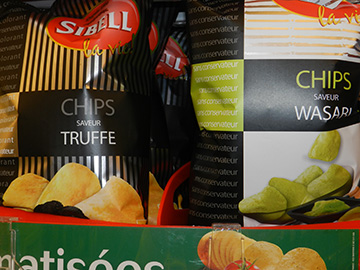
truffle and wasabi

For the refined palate — truffle and wasabi

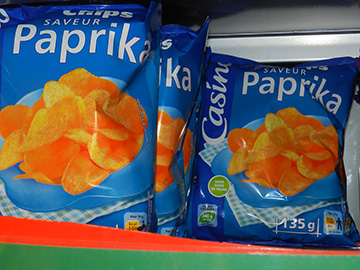
paprika

Paprika — in a potato chip, this is just wrong, wrong, wrong

bbq-ribs

For your dining pleasure — BBQ Rib flavored potatoes — mmm, mmm good

old-summergrill

These basically translate as Old Chips with grilled summer flavor — probably not making it into the shopping cart

chorizo

Chorizo flavored chips — ack!

marinatedchicken

Then of course, more chicken, this time Marinated Chicken flavored chips — I am beginning to notice the French love chicken flavored things, not sure why

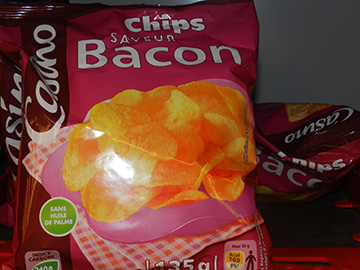
bacon

Bacon — potato chips even the dog will love!

chewableblondes-sourcream-herb

According to Google Translate this is a bag of “Chewable Blondes” with sour cream and herb flavors. I had to translate it twice because I was having trouble believing the first translation.

There are other types of chips and Alan even found my “comfort food” chips when I was ill during our second week here. But these really are the ones filling up the shelves and not just the oddity that we find on occasion. I must say that I do miss my Nacho Cheese Doritos, they were my “go to” chip whenever Alan made sandwiches!

We have a joke between us, Alan makes a sandwich and we get two slices of bread, a slice of cheese, a slice of meat and if he’s feeling like a chef, a slice of lettuce.

I make a sandwich and we get two slices of 12 grain bread with hummus, feta cheese, slices of sun-dried tomato flavored turkey, shredded romaine, clover sprouts, mini sweet pepper slices and chips that are perfectly chosen to enhance the flavor of the sandwich.

I miss my chips, but there may be some adventurous flavors awaiting me . . . however, I will not lower myself to the Paprika flavored chips, never, never.

Funny French Foods

Now that we’ve been in Carcassonne for a few days, there are a few differences that we’ve noticed when it comes to how food is packaged. Not difficult to deal with, but rather an interesting difference to what we are used to seeing in the U.S.

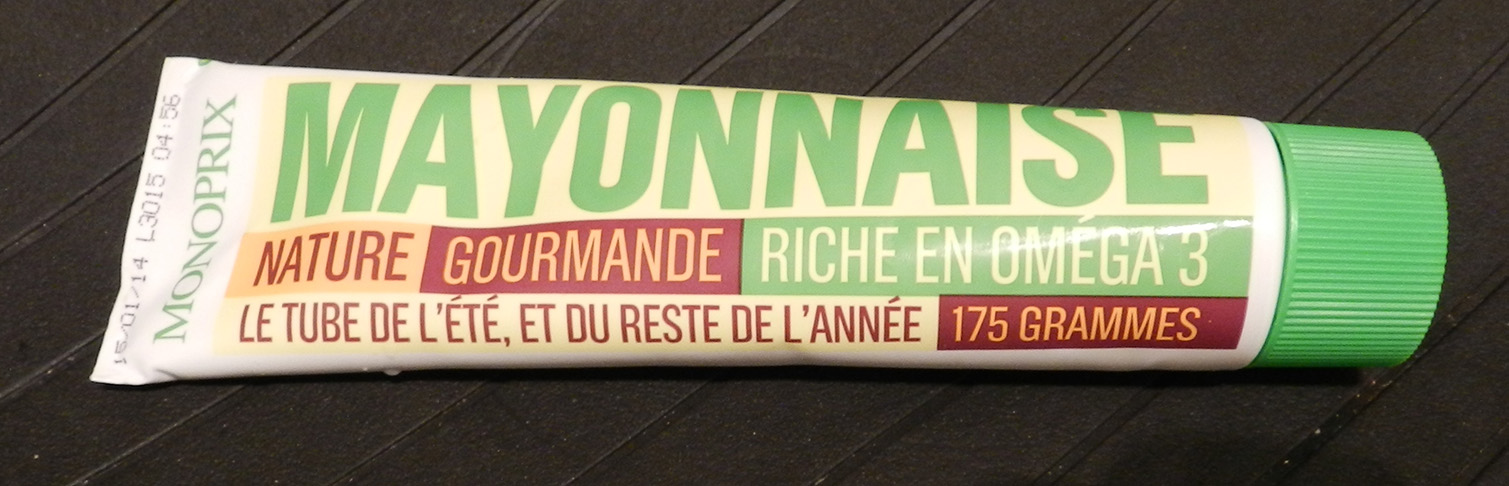
Mayo in a Tube

It looks a bit like Mayo Toothpaste. It is not white but a light yellow color, but has the same texture and flavor we are used to having with Best Foods.

DSCN7040

Dijon Packs a Powerful Punch

I love dijon, spicy, yellow mustards, but wow you really need to go easy on the French Dijon Moutard. A teaspoon of this stuff has the same amount of flavor and zest as an entire bottle of Dijon Mustard in the U.S. Which is probably why it comes in a little tiny jar. If you have a sensitive palate as I do, take it easy for the first use.

DSCN7041

Milk on a Shelf

We double-checked this a couple of times, but YEP, milk in France is sold unrefrigerated in the same aisle as your cereal. In all honesty, we haven’t actually tried it yet. But we’re keeping ours in the fridge.

DSCN7043

Two Carton Sizes for Eggs: 4 or 6

We chose the 6-count carton because Kiara likes an over easy egg every couple of days and well, we like to spoil her. But think about that next time you’re at the grocery store picking up and 18-count carton of eggs – how many of you would decide to give the kids cereal if those were you only choices. Additionally, we have yet to see white eggs. Perhaps all the white chickens live in the U.S.

DSCN7044

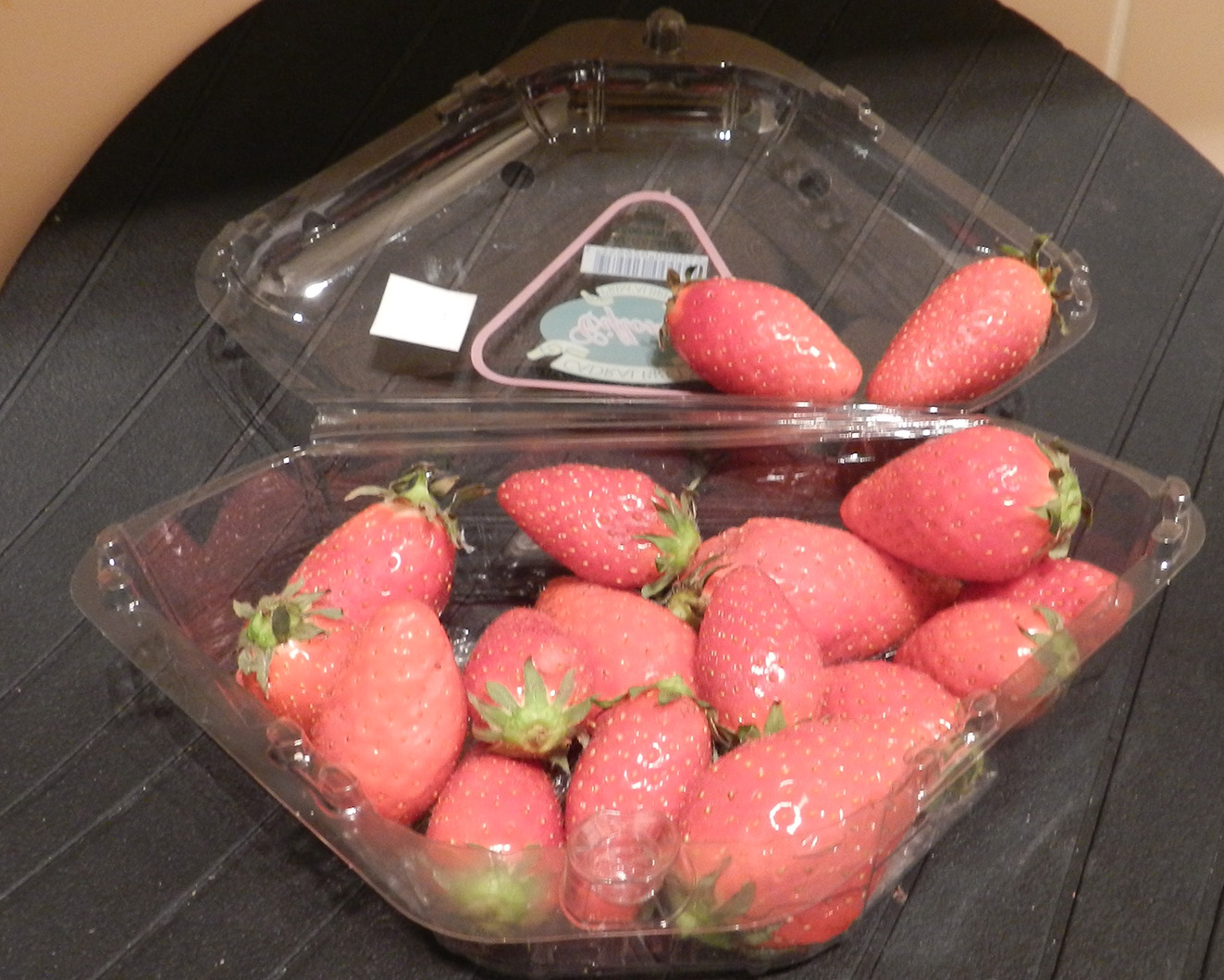
The Sweet Scent of Strawberry

We bought this pack of strawberries, it smelled so fresh it literally stopped you in your tracks. I do not care for strawberries as I find them more tart than sweet. These thinner French ones are so sweet they taste like strawberry flavored candy. Absolutely delicious. Totally a keeper!

DSCN7045

Wrinkly Tomates

French tomatoes (tomates) look like a cross between a tomato and a pumpkin and they are kind of orangey as well. We haven’t tried these yet, we bought the ones still on the vine, yummy. These are definitely on the list to try though!!

IMG_2112

Brown Sugar in Small Hard Chunks

Brown sugar, or what I believe to be brown sugar (it could also be raw sugar — jury is still out on this one) comes in a box full of small hard chunks. It breaks up pretty easily and tastes like the light brown sugar at home and, even better, still works with my special dressing/marinade which I made this afternoon. Not bad!

DSCN7046

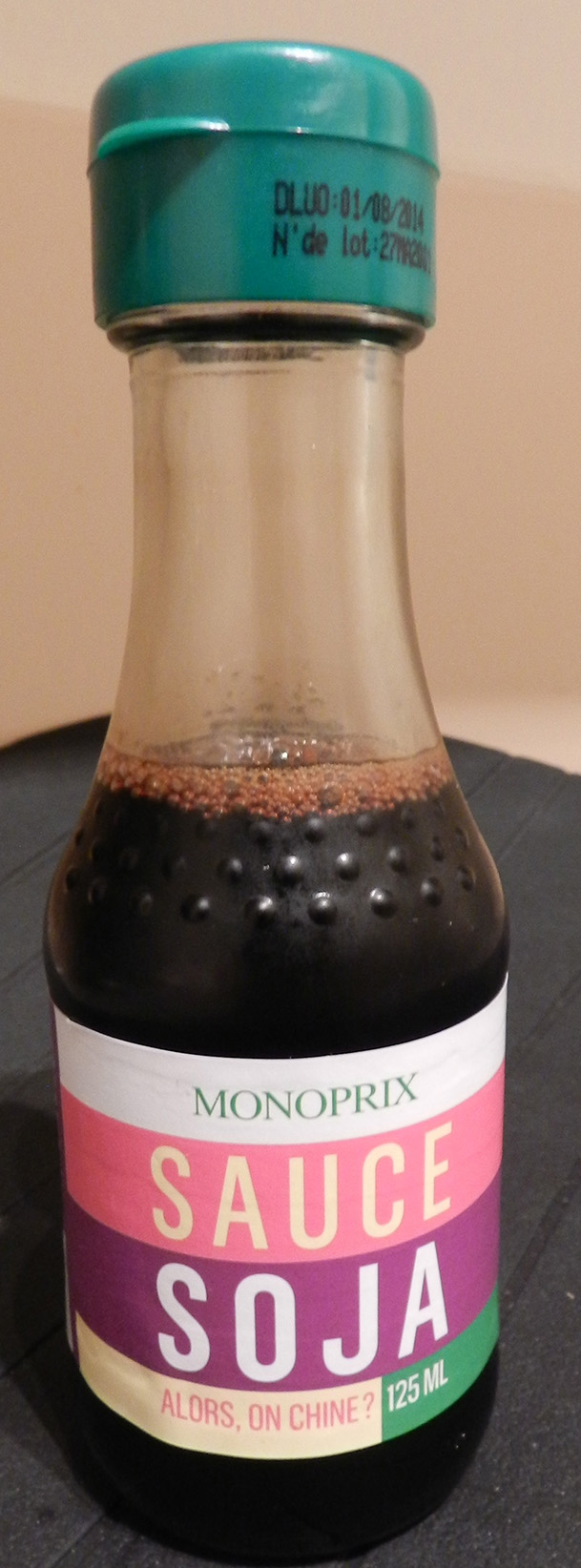
Tiny Jars of Soy Sauce

The only soy sauce we’ve come across so far are smaller than the ones used in Chinese and Japanese restaurants in the U.S. It tastes fine, it made the list cause it’s kinda cute.

DSCN7042

City Wine

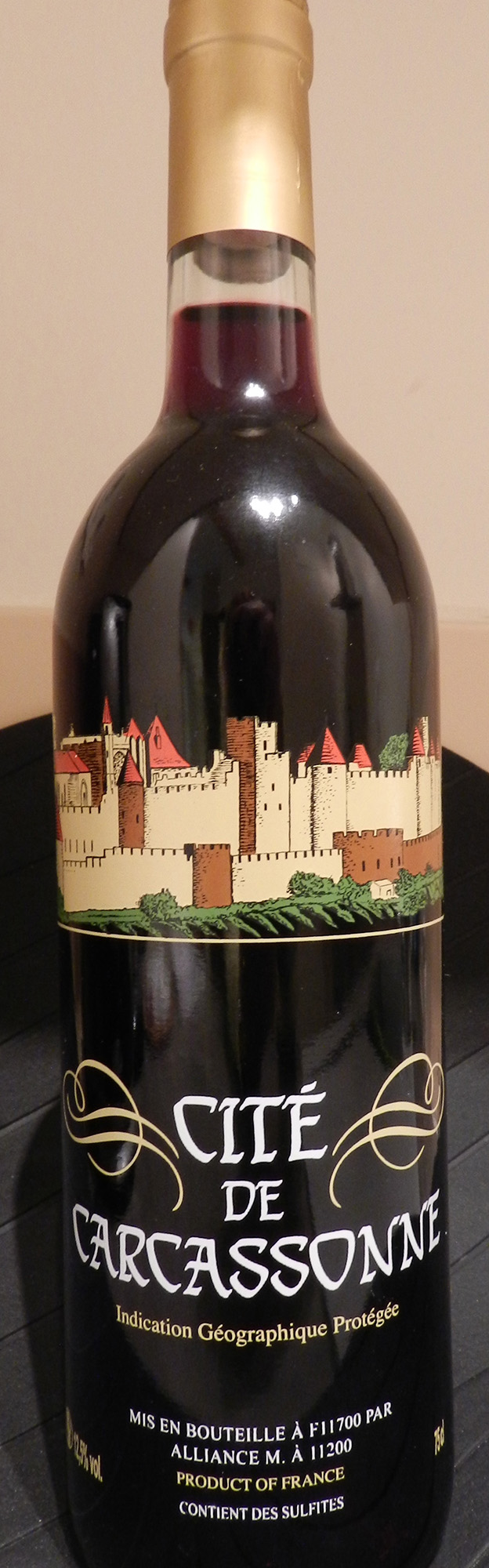
The Carcassonne Wine. Haven’t tried it yet, but is was actually the least expensive wine in the store, so we had to try it to see what it tastes like, really big bottle, really little price . . . my kind of wine!

DSCN7047

Icky Cheese

There are over 600 varieties of cheese in France. It was just our fate that this nasty palette ruining 80 grams of icky was one the first we bought. It is creamy like a cream cheese and it spreads very nicely. The damage isn’t done unti you open your mouth and taste it . . . definitely going on the NEVER AGAIN list.

DSCN7048

Yummy Cheese

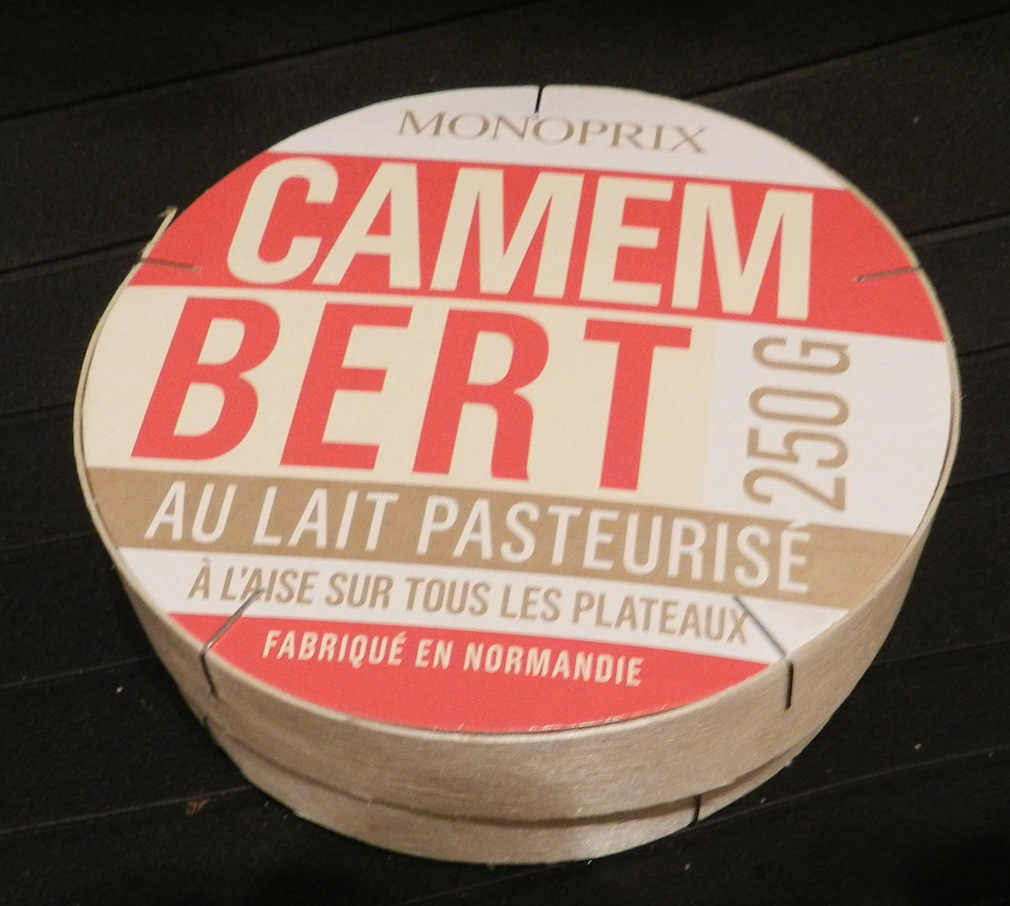
This is our friend Camembert (the “t’ is silent). Cam is a wonderful cheese, it tastes incredibly smooth and is almost sinfully delicious. This is is definitely a keeper!

DSCN7049