Writing A Check In France

Although we’ve had a French checking account for about a year, we’ve been exclusively using the account’s credit/debit card, the Carte Bleue, for in-person and online shopping. We have never bothered to obtain an actual checkbook from our bank in France.  We very seldom used checks in the US because of the prevalence of online payments.

But, we recently had a need for a chèque issued on a French bank, so I set about acquiring a French checkbook called a Chéquier or a Carnet de chèques. I went online to BNP Paribas, our French bank, and searched for the link to order a Carnet de chèques.  Of course, the website is in French and after stumbling around web pages for a good while using with my limited French language skills, I decided I needed some help locating the correct link.  

I “clicked in” to the BNP website’s “chat” function to “speak” with a bank representative who was extremely helpful.  Totally embracing technology, I had one computer window open to the BNP website, a second window open to chat with the bank representative, and a third window opened to Google Translate to expedite the conversation with the French speaking bank rep.   I worked through the  online conversation and finally located the right web page to order chèques.  However after reaching the correct webpage, I was offered the somewhat confusing options of:
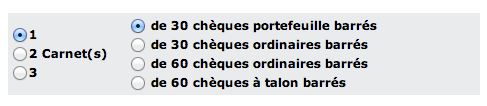
Cheques Options
Cheques Options

While I understood the options of  ordering 1, 2, or 3 carnets (books) of chèques with either 30 or 60 chèques each, I had to do some additional online research to figure out exactly what the differences were between chèques portefeuille barréschèques ordinaires barrés, and chèques à talon barrés.  After visiting several online Expat forums I learned that: 

Chèque portefeuille: has checks that are attached and tear away from the top like the majority of US checkbooks.
Chèque ordinaire:  has checks that are attached to the left side like a book and tear away from the left side.
Chèque à talon:  checks that are attached and tear away from the top, but with a”stub”(à souche) that gets left in the checkbook with a space for a personal memo.

Now understanding the options better, I selected the chèques portefeuille barrés (the choice most similar to what we have for our US checkbook) and “clicked” to have the Carnet de chèques mailed to us rather than the option of having the checkbook sent to our local bank branch for pick-up.
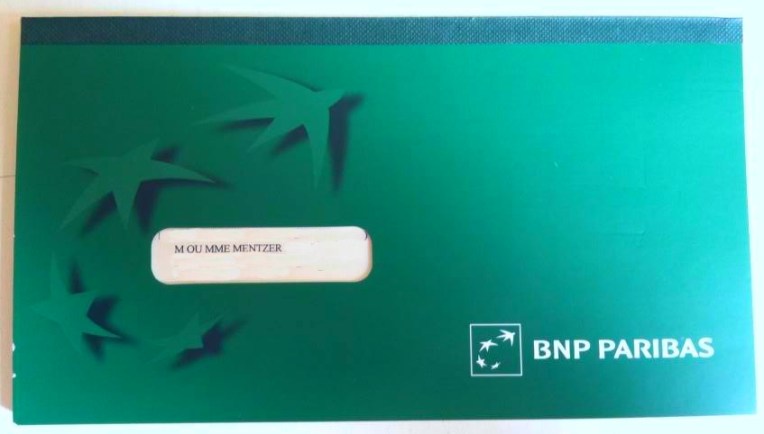
Carnet de chèques
Carnet de chèques

A week later, the Carnet de chèques arrived in the mail.  First thing I saw was that French chèques are noticeably larger than US checks.

Size Comparison: An US Check On Top Of A French Chèque
Size Comparison: A US Check On Top Of A French Chèque

Also different from the US was a receipt included which had to be signed and returned to the bank acknowledging that the checkbook had arrived, there are no missing checks, and that the checks are printed correctly.  Apparently the checks are not valid until the return receipt has been received at the bank.

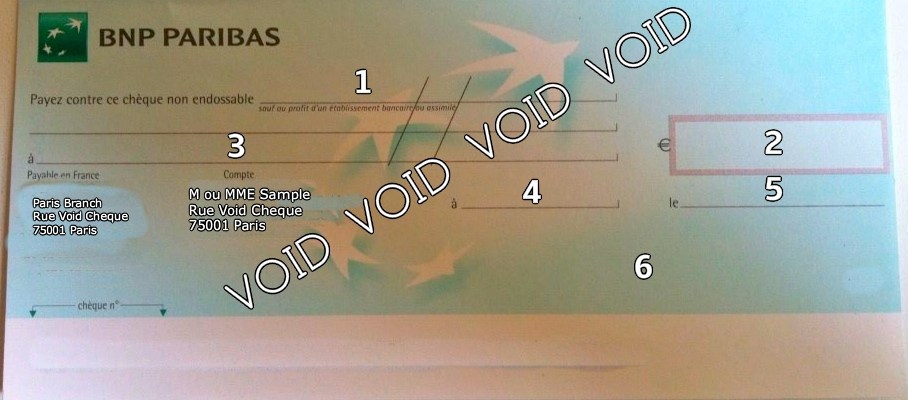
There is a very specific formula to writing French checks.  While US checks and French chèques look similar, there are several differences in their formats.  The most obvious difference that a chèque written on a French bank is required to be written in French.
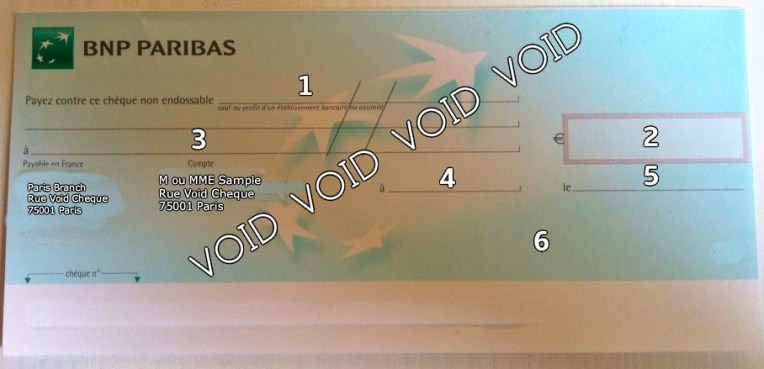
Sample French Chèque

Line 1.Payez contre cheque,” “Payez contre ce chèque‘,” or “Payez contre cheque non endossable.”  The top line on US checks is where the payee’s name usually goes, so it’s important to know that Payez contre cheque means “Pay against this cheque (this amount)” not “Pay to the order of” like is found on an US check.  On the top line of the chèque you spell out the amount to be paid using French words.  For example €87,50 needs to be spelled out as “Quatre-vingt-sept Euros et cinquante centimes” or “Quatre-vingt-sept Euros et 50/100 c.”  I still struggle with understanding French numbers, but there are many “How to write a check in France” websites with “Numbers to French Words Converters” that look very helpful.

Line 2. “” On this line the amount for the check is written in numbers.  Remember that in France the comma (virgule) and the period (point) are used in writing amounts are reversed from the way the comma and the period are used in the US. For example: Two thousand eighty-seven Euros and 50 centimes is correctly written as €2.087,50 and not as €2,087.50.

Line 3. “A” This is the payee space that you write in the name of the person, company, or organization to whom the amount is being paid.  A chèque for Mr. Dubois is written as M Dubois (for Monsieur Dubois),  Mrs. Dubois as Mme Dubois (for Madam Dubois), or Miss Dubois as Mlle Dubois (for Mademoiselle Dubois.)

Line 4. “Fait à” or “A“.  A departure from how checks are written in the US, on this line you write the name of the city of where the chèque is being written, for example “Fait à Carcassonne” or “a Paris.”

Line 5. “Le”  This is the date line where today’s date is written.  Remember that the European standard for writing a date is “day-month-year” (like the US military standard of writing dates.)  A chèque written on Christmas day would be correctly written as 25-12-2014, not as 12-25-2014.  Christmas day could also be correctly written as 25 décembre 2014.  (The French do not capitalize the first letter of a month.)

janvier = January
février = February
mars = March
avril = April
mai = May
juin = June
juillet = July
août = August
septembre = September
octobre = October
novembre = November
décembre = December

Line 6. Beneath lines 4 and 5 reading “Fait à Carcassonne le 25-12-2014″ is the space for a signature.  There is often no actual “line” provided on French chèques for a signature like is usually found on US checks.

So now, with a Carnet de chèques in hand and understanding the format for writing a French chèque, we are finally ready to write that check.
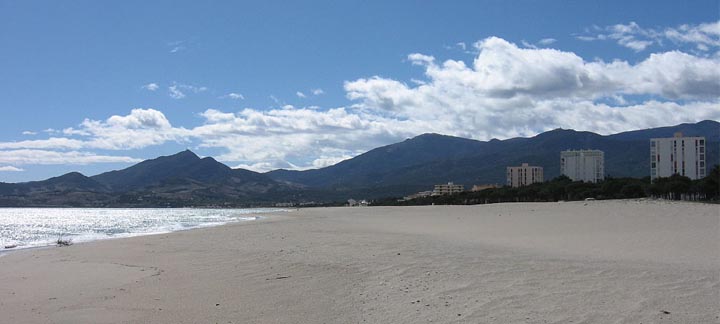


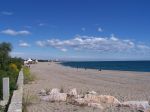
Argeles-sur-Mer in 2015

Originally when we made the move to France it was with the understanding that we would move at the end of every year to a new city or region. Our intention was to see as much of this beautiful country and absorb as much of the culture as possible.

However, when the time came we decided to make our stay in Carcassonne a bit longer. The reason was simple, we love it here. It certainly didn’t hurt that three months in a row our landlord, Jason, asked if we wanted to stay on. We have been good tenants and felt that he might have thought so as well.

Recently, we were discussing our decision to stay another year and decided that we had better start making plans to move at the end of this year or it might become all too easy to agree to a third year here. We have become locals and like that many of the people we see frequently think of us as such.

After returning from our six week sojourn to Spain, several of the locals we see frequently were happy to see us return. We assimilated quite easily into the laid back lifestyle here in the Languedoc region and enjoy everything from the locals to the weather.

But we didn’t want to bail on our original goals. We love to travel and visit new places. Part of the attraction to living abroad was to be able to do more than just see a few tourist sites and leave. So the idea of settling into a comfy situation has left us feeling like we might be betraying the original plan.

To that end, we have been looking for another location that offers everything we love about Carcassonne. It needs to have a good mix of things to do, festivals, market days, museums, parks. Access to transportation by train or bus is a necessity as we don’t own a car. Access to “regular” life stuff such as a super market, sporting goods store, pharmacy, veterinarian, etc.

This time we also have to consider Sami’s needs.  Kiara was small enough that she didn’t mind being an apartment dog. A trip each day to the park was more than enough for her, and due to her illness sometimes it was too much. However, Sami is a healthy girl with tons of energy.  So, for her a place to run and play is a luxury that we added to our list of wants.

After creating a list of things that were necessities and those that are complete deal breakers (such as no train and 5 km or more to the local market) we went in search of a new residence in a new location.

We believe we have found exactly the right spot in Argeles-sur-Mer. Argeles-sur-Mer is on the coast of the Mediterranean Sea. It has the longest un-obstructed sand beach in the south of France, just over 7 km. The town has history going back to the 8th century and is close to a noted artist colony, for Fauvists such as Picasso and Matisse, in Collioure just 7 km up the road.

Though Argeles-sur-Mer has a smaller population than we prefer at just over 10,000 residents, it seems to have more than enough access to open-air markets, supermarkets, pharmacies and such. Anything that may be lacking we’ll be able to find in Perpignan, with over 118,000 residents, which is only 17 km away and accessible by train in 15 minutes. We have purposely tried to avoid towns that are too small as a comfort measure, but Argeles-sur-Mer has one more added bonus that makes it worth trying . . . a two-bedroom apartment with a yard just three short blocks from the Mediterranean Sea.

We are in negotiations now with the owner and she seems happy to have us come stay beginning in April of 2015. It has long been a dream for both of us to live close enough to a beach that we could enjoy year round. Though Argeles-sur-Mer is a tourist town the busy part of the high season lasts only a few short weeks in August. During the high season, June 1 to September 15, dogs are not allowed on the beaches but come September 16 Sami will be able to spend as much time as she likes running in the sand and surf. Between June 1 and September 15 she’ll have to get by with the 6 acre park two blocks from our apartment or walking along the promenade that stretches the length of the beach, all 7 kilometers!

We have spent more than a few hours with Google Earth getting familiar with what will hopefully be our home for 12 months come April 2015, but we are excited at the prospect of living close to the sea and spending time seeing all the sites available in and around the area. And, of course, long walks on the beach!

Photo credits to Wikipedia and Google Earth.

Reducing Our Footprint and Maintaining Minimalism

For the last few years Alan and I have been trying to reduce our footprint. We decided to adopt a minimalist lifestyle that would work well with our retirement plan of living abroad. Our apartment here is furnished and we only needed few “essential” items, some of which we can leave here when we go. Essential like a corkscrew, which is totally essential in France!

We started in August of 2011 while in our 1500 sq. ft., 3 bedroom, 2 bath house with a 2 car garage and sizable backyard while getting it ready to sell. In November of 2011 we moved to a 735 sq. ft. apartment in Sparks where we stayed until March 31 of 2013 when we moved into our current apartment in Carcassonne, France which is approximately 550 sq. ft.

The first step when we began minimizing the house in Sparks was to identify the items we would bring with us to the apartment after the house sold. They included the dining room set, the wine cabinets, a small bookcase, our clothing, computers, cameras, a few dozen travel books, about six language books and a few books on crochet and knitting, and a sizable library of DVDs (about 150) and CDs (about 90), some of the paintings, a flat screen tv, and five Rubbermaid tubs full of photos. We kept some of the kitchen items, the newest set of dishes, a couple of favorite coffee mugs and soup bowls. Our living room furniture wouldn’t fit through the door of the apartment, so that was gifted to my sister. Along with nearly all our serving ware and kitchen appliances. Some of the other furniture and wall decor were re-homed with kids and other family.

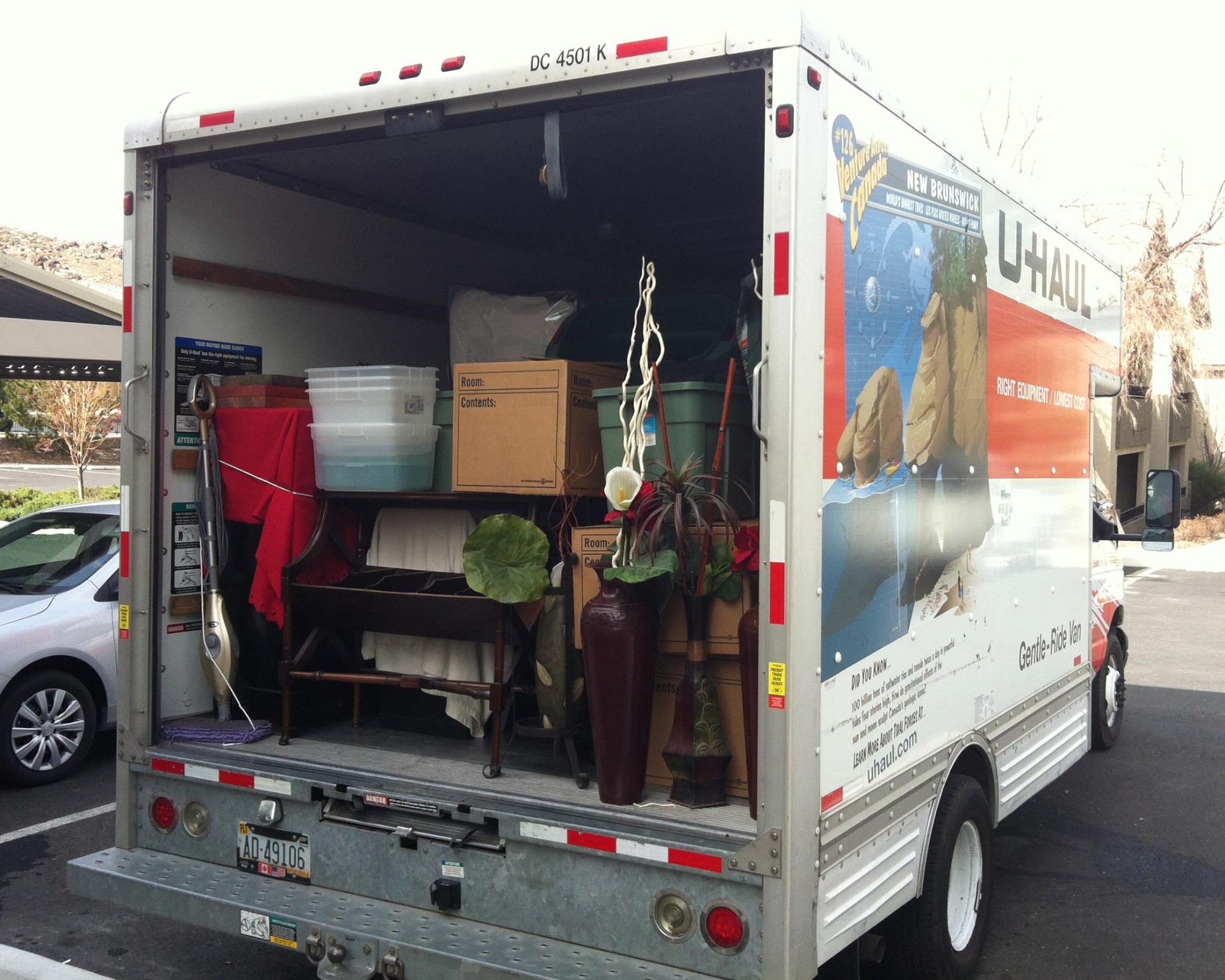
In all, it took two 6 cubic yard dumpsters, a 14 cubic yard dumpster and a 10′ U-haul to rid ourselves of the rest of the “stuff” we had stockpiled.

For the apartment in Sparks we ended up purchasing a full-sized bed, mattress, and bedding, a couch and entertainment center, two end tables and two coffee tables, a second flat screen tv, tv stand, two night stands, a cane/umbrella stand, new cookware, flatware, water and wine glasses, toaster, blender, and two cutting boards . . . all of which we purchased at IKEA with the exception of the couch which we bought in Reno at a furniture discounter. All of this to make the apartment livable for the 17 months we would be in it.

The last three months in the Sparks apartment were used to minimize for our relocation to France. We took a hard look at what we felt was essential for our move to France. Camera and computer equipment, definitely a must. We both have cameras, I prefer Nikon while Alan favors Olympus. We upgraded Alan’s camera, both picked up a second camera, smaller and waterproof, and selected camera bags that fit our individual preferences. Extra batteries and larger SD cards were purchased for both of us as well.

We both have Macbooks, I also have a basic Kindle reader, iPad, iPod Touch, and iPod shuffle, Alan, in addition to his Macbook, has a netbook, Kindle Fire, iTouch, and iPhone. Essential for me as well was a small graphic tablet. We both purchased cable cases to handle the overflow of cabling that comes with having so many devices. In addition, each of us has a 500 GB backup for personal files and a 1 TB backup for our individual photos and design stuff. These also have cases and cables.

All books were scanned to PDF using our Doxie Go. All 12,000 hard copy family photos were scanned and saved. The photos were then separated and distributed to the kids. The PDF books work great on our Kindles and the digital copies of the photos are now stored on a 500 GB backup drive.  Our CD collection was integrated into our personal iTunes libraries. The DVD collection was run through a DVD Ripper software and is now housed on a second 500 GB backup drive. There is room on both the Photo and Movie/Music backups to add more if it is needed.

For clothing we decided on eight outfits each, tennis shoes, socks and stuff, and a jacket, Alan brought a rain coat, lightweight jacket and a pair of dress shoes as things that fit someone who is 6’4″ tall are not always as easy to find. I brought a few pieces of jewelry, a small framed wallet-sized photo of my Mom and Dad and one of our dog, Max.

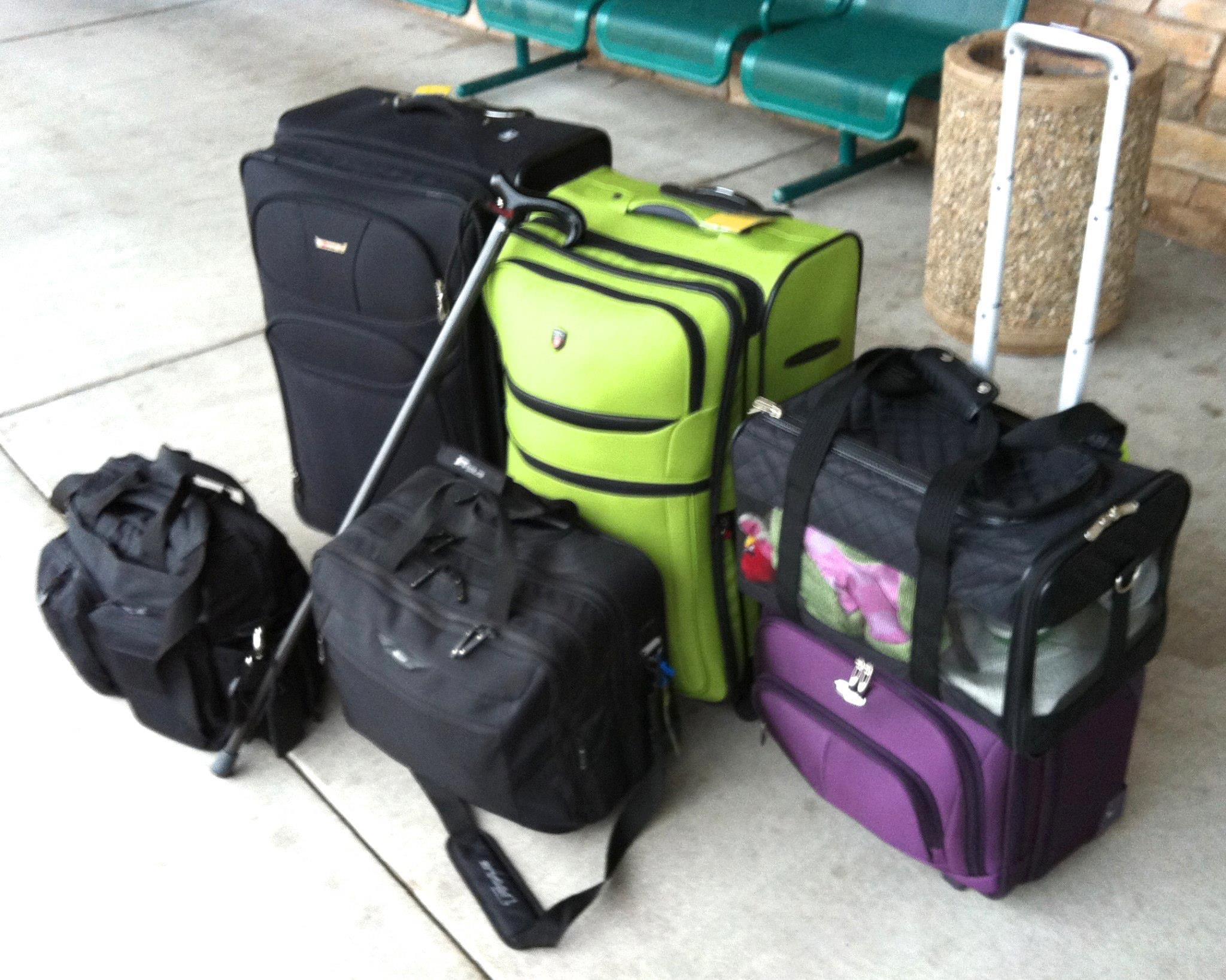
By the time we stepped onto the plane for France we had gone from a 3 bedroom house full of “stuff” to one 29″ upright, one 28″ upright, two wheeled carry-ons, and two personal carry-on items – under 200 lbs. of “stuff.”

We’ve been in France over a year now and have not missed any of our old “stuff.” Our furnished apartment has nearly everything we need, including a hair dryer. We have picked up a few things –like the corkscrew — a small printer, a couple of drawer organizers, a few hangers, three fleece blankets, a French press and mortar and pestle. Well, and the gear we purchased for our Camino trip. The backpacks have become in very handy for other travels as well as shopping day.

We now recycle as much as possible, France is a very green country and everyone here recycles. You bring your own bags to the store, market, bread store and we have a few of those now as well. There are 3 trash bins at the end of our block, one for glass, one for plastic and one for other trash. They empty into large underground bins which are emptied twice a week. The bins are free to use, unlike recycling in our old neighborhood, and we often see people walking the extra distance to use them. Even folks from our neighborhood restaurants can be seen carrying boxes full of empty wine bottles to the recycle bin.

In Sparks we used to fill up a 30 gallon trash bag three times a week – mostly take-out containers. Here in France we will fill a 20 liter bag once a week, mostly vegetable waste from cooking and newspaper from housebreaking the dog.

As you can see, it’s a work in progress. With each move we strive to “need” less things and these days seriously discuss our need vs. want tendencies before making a purchase. We don’t miss the “stuff” of our pre-retirement life. It’s been an eye-opening realization that we can live without the things we used to think were essential to happiness and just concentrate on being happy instead.

904544_10152725557875173_42657400_o
The last of our “stuff” from our Sparks apartment, being re-homed to our son
compter screen
Digitizing all 12,000 of our hard copy photos
882371_10152725558125173_1342049179_o
Our lives minimized to the essentials when leaving Reno

Absentee/Overseas Voting From France

Tracy and I believe that it is essential to participate in the privilege and right of voting in the US.

One major issue we have read in the many expat forums is Americans who say that they have had difficulties voting while living abroad. But so far our voting experience has been very positive.  I wonder with the ease we have navigated the process if some of those voting complaints are from the distance past or because of a person living overseas misunderstanding of the process to obtain a ballot.

Since 1986 there has been the “Uniformed and Overseas Citizens Absentee Voting Act (UOCAVA)” that requires that all overseas citizens be allowed to register and vote in federal elections. For Nevada, the Secretary of State web site explains the absentee/overseas process on its “Military/ Overseas Voting” page.  The web page also supplies links to individual Nevada counties’ Registrars of Voters and to the Federal Voting Assistance Program that assists both military and civilian overseas voters.

Our Washoe County Registrar of Voter’s web site is also very helpful with a form request page that carefully explains the absentee/overseas process:

“ABSENT BALLOT REQUEST

An absent ballot request form can be filled out and processed at the beginning of each election year.  Your absent ballot request is only valid for the calendar year in which we receive it.  It is important that you specify which election(s) you are requesting a ballot for.

THE DEADLINE TO SUBMIT A REQUEST FOR AN ABSENT BALLOT IS THE TUESDAY PRIOR TO ANY ELECTION, AT 5 PM.  WE STRONGLY URGE YOU TO SEND IN YOUR REQUEST AS SOON AS POSSIBLE.  REMEMBER, YOUR VOTED BALLOT MUST BE IN OUR OFFICE BY 7 PM ON ELECTION DAY IN ORDER TO BE COUNTED.

BALLOTS WILL BE MAILED TO OVERSEAS AND MILITARY VOTERS 45 DAYS PRIOR TO ANY ELECTION. BALLOTS WITH OUT-OF-STATE MAILING ADDRESSES WILL BE MAILED 40 DAYS PRIOR TO ANY ELECTION AND BALLOTS WITH IN-STATE ADDRESSES WILL BE MAILED AT THE 30-DAY MARK.
 IT IS IMPORTANT THAT YOU PLAN ACCORDINGLY. 

You can print, fill out and mail or fax the Absent Ballot Request form below to us.  (Remember, your signature is required.)  If you find that the address you have listed for the Primary Election will not be valid for the General Election, please submit an updated request.  We cannot accept changes by phone.  Please call us if you have any questions.  (775) 328-3670″

We downloaded a “Absent Ballot Request Form” for each of us, completed the form, attached copies of our Nevada driver licenses, and mailed the form to the Washoe County Registrar of Voters.  The form gave us the option to request an absentee ballot for a specific election or for every election during the calendar year (which was our choice.)

Washoe County Absent Ballot Request

There is obviously some personal responsibility and pre-planning of deadlines required by an American living overseas to be able to vote. It is not an automatic process. A new request needs to be submitted every year.

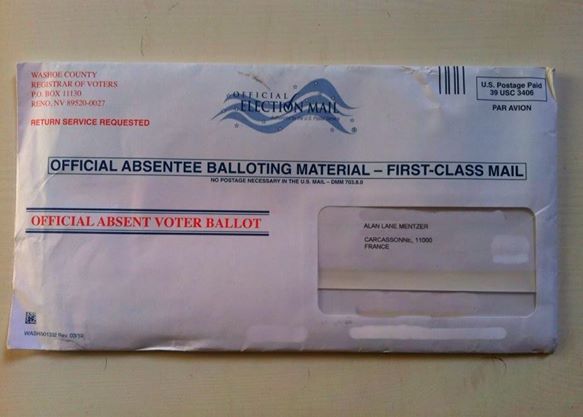
Our absentee/overseas ballots for the primary election arrived in France on May 5 for the primary election scheduled June 10.

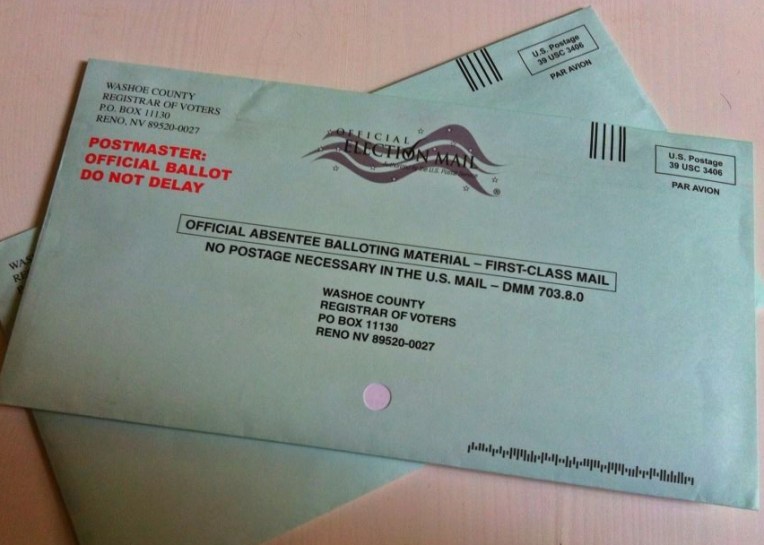
Absentee Ballot Envelop
Absentee Ballot Envelope

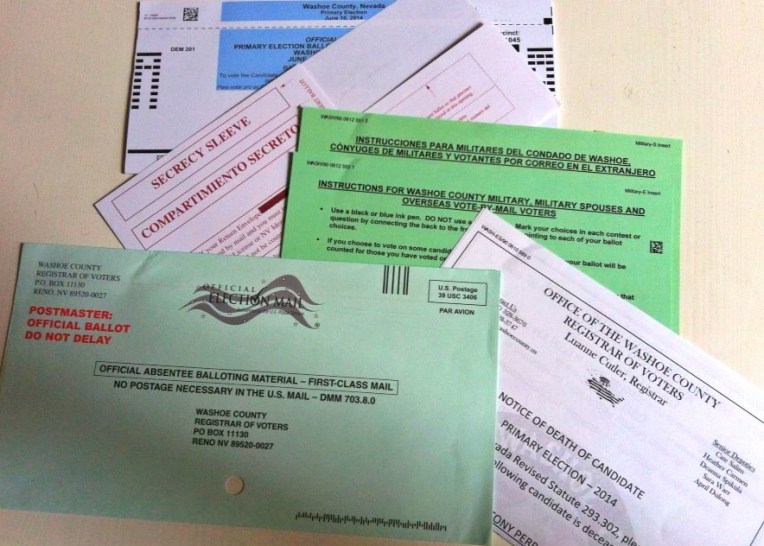
Inside the envelope is the primary ballot for my political party, “Instructions For Washoe County Military, Military Spouses And Overseas Vote-By-Mail Voters” in both English and Spanish, a notice that a candidate for office has died but remains on the previously printed ballot (also in English and Spanish), a “Secrecy Sleeve” to protect privacy, and a special return envelope.

Absentee Ballot Materials

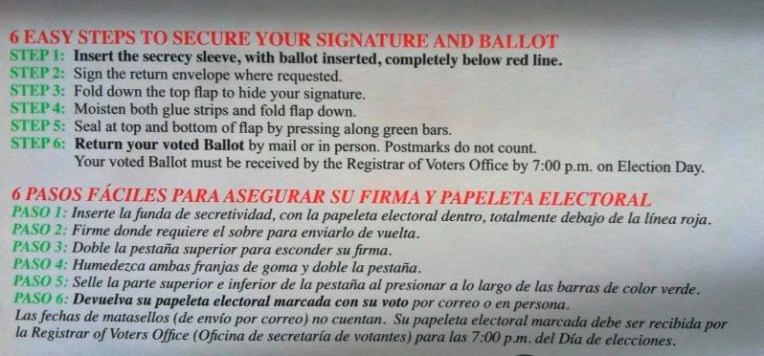
After marking our selections of candidates on the ballot (in black or blue ink only, to be read by an electronic scanner), there is an elaborate six-step process to protect our privacy while ensuring the integrity of the absentee voting process.

Ballot Mailing Directions

Once our Byzantine directions for signing and sealing the envelopes are accomplished, all that is left is a quick trip to la Poste (the post office) to add an €1,78 international stamp to each envelope (about $4.90 total) and give the ballots plenty of time to make it back to Reno by 7 p.m. June 10.

We also have the ability to confirm our ballots arrived at the Washoe County Registrar of Voters by visiting myvoterfile at the Nevada Secretary of State’s web site.

Our patriotic duty to vote is done until the general election on November 4.

Ballot Envelopes
Ballot Envelopes
 

Filing Our First Déclaration des Revenus (French Taxes)

Every May full-time residents of France are required to file la Déclaration des Revenus (Declaration of Earnings), the annual tax declaration equivalent to filing your 1040 tax form in the US.  Since France is our principal residence and we have lived here longer than a year, we are required to file a Déclaration des Revenus for the first time since moving to France.

So, how did we — with our rudimentary skills in speaking French — figure out how to file our Déclaration des Revenus?

In this case the Internet, Google Translate, expat discussion forums, and numerous professional websites were all major tools.  I’m often thankful that we have so much information available from the Internet. Neither of us can imagine the struggle of expats living abroad before such tools were readily available.  One key source for collecting information was the online English language newspaper, “The Local, France’s News in English” that reminded readers in April that a Déclaration des Revenus would be due in May.  The article listed the forms required, had advice from an expat tax expert, and listed links to La Direction Générale des Finances Publiquesthe French version of the US Treasury’s Internal Revenue Service.  The Finances Publiques’ web site allows you to download forms and even file your Déclaration des Revenus online.  (There are also expat tax preparation services in France, but ours was pretty straight forward.)

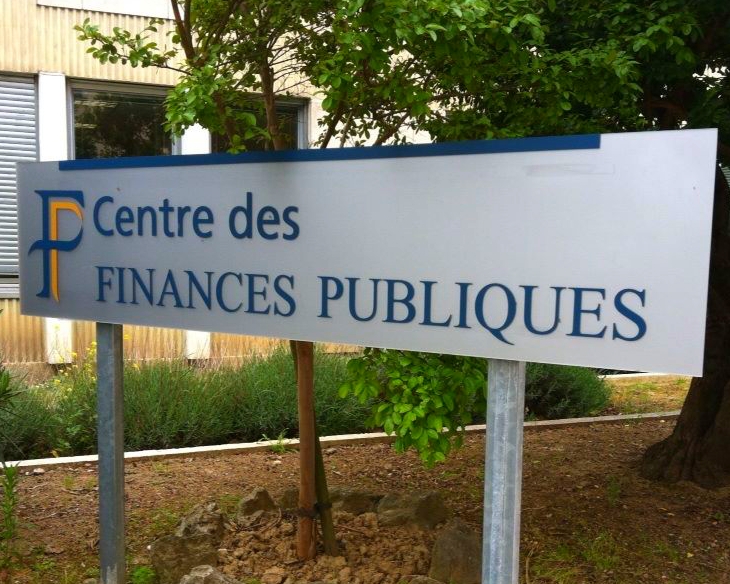
Center of Finances Publiques

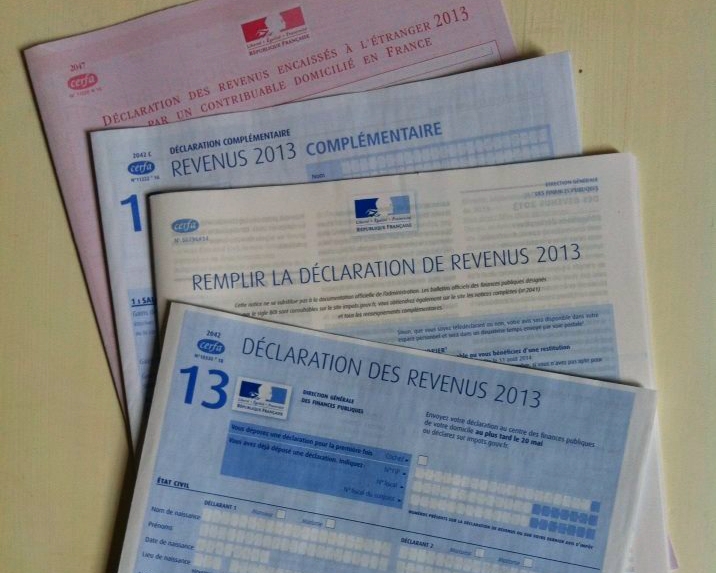
Due to my lack of confidence with online filing the Déclaration des Revenus in French, I elected to visit the local Centre de Finances Publiques (tax office) to pick up the needed forms.  Between my “shopping list” of forms, my very basic French, the helpful Finances Publiques’ representative’s basic English, I managed to pick-up the required forms.  Like our US Tax Return, the Déclaration des Revenus consists of several forms.  For us, we needed:

Formulaire 2042
The main tax form (like the US tax form 1040) listing our name, address, and global income.

Formulaire 2047
This form is for listing any income earned outside of France.  Our pensions are considered foreign income that must be declared on this form, as well as the total noted on the Formulaire 2042.

Formulaire 3916
On this form we list all bank accounts that are located outside of France.

Declaration  des Revenus Forms and Directions
Declaration des Revenus Forms and Directions

Filling out these three forms was actually simpler than completing many of my past US Tax Returns; but, of course, these forms and directions are written in French and I had to struggle with the language barrier.  Yes, French tax forms share with US tax forms the ability to create stress and give the preparer a total feeling of confusion and inadequacy.

Using an English-French dictionary, Google Translate, and a tax help guide from “The Connexion:  France’s English-Language Newspaper” written for British expats, it took about two days to (hopefully) correctly complete the documents.  Tracy double-checked the translations, Dollar-to-Euro conversions, directions, math, documents, and finally concurred that we had now had all the forms ready to submit.

The next big question was:  to whom or where do we submit Déclaration des Revenus?  Unlike US tax forms, there was no mailing address on any on the forms, nor directions for how to file.  So we gathered up all the completed forms and visited the local tax office again.  Tracy spotted a large mail box outside the office door with a sign marked for Déclaration des Revenus.  But first I visited with the Finances Publiques’ representative again and asked her to double-check that our Déclaration was complete.  (Thankfully the representative spoke some English, which was extremely helpful to me.) She asked me to include a copy of our 2013 rental contract with our Déclaration des Revenus and then the package would be complete.

We had a quick round trip back to the apartment, made a copy of our lease, and returned to speak with the same Finances Publiques’ representative for one last final review. The representative believed the package was complete now and officially accepted the Déclaration des Revenus. Yet another milestone first with living in France.

So what happens next?

Unlike the US, no payment is ever sent with the Déclaration des Revenus.  The Finances Publiques reviews the financial situation on the forms and later sends an Avis d’Imposition (a tax bill) or an Avis de Non-imposition (certificate of non-taxable income) usually around mid to late August for the amount of taxes due. Since it is our first filing, we are told that we could receive a response from the Finances Publique as late as November or December 

Now for the complexity.  The United States is one of the few countries that taxes on the basis of citizenship rather than residence.  The United States requires that US citizens file a yearly tax return with the US Internal Revenue Service as long as their income (earned in the US or earned abroad) is over $9,000. Americans working abroad are generally exempt from paying tax on their first $97,600 in foreign earned income, but they are still required to file a return. 

Tracy and I do not earn income in France and we previously filed our US tax return in April.  

To avoid double taxation for citizens living abroad, there is a tax treaty between the US and France, the “Convention Between the Government of the United States of America and the Government of the French Republic for the Avoidance of Double Taxation and the Prevention of Fiscal Evasion with Respect to Taxes on Income and Capital (1994).”  The biggest issue for us addressed in the treaty is that pensions from a US source is taxed only by the United States and not by France.  So, in theory, we are only required to pay our US taxes, however, in actually application we may still receive a tax bill.  

This is our first time filing a Déclaration des Revenus with Franceso we are interested to see exactly how this will work out for us.  Every expat’s tax situation is unique unto itself.  So we may have no French Impôts sur le Revenu (income tax) liability, a small French income tax bill (for non-pension interest or dividends), or no income tax liability but a bill for social service fees (if you call it a “fee” it doesn’t fall under the “tax” exemption.)

We will tell you about the outcome sometime between August and November when we hear from La Direction Générale des Finances Publiques.  Keep your fingers crossed that we only get a Avis de Non-imposition (certificate of non-taxable income).


The Meatless May Experiment

We decided to adopt a vegetarian menu for a month. Meatless May, we’ve been calling it. Not because we’ve taken up the cause, but because we both want to continue making healthier choices for ourselves. So far it’s been great. We’re getting more creative in the kitchen, which is always fun. Creating lots of new recipes, some of which have already made it into the recipe file that Tracy started recently. Some still need a little work.

This comes at a good time for us. We realized over the winter that some of our “go to” recipes were not the healthiest choices available. In large part due to having most of our favorite meals based on things that are readily available year-round in the States. Here in France foods only show up at the market if they are 1) in season and 2) still available. So, with spring fruits and vegetables being amongst our favorites and aplenty in the market the timing is good to get on the right path, dietetically speaking.

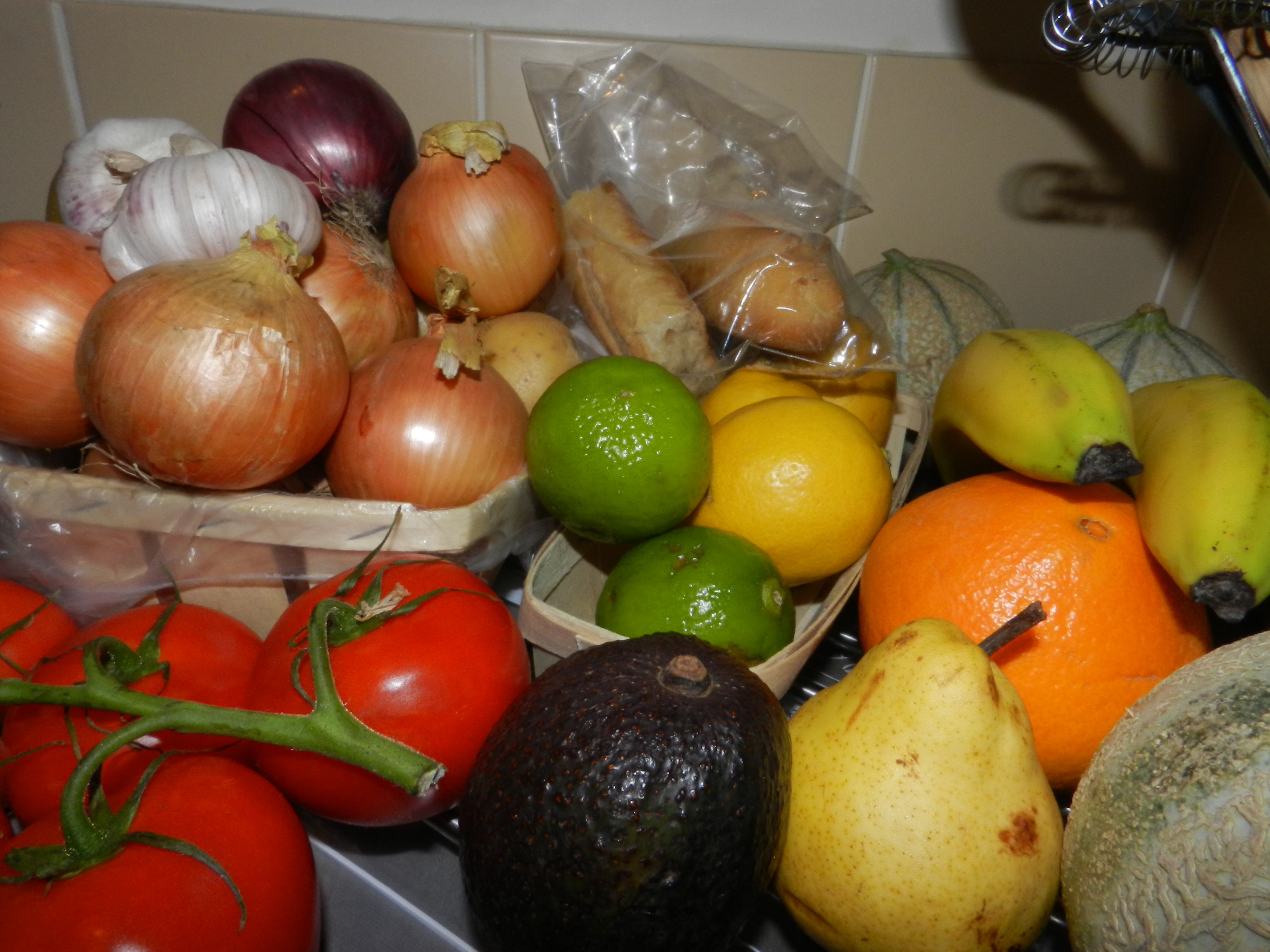
DSCN9865

We took in a major haul at the Saturday Market earlier today (above photo): 5 medium potatoes, 5 tomatoes on the vine, 1 red onion, 3 lemons, 2 limes, 3 oranges, 4 cantaloupe, 2 bananas, 3 avocado, 1 head of romaine lettuce. With just a few additional items from the grocery store (flour, eggs, goat cheese, butter). These groceries will be added to the Swiss chard and butter lettuce we picked up at last Thursday’s market. This constitutes a weeks’ worth of groceries during our Meatless May experiment!

DSCN9873

Our latest haul joins last weeks’ leftovers of 4 yellow onions, 5 green chili peppers, 4 carrots, 2 bulbs of garlic, 1 red chili pepper, and 1 pear. We also keep chickpeas, black and brown lentils, spaghetti, rice, tomato sauce, peanut butter, coconut milk, nuts (cashew, pecan, almond – whatever is available), sugar, coffee and tea on hand as staples year round. Last week we also picked up chocolate chips, the mini ones. Baguettes are purchased as needed every few days.

Tracy started making pita bread, getting very excited when they actually puff! It takes very little time, but are so yummy fresh out of the oven. The ones that don’t puff get called Naan and used for garlic bread or called Torillas and get used for her mashed lentil/potato tacos.

We plan to add black beans this week, and maybe another one if something catches our eye at the store. It will be interesting to see what we can whip up in the kitchen.

The added benefit we hadn’t realized at first was that all of the above items cost less than 25 Euro (roughly $34.50), not including the staples we keep. We used to spend more than this on one dinner dining out in Reno.

We’ll post an end of the month review on Meatless May sometime in early June!