Meatless May Recap

We celebrated the end of our Meatless May experiment with cheeseburgers and fries! But in all honesty, it wasn’t totally meatless either, we also had a mid-month secret shawarma night.

I have to say that I did not miss meat all that much. We normally have a few meatless meals during any given week anyway, so it wasn’t a huge drastic change. And, with just a few adaptations — most of which involved substituting mushrooms for meat — my standard “go-to” recipes didn’t change.

I did have the chance to create a few new dishes from scratch that turned out to be rather good.

The first was a homemade falafel. I had an idea of the basic ingredient list and just winged it. That happens a lot in my kitchen, ingredients get tossed together in amounts that “look good” and we basically go from there. This time I lucked out and came up with something very yummy. I don’t have a food processor but found that the pestle from my countertop mortar/pestle set and the colander with the narrow slits worked great for mashing chickpeas. So I used about 5 oz of chickpeas (half a can rinsed in the colander before I mashed them), a handful of homemade breadcrumbs that are pre-seasoned (garlic salt, parsley and grated parmesan cheese), about 1/2 a handful of diced hot green chili peppers and an egg. When it’s all squished together and shaped into small patties (roughly the size of a dollar coin) and quickly pan-fried (about a minute on each side) make a very tasty falafel-ish patty. Then I warmed tortillas, added a bed of chopped lettuce, topped that with four falafel patties and then drizzled on a spicy mayo (a tablespoon of mayo and a teaspoon of that red rooster hot chili sauce). Turned out pretty yummy.

The second recipe that came out was actually a salad dressing, an orange-ginger-sesame tasting one. I used about 1/2 cup of brown sugar (here in France it’s crystalized like white sugar, but tastes very similar to the brown cane sugar in the US), the juice from 1/2 an orange, a tsp of grated ginger, a tablespoon of soy sauce and a tablespoon of sweet Thai chili sauce and boiled it all together until the sugar was melted and it because syrupy. Then as it cooled I added about 3 Tbsp of toasted sesame seeds. Worked great as a salad dressing, but I can’t wait to try it as a marinade for shrimp!

I also came up with a strawberry balsamic dressing that turned out pretty good. I used 2 tsp balsamic vinegar with 2 tablespoons-ish of strawberry jam, threw in a clove of chopped garlic and roughly 1/2 cup of olive oil put everything in a jar and shook it to mix. Turned out pretty good as well.

I think my favorite dish was the peanut butter sauce for pasta. It was so simple to make and tasted so good that we had it quite a few times while I perfected the flavor a bit. I used about 1/2 cup of peanut butter, 1/3 cup of soy sauce, 1/3 cup sweet Thai chili sauce, 1 Tbsp of that red rooster hot chili sauce and a ladle full of the pasta water when the pasta was done cooking. I tossed the cooked spaghetti with the peanut sauce and added in some sauteed mushrooms, raw green hot chili pepper that I diced super fine and some raw carrots that were julienned. Turned out to be a new family favorite. Even the dog likes this sauce.

So basically, we didn’t starve or eat just salads for a month. Early in the month I messed up and didn’t balance proteins at a couple of meals. I got pretty shaky and was kinda wobbly. But once I started adding nuts or beans to nearly every dish that problem was self-correcting.

Overall I felt better than I had for the first few months of the year. I really enjoyed the challenge of coming up with new things to make. We got rather adventurous with the vendors at the Saturday market and picked up things we had never seen before to try in different meals. Some were okay, some were disgusting, a few were things we’d heard of but had never cooked with before and have become new favorites, like the bettes which I think is a type of chard. It tastes like kale but is even easier to cook and tastes good raw as well. The spinach from Spain is a current favorite. It’s so good I just love it in everything — even tried it in falafel the other night, turned out pretty good!

Alan dropped even more weight, I think I actually gained weight — go figure! Probably the most interesting side effect was the fact that I lost all cravings for my carb-y snacks was able to leave the soda behind as well.

We talked about it one night and the thing I missed most was my grilled goat cheese and tuna sandwiches. Alan really missed the duck pizza from the pizza kiosk guy around the corner — that guy makes wickedly delicious pizza. Alan prefers the duck, I like the smoked salmon and goat cheese.

I doubt either of us would switch to a completely vegetarian diet, but I think both of us can cut back on the animal proteins and not feel deprived. This year is dedicated to healthy changes and I think that switching to a primarily vegetarian or pescetarian diet would definitely be a healthy change.
Writing A Check In France

Although we’ve had a French checking account for about a year, we’ve been exclusively using the account’s credit/debit card, the Carte Bleue, for in-person and online shopping. We have never bothered to obtain an actual checkbook from our bank in France.  We very seldom used checks in the US because of the prevalence of online payments.

But, we recently had a need for a chèque issued on a French bank, so I set about acquiring a French checkbook called a Chéquier or a Carnet de chèques. I went online to BNP Paribas, our French bank, and searched for the link to order a Carnet de chèques.  Of course, the website is in French and after stumbling around web pages for a good while using with my limited French language skills, I decided I needed some help locating the correct link.  

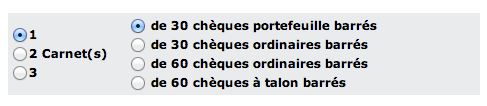
I “clicked in” to the BNP website’s “chat” function to “speak” with a bank representative who was extremely helpful.  Totally embracing technology, I had one computer window open to the BNP website, a second window open to chat with the bank representative, and a third window opened to Google Translate to expedite the conversation with the French speaking bank rep.   I worked through the  online conversation and finally located the right web page to order chèques.  However after reaching the correct webpage, I was offered the somewhat confusing options of:

Cheques Options
Cheques Options

While I understood the options of  ordering 1, 2, or 3 carnets (books) of chèques with either 30 or 60 chèques each, I had to do some additional online research to figure out exactly what the differences were between chèques portefeuille barréschèques ordinaires barrés, and chèques à talon barrés.  After visiting several online Expat forums I learned that: 

Chèque portefeuille: has checks that are attached and tear away from the top like the majority of US checkbooks.
Chèque ordinaire:  has checks that are attached to the left side like a book and tear away from the left side.
Chèque à talon:  checks that are attached and tear away from the top, but with a”stub”(à souche) that gets left in the checkbook with a space for a personal memo.

Now understanding the options better, I selected the chèques portefeuille barrés (the choice most similar to what we have for our US checkbook) and “clicked” to have the Carnet de chèques mailed to us rather than the option of having the checkbook sent to our local bank branch for pick-up.

Carnet de chèques
Carnet de chèques

A week later, the Carnet de chèques arrived in the mail.  First thing I saw was that French chèques are noticeably larger than US checks.

Size Comparison: An US Check On Top Of A French Chèque
Size Comparison: A US Check On Top Of A French Chèque

Also different from the US was a receipt included which had to be signed and returned to the bank acknowledging that the checkbook had arrived, there are no missing checks, and that the checks are printed correctly.  Apparently the checks are not valid until the return receipt has been received at the bank.

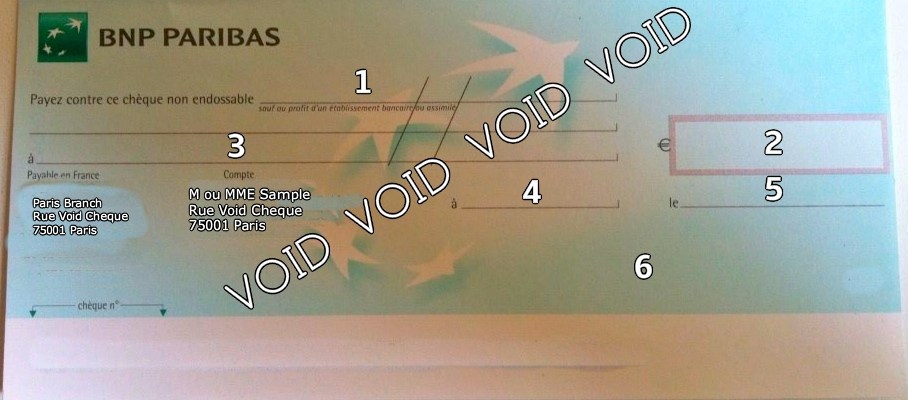
There is a very specific formula to writing French checks.  While US checks and French chèques look similar, there are several differences in their formats.  The most obvious difference that a chèque written on a French bank is required to be written in French.

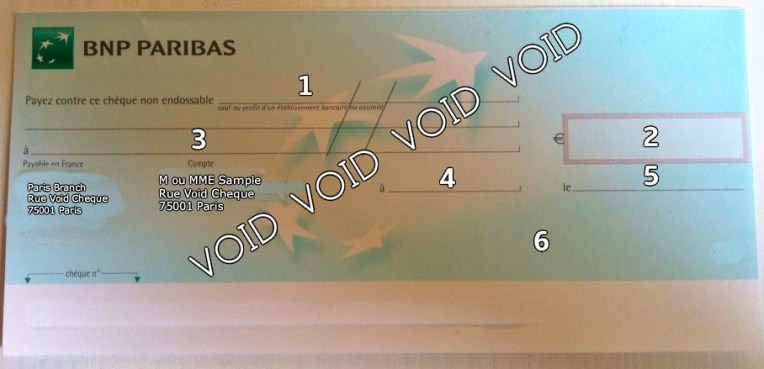
Sample French Chèque

Line 1.Payez contre cheque,” “Payez contre ce chèque‘,” or “Payez contre cheque non endossable.”  The top line on US checks is where the payee’s name usually goes, so it’s important to know that Payez contre cheque means “Pay against this cheque (this amount)” not “Pay to the order of” like is found on an US check.  On the top line of the chèque you spell out the amount to be paid using French words.  For example €87,50 needs to be spelled out as “Quatre-vingt-sept Euros et cinquante centimes” or “Quatre-vingt-sept Euros et 50/100 c.”  I still struggle with understanding French numbers, but there are many “How to write a check in France” websites with “Numbers to French Words Converters” that look very helpful.

Line 2. “” On this line the amount for the check is written in numbers.  Remember that in France the comma (virgule) and the period (point) are used in writing amounts are reversed from the way the comma and the period are used in the US. For example: Two thousand eighty-seven Euros and 50 centimes is correctly written as €2.087,50 and not as €2,087.50.

Line 3. “A” This is the payee space that you write in the name of the person, company, or organization to whom the amount is being paid.  A chèque for Mr. Dubois is written as M Dubois (for Monsieur Dubois),  Mrs. Dubois as Mme Dubois (for Madam Dubois), or Miss Dubois as Mlle Dubois (for Mademoiselle Dubois.)

Line 4. “Fait à” or “A“.  A departure from how checks are written in the US, on this line you write the name of the city of where the chèque is being written, for example “Fait à Carcassonne” or “a Paris.”

Line 5. “Le”  This is the date line where today’s date is written.  Remember that the European standard for writing a date is “day-month-year” (like the US military standard of writing dates.)  A chèque written on Christmas day would be correctly written as 25-12-2014, not as 12-25-2014.  Christmas day could also be correctly written as 25 décembre 2014.  (The French do not capitalize the first letter of a month.)

janvier = January
février = February
mars = March
avril = April
mai = May
juin = June
juillet = July
août = August
septembre = September
octobre = October
novembre = November
décembre = December

Line 6. Beneath lines 4 and 5 reading “Fait à Carcassonne le 25-12-2014″ is the space for a signature.  There is often no actual “line” provided on French chèques for a signature like is usually found on US checks.

So now, with a Carnet de chèques in hand and understanding the format for writing a French chèque, we are finally ready to write that check.


Argeles-sur-Mer in 2015

Originally when we made the move to France it was with the understanding that we would move at the end of every year to a new city or region. Our intention was to see as much of this beautiful country and absorb as much of the culture as possible.

However, when the time came we decided to make our stay in Carcassonne a bit longer. The reason was simple, we love it here. It certainly didn’t hurt that three months in a row our landlord, Jason, asked if we wanted to stay on. We have been good tenants and felt that he might have thought so as well.

Recently, we were discussing our decision to stay another year and decided that we had better start making plans to move at the end of this year or it might become all too easy to agree to a third year here. We have become locals and like that many of the people we see frequently think of us as such.

After returning from our six week sojourn to Spain, several of the locals we see frequently were happy to see us return. We assimilated quite easily into the laid back lifestyle here in the Languedoc region and enjoy everything from the locals to the weather.

But we didn’t want to bail on our original goals. We love to travel and visit new places. Part of the attraction to living abroad was to be able to do more than just see a few tourist sites and leave. So the idea of settling into a comfy situation has left us feeling like we might be betraying the original plan.

To that end, we have been looking for another location that offers everything we love about Carcassonne. It needs to have a good mix of things to do, festivals, market days, museums, parks. Access to transportation by train or bus is a necessity as we don’t own a car. Access to “regular” life stuff such as a super market, sporting goods store, pharmacy, veterinarian, etc.

This time we also have to consider Sami’s needs.  Kiara was small enough that she didn’t mind being an apartment dog. A trip each day to the park was more than enough for her, and due to her illness sometimes it was too much. However, Sami is a healthy girl with tons of energy.  So, for her a place to run and play is a luxury that we added to our list of wants.

After creating a list of things that were necessities and those that are complete deal breakers (such as no train and 5 km or more to the local market) we went in search of a new residence in a new location.

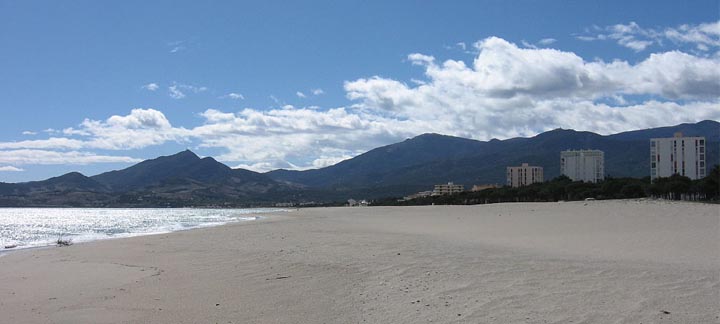
We believe we have found exactly the right spot in Argeles-sur-Mer. Argeles-sur-Mer is on the coast of the Mediterranean Sea. It has the longest un-obstructed sand beach in the south of France, just over 7 km. The town has history going back to the 8th century and is close to a noted artist colony, for Fauvists such as Picasso and Matisse, in Collioure just 7 km up the road.

Though Argeles-sur-Mer has a smaller population than we prefer at just over 10,000 residents, it seems to have more than enough access to open-air markets, supermarkets, pharmacies and such. Anything that may be lacking we’ll be able to find in Perpignan, with over 118,000 residents, which is only 17 km away and accessible by train in 15 minutes. We have purposely tried to avoid towns that are too small as a comfort measure, but Argeles-sur-Mer has one more added bonus that makes it worth trying . . . a two-bedroom apartment with a yard just three short blocks from the Mediterranean Sea.

We are in negotiations now with the owner and she seems happy to have us come stay beginning in April of 2015. It has long been a dream for both of us to live close enough to a beach that we could enjoy year round. Though Argeles-sur-Mer is a tourist town the busy part of the high season lasts only a few short weeks in August. During the high season, June 1 to September 15, dogs are not allowed on the beaches but come September 16 Sami will be able to spend as much time as she likes running in the sand and surf. Between June 1 and September 15 she’ll have to get by with the 6 acre park two blocks from our apartment or walking along the promenade that stretches the length of the beach, all 7 kilometers!

We have spent more than a few hours with Google Earth getting familiar with what will hopefully be our home for 12 months come April 2015, but we are excited at the prospect of living close to the sea and spending time seeing all the sites available in and around the area. And, of course, long walks on the beach!

Photo credits to Wikipedia and Google Earth.

Absentee/Overseas Voting From France

Tracy and I believe that it is essential to participate in the privilege and right of voting in the US.

One major issue we have read in the many expat forums is Americans who say that they have had difficulties voting while living abroad. But so far our voting experience has been very positive.  I wonder with the ease we have navigated the process if some of those voting complaints are from the distance past or because of a person living overseas misunderstanding of the process to obtain a ballot.

Since 1986 there has been the “Uniformed and Overseas Citizens Absentee Voting Act (UOCAVA)” that requires that all overseas citizens be allowed to register and vote in federal elections. For Nevada, the Secretary of State web site explains the absentee/overseas process on its “Military/ Overseas Voting” page.  The web page also supplies links to individual Nevada counties’ Registrars of Voters and to the Federal Voting Assistance Program that assists both military and civilian overseas voters.

Our Washoe County Registrar of Voter’s web site is also very helpful with a form request page that carefully explains the absentee/overseas process:

“ABSENT BALLOT REQUEST

An absent ballot request form can be filled out and processed at the beginning of each election year.  Your absent ballot request is only valid for the calendar year in which we receive it.  It is important that you specify which election(s) you are requesting a ballot for.

THE DEADLINE TO SUBMIT A REQUEST FOR AN ABSENT BALLOT IS THE TUESDAY PRIOR TO ANY ELECTION, AT 5 PM.  WE STRONGLY URGE YOU TO SEND IN YOUR REQUEST AS SOON AS POSSIBLE.  REMEMBER, YOUR VOTED BALLOT MUST BE IN OUR OFFICE BY 7 PM ON ELECTION DAY IN ORDER TO BE COUNTED.

BALLOTS WILL BE MAILED TO OVERSEAS AND MILITARY VOTERS 45 DAYS PRIOR TO ANY ELECTION. BALLOTS WITH OUT-OF-STATE MAILING ADDRESSES WILL BE MAILED 40 DAYS PRIOR TO ANY ELECTION AND BALLOTS WITH IN-STATE ADDRESSES WILL BE MAILED AT THE 30-DAY MARK.
 IT IS IMPORTANT THAT YOU PLAN ACCORDINGLY. 

You can print, fill out and mail or fax the Absent Ballot Request form below to us.  (Remember, your signature is required.)  If you find that the address you have listed for the Primary Election will not be valid for the General Election, please submit an updated request.  We cannot accept changes by phone.  Please call us if you have any questions.  (775) 328-3670″

We downloaded a “Absent Ballot Request Form” for each of us, completed the form, attached copies of our Nevada driver licenses, and mailed the form to the Washoe County Registrar of Voters.  The form gave us the option to request an absentee ballot for a specific election or for every election during the calendar year (which was our choice.)

Washoe County Absent Ballot Request

There is obviously some personal responsibility and pre-planning of deadlines required by an American living overseas to be able to vote. It is not an automatic process. A new request needs to be submitted every year.

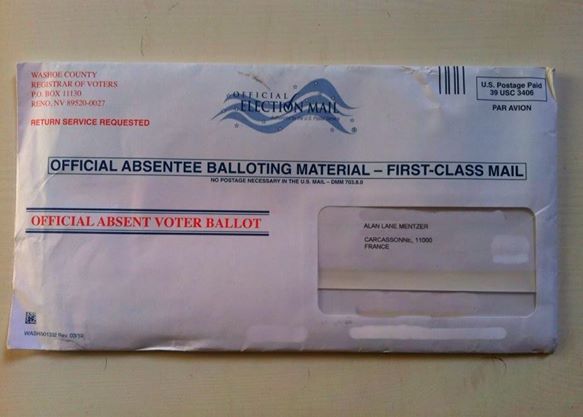
Our absentee/overseas ballots for the primary election arrived in France on May 5 for the primary election scheduled June 10.

Absentee Ballot Envelop
Absentee Ballot Envelope

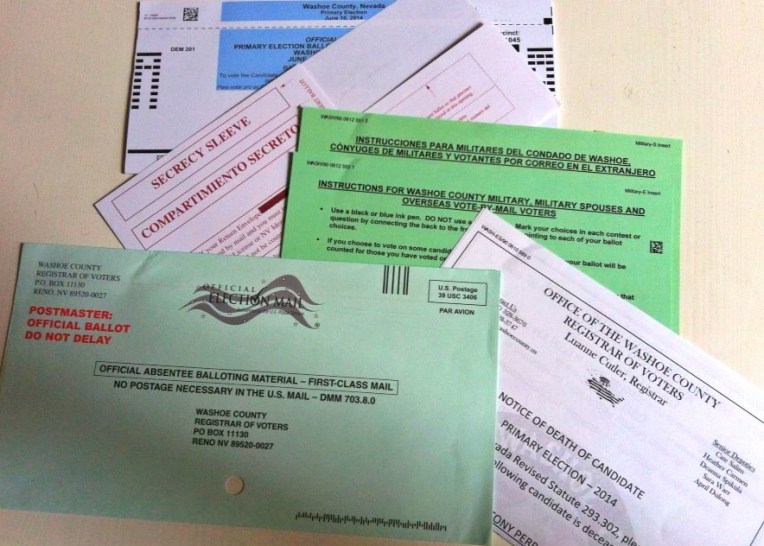
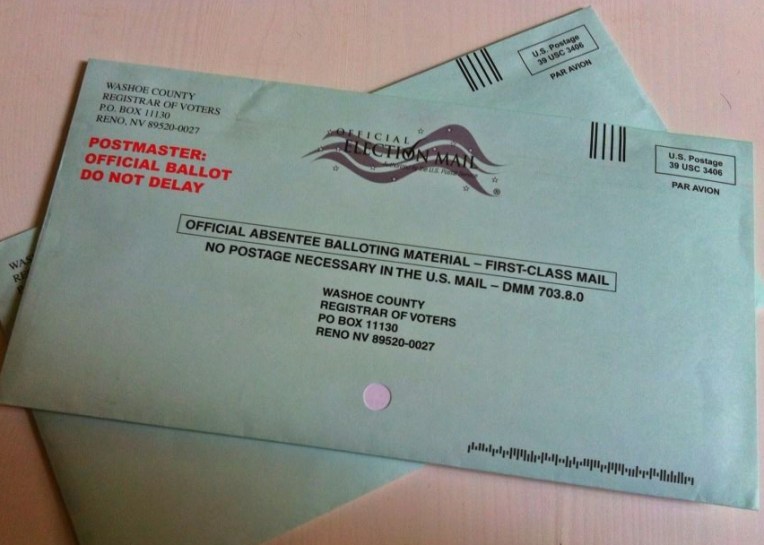
Inside the envelope is the primary ballot for my political party, “Instructions For Washoe County Military, Military Spouses And Overseas Vote-By-Mail Voters” in both English and Spanish, a notice that a candidate for office has died but remains on the previously printed ballot (also in English and Spanish), a “Secrecy Sleeve” to protect privacy, and a special return envelope.

Absentee Ballot Materials

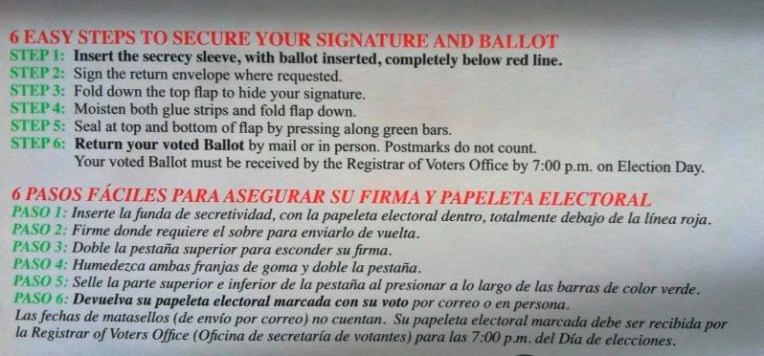
After marking our selections of candidates on the ballot (in black or blue ink only, to be read by an electronic scanner), there is an elaborate six-step process to protect our privacy while ensuring the integrity of the absentee voting process.

Ballot Mailing Directions

Once our Byzantine directions for signing and sealing the envelopes are accomplished, all that is left is a quick trip to la Poste (the post office) to add an €1,78 international stamp to each envelope (about $4.90 total) and give the ballots plenty of time to make it back to Reno by 7 p.m. June 10.

We also have the ability to confirm our ballots arrived at the Washoe County Registrar of Voters by visiting myvoterfile at the Nevada Secretary of State’s web site.

Our patriotic duty to vote is done until the general election on November 4.

Ballot Envelopes
Ballot Envelopes
 

Filing Our First Déclaration des Revenus (French Taxes)

Every May full-time residents of France are required to file la Déclaration des Revenus (Declaration of Earnings), the annual tax declaration equivalent to filing your 1040 tax form in the US.  Since France is our principal residence and we have lived here longer than a year, we are required to file a Déclaration des Revenus for the first time since moving to France.

So, how did we — with our rudimentary skills in speaking French — figure out how to file our Déclaration des Revenus?

In this case the Internet, Google Translate, expat discussion forums, and numerous professional websites were all major tools.  I’m often thankful that we have so much information available from the Internet. Neither of us can imagine the struggle of expats living abroad before such tools were readily available.  One key source for collecting information was the online English language newspaper, “The Local, France’s News in English” that reminded readers in April that a Déclaration des Revenus would be due in May.  The article listed the forms required, had advice from an expat tax expert, and listed links to La Direction Générale des Finances Publiquesthe French version of the US Treasury’s Internal Revenue Service.  The Finances Publiques’ web site allows you to download forms and even file your Déclaration des Revenus online.  (There are also expat tax preparation services in France, but ours was pretty straight forward.)

Center of Finances Publiques

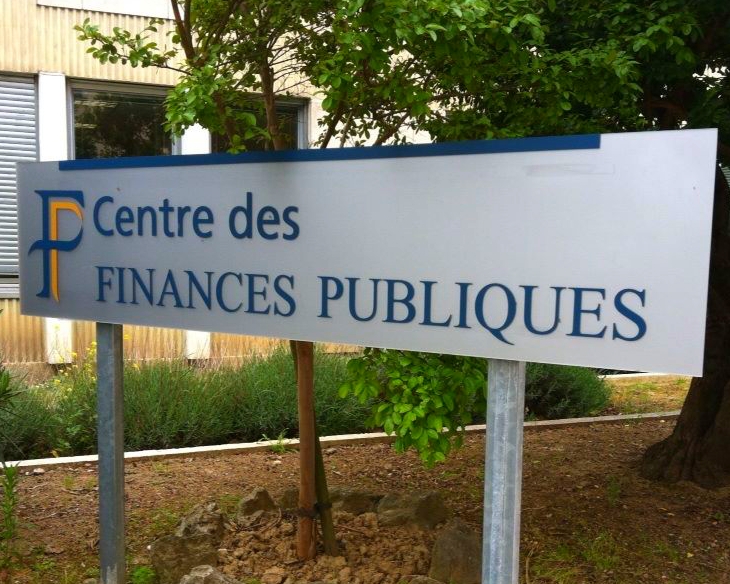
Due to my lack of confidence with online filing the Déclaration des Revenus in French, I elected to visit the local Centre de Finances Publiques (tax office) to pick up the needed forms.  Between my “shopping list” of forms, my very basic French, the helpful Finances Publiques’ representative’s basic English, I managed to pick-up the required forms.  Like our US Tax Return, the Déclaration des Revenus consists of several forms.  For us, we needed:

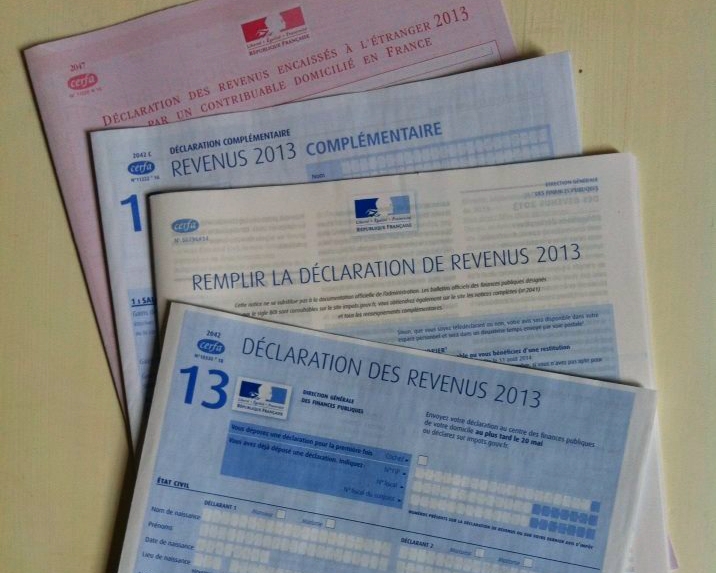
Formulaire 2042
The main tax form (like the US tax form 1040) listing our name, address, and global income.

Formulaire 2047
This form is for listing any income earned outside of France.  Our pensions are considered foreign income that must be declared on this form, as well as the total noted on the Formulaire 2042.

Formulaire 3916
On this form we list all bank accounts that are located outside of France.

Declaration  des Revenus Forms and Directions
Declaration des Revenus Forms and Directions

Filling out these three forms was actually simpler than completing many of my past US Tax Returns; but, of course, these forms and directions are written in French and I had to struggle with the language barrier.  Yes, French tax forms share with US tax forms the ability to create stress and give the preparer a total feeling of confusion and inadequacy.

Using an English-French dictionary, Google Translate, and a tax help guide from “The Connexion:  France’s English-Language Newspaper” written for British expats, it took about two days to (hopefully) correctly complete the documents.  Tracy double-checked the translations, Dollar-to-Euro conversions, directions, math, documents, and finally concurred that we had now had all the forms ready to submit.

The next big question was:  to whom or where do we submit Déclaration des Revenus?  Unlike US tax forms, there was no mailing address on any on the forms, nor directions for how to file.  So we gathered up all the completed forms and visited the local tax office again.  Tracy spotted a large mail box outside the office door with a sign marked for Déclaration des Revenus.  But first I visited with the Finances Publiques’ representative again and asked her to double-check that our Déclaration was complete.  (Thankfully the representative spoke some English, which was extremely helpful to me.) She asked me to include a copy of our 2013 rental contract with our Déclaration des Revenus and then the package would be complete.

We had a quick round trip back to the apartment, made a copy of our lease, and returned to speak with the same Finances Publiques’ representative for one last final review. The representative believed the package was complete now and officially accepted the Déclaration des Revenus. Yet another milestone first with living in France.

So what happens next?

Unlike the US, no payment is ever sent with the Déclaration des Revenus.  The Finances Publiques reviews the financial situation on the forms and later sends an Avis d’Imposition (a tax bill) or an Avis de Non-imposition (certificate of non-taxable income) usually around mid to late August for the amount of taxes due. Since it is our first filing, we are told that we could receive a response from the Finances Publique as late as November or December 

Now for the complexity.  The United States is one of the few countries that taxes on the basis of citizenship rather than residence.  The United States requires that US citizens file a yearly tax return with the US Internal Revenue Service as long as their income (earned in the US or earned abroad) is over $9,000. Americans working abroad are generally exempt from paying tax on their first $97,600 in foreign earned income, but they are still required to file a return. 

Tracy and I do not earn income in France and we previously filed our US tax return in April.  

To avoid double taxation for citizens living abroad, there is a tax treaty between the US and France, the “Convention Between the Government of the United States of America and the Government of the French Republic for the Avoidance of Double Taxation and the Prevention of Fiscal Evasion with Respect to Taxes on Income and Capital (1994).”  The biggest issue for us addressed in the treaty is that pensions from a US source is taxed only by the United States and not by France.  So, in theory, we are only required to pay our US taxes, however, in actually application we may still receive a tax bill.  

This is our first time filing a Déclaration des Revenus with Franceso we are interested to see exactly how this will work out for us.  Every expat’s tax situation is unique unto itself.  So we may have no French Impôts sur le Revenu (income tax) liability, a small French income tax bill (for non-pension interest or dividends), or no income tax liability but a bill for social service fees (if you call it a “fee” it doesn’t fall under the “tax” exemption.)

We will tell you about the outcome sometime between August and November when we hear from La Direction Générale des Finances Publiques.  Keep your fingers crossed that we only get a Avis de Non-imposition (certificate of non-taxable income).


Cartes de Séjour Arrived To Help Celebrate Our First Year In France

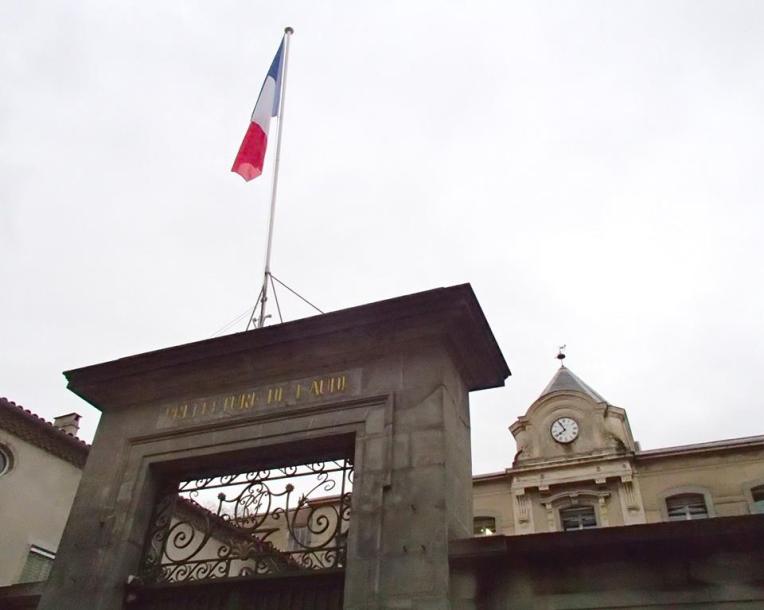
Following the Prefect Office’s instructions that we received after we submitted our applications to renew our Titres de Séjour (residency permits) [First Renewal of Our Residency Permit (Titre de Séjour)], we e-mailed the prefecture after 30 days to inquire whether our application has been approved and Cartes de Séjour (residency cards) issued.

So after an anxious 30 days (we expected the approval to be pro forma with the initial request in the US for a long-term visa being the most challenging, but it’s never good to make such a broad assumption of an automatic approval when immigration law and bureaucracy are involved) I translated an inquiry into French and e-mailed the Préfecture de l’Aude here in Carcassonne.  I immediately received an auto-response advising me that the message was received by the Prefecture and to expect an answer within 5 working days.  I put my “Type A” personality back in retirement mode and told myself, five more days to wait was not unreasonable.

However, I received back within two hours an e-mail response from an actual person telling me our request was in the hands of a real person and requested our 10 digit identification number from our Récépissés de Demande de Carte de Séjour (receipts of application for residency permit.)  I referred to our  Récépissés, located the ID numbers in the upper right corners where the e-mail said the numbers would be found, and e-mailed the information back to the Prefecture.

La Préfecture de l'Aude à Carcassonne
La Préfecture de l’Aude à Carcassonne

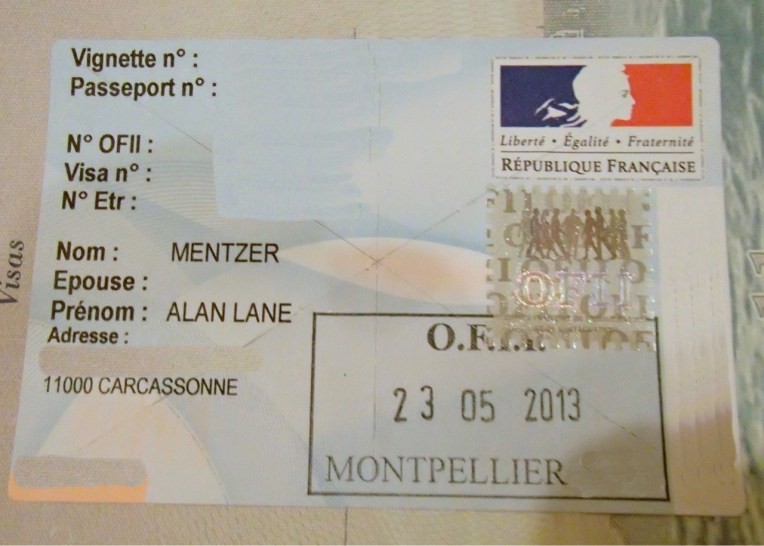
The following morning before 9:30 a.m. there was an e-mail from the Prefecture telling me that our application is approved, our new Cartes de Séjour are at the Prefecture, and to come and pick the cards up April 1. We were asked to bring with us our Récépissés de Demande de Carte de Séjour and current Titres de Séjour (residency permits) which are “sticker” documents affixed inside our US passports.

So April 1, Tracy and I were up early to be at the Prefecture at 9 a.m. when the doors open to the residency permit office. After a little bit confusion and language difficulties at the reception area we received a yellow “Post-It” note with the number “4” written on it and sent to the waiting area outside the residency permit office.  This was unusual because on previous visits at the prefecture, like at the DMV back in the States, we received a printed number tab to match the electronic number display next to the office door.  After waiting a couple of minutes the electronic display turned on and showed “500.”  That didn’t look right.  Having a number “4” in our hands we decided we misunderstood something in the French.  After checking back at the reception desk, the receptionist took us into the Estranger Passeport (foreign passport) office and created an informal line with us and other visitors also holding “Post-It” note numbers. We quickly moved up in the line short line and met with the friendly Prefect representative who accepted our Récépissés de Demande de Carte de Séjour and passports. The representative very efficiently had us sign a form accepting our new Cartes de Séjour and handed us our cards and a receipt for our records. We were in and out of the Prefecture in 20 minutes.

Cartes de Séjour
Cartes de Séjour

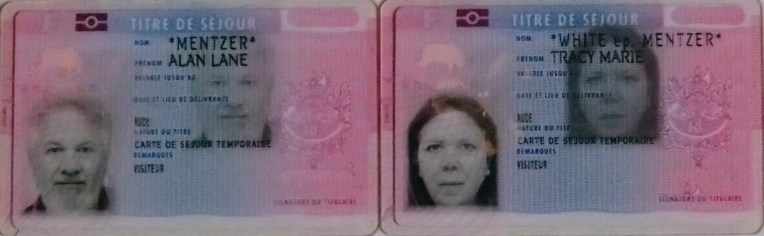
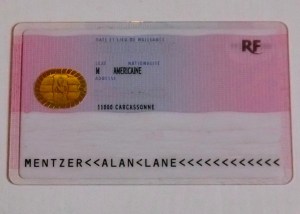
The Carte de Séjour is rather “High-Tech” with security features like a microchip with biometric information, a “watermark photo” that matches the subject’s photo, hologram, shifting colors, micro-printing, République Française watermarks on the laminate, the subject’s signature, and check digits.  It’s a very professional looking document, although a rather unattractive pastel pink and blue in color.  The card lists our French ID number, expiration date, nationality, place and date of birth, gender, and current address in France.

Reverse of Carte de Séjour

So we are starting our second year in France feeling fairly accomplished with successfully navigating French bureaucracy and obtaining our Cartes de Séjour without any snags. For our renewal next year we are planning the same strategy of starting early and being well prepared with all the documents required.


Carcassonne – Au Panthéon Photo Project

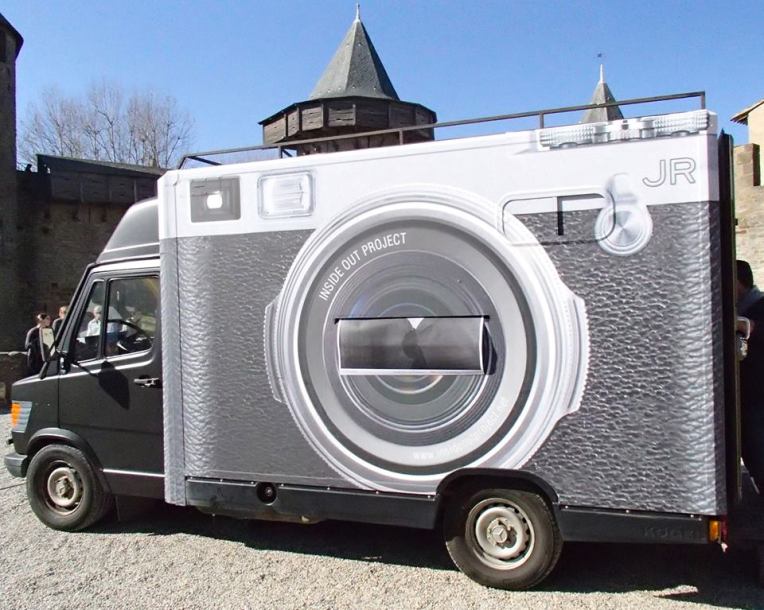
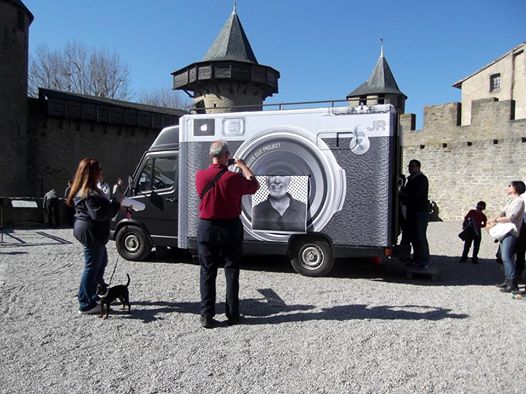
Tracy and I participated in the Au Panthéon Photo Project that is visiting 8 national monuments in France collecting portraits of visitors to later use as an art project of portraits covering the enormous scaffolding system that will be surrounding the Pantheon in Paris during its renovation this year.  The Centre des Monuments Nationaux commissioned contemporary artist JR to create a participatory work inspired by his Inside Out projects, “encapsulating the humanistic and universal values embodied by the Pantheon.”

Mobile Photo Booth for Inside Out Project

From March 5 to 29, The Inside Out project’s unique mobile photo booth is visiting the Basilica Cathedral of Saint-Denis near Paris, home to the royal necropolis and its collection of 70 sculpted recumbent statues; the medieval city of la Cité de Carcassonne; Angers Castle, home of the Apocalypse tapestry, the largest known tapestry from the Middle Ages; the Carnac Megaliths near the Morbihan Gulf, the largest group of standing stones in the world, a key place in European prehistory; the three towers of La Rochelle, facing the Atlantic as some of the most important medieval maritime fortifications; the Palais du Tau in Reims, the royal and episcopal residence associated with the coronation of 32 French kings; the Savoye villa à Poissy and its modernist architecture by Le Corbusier; and returning to the Pantheon in Paris, the masterpiece of the architect Soufflot, located on the Montagne Sainte-Geneviève.  People unable to come to one of these locations may still participate by taking a photo at home and uploading it to http://www.au-pantheon.fr/en/.

According to the Au Panthéon website, “The portraits that best represent the diversity of the contemporary world will be used to create a mosaic that will be visible around the drum beneath the dome, and on certain places within the monument. The aim is to use all of the portraits in the final work. It will be inaugurated on Tuesday 22 April 2014.”

During our visit the mobile photo both produced poster-sized prints of our images like a giant Polaroid camera.  We added out photos to the temporary mosaic of photos on the sidewalk outside the barbacane surrounding the Château in La Cite De Carcassonne.  Although there was a lengthy line to participate in the free process, we had a great time visiting with an American expats family from Oregon currently living outside Aix-en-Provence, our upstairs apartment neighbor and her friend also visiting from Oregon, and a French women recently returned from Miami where she was working for an US company.  Sami the MinPin enjoyed the attention from the crowd as well.

We were two of the 288 portraits taken during the day at Carcassonne.  The link to the Au Panthéon photo gallery is located at http://www.au-pantheon.fr/en/portraits/carcassonne/.

Some of the 288 portraits taken in Carcassonne, including ours.
Tracy, Sami, and Alan photographed by the local newspaper, Midi Libre, at the Au Panthéon event.


Since we have plans to be in Paris in June, we are looking forward to seeing the finished art project and possibly even our own images displayed at the Pantheon.

This slideshow requires JavaScript.

Carcassonne: Local Michelin “Starred” Restaurants 2014

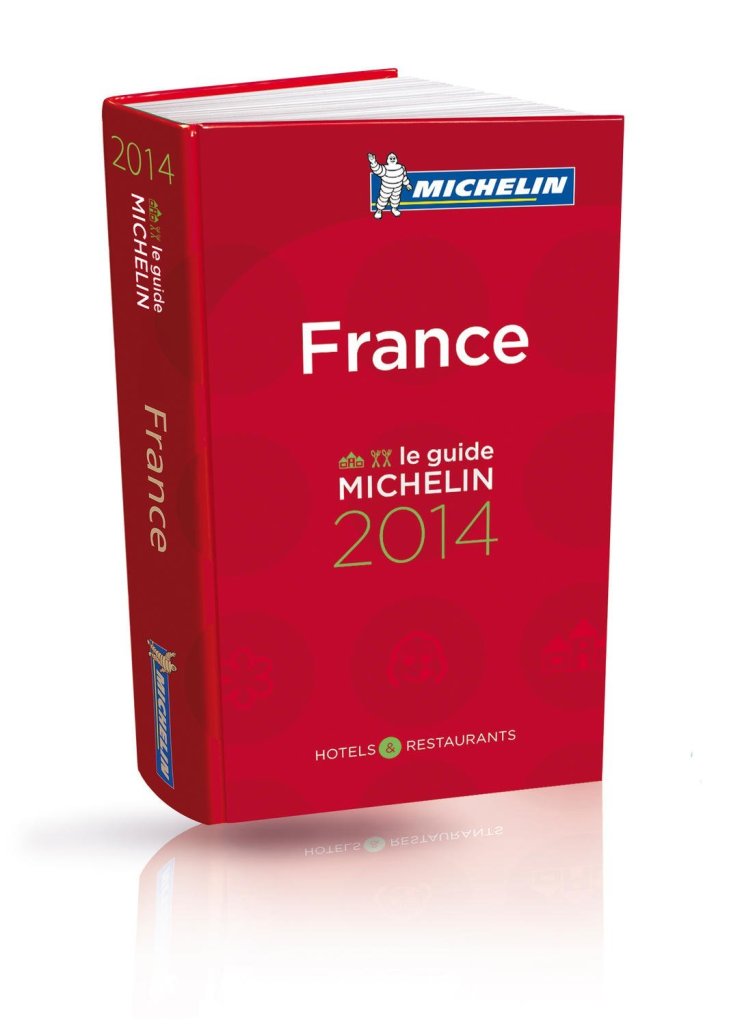
The 2014 Michelin Guide was just been released and that is big news in France.  (Michelin Guide to Restaurants.)  National and local newspapers have been publishing articles about the restaurants that have earned or lost stars, the process of Michelin’s restaurant inspectors, the inspectors’ unpublished criteria, the growing number of women chefs on the list, and the state of fine dining in the world.  (Food Buzz: Michelin Guide France 2014.)

It has been said that France anticipates the annual gastronomic “red guide” with its ratings the way the US looks forward to the Academy Awards.  World renowned French chef Paul Bocuse, who has been honored by the Culinary Institute of America as Chef of the Century, once said, “Michelin is the only guide that counts.”  French Chef Bernard Loiseau in 2003 committed suicide in part because of rumors that his restaurant was to be demoted  from three-stars to two.

Michelin Guide France 2014

France now has 27 three-stars restaurants (one new addition this year), 79 two-stars restaurants (six new additions), and with the addition of 57 new restaurants for 2014 there are 504 one-star restaurants. (A Complete List: France’s New Michelin Star Diners.)  For comparison, there are 10 three-stars restaurants in the US:  7 in New York, 2, in San Francisco, and 1 in Chicago.  There are another approximately 230 two and one-starred rated restaurants also in the US. (The Michelin Guide: Making Top Chefs Reach For The Stars.)  Japan actually has more three-stars restaurants than France with 28, a matter causing indignation with the Michelin Guide for many French.

The “star” ratings means:

* * * Three stars reward exceptional cuisine where diners eat extremely well, often superbly. Distinctive dishes are precisely executed, using superlative ingredients. Worth a special journey.

* * Two stars denote excellent cuisine, skillfully and carefully crafted dishes of outstanding quality. Worth a detour.

* One star indicates a very good restaurant in its category, offering cuisine prepared to a consistently high standard. A good place to stop on your journey.

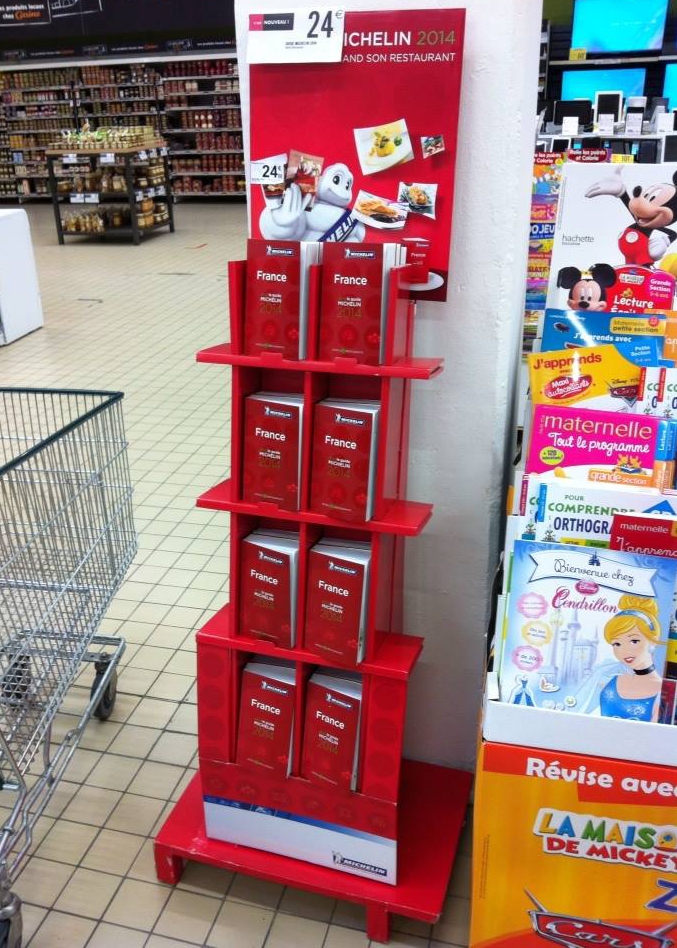
I was grocery shopping at the local supermarché and was surprised to see a display of the red-covered Michelin Guides.  Apparently the Michelin Guide isn’t a specialty text for “foodies” and gourmands but a required best-selling reference for everyday people in France.

Michelin Guide Display

Our local Michelin “starred” restaurants near Carcassonne are:

Parc,  Two-stars, Chef Franck Putelet, 80 Chemin des Anglais, at the base of hill below the medieval le Cité de Carcassonne.

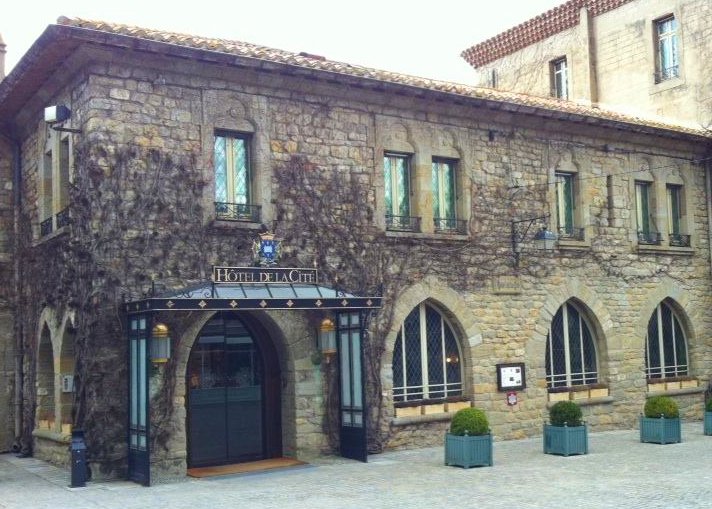
La Barbacane, One-star, Chef Jérôme Ryon, located in Hôtel de la Cité within the walls of the medieval citadel of le Cité de Carcassonne.

Hôtel de la Cité
Hôtel de la Cité
La Barbacane
La Barbacane

Le Domiane d”Auriac, One-star, Chef Philippe Deschamps, Route de Saint-Hilaire, at the edge of Carcassonne.

La Bergerie Aragon, One-star, Chef Fabien Galibert, 12 kilometers North of Carcassonne in the village of Aragon.

Le Puits du Trésor, One-star, Chef Jean-Marc Boyer, 12 kilometer north of Carcassonne in the village of Lastours.  Above the village are of the few original Cathar castles left.

L’Ambrosia, One-star, Chef Daniel Minet, 8.5 kilometer north-west of Carcassonne.

So which Michelin rated restaurants have Tracy and I experienced in France?  At this point none, although we are considering several for special occasions like our anniversary.

While lunches at many of these elite establishments are not outrageously expensive, dinners can have a substantial cost.  La Barbacane’s lunch with wine and coffee is now priced at €36 each, about $100 total with today’s exchange rate.  La Barbacane’s current seasonal dinner – Gnocchi Parisienne Gaude Mornay in Beaufort with cream and truffle stew Magnatum Pico; Black winter truffle salad, bread and truffle chicken jus; Scallops Jacques Breton with Mélanosporum truffle, potato Pays de Sault and cream leeks sauce “carbonara;” Veal shank confit and stuffed milk Orloff nuts, smoked ham and Comté old heart endive with truffle; Truffled cheese trolley; Pure Caribbean chocolate mousse and black truffles and light nuts nougat cream, and milk foam arlette – is €140 each, about $400 for the two of us.  I’m not certain if beverages are included.  Perhaps it’s like the old saying, “If you have to ask you can’t afford it.”  A Michelin rated restaurant dinner is, for this retired couple on a fixed income, certainly a planned and carefully budgeted extravagance.  In the mean time, we can admire culinary excellence from afar like admiring the latest model sports cars.

Good thing we love the take-out shawarma at the nearby Moroccan kebab restaurant while watching Anthony Bourdain and trying in the many small “holes-in-the-wall” cafes, brasseries, and bistros in Carcassonne.

First Renewal of Our Residency Permit (Titre de Séjour)

Tracy and I are fast approaching our first anniversary of living in France.  This anniversary requires that we renew our Residency Permit, our Titre de Séjour.  Although the French government has been considering creating long-stay visa with a 4 year expiration date, those have not been approved yet.  So for at least the first five years of residency, a Titre de Séjour must be renewed annually. (France Mulls Longer Visas for Expats.)

Titre de Sejour
Titre de Sejour

When we first arrived in France, we needed to immediately make appointments with the Immigration Office, OFII (L’Office Français de l’Immigration et de l’Intégration, in Montpellier for a review of our paperwork and a medical check up. (See our previous blog post OFII Medical and Titre de Sejour.)  But our renewal needs to be submitted to the local Prefect Office having jurisdiction over the district in which we live rather than at the OFII .  A Prefect Office is the representative of the French national government and Ministry of the Interior at the local level.  Visiting the Prefect Office is like visiting a local “Federal Building” in the US.  There are 101 districts in France, each with its own Prefecture.   Since the city of Carcassonne resides within the District of Aude, our Prefect Office is the Préfecture de l’Aude.   No train ride is required to another city like when we had to visit OFII in Montpellier.  Conveniently  for us, the Préfecture is located walking distance from our apartment at 52 Rue Jean Bringer in the historical Bastide of Carcassonne.

Préfets de l'Aude
Préfets de l’Aude

The Préfect de l’Aude is located within the former Bishopric Palace of Carcassonne’s Catholic Diocese that was originally built in 1760.  The Prefecture Office was moved into the building after the establishment of the French Consulate system of government after 1799.

PRÉFECTURE DE L'AUDE À CARCASSONNE
PRÉFECTURE DE L’AUDE À CARCASSONNE

Although Tracy and I haven’t yet had any difficulties with the legendary French bureaucracy (in fact government offices have been surprisingly helpful and efficient to date) I wanted to get started early to hopefully “head off” any potential problems.

In January 2014, three months before our Titre de Séjour’s expiration date, I went to the Prefect Office to pick up a renewal form and make an appointment. I wanted enough time to allow for requesting documents from the US and their mailing time.   It’s a pretty building, but “government offices” are “government offices” around the world with the feel of waiting at the DMV or Social Security office.  I was given a number and directed to the waiting area.  While sitting in the waiting room I had a nice conversation in English with an Italian expat and his Australian girlfriend.  He was helping her renew her residency.  Sadly, they were called in by their representative before I could learn many details of their immigration experiences.  But I was also quickly called in to see my representative.  She did not speak English, but between my pre-translated request letter and fledgling French I was able to pick up the application and make a return appointment for February 28.

The renewal application was a single page asking for our name and address in France and a list of supporting documents with only nine items. The application asked us to bring the original documents for the Prefect to inspect and photocopies to submit with the application form .  Of the nine items on the supporting documents list, 0ne item doesn’t apply, two overlap, and two are “stationery” items.  It appears to be a simple process.  In addition to the application form we also needed to produce:

Applications and supporting documents

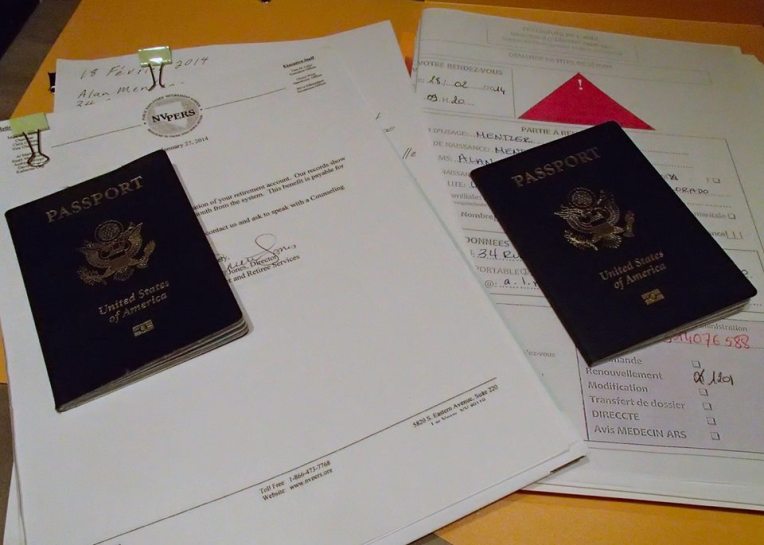
1.  The current  Titre de Séjour, residency permitto be renewed.  Our initial Titre de Séjour is actually a “sticker” that OFII attached to a page in each of our passports (which are required as Item 2.)

2.   US passport valid through the end of the visa.

3.   Any documents of changes in civil status (marriage, divorce, widowed).  This does not apply as there had obviously been no changes in status for either of us.

4.  Proof of financial independence.  Documents that prove we are financially stable and independent.  We have bank statements, letters of recommendations, and pension statements.

5.  Statement of honor (Attestation sur l’Honneur) in our handwriting that we will “not to exercise any professional activities” in France without prior authorization.  Basically a statement that we will not be working or seek ing employment in France.  We located an online a sample letter of the correct format to use and translated our letters into French.

6.  Proof of domicile by evidence of a recent electricity bill.   Jason, our landlord, provides utilities as part of our rent so we do not have an electricity bill.  Jason was kind enough to provide the apartment’s power bill, his identification information, and his own  Attestation sur l’Honneur to verify our residency as his tenants.

7.  Four passport photos taken at the convenient photo booth at the local Monoprix supermarket.

8.  Stamped, self-addressed envelope.

9.  Tax Stamps (timbres fiscaux) for payment in the amount of €106 each.  The timbres fiscaux were purchased at a local convenience store, a tabac, designated to sell tax stamps.

 Tax Stamps (timbres fiscaux)
Tax Stamps (timbres fiscaux)

Tracy, the queen of organization, prepared our individual dossiers of application forms and supporting documents that follows the list right down the line.

We arrived at the Préfect about 10 minutes early for our appointment and were given slips with numbers, but escorted directly to the Residency Permit office.  There was a young couple completing their appointment ahead of us.  It was obvious from the discussion and body language that they had apparently came to their appointment without all their necessary documents and were sadly leaving empty-handed.

Tracy and I were invited into a cubicle and our Préfect representative very professionally went through our application and dossiers of supporting documents.  It was obviously she was very pleased with Tracy’s organization and efficiency with the presentation.  Our representative did require “proof of civil status” which we wrongly assumed we didn’t need  since there had been no change.  However we also brought to the appointment our “mobile file cabinet” binder/briefcase with originals of all our essential documents and we were able to produce the marriage certificate that our representative required.  She allowed me to make a quick photocopy and add it to our applications.
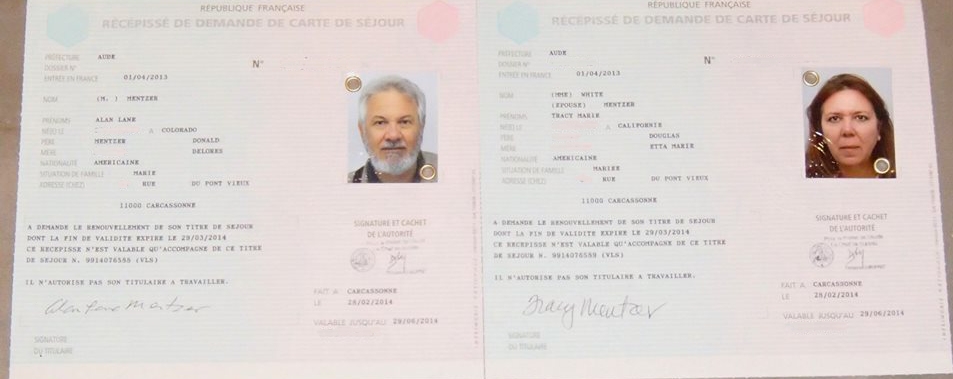
At the conclusion of our appointment the representative gave us each an elaborate Récépissé de Demande de Carte de Séjour, a receipt that allows us to continue to live in France until final disposition of our applications by the Préfect.

The representative also gave us an e-mail address at the Préfect to contact after 30 days to inquire if our  Cartes de Séjour have arrived for pick-up at the Préfect.  My understanding is that the renewal (if granted) that will replace our initial Titre de Séjour, residency permits “stickers” and would be issued in the form of an identification card, a Carte de Séjour Think of the Carte de Séjour as the French equivalent of an US Citizenship and Immigration Services’ (USCIS)  “Green Card,” although a “Green Card” represents permanent residency in the US and this Carte de Séjour will need to be renewed again in another year after issue.
From beginning to end the entire appointment took 30 minutes.  Our representative was friendly, helpful, and very efficient.  Overall it was as good of an experience as possible aided, I believe, by our efforts to be well prepared and organized to help make our representative’s job as easy as possible.  Now we wait for the next 30 days and hope for a positive answer to our requests.

Récépissé de Demande de Carte de Séjour