In 2014, my Aunt Deb and I hiked from St. Jean Pied-de-Port to Los Arcos, caught a bus to Logrono and a train from Logrono to Sarria, then hiked the last 100 kilometers from Sarria to Santiago de Compostela. It rained a lot in 2014, but I finally had the opportunity to cross the Pyrenees (in 2013 we took the southern route through Valcarlos). What I really enjoyed though was spending the two weeks with Deb. She’s one of my personal role models and a woman I respect very much. She loves the outdoors and I enjoyed every mile we hiked together. She has a fantastic sense of humor, is quick to laugh, shares my love of occasional junk food binges, can hike 20 kilometers a day for weeks without seeming tired, and doesn’t mind getting up early. It was a fantastic journey and I’m so glad that she shared it with me.
But as Alan and I were discussing vacation options (such as Marrakech, a cruise from Venice to Greece, etc.) the husband mentioned that he was a little jealous of my trek in 2014 with my aunt. So I suggested that we do it again, the whole 800 kilometers. We figure that cruise lines will always be headed to Greece, that Marrakech will always be a short flight from France, but the ability and desire to hike 800 kilometers across Spain may wane over time. So we’re gearing up and going again in September/October 2015.
We’ve compiled a new equipment list based on our experiences in 2013 (see 2013 Equipment Review) hoping to learn from our first trek and make changes according to our own reviews of the equipment we chose for 2013. Our idea of “wear one, wash one” worked very well for the entire six weeks and we plan to stay with that idea except for socks. As we mentioned again and again in 2013, foot care is the most important issue on the Camino. Dry socks = happy feet. So we’ll bring extras!:)
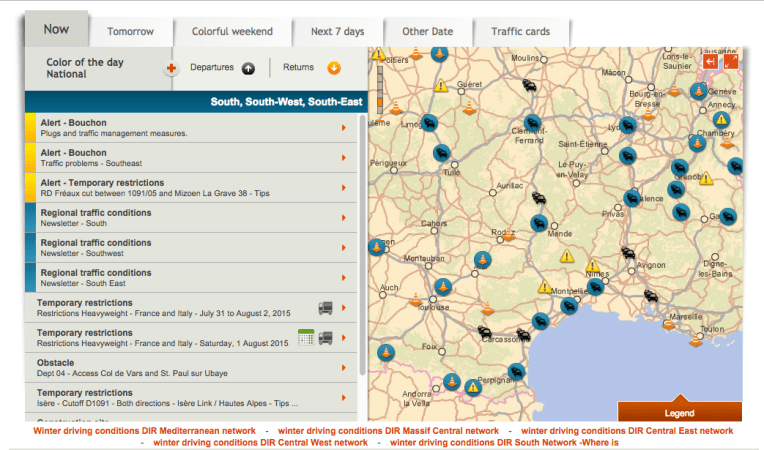
Today is Saturday, August 1, 2015, the biggest traffic day of the year in France. Why?
“Samedi Noir” (Black Saturday) is the changeover between the juillettistes(families that take their annual vacations in July) and the aoûtiens (families that take their annual vacation in August). “Le chassé-croisé des juillettistes et des aoûtiens,” is the cross-over of July and August vacationers and an annual “event” usually on the last Saturday of July.
Traffic stopped on highway. Sous licence CC BY-SA 2.5 via Wikimedia Commons –
It’s like the US Memorial Day weekend traffic, squared, because of France’s centralized highway system. Millions of French travelers are on the road today, some heading home after holidays and others on the way to their vacation destinations. It is called “Les jours de grands départs” (the days of great departures) across France.
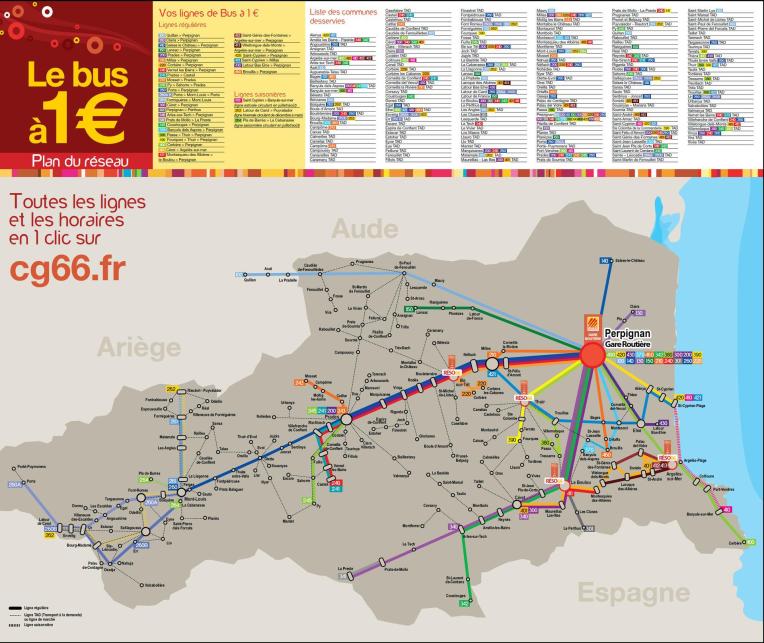
One of the biggest bonuses with living in Argelès-sur-Mer within the Pyrénées-Orientales Department has been Le Bus à 1€ (the €1 Bus), a public transportation system providing bus service throughout the department with dozens of bus routes to scores of cities. This is an amazingly useful and economical way for Tracy and I to travel since we have elected not to buy a car.
Our transportation for the day.
With a €1 Bus stop 100 yards from our front door, it is actually more convenient for us to take the €1 Bus to Perpignan to go to the large supermarket shopping there than to walk to the smaller supermarket that is in Argelès. The current bus schedule list 19 buses a day from Argelès to Perpignan, Monday through Saturday, starting at 6:50 am until 8:40 pm. There is a reduced bus schedule on Sundays. In July and August there are additional routes during the summer season connecting the small beach towns along the Côte Vermeille. Additionally there is an expanded schedules for regular routes during these peak summer months.
1€ Bus Schedules
The €1 Bus service is provided by the Conseil Général des Pyrénées-Orientales, an elected board of 31 Conseillers Généraux (one for each of the 31 Cantons of the Pyrénées-Orientales) and a Chairman. Members of the Conseiller Général are elected for a 6 year term. The Conseil Général decides public policy at the department level similar to the role and responsibilities of a county commission in the United States.
1€ Bus Map
For the price of a single Euro each (currently about $1.11), we can reach nearly anywhere in the Pyrénées-Orientales. The tickets also allow transfers for two hours to other bus routes traveling in the same direction within the €1 Bus system. That means we can take the bus from Argelès to Perpignan for €1, do some shopping, get on a different bus still outbound within the two-hour transfer time limit, and go to Prade for lunch. A return ticket for €1 each will bring us back to Argelès. A traveler would spend more on gasoline than the €2 cost of a round-trip on the bus. (Currently gasoline costs about €1.37 a liter, about $1.50. There are 3.8 liters to a gallon, so gasoline would cost about $5.70 a gallon.)
1€ Bus Tickets
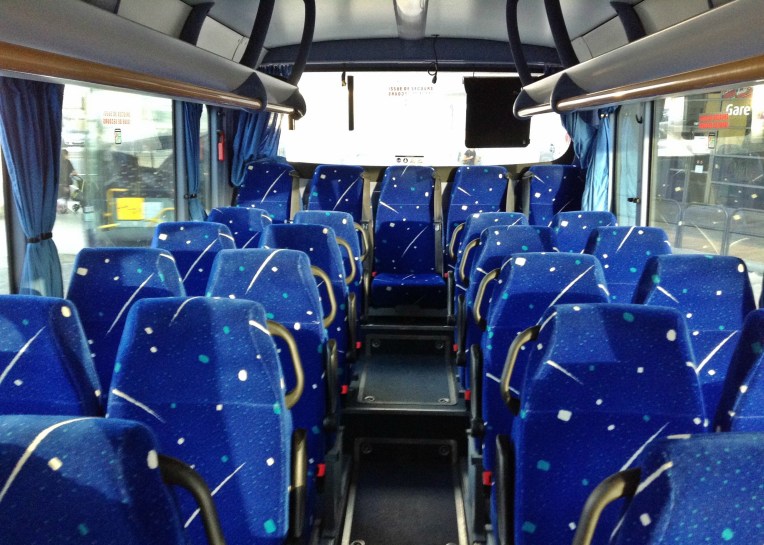
The buses are clean, modern, and comfortable motor coaches. They are dog-friendly and Sami the MinPin can travel with us with the use of a travel bag while she is inside the bus. There are overhead racks for backpacks and under-the-bus-carriage storage for large suitcases or even bicycles. There are even several “Réso 66” stops, “Park and Ride” locations where commuters to park their cars for free and let the bus drive them to work or school. The bus drivers are friendly and helpful, but pretty much they exclusively speak French (if the drivers do speak a second language it’s most probably Spanish or Catalan.) But between our very basic French language skills, pointing at the stop we want on the map, or showing the driver a promotional brochure for a tourist sight, we have not had any problem communicating. (And there is always the red “Stop” button to indicate that you want off the bus.)
€1 Bus Interior
Tracy and I have been making great use of the €1 Bus for our Micro-Adventures. With just €4, a camera, a bottle of water, an inquisitive MinPin, and a picnic lunch, we have an entire day’s entertainment exploring in the Pyrénées-Orientales.
Tracy enjoying one of our Micro-Adventures at Les Orgues d’Ille-sur-Têt, which we reached by the €1 Bus
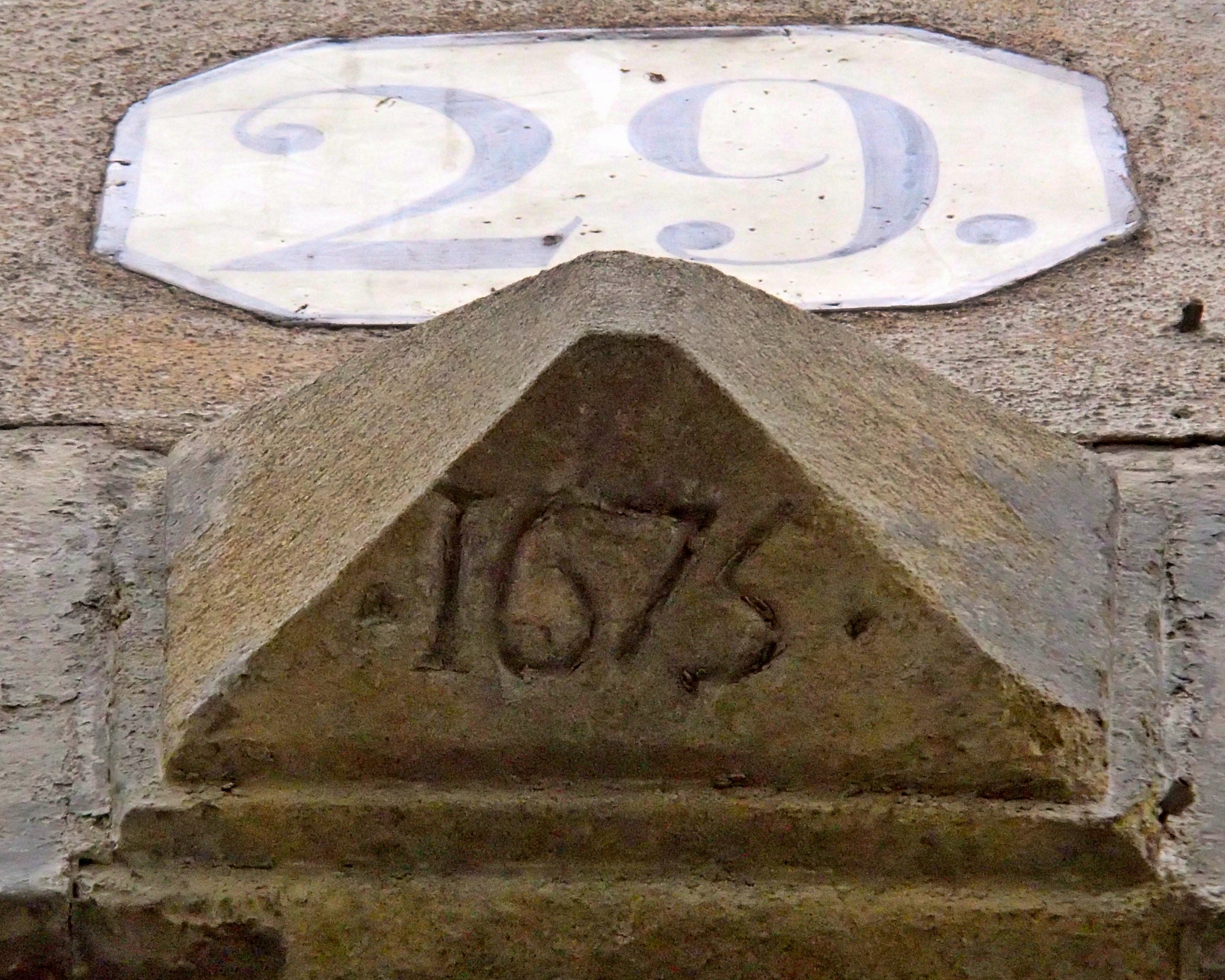
I came across a photo today. One I took over two years ago while Alan and I were out walking with Kiara one evening. The weather had been so especially nice that day. As we headed toward the dog-friendly park on our side of the Aude River, we noticed a keystone with a date on the building across the street from us.
A keystone with the date “1675” on a building in our former neighborhood on the Rue Du Pont Vieux in Carcassonne.
Our landlord at the time, Jason Carr, — an expat from Great Britain — told us that he isn’t sure exactly when the building we lived in was built due to lack of record keeping and from different armies burning the area to the ground a couple of times in the ancient past. He found a few interesting things while renovating, but the exact date is lost in history. The neighborhood dates to the late 17th century, which is interesting enough.
We found the date fascinating. I remember we talked about it while we watched Kiara running joyfully (and leash-less) through the clover at the park, one of her all-time favorite things.
I find that I am continually amazed at the age of things here in France and usually end up mulling over dates like 1776 to put things into perspective. And to think there was a time that I thought a five-year-old car was old!
Life as an expat has many challenges, thankfully staying in touch with family and friends is not one of them.
I cannot imagine what our expat lifestyle would have looked like just 20 years ago. Before social media, the Internet and smart phones. Staying in touch must have involved a lot more postcards and hand-written letters that would take weeks to arrive. All news from home would have been weeks or months old and photos rare. Long distance calls home few and quite expensive. Family events missed.
We learned the advantages of using a smartphone to be “present” at an event several years ago. Our daughter, Dallas, was returning from a years deployment in Afghanistan to Colorado Springs. We were there in person to welcome her home. Her sister, Danielle, was in the hospital with Princess Lily, and her new iPad. Alan contacted Danielle via FaceTime on his phone and through the magic of Apple, Danielle was able to sit in a hospital room in southern California and watch her sister arrive safely back home in Colorado. We recognized the advantage right away.
We have been in France for over 2 years and have not missed college graduations, holidays with family, or one-on-one chats with children or siblings. With our computers, phones, iPods, and a wifi connection we are able to visit family at the holidays, have a chat one-on-one with a sister, a daughter, or a friend. We watched via streaming video the graduations of four of the kids (Casey, his fiancee Megan, Adam, and his wife, Liz) from the University of Nevada, Reno over the last two years. At the holidays we FaceTime a family member and visit with everyone as they pass us around the room.
We haven’t missed a Superbowl. One of the BBC channels has aired the Superbowl live and we’ve been able to stay up late, very late, drink beer and cheer on our favorite team. It was always a big family event. We are thrilled to watch, even really early in the morning. With our laptops handy to keep up with chatter on Facebook, it’s almost like having a Superbowl party like we did before we moved.
Our son, Casey is getting married today. Though we will not be sitting in the audience, we will be able to witness this major life event. It’s a matter of learning to be “present” without being “there.” For today’s event it will be a Skype call through a smartphone.
It’s the little things like this that make life as an expat survivable for us. Our family is precious to us and being able to be present in the moment via social media, video chat or text messaging makes us feel like we are not so far from home. Events occur in real time and we are always available for family, friends, and assorted loved ones. Life is about not missing out on the moments that matter. Whether its a wedding, a graduation, a kid who misses us, or a sister who is having a bad day, we don’t miss out on too much. Hugs are tougher though . . . we miss those quite a bit.
We are so pleased to welcome our new daughter Megan, and new grand-daughter Izzy to the family!
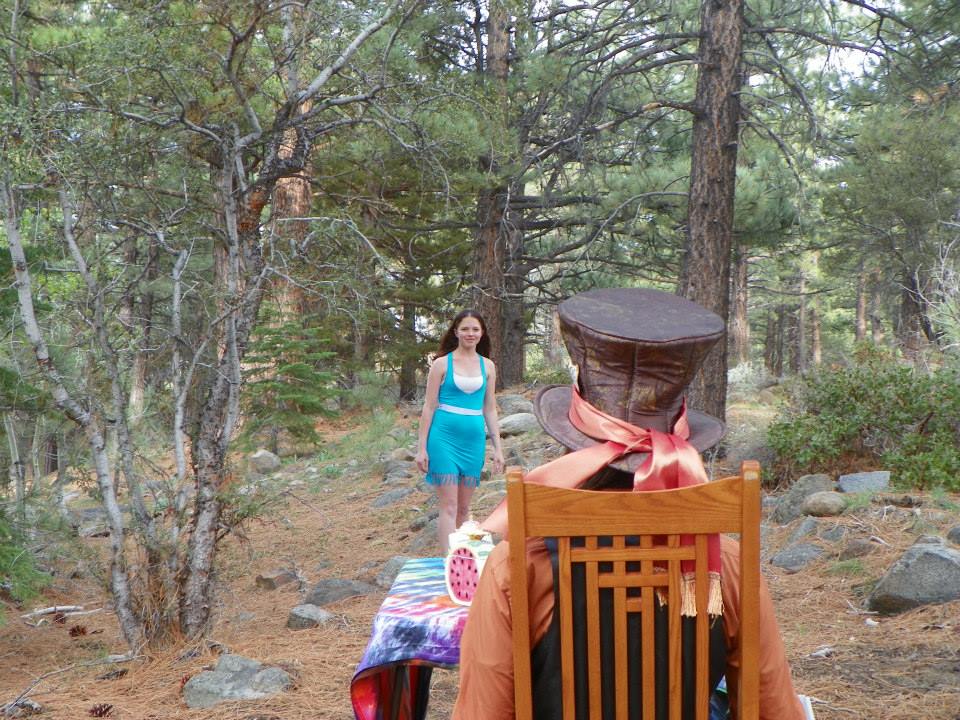
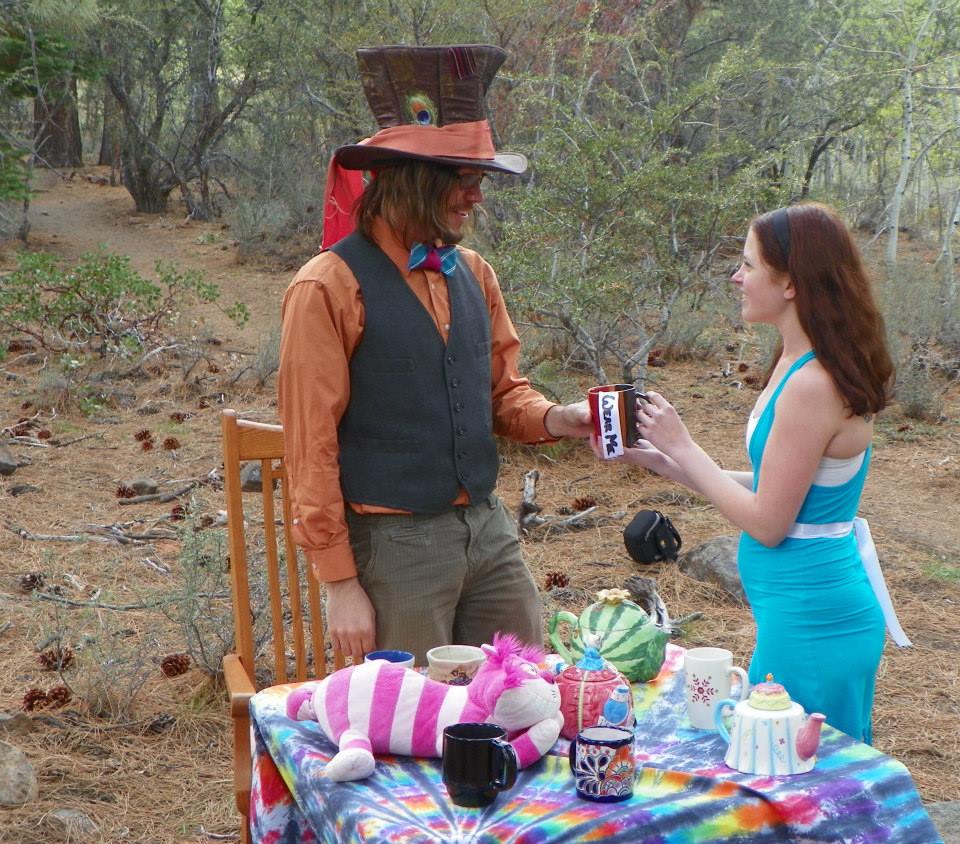
Casey and Megan’s engagement photo shoot.
Alice spots the Cheshire CatThe Mad Hatter awaits Alice at the tea partyThe Mad Hatter proposes to AliceWear MeCasey and Megan
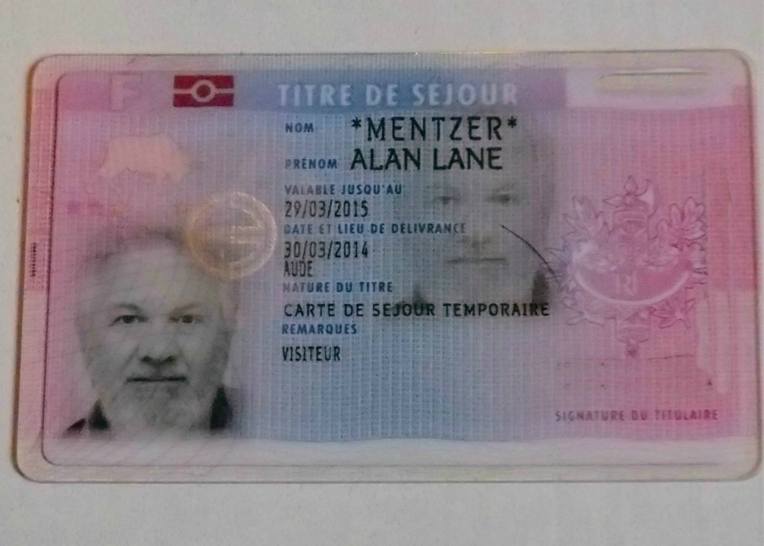
While we were doing our final preparations to move from Carcassonne to Argelès-sur-Mer, we received an e-mail from our future landlord that our letters from the Préfecture des Pyrénées–Orientales notifying us that our Cartes de Séjour (residency permits) were ready for pick-up. We decided to wait the until we completed our move before we would go to collect our new cards. It had taken the Préfecture about three weeks to officially approve and produce our new Cartes de Séjour.
We moved to our new residence, unpacked, settled-in, completed and submitted our US tax return, shopped for kitchen basics, found the local open-air market, got to know Argelès-sur-Mer’s public transportation system, met a couple from Collioure for drinks, and even hosted friends overnight who were on a vacation through France.
We sorted out the “€1 Bus” schedule to Perpignan and left early on a Thursday morning with the documents the notification letter said were required: our passports, current Cartes de Séjour, €106 payment each in timbres fiscaux (tax stamps), and the notification letter. I double-checked the letter and we headed to the Préfecture des Pyrénées–Orientales in Perpignan.
“Le Bus à €1” – Conseil Général Pyrénées–Orientales
The trip went flawlessly . . . almost. We correctly figured out the regional bus schedule from Argelès to Perpignan, we remembered the path from the station to the prefecture without error, we successfully planned enough transit time to enjoy a leisurely cup of café crème in a nearby cafe, and we were waiting at the right door when the immigration office opened for business. We were feeling very pleased with our skills navigating life as “strangers in a strange land.”
However, I made the embarrassing and very rookie error while reading our notification letters and mis-translated “mercredi et vendredi” (Wednesday and Friday) as “du mercredi au vendredi” (Wednesday through Friday.) That day was, of course, a Thursday. So we spent the remainder of the day exploring Perpignan, took photos, enjoying a nice lunch before catching the bus back to Argelès.
The next day, Friday, we repeated our inadvertent “trial run” and returned to the Préfecture des Pyrénées–Orientales in Perpignan. This time everything did go flawlessly. We enjoyed our morning café crème, was near the front of the line when the Préfecture’s immigration opened, and the receptionist gave us the first two numbers to be called to the service windows. Tracy had our documents well-organized and our immigration official very professionally processed our forms and payment and issued us our new Cartes de Séjour with receipts complete with digital photos should we lose our cards.
It took eleven minutes from walking into the Préfecture to walking back out with our new Cartes de Séjour tucked in our wallets. We are now all set for another year of living in France.
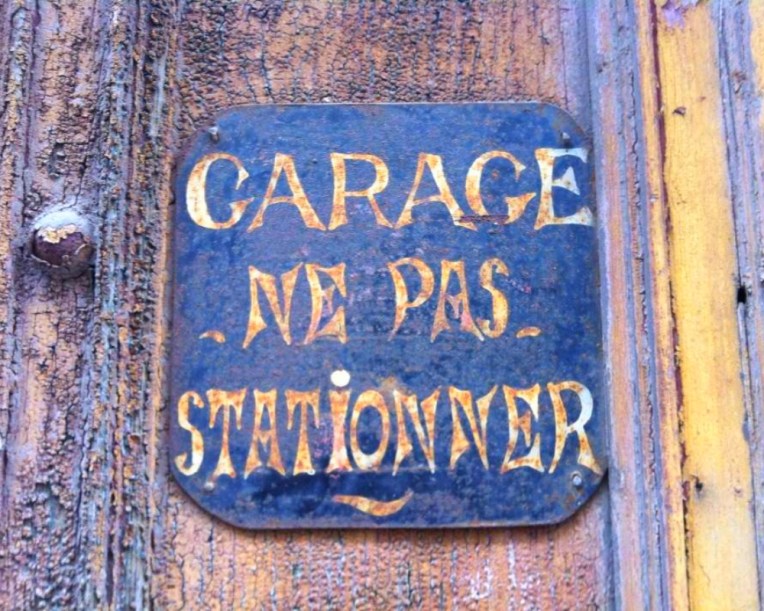
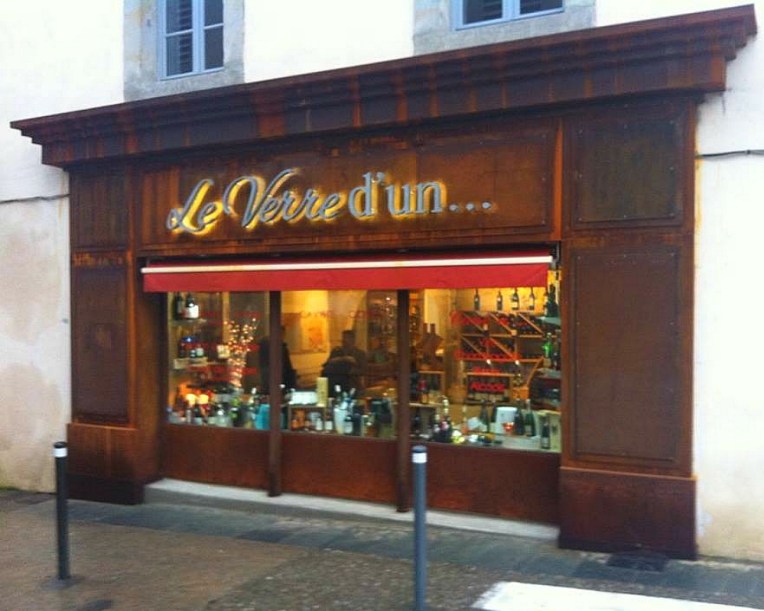
Ten photos taken “just walking around the neighborhood” in the Ville Basse (the lower city) of Carcassonne.
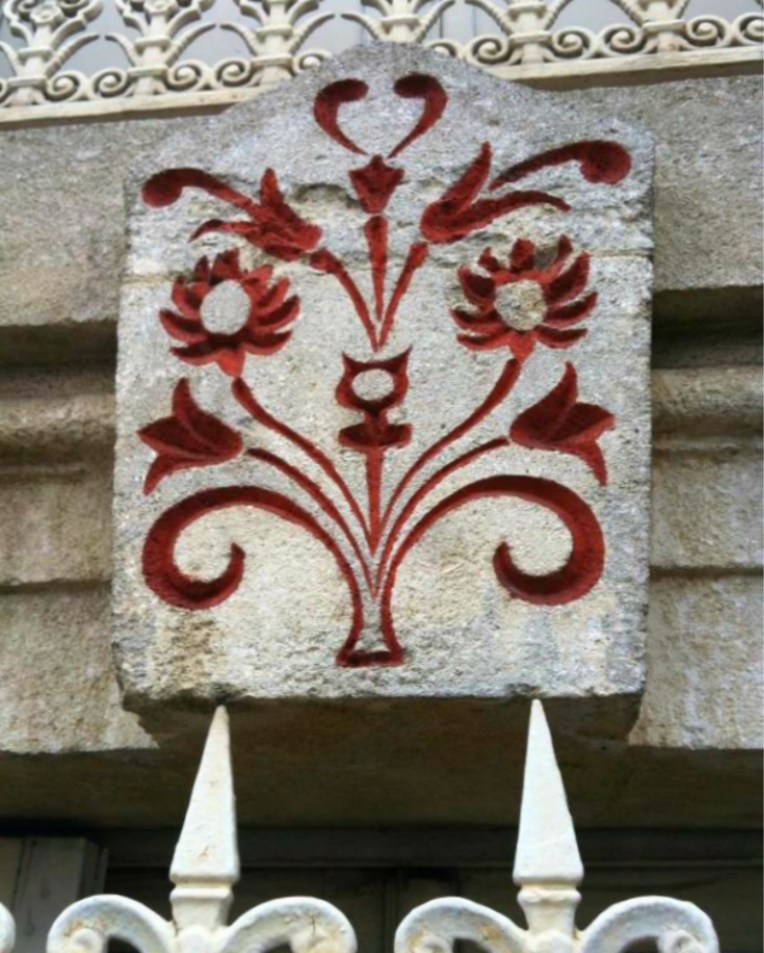
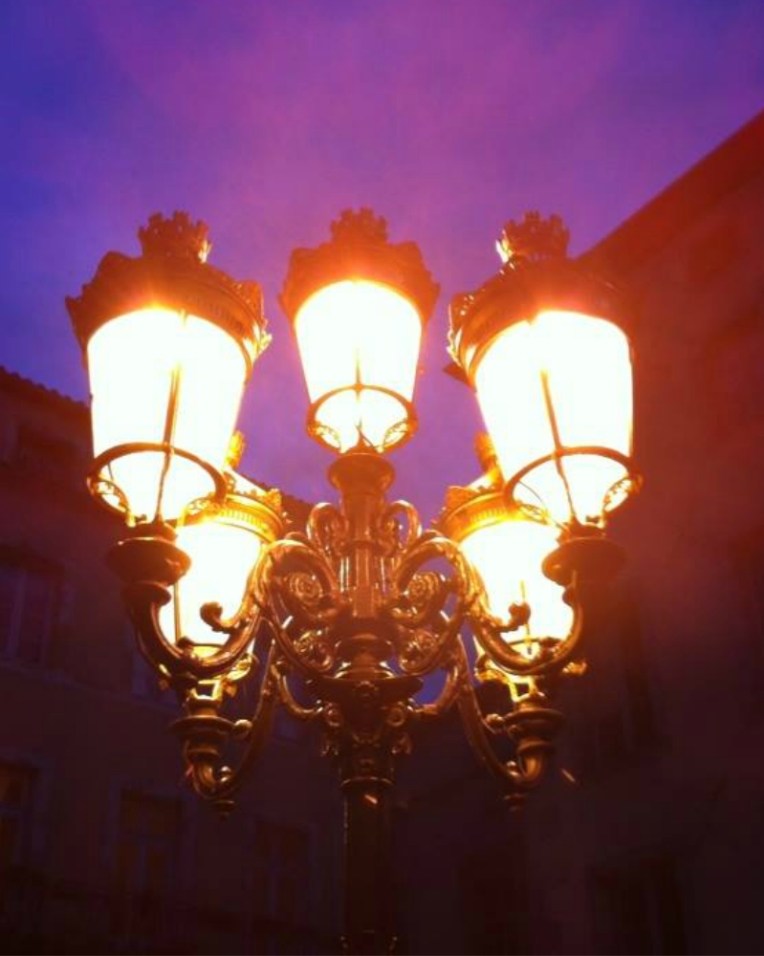
Antique “No Parking” sign on a garage along Rue Jean Bringer.Menu board from Lard et au Cochon restaurant on Rue Denisse.Spring flowers in the market.Menu board from Briocherie-Pâtisserie Arpin on Place Carnot (the town square).The solar eclipse through the clouds at the fountain and Porte des Jacobins à Carcassonne (Jacobin Gate).Menu board from the wine bar, Lâche Pas La Grappe on Rue du Pont Vieux.The iron façade of wine bar, Le Verre d’Un, on Rue de Verdun.Decorative stonework above the windows of a residence on Boulevard Barbes.Lamps at Place Carnot (the town square.)Bee investigating a lily offered in the market at Place Carnot (the town square.)
Nine photos taken “just walking around the neighborhood” in the Ville Basse (the lower city) of Carcassonne.
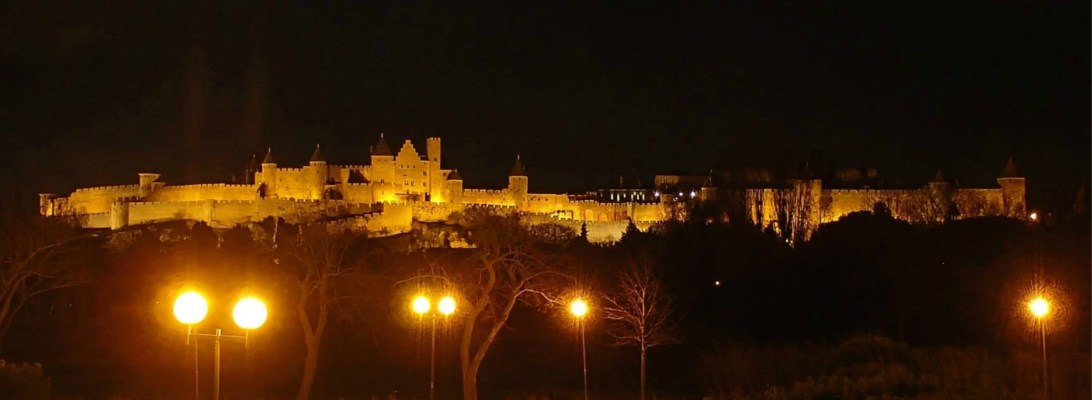
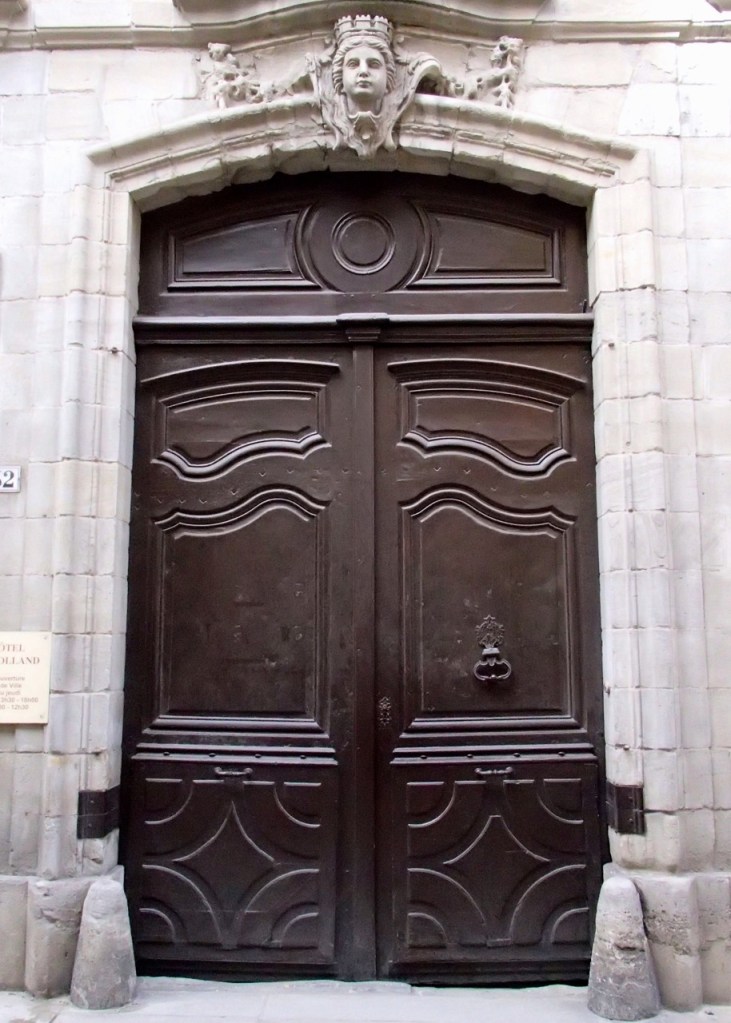
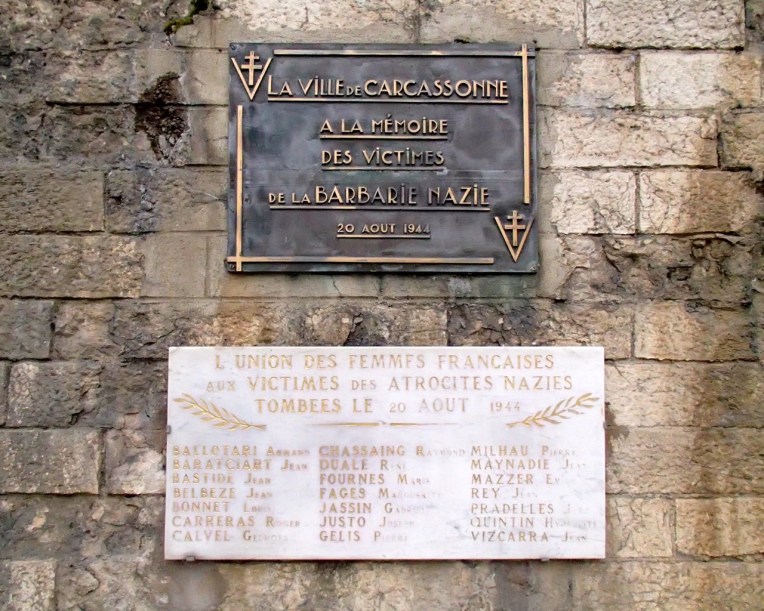
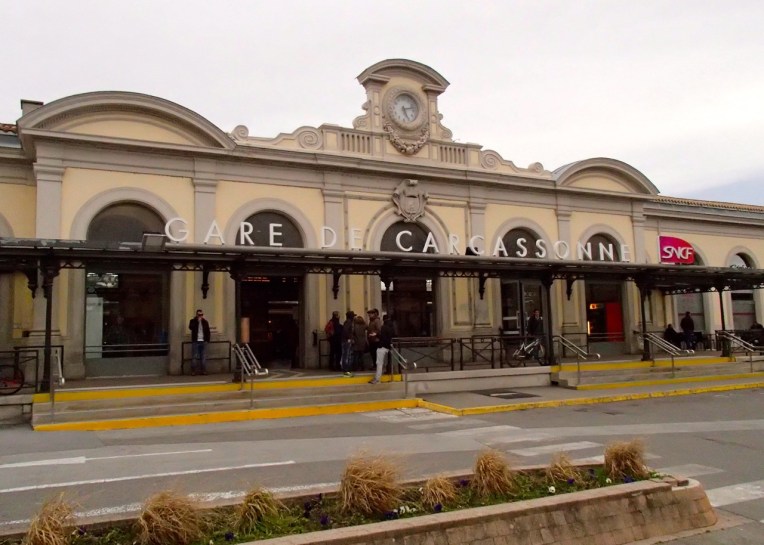
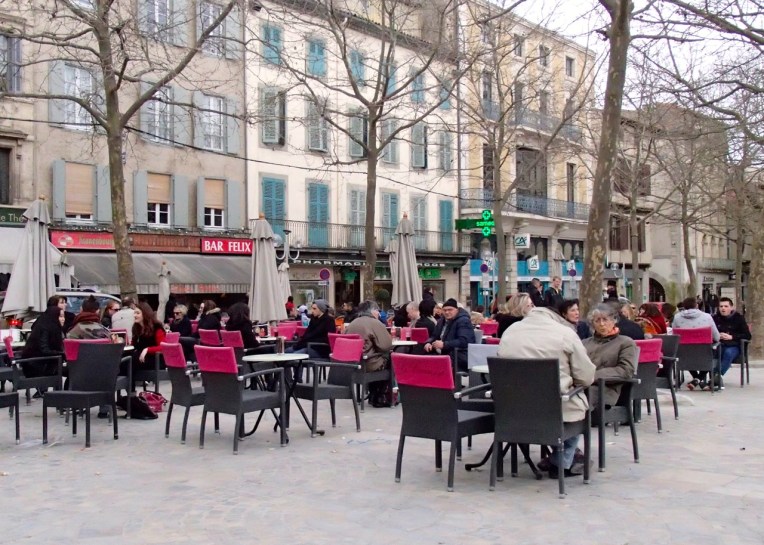
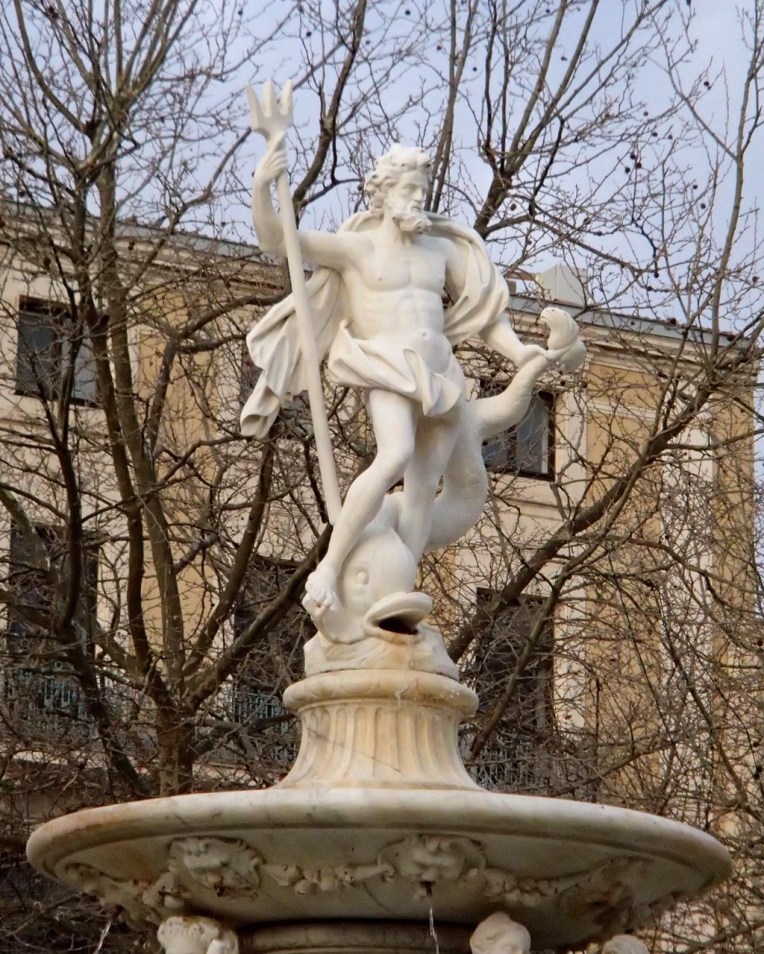
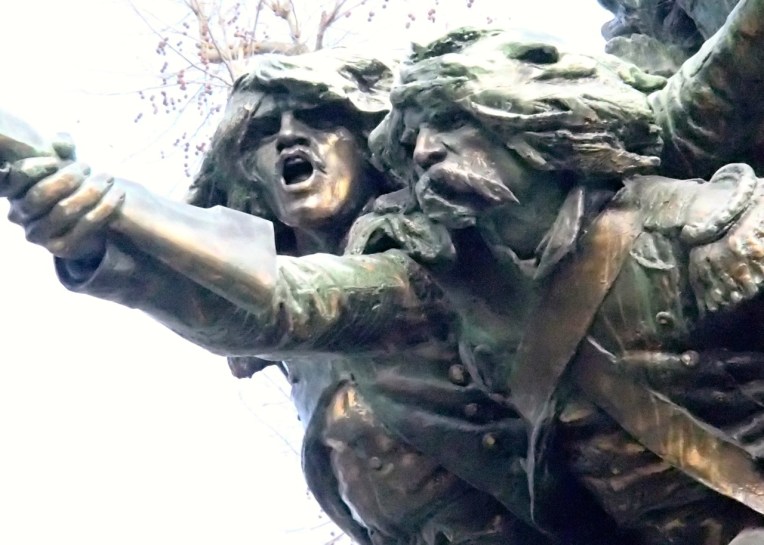
Full moon over the Cité de Carcassonne seen rom the Quai Bellevue.Entrance to the Hôtel de Rolland, the Hôtel de ville de Carcassonne.Sami the MinPin has a hero in the neighborhood. Another MinPin that rides with her Dad (a local insurance agent whose office is around the corner) on his motorcycle.Tributes to victims of Nazi atrocities.Gare de Carcassonne (Train Station).Patrons enjoying the cafes in Place Carnot (the town square.)House number on Rue Basse.Statue of Neptune above the fountain in Place Carnot (the town square.)Detail of René Phileas Carillon’s “In Square for the Fatherland,” also called “The Audois” (1912), Memorial of the 1870 War at Place Davilla.
The issue we expected to deal with was that we were moving to the city of Argelès-sur-Mer during the same week that our current Cartes de Séjourexpire. The new city is in a different department than where we currently live (a department is one of the three levels of government below the national level, between regions and communes.) These administrative levels of French government are roughly analogous as US states to French regions, US counties to French departments, and US cities to French communes. Because of the change in physical location we had the question, “Do we renew in our current department or at the one where we will actually be living for the duration of the permit?”
After double-checking with both prefectures (a prefecture being the government office that performs national level business at the local level – think visiting a “Federal Building” in the US) we learned that the Préfecture des Pyrénées–Orientales would prefer to handle our renewal (although the Préfecture de l’Aude very kindly told us they would be happy to help and do the renewal if there was any problems.) So after two visits to the Préfecturedel’Aude and a couple of e-mails to the Préfecture des Pyrénées–Orientales I was a finally able to request an appointment date.
“Take a Number”
We now knew “when” and “where,” the next step was “what.” Although immigration is performed by the national government, we have been told that there is some discretion at the individual préfet offices in issuing renewals for Cartes de Séjour. The Préfecture de l’Aude provides an in-house form and check-list of “what” supporting documents are required. Not knowing “what” documents the Préfecture des Pyrénées–Orientales may require and in an attempt to avoid a four-hour round-trip train ride to Perpignan, I requested the correct renewal forms and check-list from that préfet by mail and by e-mail. Yes, I know it’s redundant for both, but I wanted to make sure I received a response so that we had plenty of time to acquire all the supporting documents before the appointment. I’m sure anyone who has ever gotten turned away at a window at the Department of Motor Vehicles because of a forgotten document can relate.
The Préfecture des Pyrénées–Orientales very promptly responded with a confirmation date for our renewal appointment, the renewal forms required, and a list of supporting documents that need to accompany the renewal application. The forms themselves simply asked for identification information (i.e. name, date of birth, address, nationality, and such) and the required documents is a short list (the originals to be brought with us and copies to be attached to the application):
1. Current Carte de Séjour (residency permit) that is being renewed.
Carte de Sejour
2. Passport with copies of pages with identification information, expiration dates, entry stamps, and visas.
3. Marriage certificate since our passports do not confirm marital status. This document was not specifically on our list from the Préfecture des Pyrénées–Orientales but marital status was mentioned on the copies of passport pages. A marriage certificate was also not on the required document list at our previous renewal, but was requested during that appointment. We always opt for the “better safe than sorry” theory so the marriage certificate was included with our application. We carry our dossier file to all government meetings, our dossier file is a binder-briefcase that contains all our important documents in case an additional document is requested.
4. Birth certificate.
5. Proof of the location of residency with a utility bill and our landlord’s identification information. Our new landlord was happy to provide that information as was our current landlord during last year’s renewal.
6. Three recent passport-style photographs. There are passport photo machines in a dozen locations around Carcassonne. Photos are required with almost all government applications.
7. €106 payment each in timbres fiscaux (tax stamps.) The tax stamps are sold in specific Tabacs (tobacco and convenience stores.)
Tax Stamps (timbres fiscaux)
8. Proof of financial independence equivalent to 12 times the monthly French minimum wage (in our case with bank statements and pension confirmation letter from the Nevada Public Employees Retirement System [NV PERS] as retirees.)
9. Sworn handwritten attestation not to exercise any occupation in France. (There was actually an attestation on the form that could be filled in.)
10. Self-addressed, stamped envelopes.
All of these documents and items were then obtained over January and February. In several cases it takes a couple of weeks to process the requests plus transit time in the mail. Some agencies or companies will only mail to our “official” US address and then that document has to be re-mailed to us in France, which Tracy’s sister graciously handles for us.
Tracy (AKA the “Queen of Organization”) arranged and organized our applications exactly in the order of the checklist we were provided. There was one folder for me and one for her in the event we saw separate officials rather than together as a couple. (We have so far always had “couple” appointments.)
Carte de Sejour Renewal Paperwork
On our appointment date of March 2 we traveled by train the 114 kilometers (71 miles) to Perpignan. Since this was the first time we have visited Perpignan, we built-in a “cushion” of extra time in order to locate the Préfecture des Pyrénées–Orientales, do a bit of sight-seeing, and enjoy a leisurely lunch before our appointment.
The train trip included beautiful views of the snow-capped Pyrénées mountains and flocks of pink flamingo on the salt marches between Narbonne and Port-la-Nouvelle
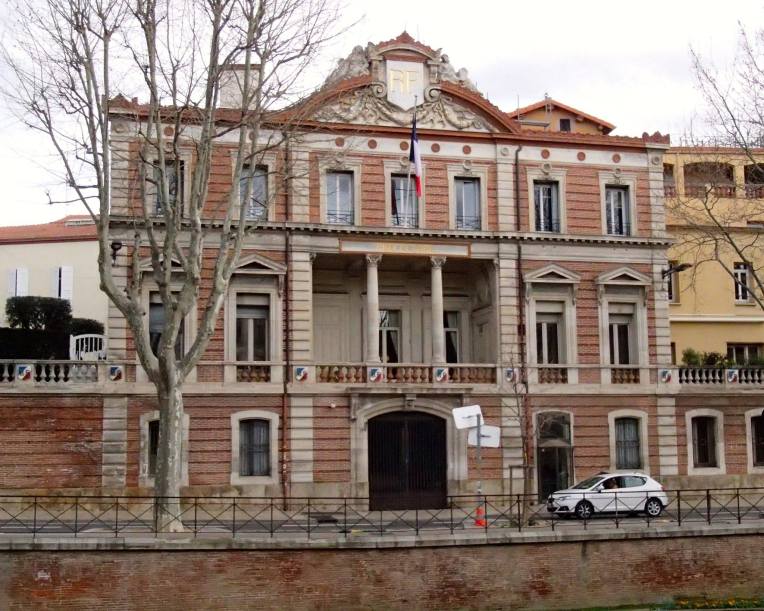
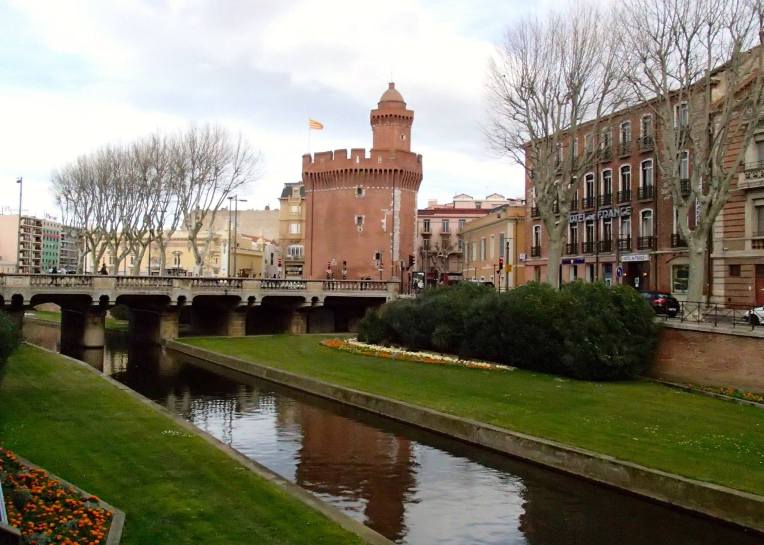
Préfet des Pyrénées-Orientales, Perpignan.The Bassa river and the Castillet in Perpignan
Just before our 2 pm appointment, we went to the Prefectures’ information desk to check-in. A very friendly staff person (speaking both French and English) explained that renewal office was located around the corner at a Prefecture annex in the Hôtel D’Ortaffa. Once we checked in at the reception desk, we were directed to a waiting room and we noticed immediately that there was an electronic display board with numbers and the other patrons were holding number slips. I went back to double-check with the receptionist if I needed a number. Another patron kindly explained to Tracy that there were two waiting areas, one with check-in numbers and a second with appointments to be called by name. Tracy called me back from the reception desk and we moved to the second waiting room. It is always little things like this that seem to cause us the most confusion.
Hôtel D’Ortaffa, PerpignanAfter a
After a twenty-minute wait we met with our immigration representative, a very patient woman who spoke no English. Almost immediately the discussion about “issues” with our renewal applications started.
The first issue: We are moving to Argelès-sur-Mer the day after our current Cartes de Sejours expire. This means we are moving between departments. Our representative first believed that we needed to apply for our renewal in Carcassonne. I was prepared with the e-mailin which I had previously confirmed where to apply for renewal. That seemed to fix the problem quite nicely.
Second issue: We had no proof we were living in Argelès-sur-Mer. Of course not, we haven’t moved yet. However, once we produced our current rental agreement and receipts she shook her head and mentioned that our stuff from Carcassonne didn’t work there. We then pointed out the address for the upcoming residence. Our representative pointed out that the residence was described as a “holiday” property. We indicated the arrival and departure dates on the lease. Our rep ran upstairs and had her supervisor approve it. She came back smiling and saying, “Okay, Okay.”
Third issue: Normally residency is proven with a utility bill in the name of the applicant. But with the Argelès-sur-Mer rental property, like our current home in Carcassonne, the utilities are in our landlords’ names. We produced a copy of the utility bill for the Argelès-sur-Mer property and a copy of our new landlord’s passport as the utilities holder. Our new rental home is a form of duplex. The landlord lives on the opposite side of the property with her entrance on a parallel street opposite from our entrance. The two units have the same number, but use different street addresses. The utility bill, although it is for both properties, is mailed to the landlord’s address. After many attempts in our limited French to explain the architecture of the buildings, Tracy solved the concern with a quick sketch of the two unit’s adjacent floor plans. Oddly, that seemed to work just fine.
Fourth issue: Our pre-addressed envelopes for pick-up notification were made out to our current Carcassonne address. (We assumed that notification would come prior to the 30 days we had before we moved.) Our representative insisted that the address be changed to the new address and kindly provided “white-out” tape for Tracy to change them. We are hopeful that we will have mail upon arrival.
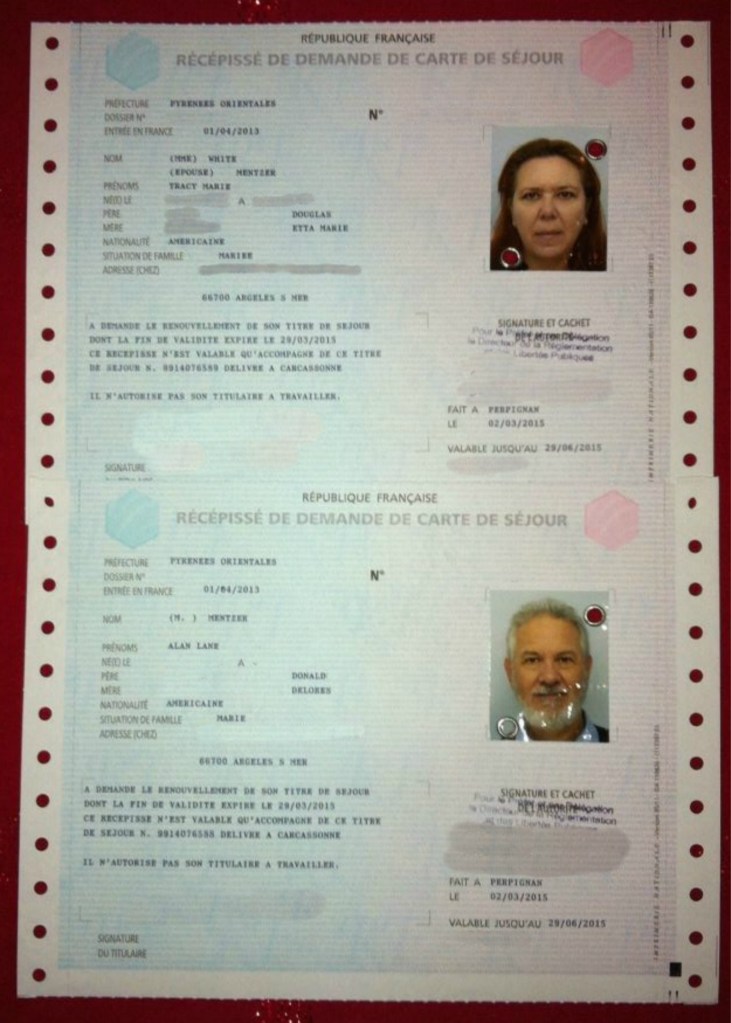
With those issues resolved, the representative accepted our renewal applications for final approval, took our digital fingerprints to confirm our identities, and prepared our Récépissés de Demande de Titre de Séjour (receipt of application for residency permits) that serve as temporary Cartes de Sejours.
Surprise fifth issue: Although the Prefecture’s checklist for the application asked us to bring three passport-style photos each, our representative needed four photos to complete the application process. Easy to fix, we always keep extras in the dossier.
Our representative had us sign our paperwork, issued us our Récépissés de Demande de Titre de Séjour, and advised us that once we received our notification letters we needed to return with our timbres fiscaux (tax stamps), passports, and Récépissés de Demande de Titre de Séjour to collect our Cartes de Sejours for 2015-2016 with our new Argelès-sur-Mer address.
Récépissés de Demande de Titre de Séjour 2015
Success! Although we were getting apprehensive in the middle of our meeting, our representative handled everything with relative expediency. Relieved, we happily walked back to the Perpignan train station with our Récépissés tucked safely inside our dossier. There was even time for a celebratory beer at a café before we boarded the train back to Carcassonne and start packing for our move.
Our biggest lesson: if there is any confusion in terminology. i.e. vacation rental, or addresses that don’t match for utility bills, it needs to be addressed prior to the appointment. A lot of the confusion could have been easily resolved with a letter from the landlord that indicated the dates and duration of our stay, that it would be our permanent address during those dates, that she owned both properties and covered them under one utility bill, and that our utilities were included in the rental price.

























 An Italian Point Of View