Where In The World Are . . .

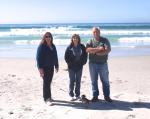
“Where in the world are . . . Tracy, Alan, and Kiara the micro-dog?”

“Where the heck is Carcassonne?  I know France . . . a little.  Paris . . . and the Normandy Beaches from WWII . . . and Provence from all those photos of fields of lavender . . . the French Riviera  . . . the Canne Film Festival . . . and those wine places:  Burgundy, Champaign, and Bordeaux. Alright, I really don’t know anything about France and never, ever heard of Carcassonne before.”

So, what about France?

France, the République Française, is the largest country in western Europe and the third largest in Europe overall. The “Hexagon” — the approximate shape of France — is a little smaller in area than Texas and basically located in the center of western Europe. To the north is the Atlantic Ocean and English Channel and to the south is the Mediterranean Sea, France is bordered by Spain, Andorra, Monaco, Italy, Switzerland, Germany, Luxembourg, and Belgium. France has overseas regions including French Guiana, Guadeloupe, Martinique, Reunion and Mayotte and additional territories like French Polynesia. This is similar to Alaska and Hawaii being U.S. states although not part of the contiguous United States and  U.S. territories like Puerto Rico, Guam, and the U.S. Virgin Islands. France has about 1/5 the total population of the U.S. with 65 million citizens, compared to 316 million in the U.S. France has been the number one tourist destination in the world for the last 20 years. Geographically diverse with three major mountain ranges, major beaches, and scenic valleys, France is also ethnically diverse.  France’s colonial past and tolerant culture has made it as much of a “melting pot” of peoples and cultures as the United States. Paris is the capitol to France’s semi-presidential constitutional republic that shares many aspects with the U.S. system of government. France is the fifth largest economy in the world and the second largest economy in Europe. And yes, the language in France is French.

France in the dark green (Wikipedia Commons)

So, exactly where in France are we?

There are 22 regions in Metropolitan France and 5 regions overseas. The regions are roughly the same as states in the U.S. but with less autonomy. Each region has a capital (think state capital). We live in the Languedoc-Roussillon region and our regional capital is in Montpellier. It is the eighth largest city in France and its fastest growing for over 25 years — it’s also the size of Reno, Nevada with approximately 255,000 residents. The immigration office we work with is headquartered there.  We live in the city of Carcassonne, about 90 miles from Montpellier.
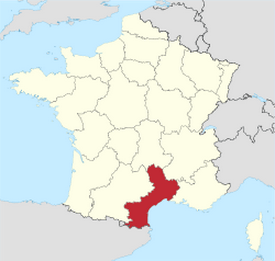
Languedoc-Roussillon Region in red. (Wikipedia Commons)
Languedoc-Roussillon Region in red.
(Wikipedia Commons)

Within the region of Languedoc-Roussillon there are five departments (think of the departments like a county):  Aude, Gard, Hérault, Lozère, and Pyrénées-Orientales.  Carcassonne is located within the Department of Aude and is its Prefecture (the “county seat”). With Languedoc-Roussillon being adjacent to Spain and the Pyrenees there is a Spanish Catalonian influence to food and culture here. There is also the local regional dialect of Occitan (a mix of French, Spanish and Italian) still spoken in the region although French is the official language.
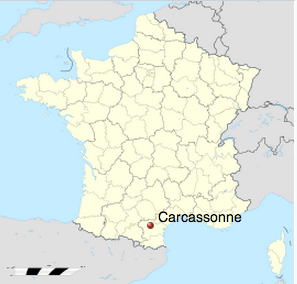
Carcassonne (Wikipedia Commons)
Carcassonne
(Wikipedia Commons)

Carcassonne’s history as a settlement dates back to about 3500 BCE. There was the Roman colony Carsac on the same site in 100 BCE. Carcassonne has been occupied by Romans, Visigoths, Saracens, and Crusaders. The beginning of what was to become the largest existing walled city in Europe started in the 3rd Century with the Romans fortifying their outpost with walls. Through the centuries the fortifications continued to grow and expanded to today’s huge citadel with two massive outer walls three kilometers in length with 52 towers and barbicans. One of these towers housed the Inquisition in the 13th Century and is still known as ‘Inquisition Tower’.  There are drawbridges, portcullis, arrow slits, and machicolations (murder holes – basically holes in the ceilings to drop rocks on people’s heads) to defend the fortress. Portions of the film “Robin Hood: Prince of Thieves” (1991) with Kevin Costner and Morgan Freeman were shot in and around Carcassonne. In 1997, le Cité de Carcassonne was added to UNESCO’s list of World Heritage sites.

Tracy, Alan, and Kiara in front of le Cité de Carcassonne

Carcassonne has a current population of  about 48,000 residents (somewhat smaller than Carson City’s 55,000) and consists of three distinct areas.

1.)  Le Cité de Carcassonne, the historic fortified citadel located at the top of the hill on the right bank of the River Aude. Le Cité is home to museums, restaurants, shops, and hotels. 

2.) The Ville Basse (the lower town) or le Bastide de Saint-Louis is located on the left bank of the River Aude. The Ville Basse, our current home, is an irregular hexagram with narrow streets in the typical grid layout of the 13th Century. The Ville Basse has historic reminders of it’s former walls with three of the town’s four original bastions at the town’s corners and the impressive medieval Jacobin Gate (Porte des Jacobin).

3.) The new town. The modern city and suburbs that has grown around the original medieval city .
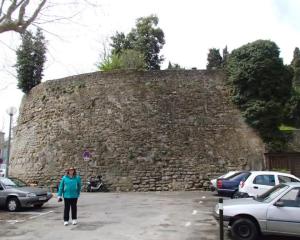
Tracy in front of one of Carcassonne's Ville Basse's remaining bastions
Tracy in front of one of Carcassonne’s Ville Basse’s remaining bastions

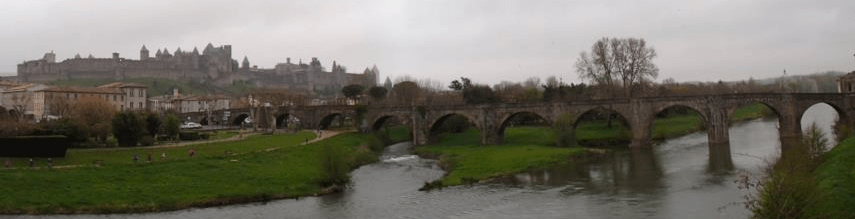
We are enjoying our new home in the Ville Basse.  At the end of our block is Pont Vieux (the old bridge), the stone bridge built with its twelve semi-circular arches in the early 1300s.  This pedestrian bridge crosses the River Aude and leads up to le Cité de Carcassonne. The parks on both the left and right banks of the Aude are Kiara’s favorite places to walk and play.
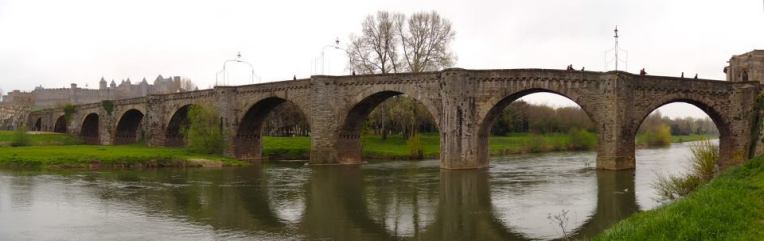
Du Pont Vieux
Du Pont Vieux

In Carcassonne’s Ville Basse we have been finding many new favorite spots, one of which is La Petit Moka with its outdoor seating and great coffee. Near our apartment is Square Gambetta, host to a rotating variety of special events including open air markets, new car shows, and flea markets.  The Musée des Beaux Arts (Museum of Fine Arts) is at the west end of Square Gambetta inside an 18th century hôtel.

Carcassonne Map
Carcassonne Map

The town square, Place Carnot, is home to the open air market on Tuesdays, Thursdays, and Saturdays, where we shop for fresh fruits and vegetables  The square has a fountain of Neptune at the center and a grandstand at one end. Its perimeter is lined with cafes and shops. Place Carnot is a perfect location for people watching and a morning café creme, an afternoon café, or an evening pichet de vin (carafe of wine). Interesting historical note: during the French Revolution and Reign of Terror, four people were guillotined in the Place Carnot. Nowadays, our favorite coffee place La Petit Moka is there.

Place Carnot
Place Carnot

At the north end of the Ville Basse is the Gare de Carcassonne (train station) and the section of the Canal du Midi that flows through Carcassonne. The Canal du Midi, like  Le Cité de Carcassonne is a UNESCO World Hertiage Site, it is a 225 mile long network of navigable waterways linking the Mediterranean to the Atlantic through 328 structures (locks, aqueducts, bridges, and tunnels.)  Built between 1667 and 1694 ,the Canal du Midi paved the way for the Industrial Revolution in France. There are now recreational barge cruises on the canal.

Canal du Midi
Canal du Midi

To the south of the Ville Basse, is the Jacobins’ Gate, Porte des Jacobins, a remaining example of the four former gates when the Ville Basse was still surrounded by a wall. The Jacobins’ Gate is registered as a historical monument. Outside the gate are fountains and gardens.

Jacobins Gate
Jacobins Gate

Our apartment is located one block west of Square Gambetta, approximately six blocks from Place Carnot and 1/2 block from Pont Vieux. A 20-minute walk from our front door will find you at either the train station (Gare de Carcassonne) or Le Cite (the citadel) depending on whether you head north or south. The Jacobins’ Gate is less than 5 minutes from our apartment.
Faux Amis – False Friends: False Cognates With English and French Words

What’s a “false friend?”

“False friends” are pairs of words in different languages which have similar spelling, so you assume they must have similar roots and meanings.  Well that assumption can sometimes be embarrassingly wrong.

Our total immersion into French culture and language has presented many opportunities to embarrass myself, thankfully not all of my assumptions made it past my lips in front of Tracy or folks on the street. I am still inching my way toward a basic working knowledge and fear there will be many more of these opportunities to embarrass myself with a “false friend.”

While many of these words may be well understood by anyone with a couple of years of high school French, I’ve posted below some of my more embarrassing/funny misunderstandings:

1.  La Mie de Pain

I assumed with the popularity of Fifty Shades of Grey that this might be a S&M dungeon.  It’s actually a bakery whose name is “The Breadcrumbs.”  Pain is the French word for bread.

La Mie de Pain
La Mie de Pain

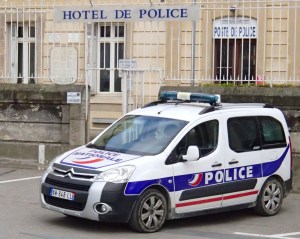
2. Hôtel de Police

A travel hotel exclusively for visiting police officers?  No, the local offices of the police department.

Hotel de Police
Hotel de Police

3.  Librairie

Rather than being a public library with books to lend to the pubic, this is a very comprehensive bookstore and stationery business.

bookstore

4.  Menu

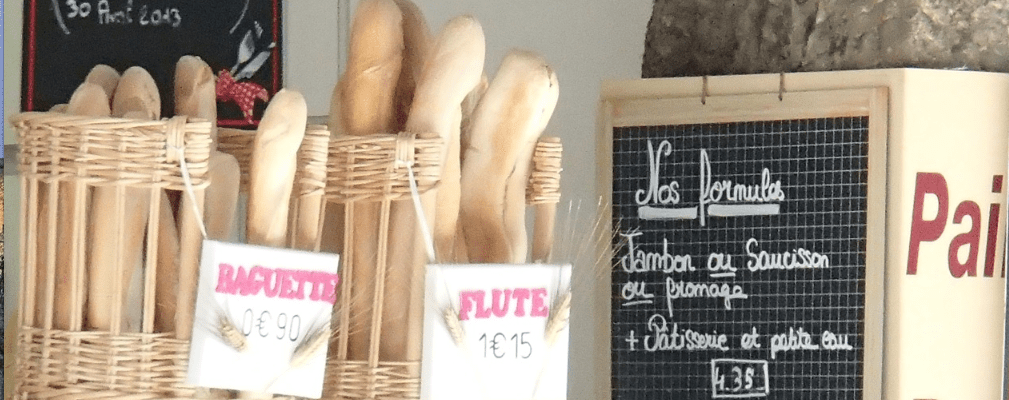
Where as in the US the menu is the brochure with a listing of meal offerings, menu in France is often posted on a notice board with a fixed-price meal of three or four courses: “Menu = Plat du jour (the plate of the day, the day’s special with meat and vegetable) + 1/4 vin (1/4 liter of the house wine) + desserte (dessert) + café (after meal espresso).”  Asking for a menu may result in the arrival of an unexpected meal.  The menu is also known as the formula.

Menu
Menu
Formules
Formules

5.  Entrée

This has got to mean the same thing, right?  We use the French word in the U.S.  However, entrée is France is not the main course, it is the starter course or appetizer.  The main course is the “plats principaux.

Entrée

6.  Immobilier

I kept walking around and seeing Immobilier offices on every block of the business district.  My mind went to a “wheel boot,” a wheel clamp used to immobilize a car with excessive parking violations, but I couldn’t understand the need for so many offices.  A closer look revealed that these were real estate agencies (real estate = immobile property.)

Immobilier
Immobilier

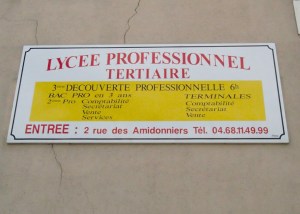
7.  Lycées

Lycées in large buildings in residential areas are obviously not Asian lychee fruits.  Lycées are senior high schools for pupil 15 to 18 years old.  Lycée général and lycée technologiques normally lead to university study.   Lycée Professionnel leads to different kinds of vocational diplomas.

Lycee
Lycee

8.  Collège

 Collège in France is not post-secondary education.  It is junior high school for pupils from the ages of 11 to 14 years old.  These collégien and collégienne (boys and girls) are taught by a professeur.  Institutions of higher education in France are referred to as université and taught by professeurs des universités or a professeurs titulaire d’une chaire.

Collège
Collège

9. Defense

Rather than defense meaning “personal protection,” défense d’entrer means “no admittance!”

Défense d'Entrer
Défense d’Entrer

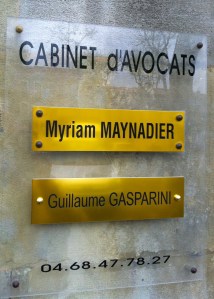
10. Cabinet

A cabinet is not a piece of furniture, but a business or professional practice like attorneys’ or doctors’ offices. Think about the term like the President’s cabinet.

Cabinet
Cabinet

In addition to the language faux paus I have also had the joy of trying to translate the operator’s manual for our clothes washer/dryer from French into English to sort out the directions on how to safely wash a load of laundry without ruining our minimized wardrobe.  I am fairly certain that I didn’t study that hard for my Ph.D. comprehensive exams.

What We Know About the French Train System (So Far)

Tracy’s MacBook waited until after we arrived in Carcassonne to start having difficulties, so a trip to the Apple Store was in order.  That accelerated us making use of the French train system sooner than we anticipated.  While we have taken trains in Europe before, it was never with a set appointment at the other end so we needed a bit more planning.

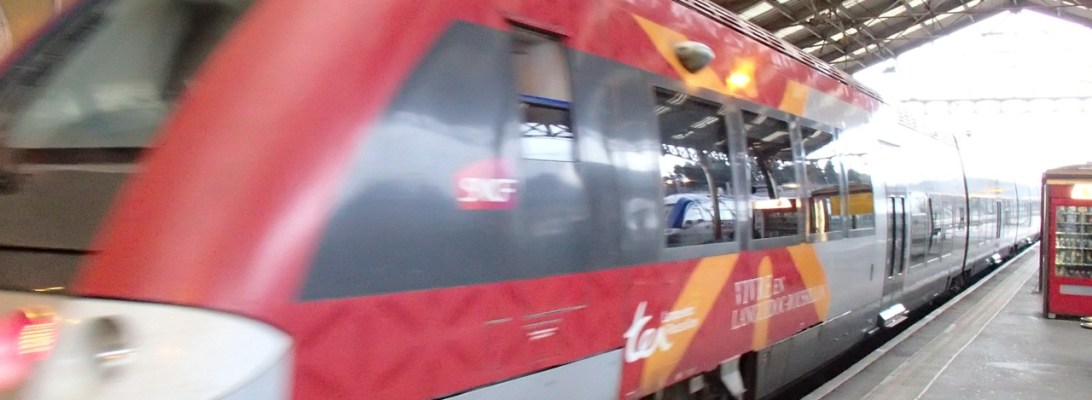
Some background first.  France has three levels of train service run by the SNCF (Société Nationale des Chemins de fer Français), the French National Railway Company.  That includes the TGV (Train à Grande Vitesse) high-speed “bullet trains,” Intercités for long distance express passenger trains, and the TER (Transport Express Régional) for urban and regional passenger rail travel.

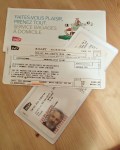
Since we are now retired and on a fixed income, we are very aware that we need to save money where we can on everyday items to have more money to spend on the luxuries.  Twenty of France’s twenty-seven regions (a region being roughly equivalent to a state in the US) with TER service has a discount plan that allows discounts train travel for residents within a region.  Within our region of Languedoc-Roussillon, for 26€ a year you can purchase a Carte Via Liberte discount card for up to four people to receive a 25% discount on weekdays and 50% off all weekends and school holidays.  There are some additional discount plans for outside the region too.

With my trusty Carte Via Liberte’ in hand, Tracy and I strolled over to the Carcassonne Train Station (Gare de Carcassonne) which is .6 miles away from the apartment.  The train station was built in 1857 and has one of those classic clock tower passages .  It is located next to the Canal du Midi, the canal connects the Garonne River to the Etang de Thau on the Mediterranen Sea and along with the 120 mile long Canal de Garonne forms the Canal des Deux Mers joining the Atlantic to the Mediterranean in 1681.  A barging canal like the Erie Canal in New York, it is kind of the French equivalent of the Panama Canal connecting two major bodies of water.

My French is very, very basic at this point.  My old “police Spanglish,” high school-college German, and Italian are all better than my French.  My “go to” method at this point is to anticipate what I need to request and to pre-write the questions that I translated using Google Translate into my handy pocket notebook (some police habits never go away).  If the ticket agent doesn’t speak English (and we are finding very few people do speak English) I hand them my notebook so they can read my request.  That and a friendly bonjour, big smiles, and many s’il vous plait and merci.

S’il vous plait Madam, est‐ce que vous comprenez l’anglais?”  Good Karma day for me.  The very helpful ticket agent spoke English fairly well. She scheduled Tracy and I for our round-trip ticket from Carcassonne with a train change in Narbonne for final arrival in Montpellier.  Since the trip was on a Saturday we received a 50% discount with our Carte Via Liberte‘.

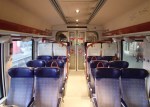
The TER trains are modern, clean and very comfortable.  They arrive and leave on the minute to their schedules.  (Although there has been rail strikes in the past.) We travelled  second class, the only real difference between first and second being reservations and seats three abreast in first class and “first come – first served” and seats that are four abreast in second class.  There are large windows to watch the scenery go past with sunshades on all the windows. Arrival and departure times are indicted on electronic display boards throughout the stations, although in French but easy to puzzle out.

While no one checked our ticket outbound, on the return trip our tickets, along with my Carte Via Liberte’ was checked by friendly conductors.  Apparently some people try to ride for free.  They are escorted off the train by the conductor and met by Surveillance Générale, which I understand is SNCF’s private security that has limited police authority.  My understanding is that riders without tickets are fined on the spot.  There are also divisions of the Police Nationale that work on the train lines and metro in Paris and its suburbs (Police Regionale des transport) and major rail lines (Service National de Police Ferroviaire.)

The trip to Montpellier was a pleasant way to do some sight-seeing from the train, get Tracy’s MacBook repaired, and better understand the train system. And we get to do all again in a week or so when Tracy’s MacBook has been repaired.

Dog on a Plane (Part Two)

Finally, D-Day (Departure Day!)

On Easter morning, Sunday the 31st, we checked out of our hotel room and headed to Reno-Tahoe International Airport with all our (much downsized) worldly possessions and Kiara the Chihuahua.

I dropped Tracy, Kiara, and the bags out in front of the main terminal and swung around to return the rental car.  As I walked back to the terminal I found our niece Lyssa, her husband Chris, and baby Selah saying farewell to Tracy and Kiara. Tracy also had for Lyssa a bag of 110 volt hair care appliances that would completely “self-destruct” if used with Europe’s 220 voltage system. With final good-byes complete we headed inside to check-in with Delta Airlines.

To our surprise we found that our two checked bags would go all the way through to Toulouse. No having to reclaim the bags for customs inspection in Paris. Yippee!

The we met Delta agent, Sarah. What a joy! She was extremely helpful ensuring Kiara was booked for cabin travel with us on every leg of the flight. She made sure we had copies of Kiara’s cabin booking to show the gate agents in Salt Lake City and Paris, if needed. Especially in Paris where we would switch from Delta to Air France.

Interesting to note that with the exception of asking if we had Kiara’s veterinary and USDA clearances, no one ever actually examined the documents. Although we will need the documents for the French veterinarian for Kiara’s EU Pet Passport, apparently we could have flown without all the effort of seeing the vet and USDA. But we operate on the “better safe than sorry” principle and we didn’t want the nightmare of being stopped at customs in Paris and refused admission or worse, Kiara being quarantined.

Although Kiara had to stay in her carrier aboard the plane, the gate agents in Reno-Tahoe, Salt Lake City and Charles De Gaulle airports graciously allowed Kiara to get out of her carrier, stretch her legs, and “strut her stuff” as an international jet-setter, a status she has long aspired to.

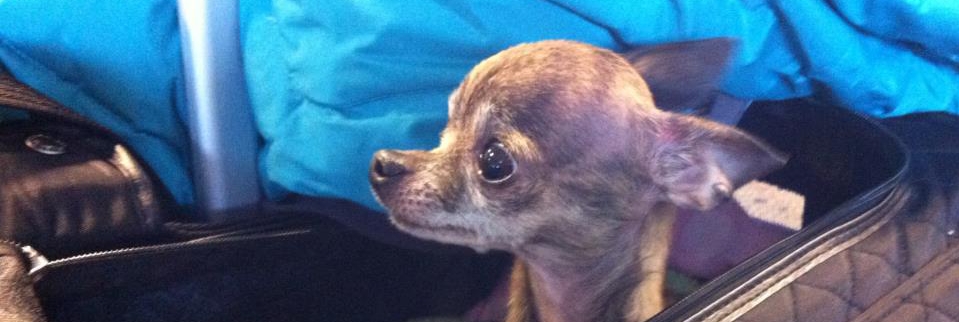
Kiara slept quietly and did not seem upset by the flights, although she would have been happier in one of our laps. Tracy did the closest thing possible to that with putting Kiara’s carrier in her lap with slipping her hand through the zippered door. No problems even medicating Kiara while enroute, though Tracy did forewarn the flight attendants that it would be necessary to do so because of her medical condition. Thankfully the flight attendants were more than understanding regarding the medication issue.

Upon our arrival in Toulouse we had the most amazing surprise of all . . . our checked luggage actually arriving with us! It was quite the relief to realize that there IS an airline that can get both you and your luggage to the same destination, at the same time. A feat that United, US Airways and Continental Airlines have never, ever been able to accomplish . . . ever!

Our final surprise was that our new landlords, British expats Jason and Annette, happened to be in Toulouse dropping off some paperwork for their daughter and offered to swing by the airport to pick us up rather than Tracy and I taking the train to Carcassonne. They were kind enough to drive us (and our luggage) the 54 miles to our apartment. That let Kiara ride in our laps for the final lap to our new home, and gave us a chance to get acquainted with another expat couple.
In all, the trip for Kiara (and us) was minimally traumatic, although our new “Miss International Diva” believes she now merits living in the adjacent castle of  la Cité de Carcassonne. In the mean time, we are settling into our new apartment . . . without issue, well mostly without issue.

Dog on a Plane

“How are you flying to Europe with Kiara?”  “Is there a quarantine on arrival?” “Can she fly in the cabin or does she have to go in the hold?”

Getting ready to fly to Europe with Kiara the Chihuahua has been a challenge.  Lots of research to find the right way to bring a pet to Europe.

First, there are a limited number of international airlines that allow pets to fly in the cabin.  We want Kiara to fly in the cabin with us.  Flying is stressful enough for dogs and there are all sort of horror stories about pets flying in the cargo holds of aircrafts.  Over Saint Patrick’s Day this year, a dog that was enroute from Newark to Phoenix was accidentally shipped to Ireland.  We decided on Delta as our airline choice for this trip.

In order to be allowed in the cabin, pets are limited to a maximum weight of 9 to 20 pounds depending on the airline.  Kiara is only 2 and a half pounds so we had lots of leeway.  Pug-nosed (brachycephalic) cats and dogs are not allowed to fly because of their high incident of in-flight deaths.

There are a limited number of pets allowed in the cabin depending on the aircraft.  Most commonly the limit is two pets in first class, two pets in business class, and a maximum of four in economy.  Delta no longer allows pets in first or business class on international flights.  We had to make a reservation for Kiara early to ensure a spot for her.  We pay an extra $200 fare for Kiara to fly in the cabin.
The dog carrier must be an approved model that is leak-proof, ventilated, and able to fit under the seat.  Tracy loses her carry-on “personal item” to bring Kiara’s in-cabin carrier.

Kiara has a seizure disorder and takes two anticonvulsant medications every twelve hours.  We have a TSA approved cooler pouch for her meds.  We will have to give a her a dose of medicine while enroute.

Finally, there is all the required paperwork to take a pet abroad.  In order to avoid having Kiara quarantined on arrival in the European Union, there is a specific process to get a United States Interstate and International Certificate of Health Examination for Small Animals” from the US Department of Agriculture.  (Seriously, exporting dogs internationally comes under the jurisdiction of the US Department of Agriculture.)  The airlines requires a final health clearance be performed no more than ten days before arrive in Europe.

So last Friday Kiara had a complete veterinary exam from her own veterinarian (who must be USDA accredited) with boosters for all vaccinations and a rabies inoculation “at least 30 days before travel but not more than 12 months” with a rabies certificate issued. The doctor completed the forms in both English and French and faxed the paperwork to the USDA office for preliminary review.  Our nearest USDA office is in Sacramento, California.  We then waited until our veterinarian telephoned us back Friday afternoon to tell us the paperwork looked good to the USDA and we can pick up the original forms from Kiara’s vet’s office.

Today we took a four-hour road trip to Sacramento and back to visit the USDA to get Kiara’s health paperwork certified.  USDA-Sacramento was friendly, helpful, and it only took the USDA’s veterinarian about 20 minutes sign off, stamp, and certify the paperwork.  We believe we are now ready for Kiara to join us on the airplane on Sunday.

Fingers crossed that all the research and work pays off on Sunday.

We Are Pedestrians And A Granddaughter Visit

We are rushing toward our departure date and frantically working on our final minimizing with 29 days to go.

We needed to sell our last remaining car.  We really wanted to have that major “loose end” completed with the car sold with registration and insurance cancelled before we leave.  In addition to listing the car on Cars.com and Craigslist, the Mercedes-Benz/Smart Car  dealership’s very helpful representative, Emily, had previously sent an e-mail about their Buy-Back program.  Apparently it is difficult to maintain Smart cars in their used car inventory since the owners hate to part with them.  A road trip to the Mercedes dealership in Sacramento resulted in a sold car.

For the first time since 1973, I am without a vehicle.  I really enjoyed the Smart car over the last four years.  The weather over the last week was pleasant enough to have the ragtop down.  I so understand now how Tracy felt after she sold her convertible.  After years of used minivans, station wagons, and SUVs, it was a real pleasure to have cars we enjoyed driving every day.  Tracy and I are now totally pedestrians.  We will sparingly rent a car or use the bus for our remaining transportation needs.

In between working and running errands this week we had the pleasure of granddaughter Lorelei visiting from Utah.  Although Lorelei was fighting an illness we did get some time for games and trip to the park.

Second Packing Trial Run, Carmel, and San Martin

As our countdown gets below 40 days until we depart, we keep finding there is still more and more tasks to get done.  We made a quick drive over to San Martin, California to see Tracy’s Aunt Debbie and Uncle Gerry.

We delivered some family heirlooms Tracy received from her grandfather, Deb’s father.  With our efforts with minimizing possessions, we have been distributing keepsakes to family members before we go.  Tracy brought photos, papers, memorabilia  collector money, and a family Bible from her grandfather that she thought should go back to her Aunt Deb.  We also asked Deb to keep a three-inch binder of legal documents for us:  certified birth certificates, marriage and divorce paperwork, baptismal certificates, etc.  We are bringing a smaller zippered binder with us to Europe with our essential legal documents.  Debbie is kind enough to hold our extended paperwork collection should we need any additional documents while abroad. Deb would be able to send needed documents by DHL when and if the need occurs.

We were able to squeeze in a hike in at Uvas Canyon County Park and Waterfalls.  Deb and Mac the dog guided Tracy, Kiara, and me through the green, lush park.  Great hiking trail with scenic bridges, flowing streams, multiple waterfalls, and quiet pools.  One of those amazing “pocket parks” tucked away unexpectedly at the end of a county road.

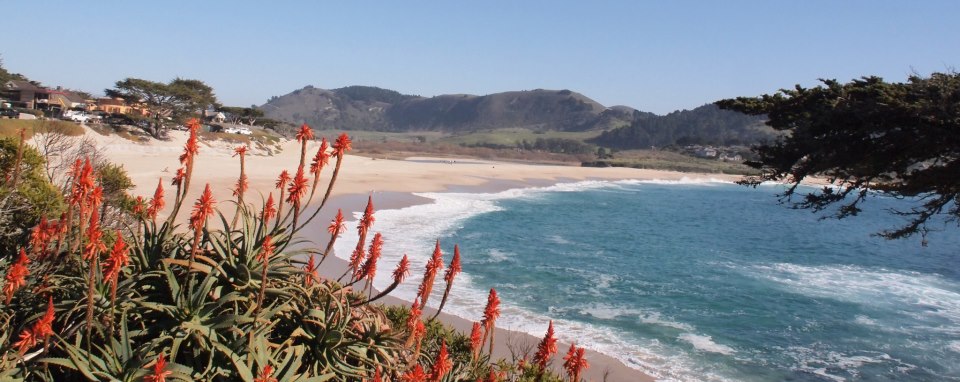
The next day we drove to Carmel-by-the-Sea.  Carmel is a favorite locale of ours and the visit let “California Girl” Tracy see the Pacific Ocean a final time before we relocate.  It was a beautiful day walking along the beach, watching the waves, looking up at Pebble Beach golf course, and a picnic lunch.  Dog-friendly Carmel welcomed Kiara to have her first visit to the ocean and opportunity to walk along the beach.

On our way back home we discussed the logistics of travelling with eight bags and whether or not we needed to rent a car in Toulouse in order to transport it all to Carcassonne.  We decided we could minimize our luggage still further from our first practice run packing our luggage.  We believe we could lighten the load from a three bedroom house to luggage still more.

We repacked our bags using our first packing list.  We started this time with eight bags weighing a total of 270 pounds.  We then unpacked and split the contents into “must have,” “maybe,” and “eliminate” piles.  It wasn’t just the idea that extra bags cost progressively more, it was the realization of the work and potential frustration trying to move eight bags with only two arms each.  We considered the cost of replacement versus the cost for items compared to re-buying the item in France, the necessity of having the item in the first place, and the frequency of use for the item. Could we justify a $100 for an extra bag, $285 for a third or fourth bag?  Could we justify having rent a vehicle to transport luggage rather than just using public transportation?  Would the replacement of an item be difficult or extremely costly in France?

Immediately we reconsidered the books we slated to bring. We are “book people” and wanted art, history, and language references to come with us, but you just don’t realize the weight of a stack of books.  We had already gone digital with Kindles for our recreational reading, so we reduced the number of physical books to just a few art books.   We decided to scan and digitize the remaining books into PDF files we could upload to our computers and Kindles.

We further eliminated packing materials, a few clothing items, some carry bags, decorator items, and an additional “back-up” camera.  We decided to pass some additional keepsake items on to the kids. I replaced my previous carry-on bag with the maximum size possible carry-on bag.  We re-shuffled and re-organized the contents from eight bags down to six bags weighing 200 pounds total:  a single checked bag and a carry-on bag each, with a camera bag for me, and Kiara’s carrier for Tracy.

The final results was that we eliminated two checked duffel bags and 70 pounds from our initial packing practice.  Tracy is already talking about a third trial run to maybe eliminate still more.

Super Bowl And A Trial Run With Luggage

In our family, Super Bowl is a non-traditional holiday that combines football, food, funny TV commercials, good-natured “smack talking” between team fans, and general family fun.  Even the kids that didn’t like football liked the annual Super Bowl party.  This year we hosted our last family Super Bowl event and were lucky to have at least some of the adult kids and their significant others join us, Nick, Adam and his fiance’ Liz, and Casey with his girlfriend Nicole.  Sarah had another commitment and Danielle, Tyler, Dirk, and Dallas are all out-of-state.  It was a great time with kids that could make it and those participating via text messages.  We had former University of Nevada – Reno quarterback Colin Kaepernick starting for the 49ers so he and his team as our hometown favorite had all of us (a first for our family) cheering for the 49ers. The kids followed Kaepernick from his first start to his last with UNR with season tickets and/or UNR v. UNLV games.

Tracy and I had made up a buffet of meats, cheeses, veggies, soft drinks, and craft beers. Lots of visiting, laughs, cheering, and Kiara received lots of attention. Kiara, however, is not a fan of football or Super Bowl. We loved the pre-game performance with Jennifer Hudson and Alicia Keyes and made fun of Beyonce’s fetish outfits at half time.  Though a dramatic and close game right to the end, the Ravens won 34 – 31, a bittersweet ending to our last Super Bowl party, but we really enjoyed it all the same. Special thanks to Dallas for being our official Ref [as in reference for rules of play] there was a bit of discussion about a play involving a player falling with the ball, getting up and running it again that ended with a text message to Dallas for the official ruling.

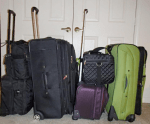
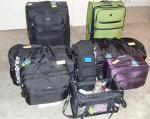
The following Tuesday (which continued into Wednesday) we held our “pre-flight” check. A trial run of the luggage/items moving abroad with us.  We have minimized from a three bedroom house into a one bedroom apartment and now into eight bags.  We will be carrying one carry-one bag each, one personal item each (a camera bag for me and Kiara’s carrier for Tracy). Our checked baggage will be one suitcase and one duffel bag each.  We are limited to 50 pounds per checked bag.  The first checked bag is free, a second bag is an additional $100, a third checked bag and any subsequent bag is $285.  A bag over 50 pounds has an additional $100 penalty with a maximum limit of 70 pounds per bag. We opted for a second bag each (at the $100 rate) and to limit our bags to 45 pounds or as close to it as possible. It was surprisingly difficult to equally distribute the weight to be at our prescribed limits. Most of which entailed packing the bag, securing its contents, weighing the bag, unpacking the bag, repacking the bag and weighing it again, and again, and again. What we thought would be a few hours turned into most of the day and part of the next. After several hours of lifting and checking the weight of the bags the decisions to discard some items became easier and easier and easier.

To make certain that our actual packing day runs smoothly, we created a database, cataloged and photographed not only each piece of luggage but each packing cube contained within the luggage so that we know exactly how each bag was packed and where each item was inside the bag. Approximately 50 percent of each of the bags are still packed and our database notes which items have been removed for use through the end of March. The idea was to know exactly what had to go back into each bag so that the next time around it is done easily and quickly.

Tracy and I previously made  a decision to travel with only two checked bag.  Our plan is to move and live in a different city every year or so.  We want to be able to travel light, especially with our intention to use public transportation and not own a car. Our packing trial run forced us to make some final decisions to lighten our load.  We each packed a week and a day of clothes; eight complete wardrobe selections, two pairs of shoes, jackets, scarfs, and hats.  Since we decided to make use of furnished apartments we packed very few household, picnic, and home office items.  We have Kiara’s flight carrier, playpen, bed, chest carrier, harness and leash, and her wardrobe and blankets (hairless micro-dogs get cold easily.)  We packed a few essential hard copy books, but for the most part we have gone digital for reading and reference.

Our biggest indulgence is technology.  MacBooks for each of us, a PC netbook for me and a iPad for Tracy, multiple external hard drives, a principle camera and a compact waterproof camera for both of us, GPS unit, a Doxi portable scanner, Kindles for each of us, and finally personal iPods.  Photography is our principle recreation and method of sharing our travels, we need the computers to communicate with family back home and to keep learning languages, the GPS with a pedestrian option to help us find our way despite lack of language skills, and iPods and Kindles for recreation and language studies.

Our luggage is meant to nest and store inside one another for compact storage after arrival and for use on future road trips around Europe.  Amazingly, over the last 18 months we have managed to reduce our personal possessions from filling a 3-bedroom house to two large and two small bags each with a total weight of 270 pounds.

Fifty Days To Go – Bankers And Final Minimizing

During our October appointment to the Italian Consulate General in Los Angeles, Tracy and I signed our visa application in front of a consular officer who also endorsed the application.  However we were also required by the Consulate to submit three additional documents before they would process the application.  The Consulate wanted a copy of our marriage certificate, a notarized letter of why we wanted to live in Italy, and a letter of financial solvency from our banker.  The last request seemed very old fashioned since we had already submitted pension statements and account balance print-outs.  I had an image out of  the film “It’s a Wonderful Life,” and the Consulate wanting us to go visit Jimmy Stewart down at the Bedford Falls’ Building and Loan office and asking him for a personal letter of reference.  We, like most the people we know, don’t have our very own “Banker.”

We followed-up with an appointment with the manager at our Bank of America branch.  We were surprised to learn that we actually did have our own banker.  Cherye, the branch manager, recognized us as long time patrons of the bank.  She was extremely helpful with getting us the document we needed.  She requested the financial letter from the Bank of America corporate office for us and co-signed the letter when it arrived at the bank branch five days later.  We added the bank letter to the other documents with our previously endorsed visa application and “FedEx’ed” the whole package along with our passports  back to the Consulate for their review.  We are now anxiously waiting for a return FedEx package from the Consulate with our final approval, visas, and passports.  We are in “hurry up and wait,” mode.  Although we can only apply for the formal visa a maximum of  90 days prior to scheduled departure, the Consulate does not provide a time estimate for processing and final decision.

Our efforts on minimizing “stuff” is going well.  Tracy and my goal is to downsize our personal possessions and move to Italy with only two suitcases and a carry-on bag each that contain all our clothing, computers, Kindles (in place of books), and cameras. (The dog has her own carry-on bag to ride in.)  We went through our wardrobes and reduced our clothing to just 10 outfits each, coat, and shoes.  Our son Nicholas, who is a similar height and build as me, made off with several suits, shirts, slacks, ties, and jackets from my closet.  Tracy has been copying our legal and financial records along with family photographs by scanning them into digital files while saving them to external hard drives.  She has already “ripped” all of our DVD movies into digital files so we can have some English language entertainment while abroad.

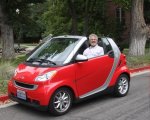
We put the Smart Car Cabriolet, our last vehicle, up for sale on Craig’s List. We wanted to get the car on the market before the upcoming holiday season diminishes the cash flow of potential buyers. The Smart car is our last “big” possession that we need to divest ourselves from.  After owning minivans, station wagons, and family sedans because of raising eight kids, I really enjoyed the last few years of having a “ragtop” two-seater and driving with the wind and sun in my face.  But getting rid of the car is a final step for making the move and transitioning on to the next big step in our lives.

Alan driving Smart car