One of the iconic French cocktails is Kir (pronounced “keer”.)
Light and refreshing, it is considered the perfect summer aperitif.
The back story to the drink was that the mayor of Dijon, Felix Kir (a Catholic priest and hero in the French resistance during WWII), wanted to promote Dijon’s local products during the post-World War II economic recovery. But the Nazis had previously confiscated the entire production of Burgundy wine for which Dijon is well-known and there was left a surplus of the then-unknown Aligoté dry white wine. In a marketing coup, Mayor Kir invited delegations from around the country to receptions in Dijon and served them a cocktail he created using the Aligoté wine and Crème de Cassis, a sweet, dark blackcurrant liqueur that was also produced locally. The Crème de Cassis‘ sweetness offset and balances the acidity and dryness of the Aligoté wine. Mayor Kir’s cocktail was a big hit and resulted in huge sales of both Aligoté wine and Crème de Cassis liqueur.
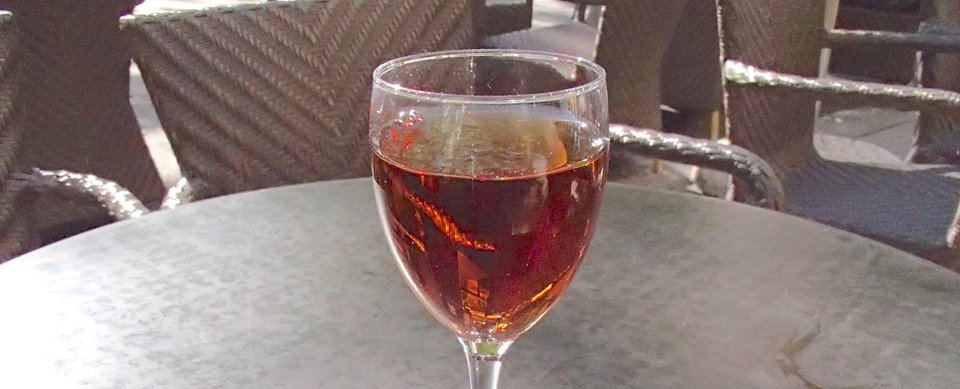
Kir Cocktail
Today you may order the classic Kir with Crème de Cassis (blackcurrant), Kir de Mûre (blackberry), Kir de Framboise (raspberry), Kir de Pêche (peach), or you can “up the ante” to a Kir Royal made with champagne.
Most Kir cocktails today will be made using a local dry white wine and mixed one part Crème de Cassis to four parts wine-producing a deep blush color. Kir is served in a white wine glass and Kir Royal is presented in a champagne flute.
What do I think? I like it. It’s very refreshing on a sunny afternoon, but it’s a little too reminiscent of a wine cooler to me. It might be a nice change of pace, but I think I’d rather just have a good glass of wine (or a carafe of wine) to enjoy the afternoon.
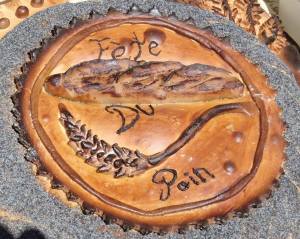
Carcassonne seems to have special events every week. This week was la Fête du Pain (the Bread Festival) sponsored by a local professional baking college, Saint Honoré Academy. (Saint Honoré is the patron saint of bakers.) All the events in Carcassonne reminds us of all the special event we used to experience in Reno, Nevada. French people really do take fresh baked bread seriously and we have found that in France, “Bread is king.”
The school set up both wood-fired and electric ovens in event tents on the perimeter of Square Gambetta We could smell freshly baked bread and hear the DJ’s music as we walked the block from our apartment to the Square. A dozen artisan bakers and apprentices were busy baking baguettes, breads, croissants, cakes, bread sculptures, and pies for exhibition and sale to the public. Many of the breads were created using the French twice-baked technique that makes that especially crusty bread that France is well-known for serving.
Fête du PainFête du PainFête du Pain – Baker working the wood fired oven
Tracy and I tried the pain au chocolat (chocolate croissant), a favorite of ours, and watched the bakers perform for the crowds. There was an area for children to decorate cookies and an inflatable “bounce house” with multiple food and craft vendors along the Square to visit as well.
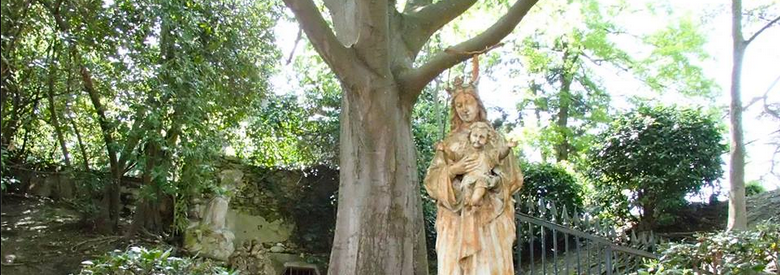
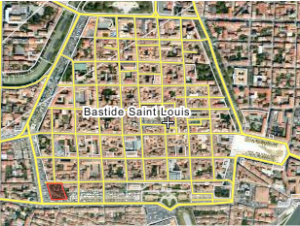
We discovered Jardin du Calvaire (Calvary Garden) located inside one of Carcassonne’s three remaining bastions. The “Big Tower” (also called the Bastion les Moulins [Tower of the Mills]) was built after 1359 and was part of the walls and fortifications that used to surround the Bastide Saint-Louis (Ville Basse) of Carcassonne. Located on the Southwest corner of the city, the bastion was later covered with windmills in 1599 to power mills grinding grain into flour for bakeries that would supply the city with “300 breads everyday for the poor.”
Location of the Jardin du Calvaire within Carcassonne’s Ville Basse
In 1825 a group formed to create the Jardin du Calvaire within the bastion. The leader of the group was Canon Cazaintre who is now buried on the site. The garden’s design was created by architect Jean-François Champagne. Jardin du Calvaire is circled with “Station of the Cross” shrines on its perimeter, has cypress and olive trees and laurels, and impressive sculptures reenacting the crucifixion on Calvary Hill. The crucifixion tableau is shielded by trees and cannot been seen from the regular garden; the sculptures can only be viewed after climbing to the top of the small hill in the garden. There is a small chapel built into the hill that represents the Holy Sepulcher and is illuminated with natural light from the crucifixion scene above.
Chapel within the Jardin du CalvaireWithin the Chapel in the Jardin du Calvaire
This urban garden is very peaceful with many benches along its paths. The restful quiet can make you forget that Jardin du Calvaire is situated alongside the major avenue of Boulevard Barbès.
One of Tracy’s favorite things about the garden are its numerous feral, but friendly cats cruising the garden and serving as unofficial “guardians” for the garden.
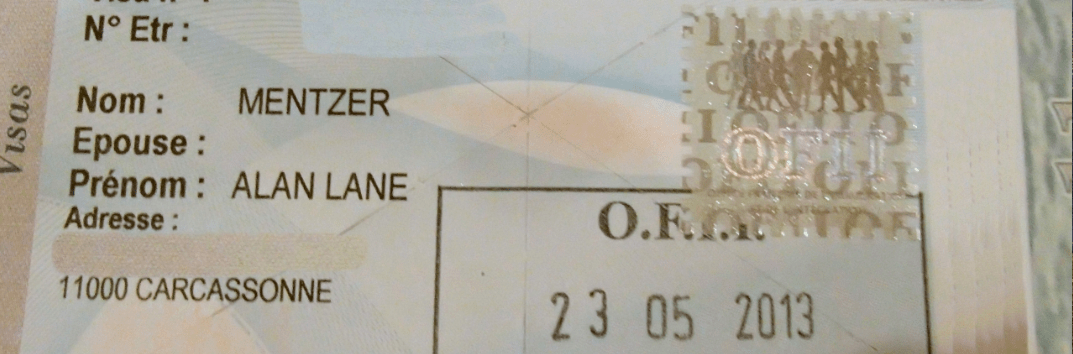
xamTracy and I are extremely excited that we have successfully completed our process for obtaining our Titre de Sejour (resident permits) at the OFII (L’Office Français de l’Immigration et de l’Intégration)office in Montpellier yesterday.
Titre de Sejour
The detailed process started in January 2013 when we first applied for our initial visa application at the French Consulate in San Francisco. After our visa request was accepted, the consulate gave us each a form, Demande d’Attestation OFII, that we would need to mail to the regional OFII office having jurisdiction over our new residence after our arrival in France. We added the Demande d’Attestation forms to our growing dossier of documents which we carefully hand carried on our flight to France.
During the first week in Carcassonne, we ventured to the post office to mail the Demande d’Attestation forms and supporting photocopies (passport page showing personal information with identification numbers, stamp from French immigration showing the date and point of entry, and the visa that was issued by the Consulate.) This involved using of our very limited French to mail a certified letter with receipt showing proof of posting. Titre de Sejour process is time sensitive and has to be completed within 90 days, so not knowing how long the French bureaucracy might take, we wanted to get it started as quickly as possible.
Surprisingly, we received back a confirmation letter back from OFII in a week’s time with an appointment set for May 23 for our medical exam and interview in Montpellier. At least that is what we discovered after a lengthy translation session with the five pages of correspondence enclosed. Thank goodness for Google Translate and a French-English dictionary. The medical exam appeared to be centered around a chest x-ray so we assumed the biggest concern for OFII was immigrants from developing countries with possible tuberculosis.
This past week was busy as we double-checked that we had all the additional supporting documents to bring for the appointment in our dossier. We needed proof of our address in the form of a rental agreement and rent receipts, our passports with our original visa, extra passport photos, and payment in the form of 241€ each in tax stamps.
The confirmation letter from OFII said that we could obtain the tax stamps at specially designated tabacs, tobacco stores, (basically your neighborhood “7-11” store.) That put me on the hunt for finding a “specially designated” tabac, again using my very limited French. Off to the friendly corner tabac at the end of our block, “Etes-vous en mesure de me timbre vendre pour montant de 241€?” “No,” but the very helpful woman escorted me out the door to point into town and give me a lengthy explanation of who could help me. I, of course, understood one word out of every four. So I smiled politely, said merci, and wandered into town to try my luck at another tabac. And another tabac, and another tabac, and still another tabac without success.
I thought I should take another tack and visit the Tourist Information office, mainly to speak with a bilingual person who might have an idea of which tabac might be able to help me. The three people at the Tourist Office conferred and, since this was a government issue, sent me to the Prefect office down the block. Unfortunately the Prefect closed at 4:00 so I went to the only government office that was open, the post office. La Poste does nearly everything in France, including having its own national banking service, so I hoped they might even have tax stamps along with their postage stamps. A very nice young woman with fairly good English explained that La Poste doesn’t issue tax stamps, but suggested the tabac/bar in front of the post office. Score! The proprietor was only too happy to sell me a four 90€, four 30€, and two 1€ tax stamps.
OFII
The day before the appointment we went to the train station for the seemingly simple task was getting train tickets to Montpellier, 90 miles east of Carcassonne. We had been to Montpellier a couple of times by train with no problems. However, the day of our appointment we learned that there was going to be a rail strike starting that evening when we needed to return home. Just when I was considering trying to telephone OFII and reschedule the appointment, the ticket agent nonchalantly scheduled us for a bus ride back to Carcassonne. Problem solved.
The morning of the appointment Tracy and I had a pleasant train ride to Montpellier and walked a block from the train station to the very conveniently located OFII office in a nondescript office business. We joined a diverse group of OFII clients waiting for our appointment at 1:30. The group included people from Asia, the Middle East, Africa, us from the US, and an older Australian couple that would play into this story. Once the office open the OFII staff systematically and efficiently processed the people in our group. The staff was very good about working with immigrants who may have limited skills speaking French.
We were kind of thrown for a loop when Tracy was called for her x-ray as “Tracy White,” her maiden name with a French pronunciation. But the confusion was temporary and Tracy was up and gone getting her chest x-ray. I later got confused where to go after my name was called for my x-ray and joined the wrong group. The staff patiently redirected my path and the x-ray process was quick and easy followed by an interview with a nurse on health issues, an eye exam, and height and weight measurements. Apparently a change in diet and walking everyday has very good for us since we’ve lost about 30 pounds since our arrival in France.
Next we were seen by the doctor who read our x-rays, reviewed our medical histories, and signed off on our medical clearances. We were given our x-ray films to take home ( “. . . lovely parting gifts”) which appears to be the norm for x-rays in France.
Chest X-ray
Now back to the Aussie couple. While we were waiting for our final interview, the Australian couple went in ahead of us for their final interview. I previously discussed how in this part of France any “generic English speaker” is assumed to be British. Well, apparently we also “all look alike” too. Granted that the Aussie man and I are “of an age” with grey hair, but by no stretch of the imagination could Tracy be confused with the Aussie’s rather dowdy wife who is about 20 years older than Tracy. However, the woman performing the Aussies’ final interview initially put our Titre de Sejour stickers into their passports. Once we walked in and she saw our paperwork, she realized she confused us with the only other English-speaking couple in the group; she sprinted to the elevator to catch the Aussies before that left the building. She and another OFII staff member carefully removed our Titre de Sejour stickers from the Aussies’ passports before the adhesive “set” and then re-applied our Titre de Sejour into our passports. For a while there Tracy and I would have been living in France under assumed identities and nationalities.
Our staff member kept apologizing for the mix up as she processed our tax stamps and final paper work. That was only “snag” in our entire residency process, so we were very pleased with how smooth the French bureaucracy had treated us. There were a few more final signatures and the use of a rubber stamp and we were then official residents of France. Our appointment at the OFII office lasted an hour and forty-five minutes from start to finish, I’ve spent more time than that waiting at DMV to register a car.
Nothing more to worry about with our residency until we start our renewal process in January. Hopefully by then the new four-year renewal period will be approved rather than the current annual renewal.
In my younger days I was generally known as one of the only three cops in America that didn’t drink coffee. That didn’t change in my academic career. It took visiting Italy and France and their excellent espresso to convert me into a dedicated coffee drinker.
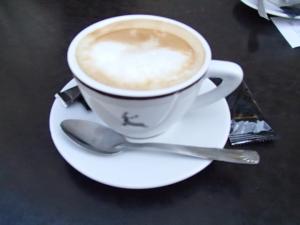
For breakfast in Carcassonne Tracy and I enjoyCafé Crème(Ca-fay Khrem), like an Italian cappuccino, a large steaming cup of espresso with steamed milk and a topping of foamed milk. Unlike Italian cappuccino or cafe latte there is no artistic patterns on top, just rich creamy coffee with a dollop of foam. In France the norm is not having a big breakfasts so Café Crème is often a meal unto itself or maybe with a croissant or a pain au chocolat (a flakey chocolate-filled viennoiserie pastry that is a favorite here in Southwest France.)
Café crème
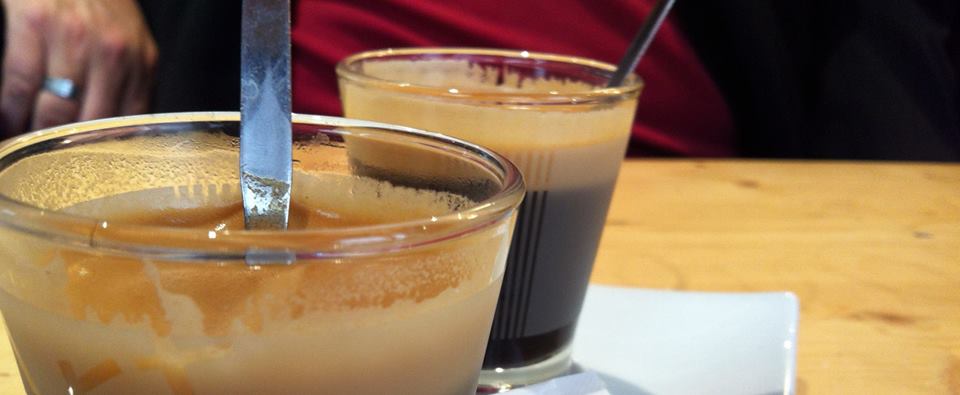
After 10:00 or 11:00 in the morning there is Café (Ca-fay) to enjoy (although many will enjoy Café for breakfast.) Café (also called Café Noir or Café Express)is drawn from an espresso machine just like an Italian espresso and rich with dark reddish-brown foam called “crema,” and served in a demitasse cup or small glass. In France and Italy milky coffee drinks like Café Crème are only consumed in the early morning, Café can be enjoyed all day long.
CaféCafé
Coffee in France is always served with sugar (sucre(Coo-khruh), real sugar, either granulated or sugar cubes. (Although a person could also request artificial sweetener, edulcorant [Ay-doohl-co-hrahn].) There is frequently a small ginger cookie or small chocolate to accompany your coffee in our part of France.
There are many cultural expectations to having coffee in France. Like I previously said, Café Crème, is not ordered after breakfast time. There are seldom paper “go cups” available, coffee is meant to be savored slowly, not to be drunk on the run. Coffee is not served during a meal (there is wine for that); coffee is reserved for after the meal is finished as a capstone to the event. If you enter a restaurant only for coffee, either sit at a table without place settings or stand at the counter. Drinking coffee while standing normally cost less than coffee while sitting at a table.
While our coffee drinking normally includes just Café Crème andCafé there are some other coffee choices.
Noisette(Nwah-zett) is an Café with a dash a cream. Noisette is French for “hazelnut” and refers to the color of the coffee. A noisette is similar to a small Italian Macchiato coffee.
Café au Lait (Ca-fay a lay), coffee with cream. Depending who you talk to, this either this is an acceptable synonym for Café Crème or is a phrase only used in a restaurant by tourists. I’ve also been told Café au Lait is a term only used by a French person in their own kitchen.
Café Allongé(ah-lohn-zhay), “extended coffee,” is espresso with additional hot water to make a more traditional American-style cup of coffee.
There is an option to order your Café as déca (Day-kah)or décaféiné (Day-kah-fay-uhn-ay)for a decaffeinated coffee. This is something Tracy strongly believes cancels a major reason for coffee in the first place and is perhaps is even a venial sin.
And for non-coffee drinkers there is Chocolat chaud (Shah-ko-lah show), hot chocolate that is normally made with rich, top-quality chocolate and is often served in demitasse cup.
France is definitely a “coffee culture” where few activities are as relaxing as sitting in the town square, sipping your café, and watching the world go by. “Un autre café, s’il vous plaît.” Another coffee, please.
Pastis is an anise-flavored liqueur and popular aperitif in France.
Ricard is the number one pastis beverage in the world, its recipe unaltered since its creation by Paul Ricard in 1932. A refreshing apperitif, Ricard is a long-time favorite in France, especially in the southern regions of the country. Over 130 million liters of pastis is sold each year in France, more than two liters per inhabitant. The name “pastis” originally comes from the regional dialect occitan’s word, pastís, meaning “mash-up.”
Ricard Pastis
Pastis’ popularity grew following the French ban on absinth. One reason for the popularity of pastis can be attributable to the demand for anise flavored drinks created by absinthe decades earlier. There is also an old tradition in the Mediterranean of anise-based liquors like Sambuca, Ouzo, Arak, and Mastika.
The principal ingredients of Ricard is star anise, a rare spice that grows in southern Chinese and in the north of Vietnam, licorice from Syria, and aromatic herbs from Provence. Pastis is not absinthe and does not does not contain grand wormwood (artemisia absinthium),the herb from which absinthe gets its name. Absinthe obtains its base flavor from green anise, not the star anise which Ricard uses. Pastis’ flavor comes from licorice root which is not used in absinthe. Also, absinthes are normally bottled at 45 to 74% ABV, while pastis is typically bottled at 40 to 50% ABV. Finally, unlike absinthe, pastis is classified as a liqueur because it contains sugar.
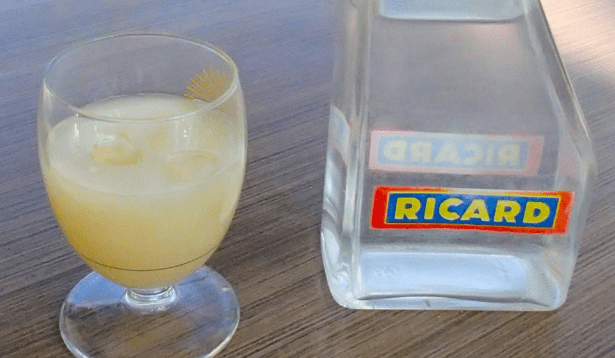
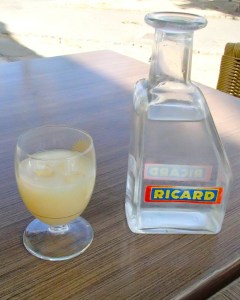
Pastis is normally served with the liqueur presented in one glass and accompanied by carafe of cold water.
The liqueur is diluted with the water according to the drinker’s preference, traditionally about 5 parts water to 1 part Ricard. Diluting the liqueur creates the “French Milk” effect as the water is added. The combination of liqueur and water ‘louches,’ and turns the diluted beverage cloudy and white in appearance. The drink is then consumed cold and is considered a refreshing beverage for hot days. Ice cubes may be added after diluting the pastis.
Pastis before dilution with waterPastis after dilution with water and ‘louching’ starting
Carcassonne is filled with historic houses of worship.
1. Basilique Saint-Nazaire-et-Saint-Celse de Carcassonne (Basilica of Saint Nazaire and Saint Celsus) Located within the citadel of la Cité de Carcassonne, the “Jewel of the City,” has a harmonious coexistence between the Romanesque and Gothic windows which are the finest in the South of France. The first church was built in the sixth century, under the reign of the Visigoths. The first written record of the church dates from 925. In 1096, Pope Urban II came to Carcassonne and blessed the construction of what would become the Basilica of Saint Nazaire and Saint Celsus. The building was completed in the first half of the twelfth century. The nave and aisles remain in the Romanesque style. Gothic alterations were completed in the fourteenth century. The church was rebuilt many times and eventually lost its cathedral status in 1803 to Saint Michael’s Cathedral in the Bastide. Saint-Nazaire-et-Saint-Celse received the title of Basilica in 1898 from Pope Leo XIII.
Basilique Saint-Nazaire-et-Saint-Celse de Carcassonne (Basilica of Saint Nazaire and Saint Celsus)Basilique Saint-Nazaire-et-Saint-Celse de Carcassonne (Basilica of Saint Nazaire and Saint Celsus)
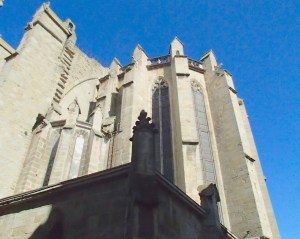
2.) Cathédrale Saint-Michel de Carcassonne (Saint Michael’s Cathedral of Carcassonne) The church was designed in the Languedoc Gothic style. Built and rebuilt over the thirteenth, fourteenth, and nineteenth centuries, Saint Michael’s Cathedral originated as a parish church until 1803 when it was elevated as the seat of the Roman Catholic bishop for Carcassonne replacing Saint-Nazaire-et-Saint-Celse as the Cathedral for the diocese and used by the Priestly Order of Saint Peter. The Cathedral is designated as a French National Monument. Rebuilding the church was required after the invasion of the Black Prince and the destruction of the Ville Basse in 1355. There was also a devastating fire in 1849 that ravaged the church. Famous architect Eugène Emmanuel Viollet-le-Duc, known for his restoration of French historical monuments, led nearly 20 years of extensive restoration to the church.
Cathédrale Saint-Michel de Carcassonne (Saint Michael’s Cathedral of Carcassonne)Cathédrale Saint-Michel de Carcassonne (Saint Michael’s Cathedral of Carcassonne)
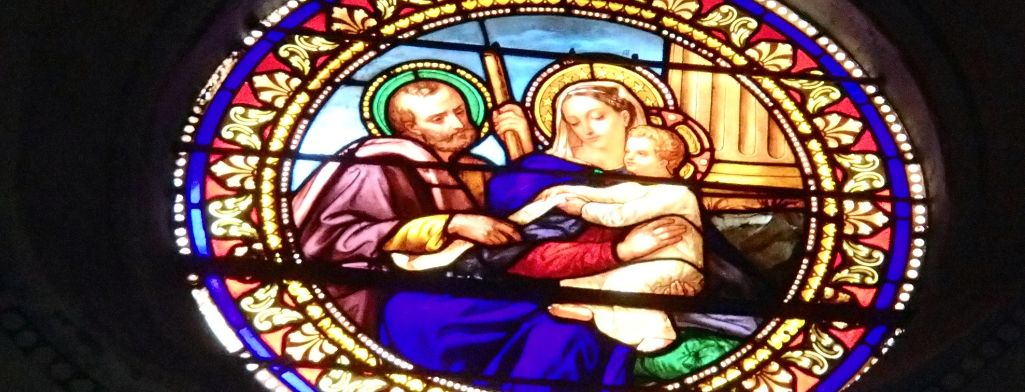
3.) Eglise Saint-Vincent (Saint Vincent Church) This thirteenth century Roman Catholic church was also designed in the Languedoc Gothic style with an impressive 23.5 meter high vaulted roof. Climbing the 234 steps of the 54 meter high octagonal bell tower will lead past the 47 bells to a view of the Ville Basse and La Cite’. In the fifteenth century, rose windows and stained-glass windows were added to the church.
Eglise Saint-Vincent (Saint Vincent Church)Eglise Saint-Vincent (Saint Vincent Church)
4.) Eglise des Carmes (Church of the Carmelites) The sparse Languedoc Gothic style Roman Catholic church was built at the end of the thirteenth century by the Order of the Brothers of Our Lady of Mount Carmel. There is also a Carmelite Covent. In 1966, the Carmelite chapel became a parish church and in the 1970s it became an annex parish to Saint Michael and Saint Vincent. The former convent, located on Rue de la Liberté, has been the offices of the diocese since 1981.
Eglise des Carmes (Church of the Carmelites)Eglise des Carmes (Church of the Carmelites)
5.) Chapelle Notre Dame de la Santé (Chapel of Our Lady of Health) This small Roman Catholic chapel was built on the west side of the Pont Vieux (old bridge) with money from the legacy of Jean de Saix in 1527 for the creation of the plague hospital. The chapel’s gothic interior features beautiful ribbed vaults and tiercerons. The chapel was used by patients and families of the former hospital.
Chapelle Notre Dame de la Santé (Chapel of Our Lady of Health)Chapelle Notre Dame de la Santé (Chapel of Our Lady of Health)
6.) Eglise Protestante Unie De Carcassonne – Communion Luthériens et Réformés (Protestant Church – French United Reformed Church) France is about 86% Roman Catholic, 7% Muslim, 2% Protestest, 1% Jewish, with 4% unaffiliated. This is literally the protestant church in Carcassonne. Apparently this church was established in 1562 by the Reformed Church of France after persecution of the Huguenots had subsided. There appears to have been a major renovation was started in 1888 and completed in 1890. Protestant church worshippers are mainly found in southeastern France.
Eglise Protestante Unie De Carcassonne – Communion Luthériens et Réformés (Protestant Church – French United Reformed Church)Eglise Protestante Unie De Carcassonne – Communion Luthériens et Réformés (Protestant Church – French United Reformed Church)
7.) Mosquée Salam à Carcassonne(Salam Mosque in Carcassonne) French of Maghreb origin (having at least one grandparent from the former French colonies of Algeria, Morocco or Tunisia) in France form the largest ethnic group after French of European origin. This Maghreb influence is also reflected in 7% of the population being Muslim.
Mosquée Salam à Carcassonne (Salam Mosque in Carcassonne)Mosquée Salam à Carcassonne (Salam Mosque in Carcassonne)
There is no Jewish Synagogue in Carcassonne. In 1394 Jews, blamed for the Black Death among other imaginary crimes, were expelled from Carcassonne and fled to Provence. After the invasion of France by the Nazis during World War II, a number of Jews returned and found refuge in Carcassonne, then in the unoccupied zone. Today the small Jewish population of Carcassonne has to travel to Toulouse or Montpellier for synagogue.
Pretty much every trip out of the apartment I have my Every Day Carry (EDC) bag, my essentials for every day in our new home of Carcassonne.
This carry bag is a bit different from my current and former law enforcement colleagues, with their EDC gear including their department or LEOSA authorized essentials for making an arrest or resolving a self-defense situation, but the principles of being self-sufficient are the same.
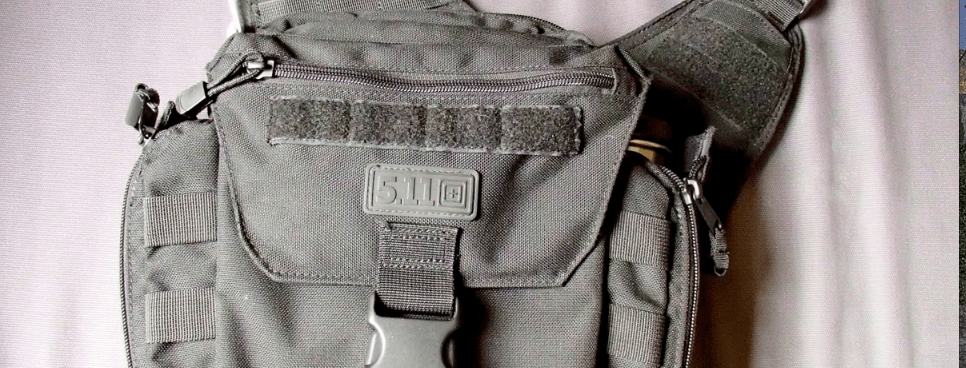
I like a carry bag that I can organize my gear and use winter or summer. A carry bag can be carried over a heavy jacket or a shirt. There is no forgetting a piece of gear being left in the pocket of my other jacket or left on a nightstand, it is all in one place. I like the 5.11 brand for its low-key practicality and toughness. The pockets are secure so there are fewer worries about a pickpocket lifting my wallet or camera and the bag’s ballistic nylon deters access by cutting into the bag. The P.U.S.H. pack doesn’t scream “expensive camera bag,” “military bag,” or “cop bag” and it isn’t an oversized messenger/computer bag.
Alan wearing 5.11 P.U.S.H. pack
There is a “man bag” culture in France and the Mediterranean areas with many local men wearing a shoulder bag “cross chest carry,” a sacs en bandoulière, so my carry bag, while a bit larger than average here, blends well into everyday life without making me looking like a tourist. (Think, “Fanny pack.”)
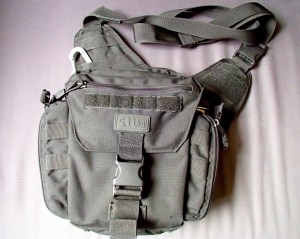
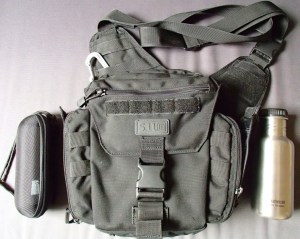
The P.U.S.H. pack has two side expanding pockets that I make use of for a water bottle and sunglasses case.
5.11 Tactical PUSH (Practical Utility Shoulder Hold-all) Pack5.11 Tactical PUSH (Practical Utility Shoulder Hold-all) Pack with Sunglasses and water bottle
2. Kleen Kanteen Classic 18 ounces water bottle
I carry Kleen Kanteen stainless steel water bottle with 18 ounce capacity. With us walking more in our new home, we never have to scramble for something to drink. Carrying a water bottle eliminates the cost of buying water and the impact of all those empty plastic bottles. The Kleen Kanteen is free of BPAs and has no plastic or epoxy linings that can crack like in aluminum water bottles.
Kleen Kanteen 18oz Classic
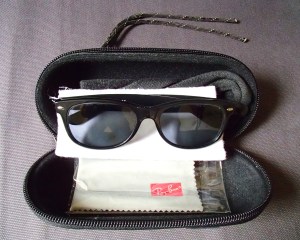
3 & 4. Ray Ban Prescription Original Wayfarers Sunglasses and Hazard 4 Sub-Pod Sunglasses Case
With making the decision to be pedestrians most of the time, I end up wearing my sunglasses nearly all the time when I’m outdoors in the daytime. I opted for the darkest polarized lenses available and a nearly “crush-proof” Hazard 4 sunglasses case. I trade out my standard eyeglasses and sunglasses in the case so I always have both with me.
Hazard 4 Sub-Pod Sunglasses CaseRay Ban Prescription Original Wayfarers Sunglasses and Hazard 4 Sub-Pod Sunglasses Case
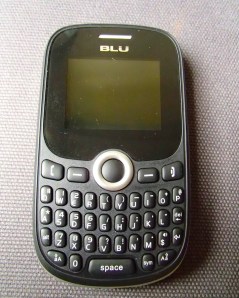
5. BLU Samba Jr Cellphone
Tracy and I needed phone communication in France immediately upon arrival. We purchased an unlocked cellphone and SIM card with a French telephone number from Cellular Abroad, a National Geographic affiliated company. It’s a “pay-as-you-go” system where you can add time through an English-speaking operator. We wanted to “unplug” for a while from always having smart phones, but wanted a basic phone for emergency “112” calls (French “911”), calls from home, and a local phone number for French government agencies and businesses. After our French bank account is established we will consider whether or not to reactivate our unlocked iPhones with a French provider.
BLU Samba Jr Cellphone
6 & 7. Business Cards and Dog Waste Bags
We have business/calling cards printed with our e-mail for use with new friends and local businesses. The dog waste bags are so we can be good neighbors cleaning up after Kiara (although it seems that, regardless of signs everywhere, few French dog owners follow suit).
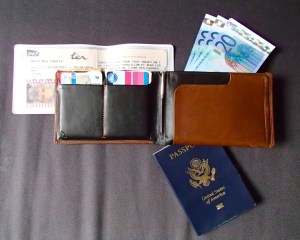
There is a Bellroy travel wallet in carry bag’s zippered inner pocket. I wanted to stop wearing my wallet in my back pocket where it is more accessible to pickpockets. It now takes a very concerted effort to obtain my wallet from its location in my carry bag. My travel wallet holds my passport (France wants you to have your Carte d’Identité or passport with you.), currency, driver’s license, credit cards, SNCF and TER (national and regional train systems) discount cards, and French supermarket loyalty cards.
Bellroy Travel Wallet
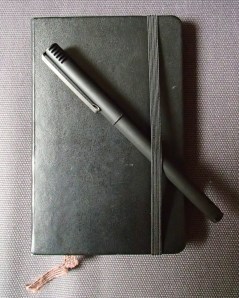
12 & 13. Moleskine Notebook and Pen
My second most used tools in the bag. I am constantly writing notes to myself, making lists, listing directions, translating French phrases to request assistance, and writing down personal observations. One of those old police habits of always having paper and pen available and making frequent notes.
Moleskine Notebook and Pen
14 & 15. Folding Nylon Shopping Bags and Spare Reading Glasses for Tracy
“Paper or plastic?” is not usually an option here. If you want a bag for your groceries you need to bring one (or several) yourself. Being primarily pedestrians, running back to the apartment to get shopping bags when we suddenly remember that we needed some things for the kitchen is awkward and time-consuming. The thin, folding nylon bags take little space and are always helpful. I also carry an extra spare of Tracy’s reading glasses in my carry bag since she often doesn’t carry a purse or camera bag..
Shopping bags and Tracy’s reading glasses
16. Olympus E-PL2 Mirrorless Digital Camera and Electronic Viewfinder with an Olympus M.Zuiko 14-150 mm Zoom Lens with lens hood and an Olympus M.Zuiko 17 mm “pancake lens” or a Olympus Tough TG820 Waterproof/Shockproof Digital Compact Camera
My most used tools since arriving in France have been my cameras. I alternate between carrying the compact Olympus TG820 when I want something lightweight in my bag all the time or in adverse weather and the Olympus Pen Camera with interchangeable lenses when I want more professional shooting options. When we decided to minimize one area was my photography. I had a larger prosumer Canon DSLR with multiple lenses which I really enjoyed. But two years ago when I carried my Canon outfit to the top of Florence’s cathedral dome, up all 463 steps, I realized that: 1.) I wasn’t getting any younger (that was a “killer” climb even without the heavy gear) and 2.) I wasn’t shooting photos professionally anymore. Today I shoot photos to share events and travels with family and friends. I decided to explore the new smaller and lighter “mirrorless” digital camera systems and return to a more classic “Robert Capa” photojournalism style of shooting images.
The carry bag allows me to “stash” the cameras out of sight in a low-key bag to avoid being targeted for camera theft and to avoid the perception of the stereotypical tourist. I always have at least the compact camera and extra batteries in my carry bag so I hope to never lose a “photo op” because I didn’t want to carry a DSLR camera with me.
Olympus Tough TG820 Waterproof/Shockproof Digital Compact CameraOlympus E-PL2 Mirrorless Digital Camera and Electronic Viewfinder with an Olympus M.Zuiko 14-150 mm Zoom Lens with lens hood and an Olympus M.Zuiko 17 mm “pancake lens”
17. Carabiner
I carry a carabiner on my bag to quickly secure my carry bag if I remove it while eating or having an espresso at an outdoor cafe. Anytime I take my carry bag off, the shoulder strap is looped around a chair or the table (or in a pinch, my leg) and secured with the carabiner. Anyone attempting to “grab and run” is going have to be able to outrun me while dragging along a large piece of the restaurant’s furniture attached to my bag.
Carabiner
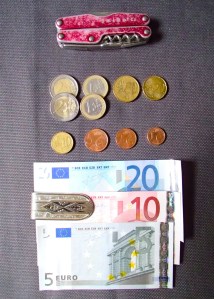
18, 19, 20, & 21. Change, Money Clip, Leatherman Juice Tool, and Apartment Keys
The final parts of my EDC gear is actually located on my person, rather than in my carry bag. I carry loose change is in my pockets. Europe uses one and two Euro coins which have proven very convenient. The lowest paper denomination for Euros is a five Euro note. I carry a money clip with currency in my pocket to avoid having to reach into my bag and displaying my wallet for every purchase. I don’t want a prospective thief to constantly see where my wallet is coming and going to.
A Leatherman Juice C2 multi-tool takes care of most tool needs with needle-nose pliers, a knife blade, screwdrivers, and the very necessary corkscrew. I’ve carried this versatile pocket tool for years.
I still wear a wristwatch, another “cop habit,” although cellphones have nearly eliminated the need for one. I rotate wearing a Seiko Black Monster dive watch, a Victorinox Swiss Army Maverick II Dual Time Zone watch, a Longines dress watch that was a college graduation gift from my parents, a Citizen Eco-Drive watch that was a gift from Tracy, and a Seiko custom TMCC retirement watch, a personalized gift from Tim Dees.
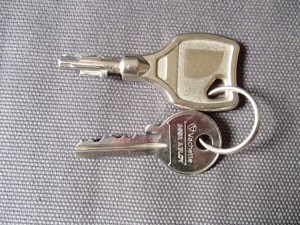
My final essential is the apartment’s keys. After years of having the “school custodian’s” size rings of home, cars, and office keys, I now carry only a building key and apartment door key.
Leatherman Juice C2 muliti-tool, Euro coins and currency, and money clipWatchesKeys
Even with the above items, There is still room in my EDC carry bag for whatever else the day’s activities might require: an umbrella, map, shopping list, Kindle, camera flash, dog’s medical records, camera tripod, flashlight, or something for Tracy.
The Eagle Scout in me has a difficult time leaving for the day without remembering to “Be Prepared” which has been serving us both well in our daily exploits here in Carcassonne.
“Where in the world are . . . Tracy, Alan, and Kiara the micro-dog?”
“Where the heck is Carcassonne? I know France . . . a little. Paris . . . and the Normandy Beaches from WWII . . . and Provence from all those photos of fields of lavender . . . the French Riviera . . . the Canne Film Festival . . . and those wine places: Burgundy, Champaign, and Bordeaux. Alright, I really don’t know anything about France and never, ever heard of Carcassonne before.”
So, what about France?
France, the République Française, is the largest country in western Europe and the third largest in Europe overall. The “Hexagon” — the approximate shape of France — is a little smaller in area than Texas and basically located in the center of western Europe. To the north is the Atlantic Ocean and English Channel and to the south is the Mediterranean Sea, France is bordered by Spain, Andorra, Monaco, Italy, Switzerland, Germany, Luxembourg, and Belgium. France has overseas regions including French Guiana, Guadeloupe, Martinique, Reunion and Mayotte and additional territories like French Polynesia. This is similar to Alaska and Hawaii being U.S. states although not part of the contiguous United States and U.S. territories like Puerto Rico, Guam, and the U.S. Virgin Islands. France has about 1/5 the total population of the U.S. with 65 million citizens, compared to 316 million in the U.S. France has been the number one tourist destination in the world for the last 20 years. Geographically diverse with three major mountain ranges, major beaches, and scenic valleys, France is also ethnically diverse. France’s colonial past and tolerant culture has made it as much of a “melting pot” of peoples and cultures as the United States. Paris is the capitol to France’s semi-presidential constitutional republic that shares many aspects with the U.S. system of government. France is the fifth largest economy in the world and the second largest economy in Europe. And yes, the language in France is French.
France in the dark green (Wikipedia Commons)
So, exactly where in France are we?
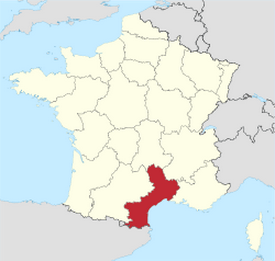
There are 22 regions in Metropolitan France and 5 regions overseas. The regions are roughly the same as states in the U.S. but with less autonomy. Each region has a capital (think state capital). We live in the Languedoc-Roussillon region and our regional capital is in Montpellier. It is the eighth largest city in France and its fastest growing for over 25 years — it’s also the size of Reno, Nevada with approximately 255,000 residents. The immigration office we work with is headquartered there. We live in the city of Carcassonne, about 90 miles from Montpellier.
Languedoc-Roussillon Region in red. (Wikipedia Commons)
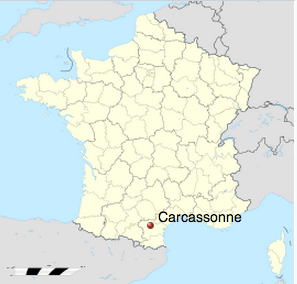
Within the region of Languedoc-Roussillon there are five departments (think of the departments like a county): Aude, Gard, Hérault, Lozère, and Pyrénées-Orientales. Carcassonne is located within the Department of Aude and is its Prefecture (the “county seat”). With Languedoc-Roussillon being adjacent to Spain and the Pyrenees there is a Spanish Catalonian influence to food and culture here. There is also the local regional dialect of Occitan (a mix of French, Spanish and Italian) still spoken in the region although French is the official language.
Carcassonne (Wikipedia Commons)
Carcassonne’s history as a settlement dates back to about 3500 BCE. There was the Roman colony Carsac on the same site in 100 BCE. Carcassonne has been occupied by Romans, Visigoths, Saracens, and Crusaders. The beginning of what was to become the largest existing walled city in Europe started in the 3rd Century with the Romans fortifying their outpost with walls. Through the centuries the fortifications continued to grow and expanded to today’s huge citadel with two massive outer walls three kilometers in length with 52 towers and barbicans. One of these towers housed the Inquisition in the 13th Century and is still known as ‘Inquisition Tower’. There are drawbridges, portcullis, arrow slits, and machicolations (murder holes – basically holes in the ceilings to drop rocks on people’s heads) to defend the fortress. Portions of the film “Robin Hood: Prince of Thieves” (1991) with Kevin Costner and Morgan Freeman were shot in and around Carcassonne. In 1997, le Cité de Carcassonne was added to UNESCO’s list of World Heritage sites.
Tracy, Alan, and Kiara in front of le Cité de Carcassonne
Carcassonne has a current population of about 48,000 residents (somewhat smaller than Carson City’s 55,000) and consists of three distinct areas.
1.) Le Cité de Carcassonne, the historic fortified citadel located at the top of the hill on the right bank of the River Aude. Le Cité is home to museums, restaurants, shops, and hotels.
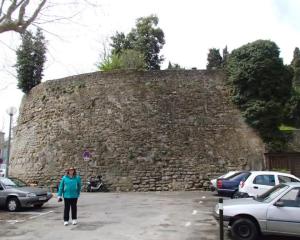
2.) The Ville Basse (the lower town) or le Bastide de Saint-Louis is located on the left bank of the River Aude. The Ville Basse, our current home, is an irregular hexagram with narrow streets in the typical grid layout of the 13th Century. The Ville Basse has historic reminders of it’s former walls with three of the town’s four original bastions at the town’s corners and the impressive medieval Jacobin Gate (Porte des Jacobin).
3.) The new town. The modern city and suburbs that has grown around the original medieval city .
Tracy in front of one of Carcassonne’s Ville Basse’s remaining bastions
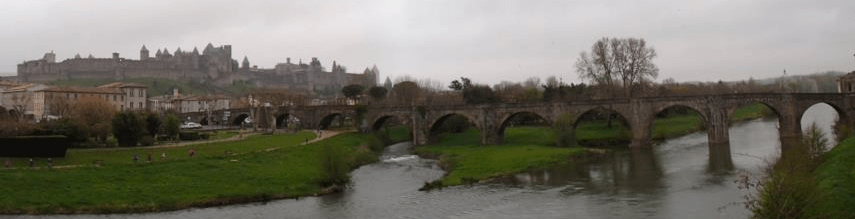
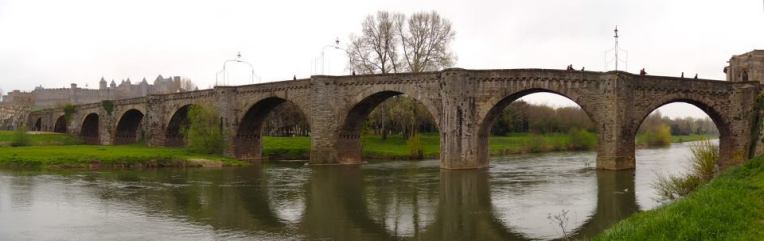
We are enjoying our new home in the Ville Basse. At the end of our block is Pont Vieux (the old bridge), the stone bridge built with its twelve semi-circular arches in the early 1300s. This pedestrian bridge crosses the River Aude and leads up to le Cité de Carcassonne. The parks on both the left and right banks of the Aude are Kiara’s favorite places to walk and play.
Du Pont Vieux
In Carcassonne’s Ville Basse we have been finding many new favorite spots, one of which is La Petit Moka with its outdoor seating and great coffee. Near our apartment is Square Gambetta, host to a rotating variety of special events including open air markets, new car shows, and flea markets. The Musée des Beaux Arts (Museum of Fine Arts) is at the west end of Square Gambetta inside an 18th century hôtel.
Carcassonne Map
The town square, Place Carnot, is home to the open air market on Tuesdays, Thursdays, and Saturdays, where we shop for fresh fruits and vegetables The square has a fountain of Neptune at the center and a grandstand at one end. Its perimeter is lined with cafes and shops. Place Carnot is a perfect location for people watching and a morning café creme, an afternoon café, or an evening pichet de vin (carafe of wine). Interesting historical note: during the French Revolution and Reign of Terror, four people were guillotined in the Place Carnot. Nowadays, our favorite coffee place La Petit Moka is there.
Place Carnot
At the north end of the Ville Basse is the Gare de Carcassonne (train station) and the section of the Canal du Midi thatflows through Carcassonne.The Canal du Midi, like Le Cité de Carcassonne isa UNESCO World Hertiage Site, it is a 225 mile long network of navigable waterways linking the Mediterranean to the Atlantic through 328 structures (locks, aqueducts, bridges, and tunnels.) Built between 1667 and 1694 ,the Canal du Midi paved the way for the Industrial Revolution in France. There are now recreational barge cruises on the canal.
Canal du Midi
To the south of the Ville Basse, is the Jacobins’ Gate, Porte des Jacobins, a remaining example of the four former gates when the Ville Basse was still surrounded by a wall. The Jacobins’ Gate is registered as a historical monument. Outside the gate are fountains and gardens.
Jacobins Gate
Our apartment is located one block west of Square Gambetta, approximately six blocks from Place Carnot and 1/2 block from Pont Vieux. A 20-minute walk from our front door will find you at either the train station (Gare de Carcassonne) or Le Cite (the citadel) depending on whether you head north or south. The Jacobins’ Gate is less than 5 minutes from our apartment.



























 An Italian Point Of View