Paris: Travel and Sacré-Cœur Basilica

Adam and Liz were flying into Aéroport Paris–Charles de Gaulle (Charles De Gaulle Airport – Paris) so we needed to travel to the other side of France to meet them.  Tracy and I elected to not get a car when we moved to France and because we were traveling with Kiara the Chihuahua using RyanAir or EasyJet (the discount airlines) was not an option.  So we made use of SNCF’s (Société Nationale des Chemins de fer Français – French National Railroad Company) regional trains and the newly available Ouigo high-speed train.  The Ouigo is a subsidiary of SNCF and is basically a stripped TGV (Train à Grande Vitesse) high-speed train without a club car designed to compete with the discount airlines.  The trains happily accept Kiara which made her and us very happy.  The Ouigo was comfortable and quiet and we enjoyed a very rural view of France that reminded us of Kansas and Nebraska with lots of grain fields and vineyards.

SNCF Train
SNCF Train
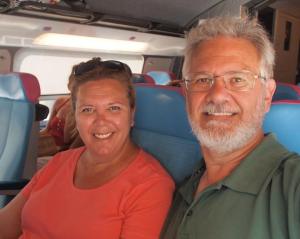
Tracy and Alan traveling by rail
Tracy and Kiara waiting for the train

Another reason for the Ouigo’s discount fare is its use of secondary train stations.  We arrived at the train station at Marne-la-Vallée – Chessy outside Paris only to realize that Marne-la-Vallée is the station for Disneyland-Paris.  We hadn’t realized that walking out the station door would put us immediately at the entrance to Disneyland.  We caught the RER (Réseau Express Régional – Regional Express Network) commuter train from Marne-la-Vallée to Paris and then the famous Paris Métropolitain (subway) to our hotel in the Montmartre district of Paris in the 18th arrondissement, a Right Bank arts neighborhood.

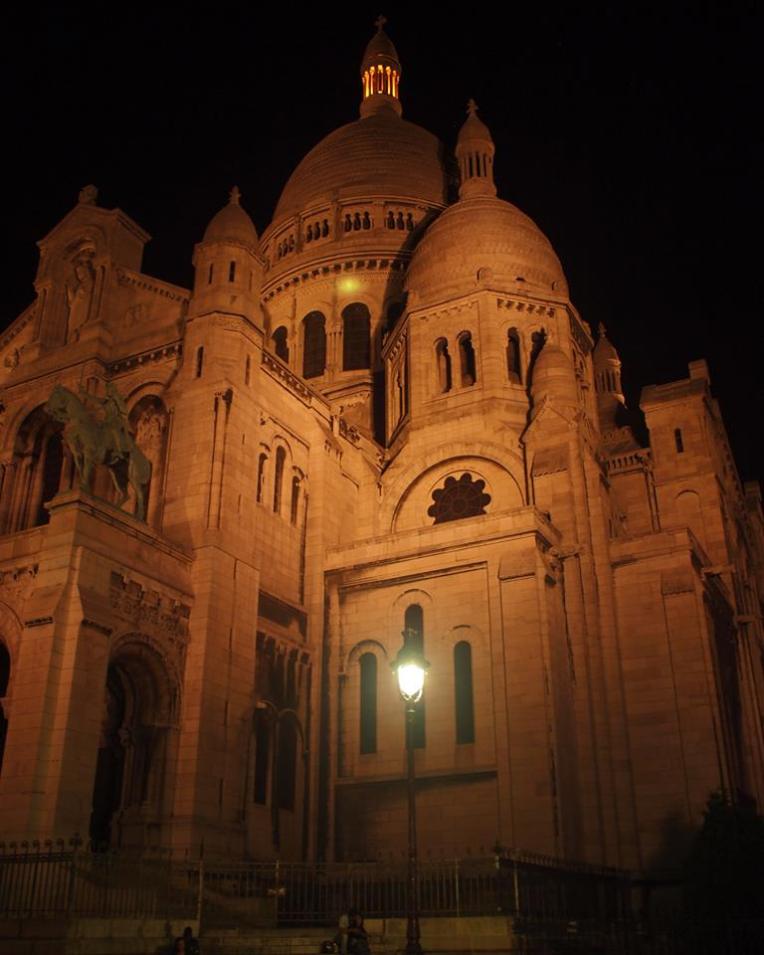
We arrived a day earlier than Adam and Liz’s arrival, so we did an evening stroll to visit Sacré-Cœur Basilica.  Located at the summit of the Butte Montmartre, the highest point in the Paris, the Basilica of the Sacred Heart of Paris, more commonly called Sacré-Cœur Basilica, is a Roman Catholic church and minor basilica, dedicated to the Sacred Heart of Jesus.  Built of white travertine stone, the Basilica is brilliantly illuminated and stunning at night.

Sacré-Cœur Basilica
Sacré-Cœur Basilica
Sacré-Cœur Basilica
Sacré-Cœur Basilica

The Basilica complex has a large garden area and  a fountain. There is an amazing panoramic view overlooking Paris from the Basilica and garden.  The Basilica complex is a favorite meeting place for young people with more than a hundred on the grounds socializing as we explored. To reach the top of Butte Montmartre there is a steep series of stairs with over 300 steps or a funicular railway.  The funicular has two parallel tracks with one car on each: one car going up counter-balancing the other car coming down.  In a minute and a half the funicular travels 354 horizontal feet and climbs the 35% gradient 118 vertical feet to the top of Butte Montmartre.  It is well worth the cost of one Métro ticket to enjoy a ride to the top.  The funicular transports about two million passengers each year.
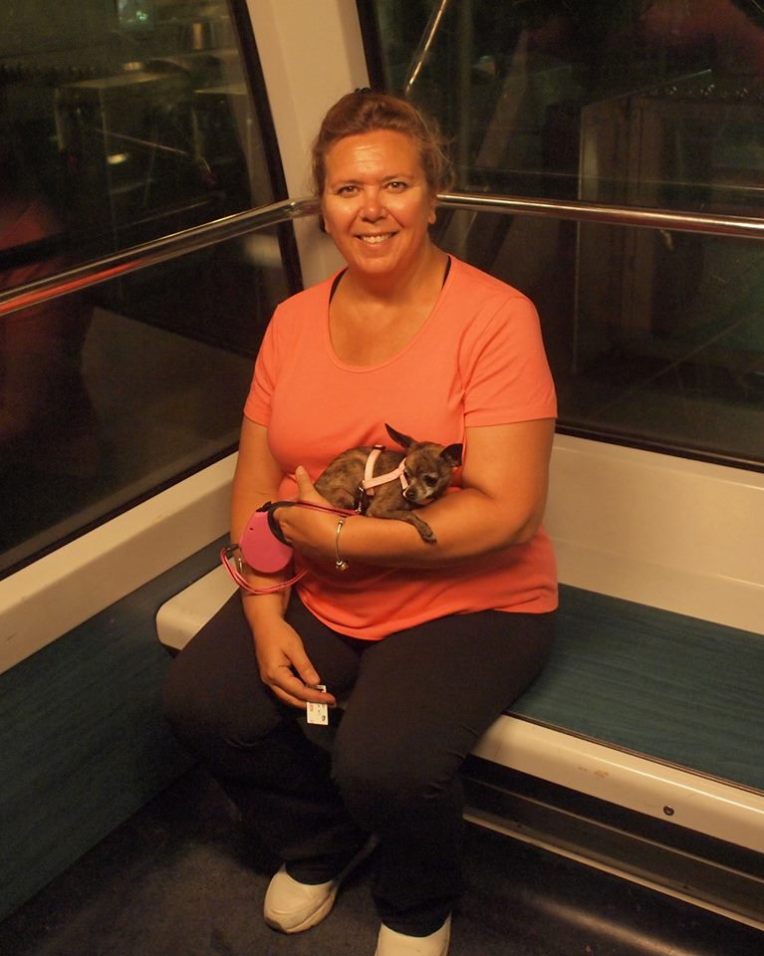
Tracy and Kiara on the Montmartre Funicular
Montmartre Funicular

With Sacré-Cœur Basilica around the corner from our hotel enjoyed the beauty of the Basilica on the hill above us and we later returned to share the sight with Adam and Liz.

View of Paris from Sacré-Cœur Basilica (Wikimedia Commons)
View of Paris from Sacré-Cœur Basilica
(Wikimedia Commons)

Our First Visitors: Adam and Liz Travel to France

We were thrilled to have our first visitors since we started our expat life abroad.

Our youngest son Adam and his fiancée Liz spent 18 days with us.  We combined the visit with travel to Paris, Barcelona, the Mediterranean Sea, and sharing our adopted home in Carcassonne.  I plan to write about their visit by breaking it up into an individual blog postings for each of the different locations we enjoyed exploring together.

Alan, Tracy, Liz, and Adam in front of the Pyramid at the Louvre Museum in Paris

It was such a pleasure to share our new life with Adam and Liz (and to congratulate Adam on earning his bachelor degree just a few weeks previous to their visit.)  We explored shared interests in great cities, history, cultures, lifestyles, art, travel, architecture and enjoyed conversation, food, and drink.  Adam and Liz are vegetarians so we had an opportunity to examine a totally different food culture in our travels than we had previously had a chance to try.  Adam juggled on the streets of Paris, Liz sampled Sangria in Barcelona, we splashed in the Mediterranean, Adam and Liz demonstrated their Spanish language skills, we celebrated Adam’s 22 birthday (and Adam and Liz attended a performance of his favorite band that just happened to be in town on his birthday for Festival de Carcassonne), and all of us (including Kiara) watched France’s biggest fireworks extravaganza for Bastille Day with the medieval city of Carcassonne as a backdrop.

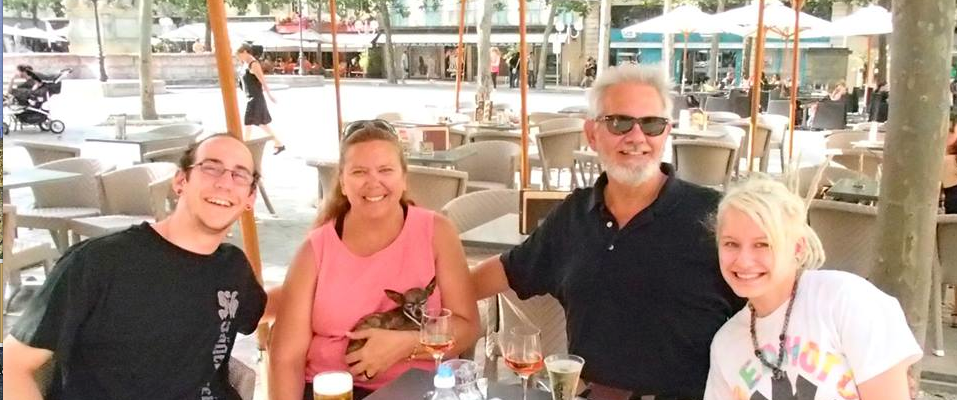
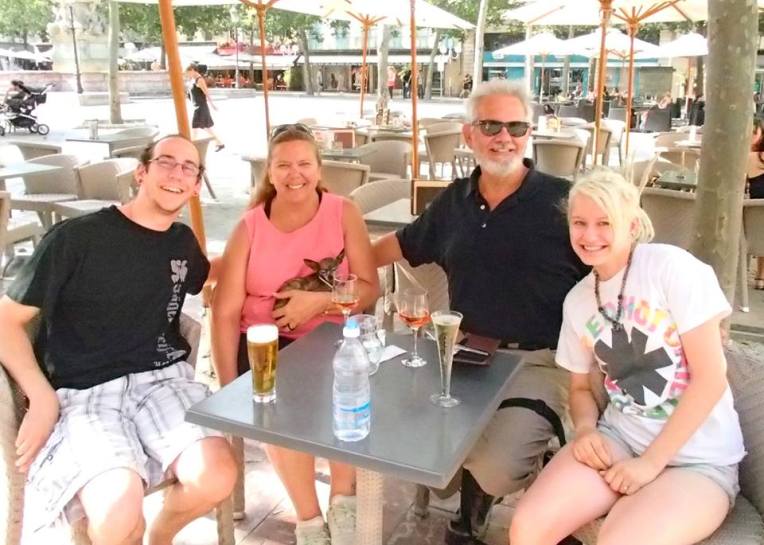
Adam, Tracy, Kiara, Alan, and Liz having a wine, beer, and champagne break in Place Carnot in the Bastide of Carcassonne

All in all, it was a spectacular visit which made us look forward to our next visitors.

French Baking, Part 1: Éclair

So what about French pastries?  Are they really as good as their reputation?  The answer is:  Absolutely!

Going to a real pâtisserie is an amazing experience.  One of the modern laments in France in that neighborhood bakeries are getting fewer and fewer because of the growing number of supermarkets and that many bakeries attempt to be both a pâtisserie (pastry bakery) and boulangerie (bread bakery.)   It is a commonly held belief that a pâtissier (pastry chef) and a boulanger (baker), while both well-respected as professionals, have totally different skill sets.  Purists argue a good boulanger cannot also be a good pâtissier.  Visiting dedicated pâtisseries and trying their pastries have made me a believer of that assertion.

Pâtisserie
Pâtisserie

I thought I would discuss the classic French pastry, the éclair, first.  An éclair is made with pâte à choux, a light pastry dough.  The reason a pâtisserie’s expertise is required is that éclairs are baked without using any rising agent.  The pâtisserie uses only the moisture in the pâte à choux dough to create steam that “puffs” the pastry.

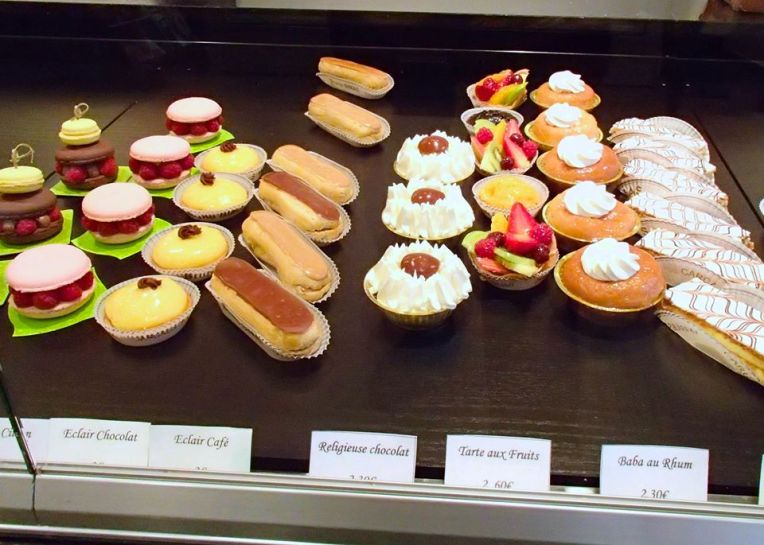
I visited my neighborhood pâtisserie saw and smelled some incredible treats on display.  The window had large empty spaces from early rising shoppers.

Pâtisserie Display
Pâtisserie Display
Pâtisserie Display
Pâtisserie Display

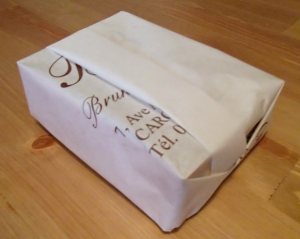
I purchased two éclairs and the pâtisserie proceeded to carefully box and wrap the pastries, in Tracy’s words, “like a Christmas gift from Nordstroms.”

Éclair Box
Éclair Box

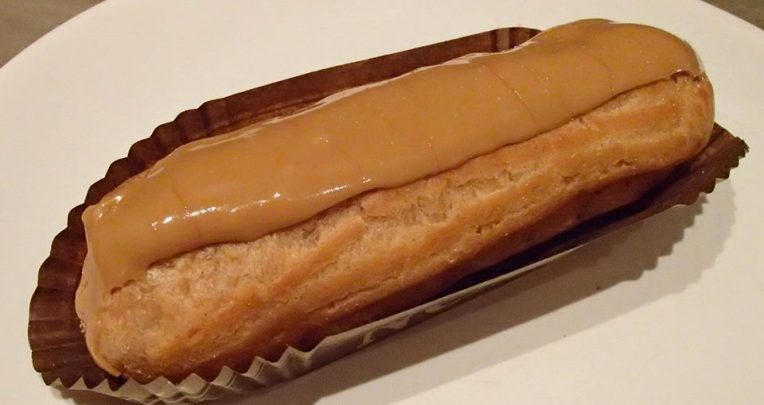
So how do they taste? Incredibly good!  The  éclair’s exterior is tan and crisp with layers of soft pastry inside.  The filling is actually custard, rich and thick, not whipped cream or pudding.  Chocolate and coffee iced éclairs are the most common with matching chocolate and coffee custard filling inside.  The richness of the pastry and custard make a single éclair a complete treat.  Melt in your mouth delicious.

Éclair
Éclair

French Beverages, Part 6: Suze

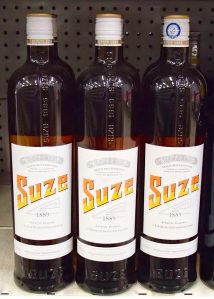
Suze is a bitter wine based  aperitif made from distilling the roots of the gentian plant and sold by the Pernod-Ricard Liqueur Company.  Suze is the fifth most popular aperitif in France.  Apparently this 15% ABV liqueur has recently also become available for purchase in the United States.

Suze was created by Fernand Moureaux in Paris in 1885, but not marketed until 1889.  Suze is known for its slender amber bottle, designed in 1896 by Henri Porte.  A Suze bottle is the subject of Picasso’s 1912 cubist image “Verre et bouteille de Suze” (Glass and Bottle of Suze) that is currently on displayed at the Mildred Lane Kemper Art Museum located on the campus at Washington University in St. Louis, Missouri.  http://www.kemperartmuseum.wustl.edu/collection/explore/artwork/1105

According to Pernod-Richard, who owns the brand, “The origin of the name “Suze” is disputed. According to the first theory, it was named after Fernand Moureaux’s sister-in-law, whose name was Suzanne and who loved the aperitif. Second theory: the drink was named after a little river in Switzerland, one of the first countries to adopt the drink.”

Suze

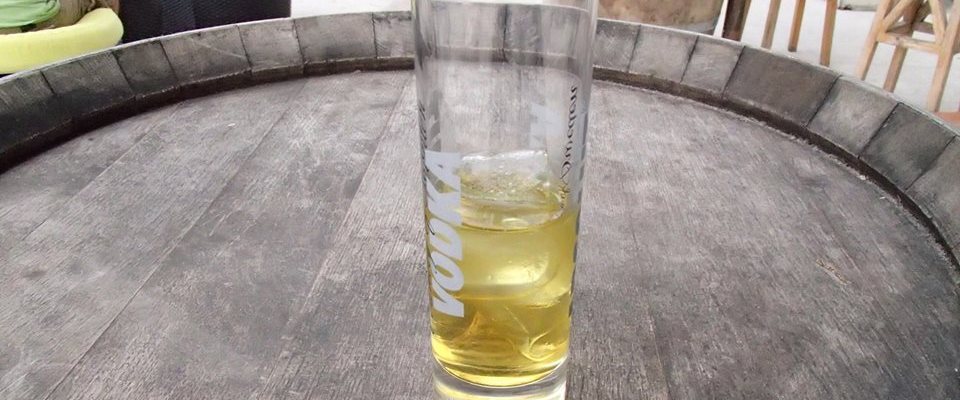
With the history behind Suze, I was looking forward to trying it.  In Carcassonne, I was served Suze as two ounces of the chartreuse colored liqueur over  ice.

What do I think?  Once was enough.  It has a very distinct bitter taste that was unpleasant  for me.  While not actually tasting “burnt,” it’s the word that first came into my mind.  I really cannot think of ever wanting another.  I don’t dislike strong liquors or liqueurs straight, in fact I prefer my Scotch and other whiskeys “neat,” but there was nothing redeeming in the taste of Suze for me.

At the Suze website,  www.suze.com, there are some Suze based cocktails that might mitigate the taste.  But I believe if you have to hide the taste of a liqueur you have to ask yourself, “Why am I drinking this?”

Bottles of Suze
Bottles of Suze

French Beverages, Part 5: Martini Blanc and Martini Rouge

No, these are not my beloved gin Martini (two ounces Bombay Sapphire Gin, scant capful of Martini & Rossi Dry Vermouth, shaken until freezing cold, with three blue cheese stuffed olives added) or James Bond’s famous vodka Martini ( . . . with a thin slice of lemon, shaken, not stirred.)

These classic French before-dinner drinks are simply a glass of white or red vermouth.  While vermouth is most commonly just a mixer in the US, in Europe it is also served as a stand alone aperitif of 2 to 3 ounces (6 to 9 centilitre) either neat, chilled, or over ice.  Vermouth is a fortified wine (13-24% alcohol content), that has been aromatized by infusing it with botanicals: spices and herbs, the most notable of which is wormwood.  The modern version of vermouth was created in Turin, Italy in 1768.  Vermouth quickly became a popular drink at the Turin Royal Court and its popularity spread throughout Europe from there.

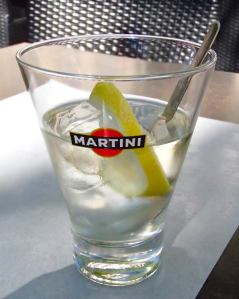
Martini Blanc (Martini White)

Martini Blanc
Martini Blanc

Here in Carcassonne I am served two ounces of Martini Bianco vermouth over ice with a slice of lemon with a small spoon in a specific Martini Logo glass.  The spoon is used to stir the drink to cool the vermouth.  This is sweet vermouth with a slightly bitter citrus taste and an undertaste of vanilla.

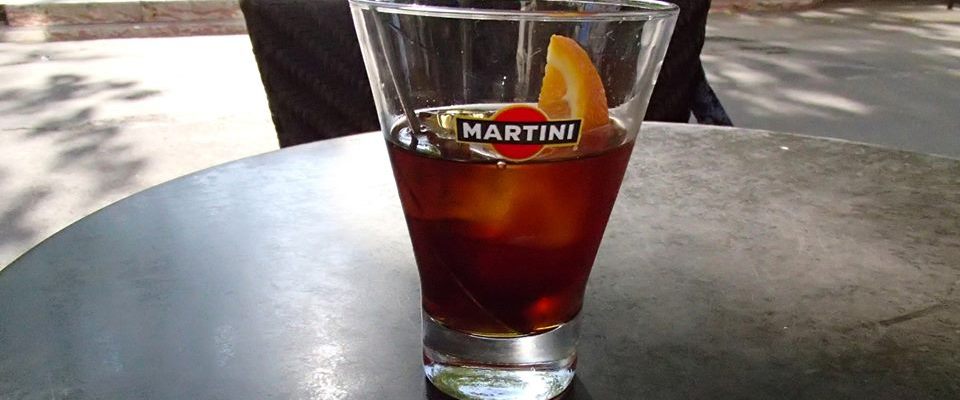
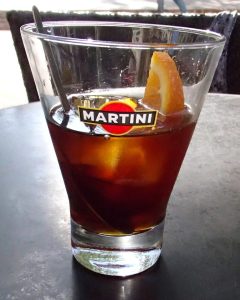
Martini Rouge (Martini Red)

Martini Rouge
Martini Rouge

The Rouge version of the Martini has two ounces of Martini Rosso vermouth poured over ice with a slice of orange.  Like the Blanc, it is served in a Martini Logo glass with a small spoon.  Another sweet vermouth, but this one has notes of slightly bitter orange.

The Italian vermouth Cinzano and French vermouth Noilly Prat are widely available in France.   There are also straw-colored dry and rosé vermouths choices available.

So what do I think?  I would be happy to accept a Martini Rouge from a host as an aperitif at a gathering.  It’s pleasant, refreshing, and I would prefer the Rouge to the Blanc.  The Rouge has more of a “wine-like” quality to its flavor than the Blanc.

I enjoyed both drinks, although while having them it brought back the memory of the pained look on Bill Murray’s face in the film “Groundhog Day” when he is forced to drink Andie MacDowell’s character’s favorite drink, “Sweet vermouth on the rocks with a twist.”  These would not be my “go to” beverages.

With all said and done,  I really prefer to have my vermouth as a few drops of dry vermouth added to a traditional gin Martini.  In order to get that classic Martini cocktail in France one must specifically order a “Dry Martini” or a Martini sec.

Gin Martini
Gin Martini

Carcassonne: Marc Walter Sculptures, “L’embrassade” and “Invités du Coeur”

Franco-Canadian artist Marc Walter created five large sculptures in Carcassonne as part of the annual Festival de Carcassonne.

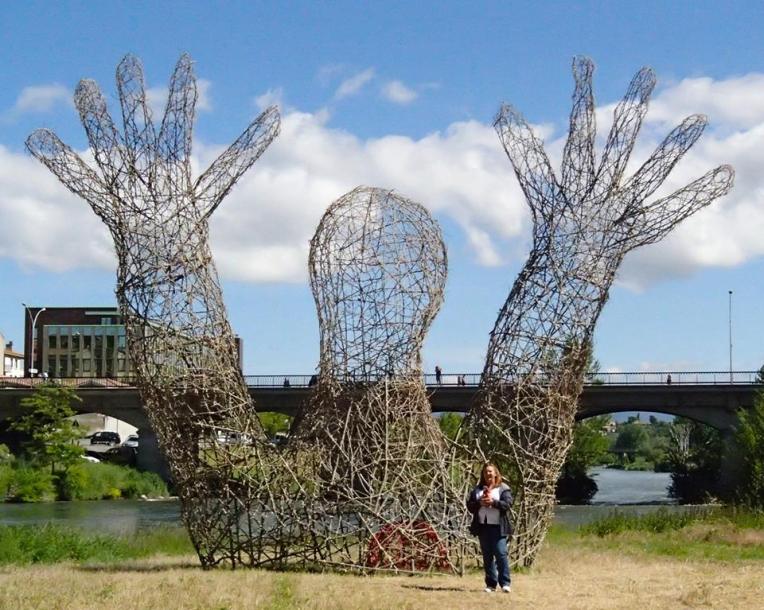
The first and largest is the “L’embrassade” (“The Hug”) sculpture located on the tip of l’île de la Cité Park and below the Pont Vieux (Old Bridge.)  The sculpture is 7 meters tall and 9 meters wide. Marc Walter uses natural materials like wood, rock and earth to create his “Land Art” sculptures. For this project he used tree branches collected from Carcassonne’s public works after pruning the local trees.  The sculpture is made by weaving the branches and securing with twine to created a large figure of a man with arms outstretched to the sky.  A bright red heart can be seen inside the sculpture.  The image is very reminiscent of an 3-D version of a Keith Haring painting.

Tracy and Kiara in front of Marc Walter's "Land Art" Sculpture "L'embrassade" ("The Hug")
Tracy and Kiara in front of Marc Walter’s “Land Art” Sculpture “L’embrassade” (“The Hug”)

This slideshow requires JavaScript.

In Square Gambetta the artist created four additional sculptures.  Standing five to six meters high, I thought these “Invités du Coeur” (“Guests of the Heart”) sculptures had a Native America feeling.  The weaving of the branches creates a vision of Indian basket weaving and the silhouette reminds me of woman with a blanket draped over her shoulders.  Again created using recycled tree branches and twine, the four figures allow you to step inside and experience the art from the interior.  Each sculpture has a distinctly red heart like the “L’embrassade” sculpture, but these  figures were somewhat more abstract in appearance.  We watched the artist and volunteers from the community build the sculptures over the last six weeks.  I spoke briefly with artist Marc Walter while he was working.  He was very friendly, accessible, and happy to discuss his work. I was thankful because of Marc’s Canadian roots I was able to communicate in English.  He works very hard to actively involved the entire local community in the work as a collective effort in the art.  The completion of the project was marked with a picnic celebration with the community invited to attend.

Tracy with one of the  "Invités du Coeur" ("Guests of the Heart") Marc Walter sculptures in Square Gambetta
Tracy with one of the “Invités du Coeur” (“Guests of the Heart”) Marc Walter sculptures in Square Gambetta

This slideshow requires JavaScript.

In all, a remarkable exhibition of public art by artist Marc Walker using local recycled materials and involving community volunteers.

To see more visit Marc Walker’s website at www.marcwalter.ca

A YouTube video creating the art is at http://www.youtube.com/watch?v=vNuHsObwnOA 

Franco-Canadian artist Marc Walker working on one of his "Invités du Coeur" ("Guests of the Heart") sculptures in Square Gambetta.
Franco-Canadian artist Marc Walker working on one of his “Invités du Coeur” (“Guests of the Heart”) sculptures in Square Gambetta.

Carcassonne: Oenovideo Film Festival and Terroirs d’Images Photo Exhibition

On May 30 through June 2, Cité de Carcassonne hosted Le 20e Festival Œnovidéo, véritable moment de rencontre internationale entre le monde du cinéma et du vin, vient de se clôturer (the 20th Annual Oenovideo International Grape and Wine Film Festival) and le 8e Torroirs d’Images Exposition Internationale de Photographies sur la Vigne et le Vin (the 8th Annual Terroirs d’Images Exhibition of  Vine and Wine Photography.)

Oenovideo Film Festival
Terroirs d'Images Photo Exhibition
Terroirs d’Images Photo Exhibition

The Oenovidéo International Grape and Wine Film Festival featured 26 films from 14 countries competing for the title of best film on the vine and wine in 2013.  The Terroirs d’Images Photo Exhibition hosted 105 photos from photographers from 14 countries on the theme “Enjoy and celebrate wines on five continents.

After going to the website I was able to request tickets to the film showings and to attend the photography exhibition.  The event’s headquarter was at Hôtel de la Cité Carcassonne, a four star hotel located inside the medieval city and next to Basilique Saint-Nazaire-et-Saint-Celse de Carcassonne (the Basilica of St. Nazaire and St. Celse).  The hotel has stunning private gardens where several events were held.

The films screened at the festival included several English language films including my favorite selection, “No Wine Left Behind,” a “kickstarter-funded” independent film which is described as, “When US Marine Sergeant Josh Laine returned from intense fighting in Iraq to his native Livermore, CA, he couldn’t find a job anywhere. When a girlfriend got him into wine, he decided to take a crack at winemaking and with the help of the other Marines that he served with, Lavish Laines Winery was born. The winery has since become a place where returning veterans can find a job, camaraderie, and a sense of purpose. The film follows Josh and his fellow vets as they try to take the winery from a garage start-up to a fully-fledged operation and in the process explores the challenges vets face in transitioning back to civilian life.”

Tracy and I really enjoyed the Terroirs d’Images Photo Exhibition.  The gallery was set up inside le Cité de Carcassonne’s Trésau Tower and  the venue gave the photos a powerful setting.  The images were suspended on thin wires to emphasize the photographer’s work.  There was a “No Photos” inside the gallery rule, but I took one overall shot to give you an impression of the exhibition and the presentation of the art.

Photo gallery inside Trésau Tower.

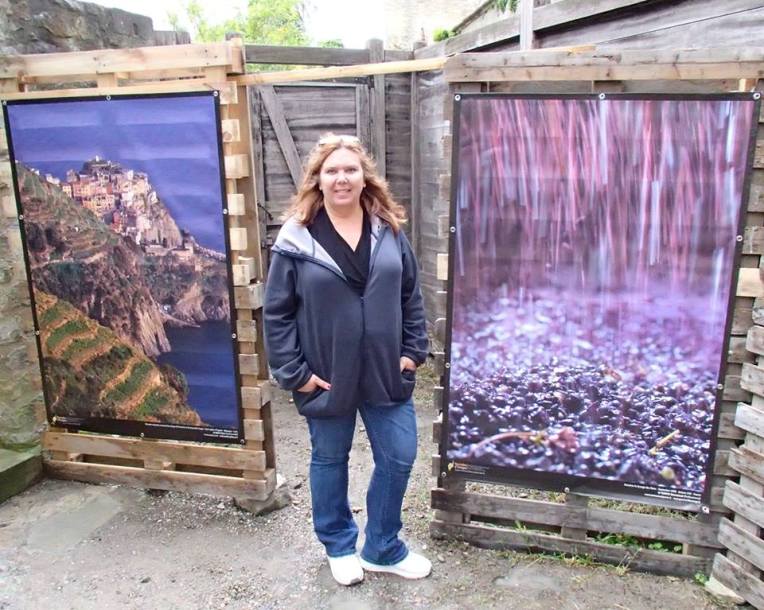
Some of the photos were “blown-up” and displayed outside the gallery so I can share some of those below.

Tracy outside the exhibition with two photos displayed inside. Eighth Annual Terroirs d'Images International Photo Exposition.
Tracy outside the exhibition with two photos displayed inside. Eighth Annual Terroirs d’Images International Photo Exposition.

This slideshow requires JavaScript.

Carcassonne: Equiaude Parade and Cheval en Fête (Horse Festival)

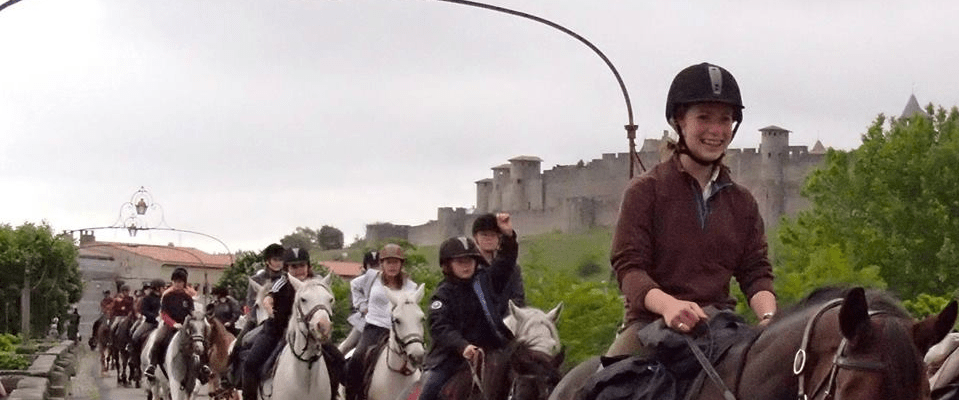
We had a great time at the Cheval en Fête (Horse Festival) today.  We watched more than 100 riders participate in the Equiaude Equestrian Parade.  The cavaliers rode from the medieval citadel of la Cité de Carcassonne, down and across du Pont Vieux (the Old Bridge), around Square Gambetta, through the streets of Carcassonne, and ending at the Hippodrome de la Fajeolle.

Equiaude Equestrian Parade passing over the Pont Vieux (Old Bridge) with la Cité de Carcassonne in the background.

The participants ranged from mature to the very young.  There appeared to be several riding schools with groups of young people in matching shirts singing together as they rode.  Riders were using western saddles, dressage saddles, Australian saddles, and jumping saddles and there was a couple of horse-drawn carriages also participating.  With the municipal police taking front and rear of the procession for safety, the parade passed through town with the children happily waving to spectators.

The parade is part of a two-day equestrian competition at Carcassonne’s hippodrome.  The Equiaude Parade (Equi = equestrian, Aude = our department in France) is anticipated in Carcassonne like the annual Reno Rodeo Cattle Drive.

Equiaude Equestrian Parade

It was odd not to see iconic American Mustangs or Quarter Horses among the horses, but there were some beautiful Arabians and Thoroughbreds, with ponies and horse/mule hybrids for the children.  While I’ve been in a saddle fewer times than I have fingers, Tracy is a former horsewoman who explained tack and horses breds as they passed.

The part we enjoyed the most was the smiles and laughter of all the young riders as they enjoyed being the center of the attention while waving to the spectators and singing in unison.

This slideshow requires JavaScript.

Carcassonne: Monet-Goyon Vintage Motorcycle

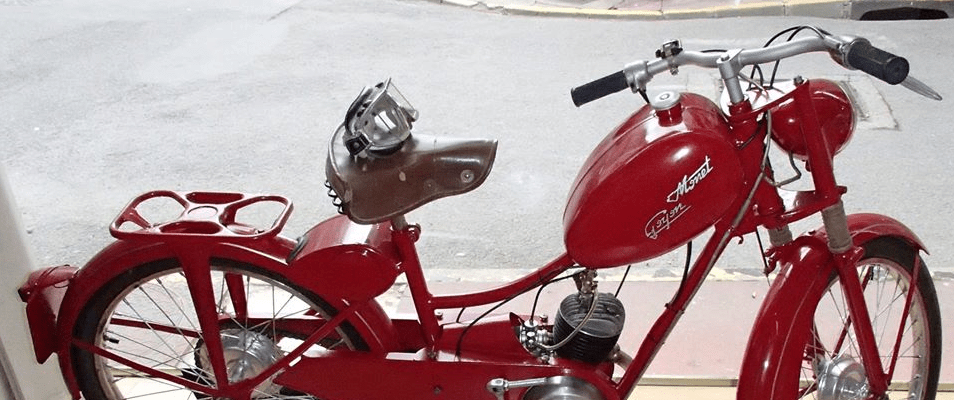
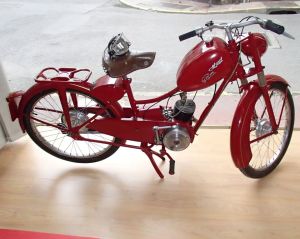
There I was “walking around the neighborhood” when I spotted this vintage Monet-Goyon motorcycle in the window of an insurance agency. I knew I had to get photos for my brother, Gary, who has always been a motorcycle enthusiast.   After a bit of a struggle getting the proprietor to understand my inadequate French, he was happy to let me take some photos of this beautifully restored classic motorcycle.  The insurance agency apparently is also a sponsor of the Circuit des Remparts, a race for classic Grand Prix and Formula 2 cars in Angoulême.  The annual event also hosts a Concours d’Élégance gathering of  vintage and prestigious cars, a “Hot August Nights” event for classic French and European cars.

Monet-Goyon 100 cc Motorcycle, circa 1954

Monet-Goyon motorcycles were made in France from about 1917 to 1959.  The factory was located in Mâcon, in the department of Saône-et-Loire in the region of Burgundy.

After researching online and getting information from Gary, I learned that Monet-Goyon motorcycles were widely used in France.  The Mâcon factory  (which also built Koehler Escoffier motorcycles) produced numerous Villiers (British brand 2 stroke engines) and MAG (Swiss brand 4 stroke engines) powered motorcycles up until 1939.  After the end of World War II, Monet-Goyon resumed production of small displacement motorcycles and scooters until finally closing its doors at the end of the 1950’s.

I believe this model is a Monet-Goyon 100cc S2G-1954G.  Fun little discovery and I’ve added the Circuit des Remparts and its Concours d’Élégance to my list of “Events to Attend” in France.

This slideshow requires JavaScript.