Micro-Adventure: St. Cyprien Plage

Last Saturday I was house shopping for 2016-2017 at AirBnB online (again). We found a place in Perpignan that looked like it would be great, but I still wasn’t sure it was the best option so I was still searching. I found a small house with nice big yard for Sami and a three room loft. I put in an inquiry and almost immediately heard back. It was available for the entire year. So we decided we should go and check out town where this cute little cottage lives in St. Cyprien Plage.

The house is at the north end of the plage, but having never been there we weren’t sure exactly where to get off on the bus and decided that the second exit near the port seemed about right. Well wrong. As we walked to the center town we realized that the port has almost two kilometers of waterfront. Built in the 1960s as a way to encourage tourism, this harbor has dozens of turns and branches out much like a palm tree. It is the second largest pleasure port in France and the third largest in Europe.

Needless to say we were quite done looking at the houses at the harbor by the time we reached the central plage.

This was a Sunday and apparently market day in St. Cyprien. We normally would have spent an hour or so wandering through, but Sami was with us and she gets terrified in a large crowd. The best option was to sit and have lunch and wait for the crowds to thin out.

We found a Vietnamese restaurant and were so excited to see that they had Pho. One of our all time favorite things and we couldn’t get seated fast enough!

We ordered to bowls of Pho with pork and shrimp and a side order of the chilled spring rolls also with shrimp. It has been years since we have had Pho and every bite was a reminder of home. Amazing food. Kim Long’s Restaurant, if you’re in the area . . . definitely do not miss!!

After lunch we toured through the central plage area, taking in the nice wide sidewalks and bike lanes. This town is definitely dog and bike friendly. Argeles-sur-Mer is also very bike friendly, but only in sections does it have wide, shaded lanes for both pedestrians and cyclists. In St. Cyprien, every street we walk on had wide sidewalks, most of them shaded by big trees and with nice lighting as well for evening strolls.

My first impression was the harbor and while nice I had been thinking that maybe it was a mistake to be looking for a rental property in this city. By the time we made it to the central plage and found where people really hang out the city had a much better feel to it. North of the harbor is the more laid-back section of town. Not quite as northern California “beach bum chic” as Argeles — which my soul does back flips over — more like yuppie surfer-dude feel of say a southern California beach like Santa Monica. Minus the ferris wheel.

After spending the day and getting oriented a bit, we decided that we definitely wouldn’t mind spending a year, or two, in St. Cyprien.

We’re sure Sami would agree. Her most favorite thing in the whole world is to get sand in her paws!

This slideshow requires JavaScript.

Micro-Adventure: Les Orgues d’Ille-sur-Têt

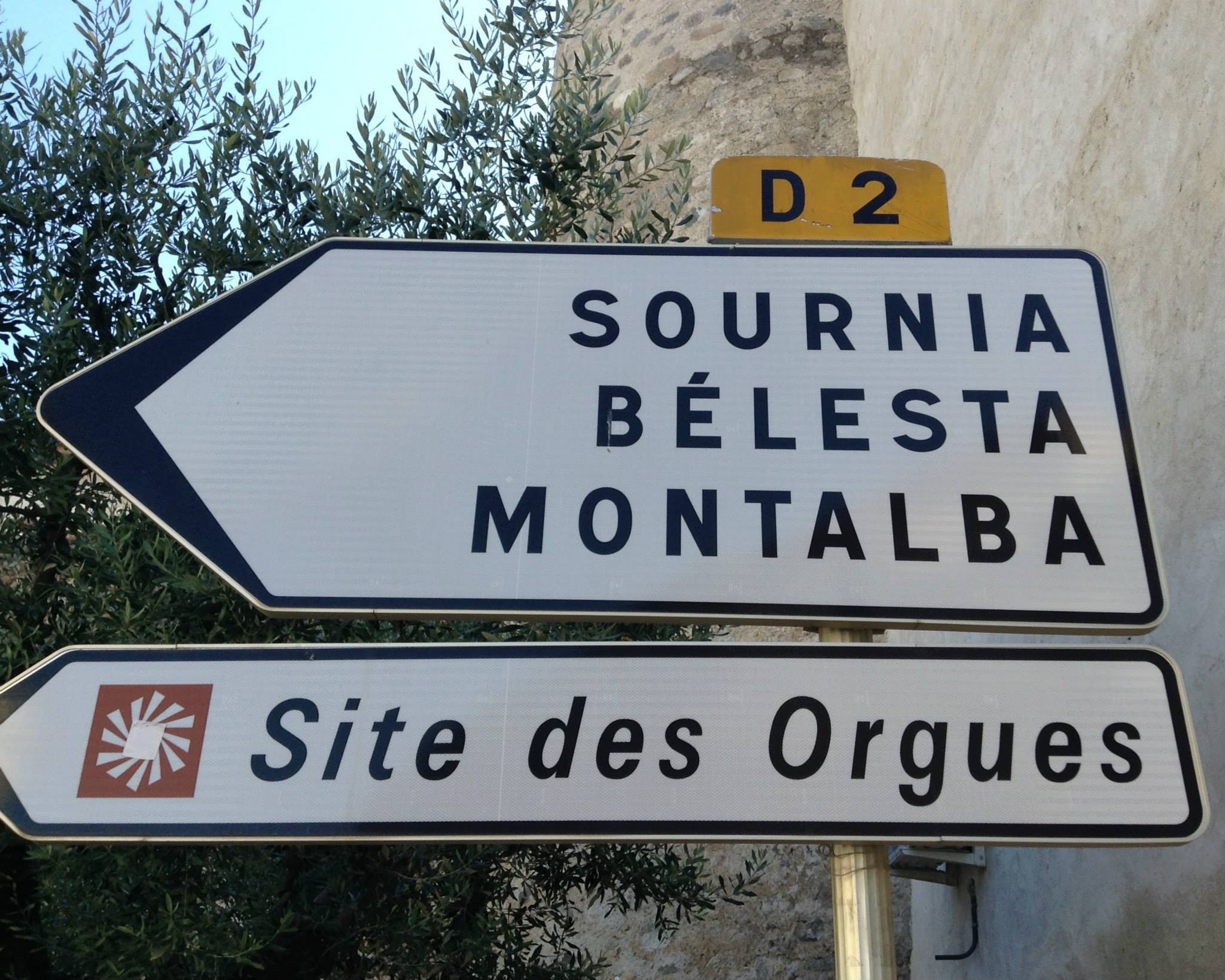
We have found that most of the staff in the tourist offices speak at least a little bit of English. Usually enough to get a map or directions. Ille-sur-Têt’s tourist office didn’t have printed city maps, but rather a large laminated map. When we asked for a map and directions to Les Orgues, the staff person pointed out the route and we jotted down the names of the streets. She said, “Just follow the signs, it is not far.”

Directional sign for Les Orgues

And it really wasn’t. 2 kilometers from the bus stop, about 20 minutes of walking and we were at the Visitor’s Center for Les Orgues d’Ille-sur-Têt. Most of the walk was on wide sidewalks. There were a few places with little room for pedestrians but drivers in our region are used to pedestrians, cyclists, runners so they just slow down and move over . . . well sometimes they slow down!

Alan on the walk out to Les Orgues

We went into the Les Orgues Visitor’s Center and while Alan purchased the entrance tickets (5 Euro/each) I browsed through the brochures they had laid out. Oddly they had more than the tourist office in town and I picked up several I hadn’t seen before.

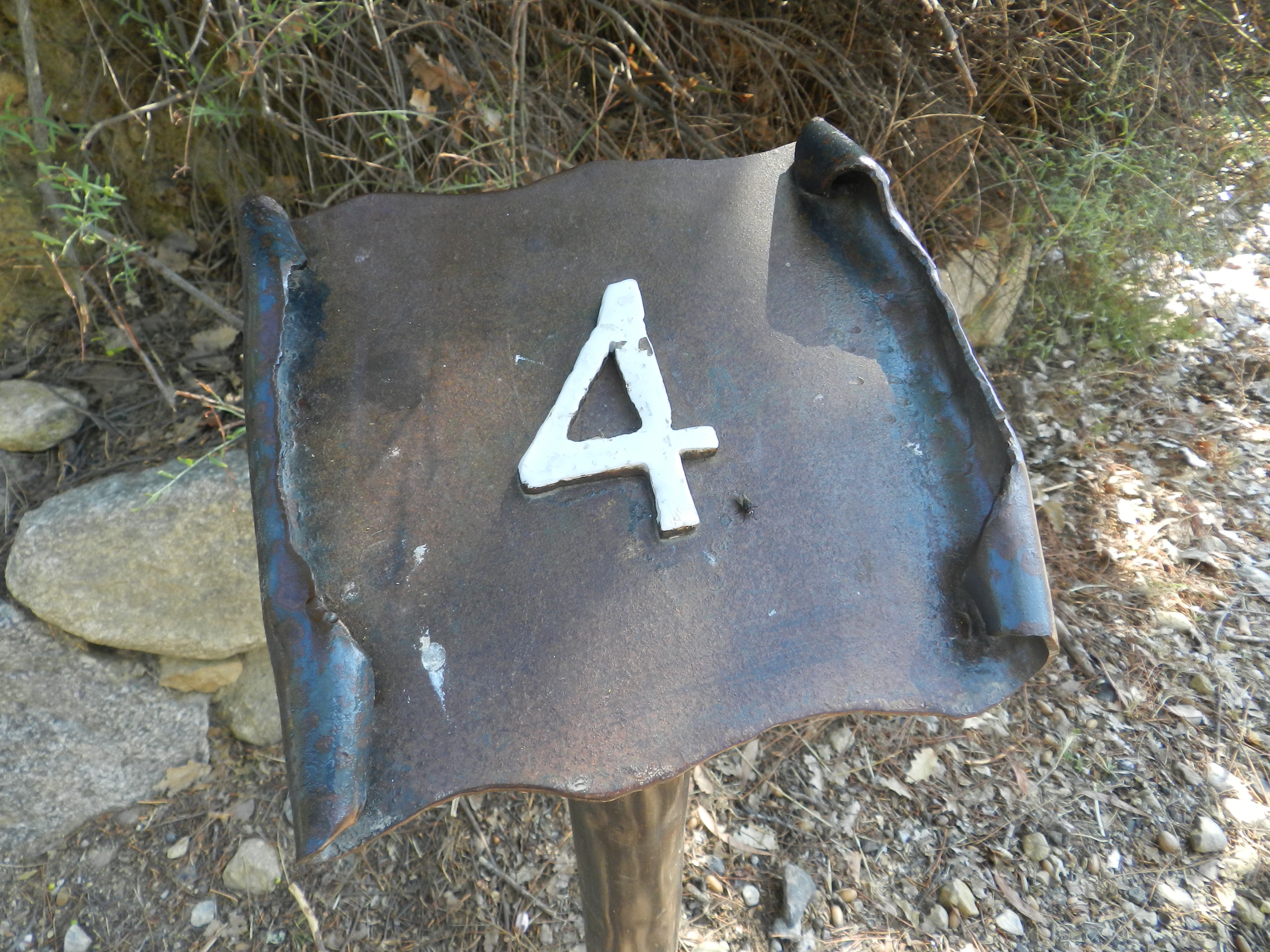
Access to the site was gained by a short walk (800 meters) on a dirt path with an interpretive trail. The Visitor’s Center had guide books that included information about the flora and fauna, waterways and flooding, etc. We dutifully stopped at each of the numbered markers and read the information in the mini guide book, which was in English.

One of the interpretive trail markers.

We were in the Têt Valley, an area called “Ribêral” meaning “river area” or “born from rivers.” In the distance is the Canigou Massif (2,784 meters) topped by the “dog’s tooth peak.” It is the last high summit of the Eastern Pyrenees, an important symbol for the Catalan people.

Earlier the area had another name, “El Val del Infern” (Hell’s Valley). The landscape was very dry. Along the interpretive path we read about the Mediterranean farming for this small area which mainly consist of vineyards, olive, almond and fig trees. A startling contrast from the rest of the Têt Valley which is well irrigated and known for its peach production. The peaches have vivid red coloring due to the reflection of the sun on the sand.

Part of the interpretive trail, an olive grove shows the types of trees that could grow here before the area was irrigated.

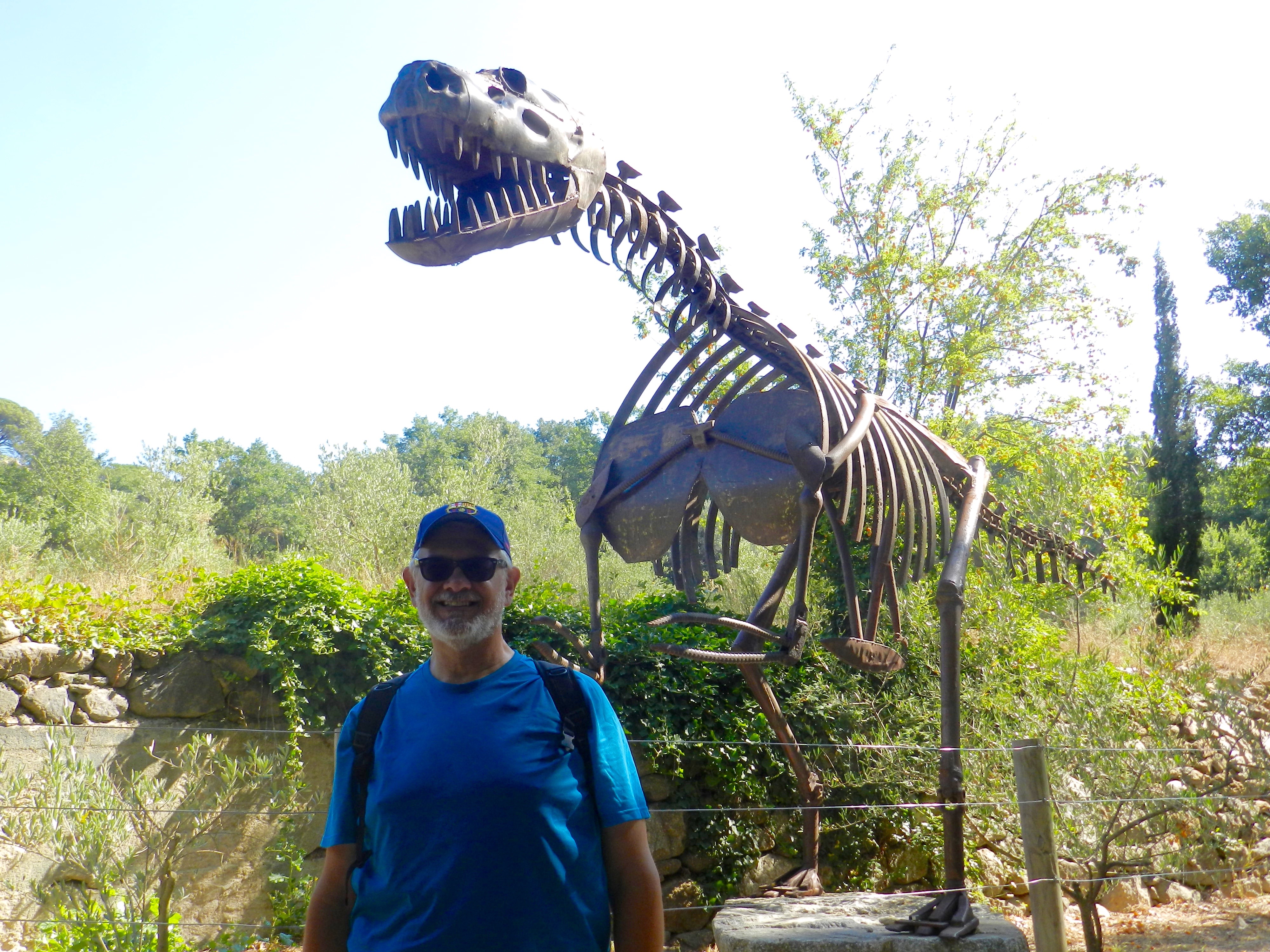
Right after marker 2 was a sculpture garden. The sculptures were made from a lot of different things, found items in most cases. The small statue of four girls dancing were made from old axe heads. My favorite was the T-Rex skeleton. Much larger than the rest and almost hidden around a bend in the path, it drew smiles from everyone passing by.

Alan and Rex
Alan and Rex

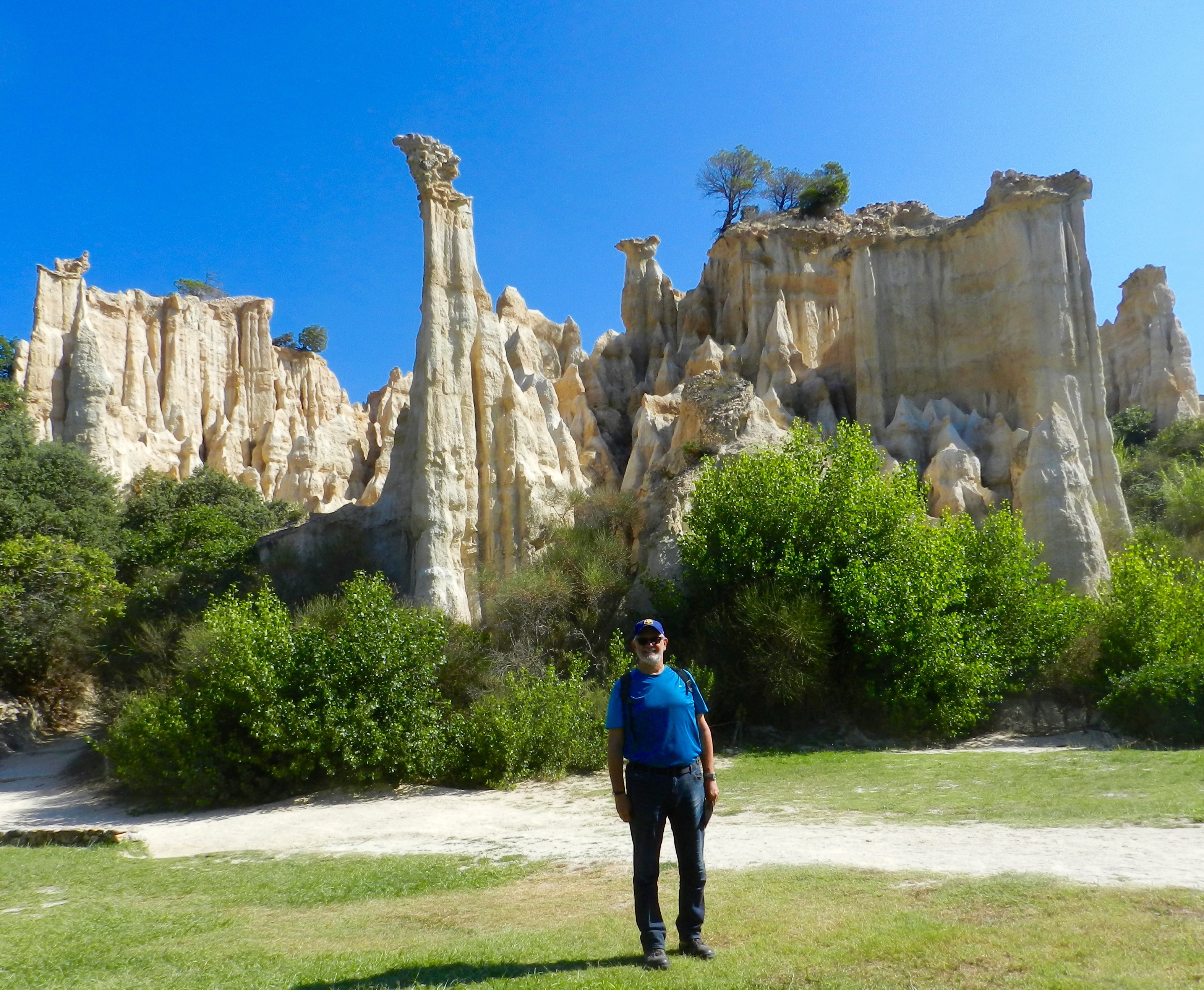
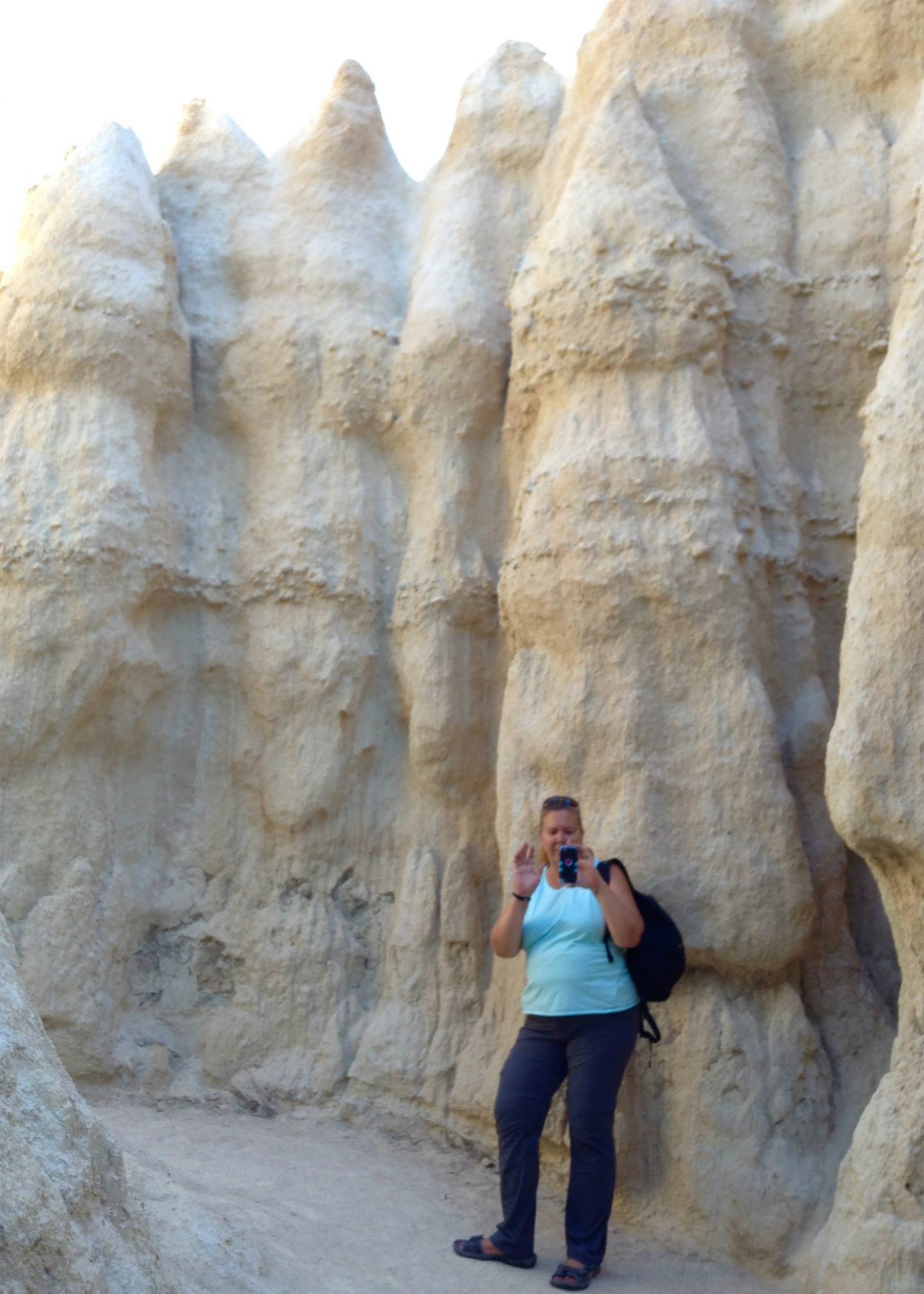
Upon reaching the entrance to Les Orgues, we handed our tickets to the young lady at the kiosk and entered the world of fairy chimneys. The site opens up like an amphitheater with walls of gigantic columns 10 to 12 meters high (30 to 40 feet).

Alan with the "fairy chimneys" in the background.
Alan with the “fairy chimneys” in the background.

It takes about an hour or so to walk through the small park, including time to take photos. The area is beautiful with white and tan columns topped by layers of rock and in some cases trees and shrubs. The columns look like chess pieces or organ pipes or chimneys. The formations are called by many different things, chimney rocks, fairy chimneys, organ pipes, hoodoos. Since individual formations had no official names we were making them up, such as the “amphitheater” or “chess pieces.”

The "chess pieces."
The “chess pieces.”

The guide book stated that the area is in a constant state of change. The sandy rock columns change with each drop of rain as they have for the last five million years. Areas like Les Orgues are scattered around the Têt Valley but nowhere else are the results quite as spectacular. However the name Les Orgues means The Organs a name which is typically used to designate basalt streams that have solidified into long pipes or columns. This particular area is not volcanic in origin, just named before the term was designated for basalt columns.

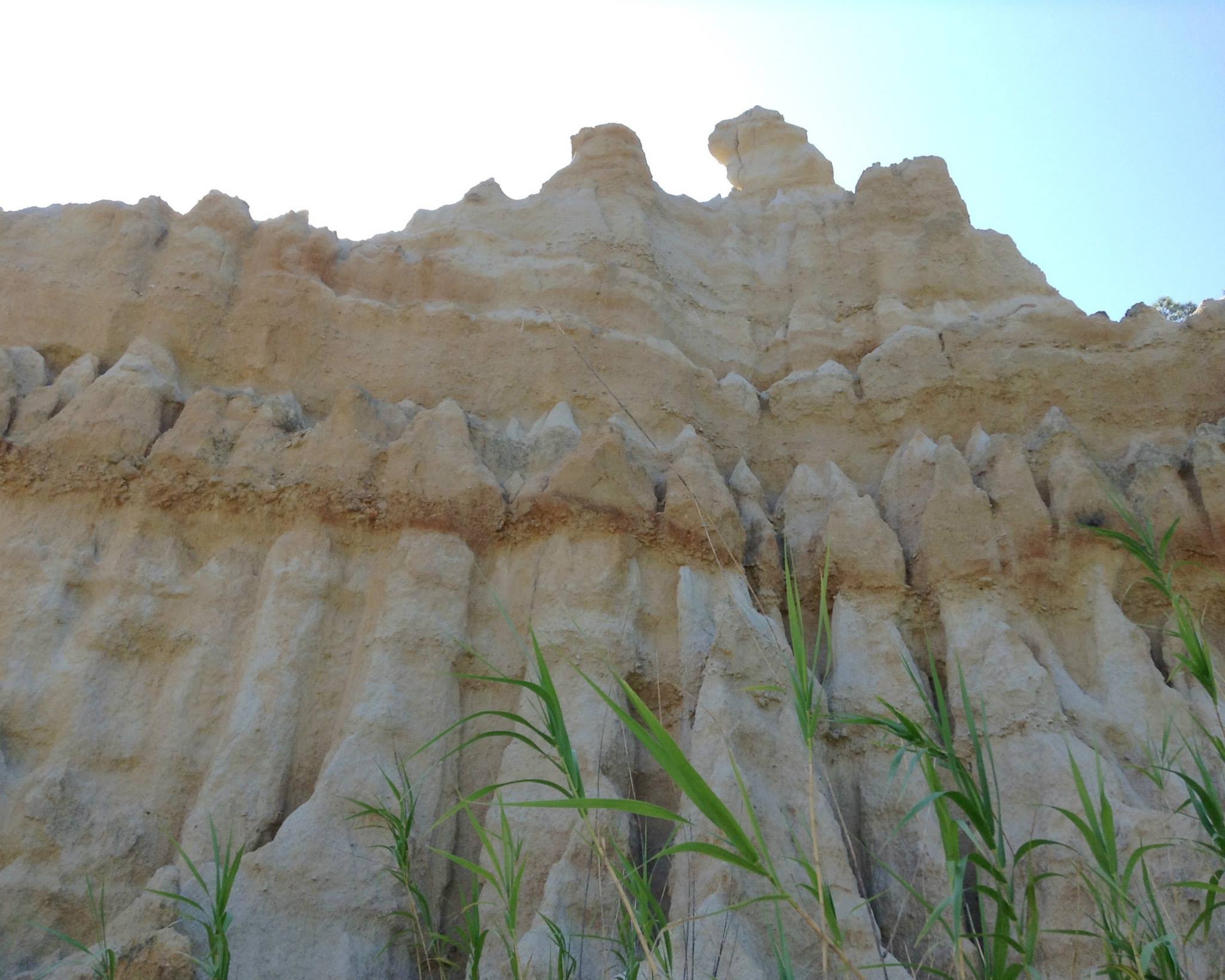
Close up of labyrinth wall detailing water run-off.

There was also a “Labyrinth” trail (about 100 meters long) that wound up through the ‘chimneys’ to a dead end. The guide book did state that it was one labyrinth that no one would get lost in!

Tracy on the labyrinth trail.
Alan walking up through the labyrinth.

We also learned that the area was home to aurochs, cave lions, cave bears and cave hyenas in prehistoric times. No mention of dinosaurs . . . except the metal T-Rex.

I had brought my good Nikon with me, but my batteries died . . . both of them. I think after 4 years they aren’t up to the job anymore or perhaps it was just a bad day for batteries! But we had both brought our iPods, training ourselves to use them for our big hike on the Camino de Santiago coming up in just about five weeks.

Back at the Visitor’s Center we enjoyed the air conditioning inside while purchasing a couple of cold drinks then sat outside on the covered terrace. Once finished, we headed back into town for lunch and visits to the churches in town. St. Etienne was visible from the bridge across the Têt River and Hospice d’Illa is a few blocks away — more about them here.

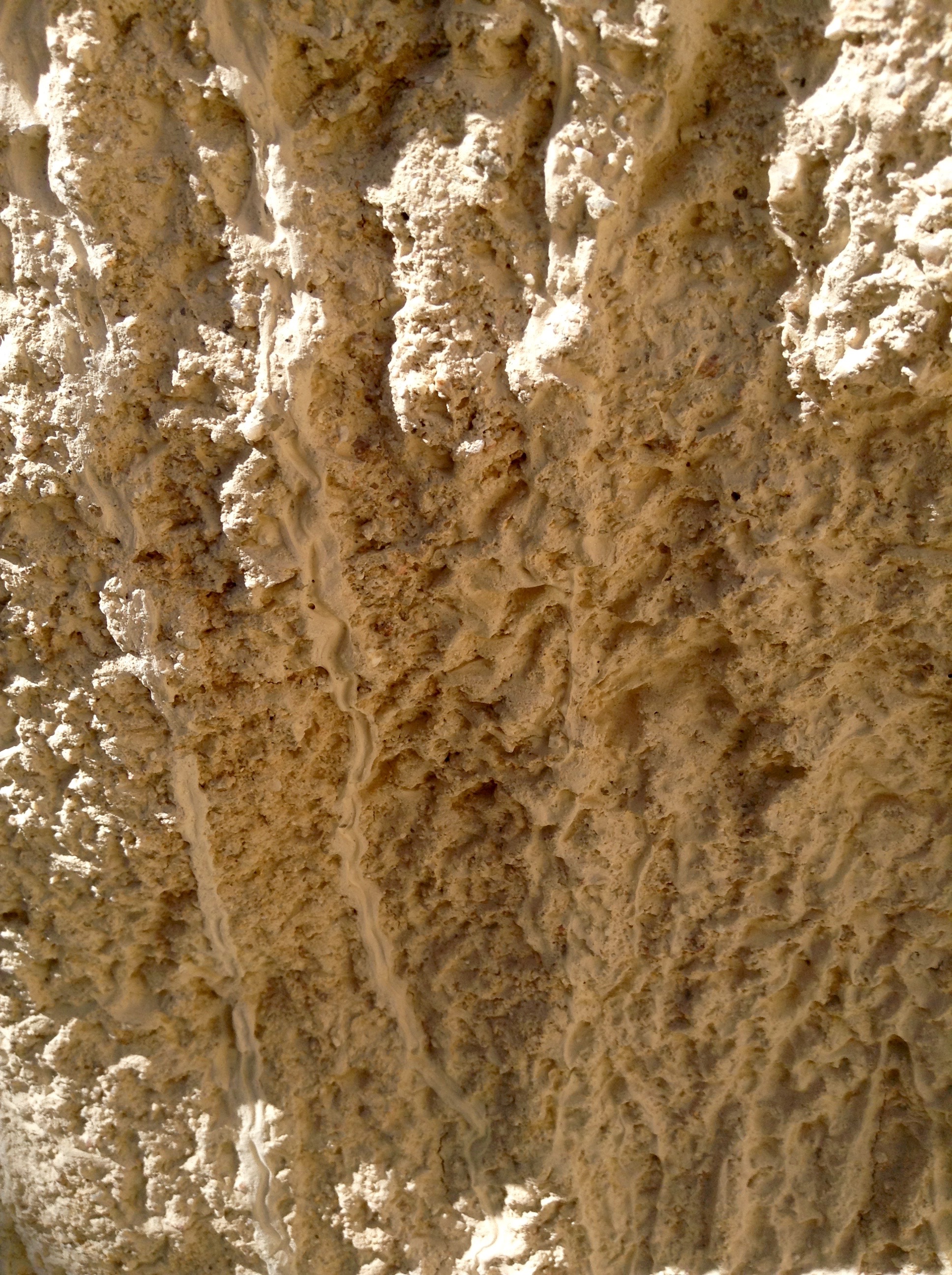
In the photos you’ll notice strips of color in the columns. The white corresponds to clay, the ochre color to iron oxidation, the brown or grey spots are lichen and moss which will turn green again with enough water.

If you are ever near the area, it is definitely worth a stop. It doesn’t take long to walk out to the site and have a look around, but is definitely a “Do Not Miss” place in this region.

This slideshow requires JavaScript.