Carcassonne: Smashing Pumpkins (Festival de Carcassonne)

The Festival de Carcassonne (Carcassonne Festival) is one of the major cultural events for the South of France and is now one of France’s largest festivals with nearly 120 shows ranging from opera, dance, theatre, classical music, cirque, French and international popular music.  More than 80 of the 120 shows have free admission. It’s Carcassonne’s version of Arttown with an emphasis on the performing arts.  From the end of June to August, artists perform at 10 different venues, including the Roman theatre in the medieval fortress of la Cité de Carcassonne.
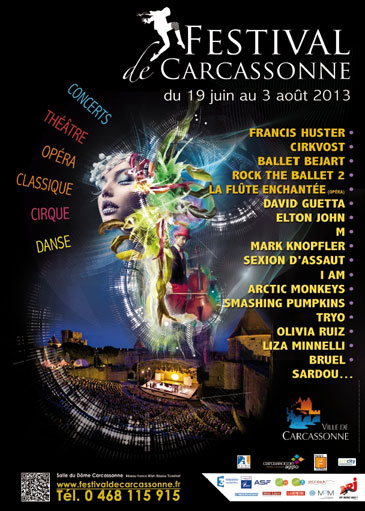
Festival de Carcassonne

Adam and Liz just happened to be visiting us over Adam’s birthday.  As Karma would have it, one of Adam’s favorite bands, Smashing Pumpkins, was performing in Théâtre Jean-Deschamps inside la Cité de Carcassonne for Festival de Carcassonne on Adam’s birthday.  The only “band shirt” Adam brought on this trip just happened to be from Smashing Pumpkins’ “Zero” tour.

Adam wearing his Smashing Pumpkins' Zero shirt
Adam wearing his Smashing Pumpkins’ Zero shirt

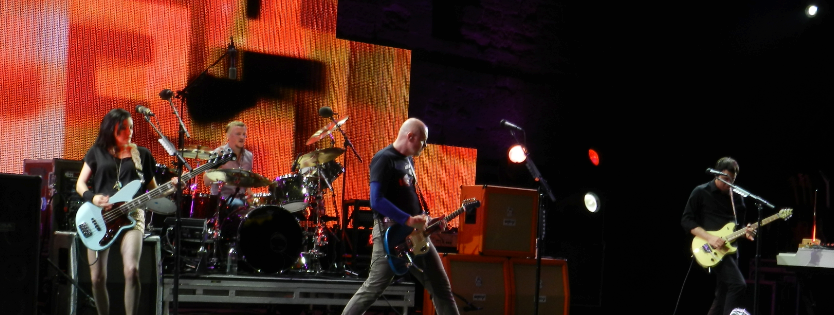
Smashing Pumpkins was performing at the Festival de Carcassonne as part of their European “Shamrocks and Shenanigans 2013” tour.  The universe had spoken and Adam and Liz were going to spend the evening of Adam’s 22nd birthday watching Smashing Pumpkins perform in the former Roman amphitheater of la Cité’s Théâtre Jean-Deschamps within the citadel’s fortified walls and in the shadow of the Basilique Saint-Nazaire-et-Saint-Celse de Carcassonne (Basilica of St. Nazaire and St. Celse.)
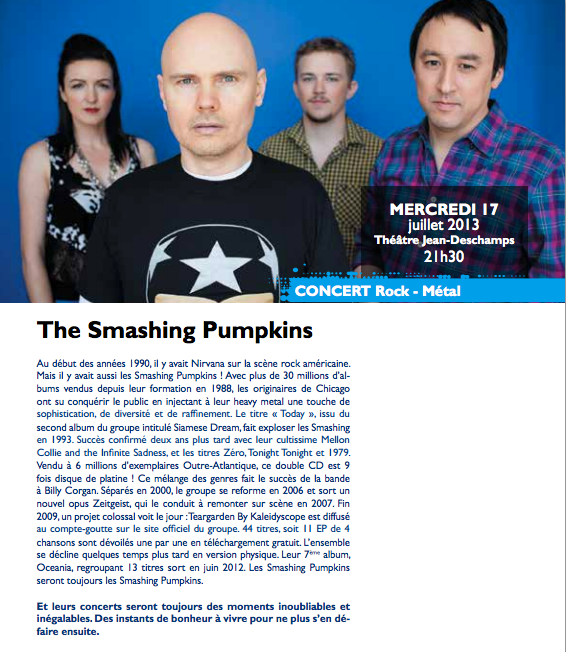
Smashing Pumpkins' program page for Festival de Carcassonne
Smashing Pumpkins’ program page for Festival de Carcassonne

Adam and Liz arrived early at the theater to wait in line and were rewarded with seats in the second row from the stage.  While standing in line they had a long discussion with an English-speaking French couple from Toulouse about the music scene in Europe.

Liz and Adam pointing out a Smashing Pumpkins sign in Place Carnot

Adam and Liz had a great time at the concert, right up front to the stage, and they captured some great photos of the performance.

This slideshow requires JavaScript.

And, of course, afterwards Liz got Adam a “Shamrocks and Shenanigans 2013” concert tour shirt for his birthday.

Adam in a Smashing Pumpkins' "Shamrocks and Shenanigans" tour shirt
Adam in a Smashing Pumpkins’ “Shamrocks and Shenanigans” tour shirt
Adam in a Smashing Pumpkins' "Shamrocks and Shenanigans" tour shirt
Adam in a Smashing Pumpkins’ “Shamrocks and Shenanigans” tour shirt

Carcassonne: La Fête Nationale Fireworks (Bastille Day)

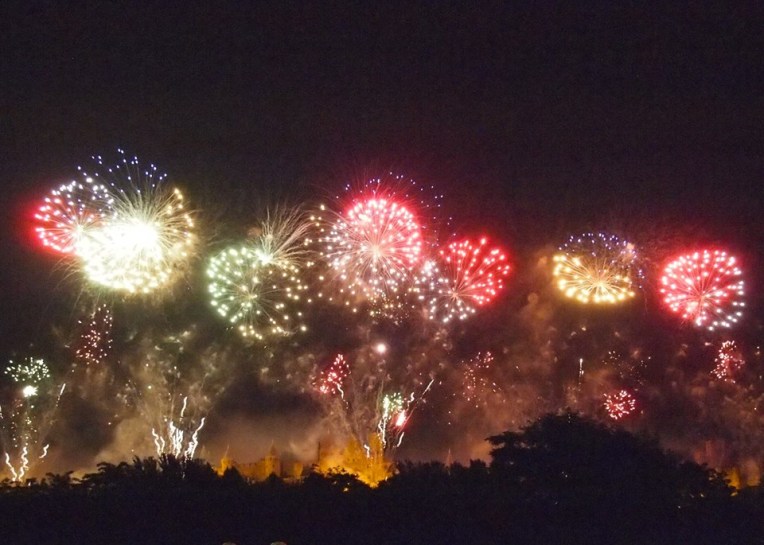
The La Fête Nationale (Bastille Day) fireworks in Carcassonne are famous throughout the world. In a beautiful medieval setting, the fireworks are lit among the ramparts and, as they shoot into the sky, they light the city below. The display has become extremely popular since its inception in 1898, with more than 700,000 people attending the festivities each year. It is the largest fireworks display in France with a full 25 minutes of pyrotechnics including “Burning the Cite,” immersing the medieval city of la Cité de Carcassonne in a red glow like the city is under siege and on fire.

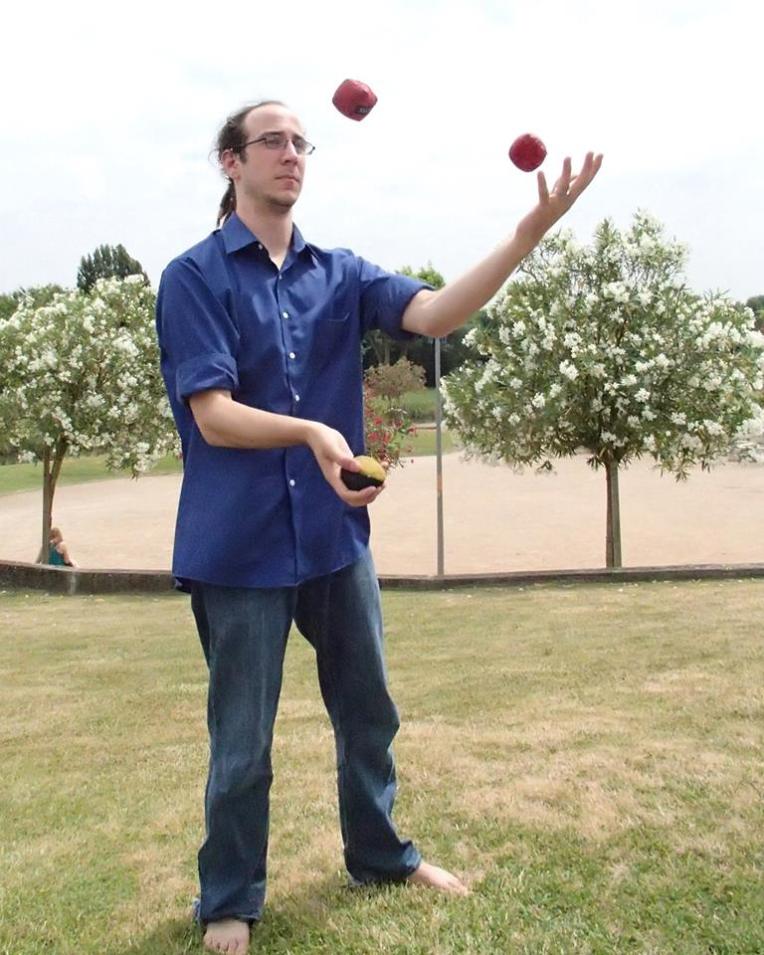
Tracy, Adam, Liz, Kiara, and I watched from the banks of the river Aube along Quai Bellevue.  We arrived early and enjoy a picnic, Adam Juggled for the crowd, watch people play petanque, Kiara was doted on, drank wine, and we chatted with our neighbors while waiting for the fireworks to start.  A festive and friendly atmosphere.

La Fête Nationale (Bastille Day) is the French national holiday commemorating the storming of the Bastille on July 14, 1789, a pivotal event the anti-monarchy revolution.

Liz, Adam, Tracy, and Kiara enjoying a picnic while we wait for the fireworks to start.
Adam juggling for the crowd while waiting for the fireworks
Fireworks over the medieval city of la Cité de Carcassonne

This slideshow requires JavaScript.

Carcassonne: 25ème Tour de l’Aude (25th Tour de l’Aude Vintage Car) Rally

With Adam and Liz newly arrived in Carcassonne, they had an opportunity to attend one of the many events that seem to be happening all year-long.  Their first event was at the medieval city of la Cité de Carcassonne:  the 25ème Tour de l’Aude des Voitures Anciennes en Pays Cathare (25th Annual Tour de l’Aude Vintage Car Rally through Cathare Country.)  Eighty plus cars from 1914 to 1945 of the most prestigious brands (Delage, Delahaye, Rolls Royce, Talbot, Bugatti …) from all over Europe. Like “Hot August Nights” for vintage European cars (plus a few US cars like a classic Mustang and Cadillac.)

Tracy, Liz, and Adam at the 25ème Tour de l'Aude des Voitures Anciennes en Pays Cathare (25th Annual Tour de l'Aude Vintage Car Rally.)
Tracy, Liz, and Adam at the 25ème Tour de l’Aude des Voitures Anciennes en Pays Cathare (25th Annual Tour de l’Aude Vintage Car Rally.)
Liz and Adam at the Narbonne gate of the medieval city of la Cité de Carcassonne

This slideshow requires JavaScript.

French Baking, Part 1: Éclair

So what about French pastries?  Are they really as good as their reputation?  The answer is:  Absolutely!

Going to a real pâtisserie is an amazing experience.  One of the modern laments in France in that neighborhood bakeries are getting fewer and fewer because of the growing number of supermarkets and that many bakeries attempt to be both a pâtisserie (pastry bakery) and boulangerie (bread bakery.)   It is a commonly held belief that a pâtissier (pastry chef) and a boulanger (baker), while both well-respected as professionals, have totally different skill sets.  Purists argue a good boulanger cannot also be a good pâtissier.  Visiting dedicated pâtisseries and trying their pastries have made me a believer of that assertion.

Pâtisserie
Pâtisserie

I thought I would discuss the classic French pastry, the éclair, first.  An éclair is made with pâte à choux, a light pastry dough.  The reason a pâtisserie’s expertise is required is that éclairs are baked without using any rising agent.  The pâtisserie uses only the moisture in the pâte à choux dough to create steam that “puffs” the pastry.

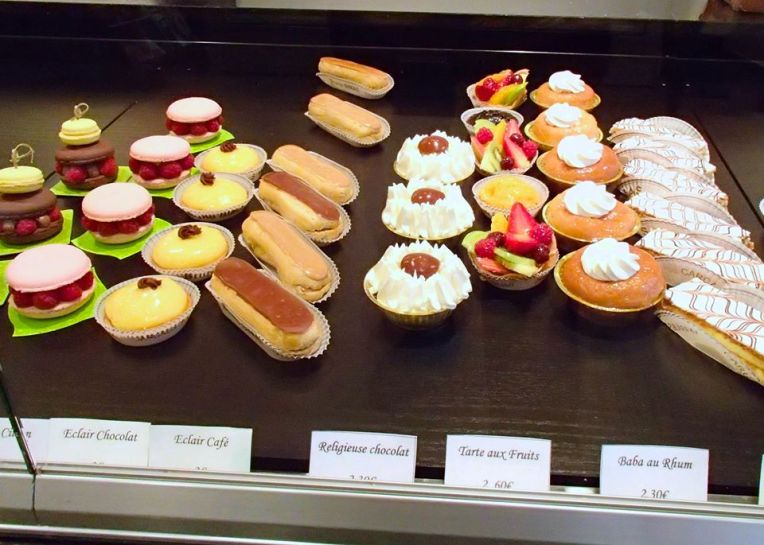
I visited my neighborhood pâtisserie saw and smelled some incredible treats on display.  The window had large empty spaces from early rising shoppers.

Pâtisserie Display
Pâtisserie Display
Pâtisserie Display
Pâtisserie Display

I purchased two éclairs and the pâtisserie proceeded to carefully box and wrap the pastries, in Tracy’s words, “like a Christmas gift from Nordstroms.”

Éclair Box
Éclair Box

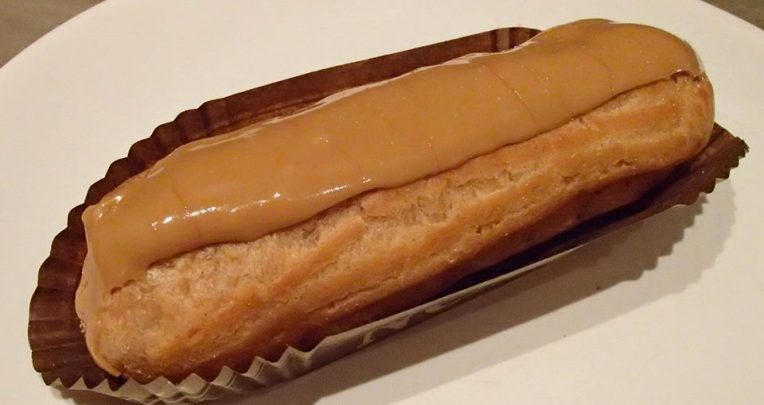
So how do they taste? Incredibly good!  The  éclair’s exterior is tan and crisp with layers of soft pastry inside.  The filling is actually custard, rich and thick, not whipped cream or pudding.  Chocolate and coffee iced éclairs are the most common with matching chocolate and coffee custard filling inside.  The richness of the pastry and custard make a single éclair a complete treat.  Melt in your mouth delicious.

Éclair
Éclair

French Beverages, Part 6: Suze

Suze is a bitter wine based  aperitif made from distilling the roots of the gentian plant and sold by the Pernod-Ricard Liqueur Company.  Suze is the fifth most popular aperitif in France.  Apparently this 15% ABV liqueur has recently also become available for purchase in the United States.

Suze was created by Fernand Moureaux in Paris in 1885, but not marketed until 1889.  Suze is known for its slender amber bottle, designed in 1896 by Henri Porte.  A Suze bottle is the subject of Picasso’s 1912 cubist image “Verre et bouteille de Suze” (Glass and Bottle of Suze) that is currently on displayed at the Mildred Lane Kemper Art Museum located on the campus at Washington University in St. Louis, Missouri.  http://www.kemperartmuseum.wustl.edu/collection/explore/artwork/1105

According to Pernod-Richard, who owns the brand, “The origin of the name “Suze” is disputed. According to the first theory, it was named after Fernand Moureaux’s sister-in-law, whose name was Suzanne and who loved the aperitif. Second theory: the drink was named after a little river in Switzerland, one of the first countries to adopt the drink.”

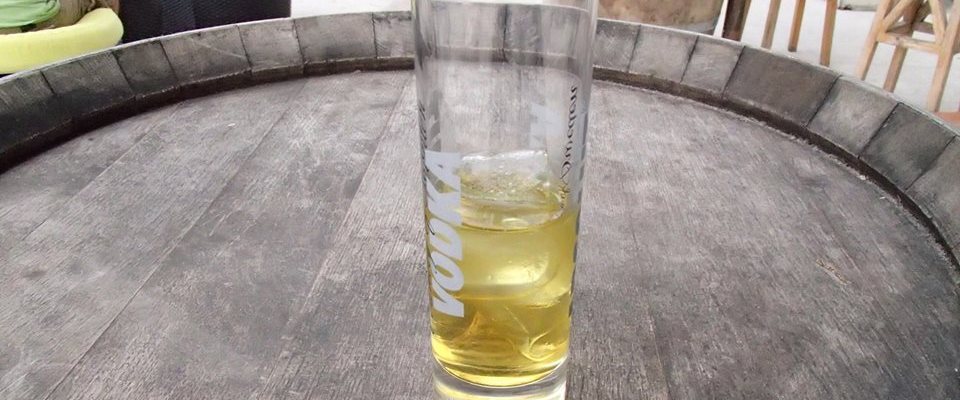
Suze

With the history behind Suze, I was looking forward to trying it.  In Carcassonne, I was served Suze as two ounces of the chartreuse colored liqueur over  ice.

What do I think?  Once was enough.  It has a very distinct bitter taste that was unpleasant  for me.  While not actually tasting “burnt,” it’s the word that first came into my mind.  I really cannot think of ever wanting another.  I don’t dislike strong liquors or liqueurs straight, in fact I prefer my Scotch and other whiskeys “neat,” but there was nothing redeeming in the taste of Suze for me.

At the Suze website,  www.suze.com, there are some Suze based cocktails that might mitigate the taste.  But I believe if you have to hide the taste of a liqueur you have to ask yourself, “Why am I drinking this?”

Bottles of Suze
Bottles of Suze

Carcassonne: Marc Walter Sculptures, “L’embrassade” and “Invités du Coeur”

Franco-Canadian artist Marc Walter created five large sculptures in Carcassonne as part of the annual Festival de Carcassonne.

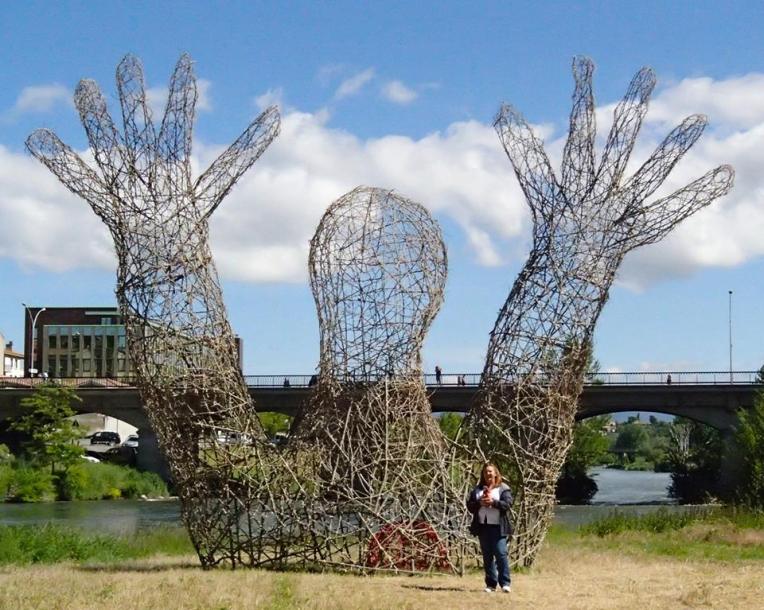
The first and largest is the “L’embrassade” (“The Hug”) sculpture located on the tip of l’île de la Cité Park and below the Pont Vieux (Old Bridge.)  The sculpture is 7 meters tall and 9 meters wide. Marc Walter uses natural materials like wood, rock and earth to create his “Land Art” sculptures. For this project he used tree branches collected from Carcassonne’s public works after pruning the local trees.  The sculpture is made by weaving the branches and securing with twine to created a large figure of a man with arms outstretched to the sky.  A bright red heart can be seen inside the sculpture.  The image is very reminiscent of an 3-D version of a Keith Haring painting.

Tracy and Kiara in front of Marc Walter's "Land Art" Sculpture "L'embrassade" ("The Hug")
Tracy and Kiara in front of Marc Walter’s “Land Art” Sculpture “L’embrassade” (“The Hug”)

This slideshow requires JavaScript.

In Square Gambetta the artist created four additional sculptures.  Standing five to six meters high, I thought these “Invités du Coeur” (“Guests of the Heart”) sculptures had a Native America feeling.  The weaving of the branches creates a vision of Indian basket weaving and the silhouette reminds me of woman with a blanket draped over her shoulders.  Again created using recycled tree branches and twine, the four figures allow you to step inside and experience the art from the interior.  Each sculpture has a distinctly red heart like the “L’embrassade” sculpture, but these  figures were somewhat more abstract in appearance.  We watched the artist and volunteers from the community build the sculptures over the last six weeks.  I spoke briefly with artist Marc Walter while he was working.  He was very friendly, accessible, and happy to discuss his work. I was thankful because of Marc’s Canadian roots I was able to communicate in English.  He works very hard to actively involved the entire local community in the work as a collective effort in the art.  The completion of the project was marked with a picnic celebration with the community invited to attend.

Tracy with one of the  "Invités du Coeur" ("Guests of the Heart") Marc Walter sculptures in Square Gambetta
Tracy with one of the “Invités du Coeur” (“Guests of the Heart”) Marc Walter sculptures in Square Gambetta

This slideshow requires JavaScript.

In all, a remarkable exhibition of public art by artist Marc Walker using local recycled materials and involving community volunteers.

To see more visit Marc Walker’s website at www.marcwalter.ca

A YouTube video creating the art is at http://www.youtube.com/watch?v=vNuHsObwnOA 

Franco-Canadian artist Marc Walker working on one of his "Invités du Coeur" ("Guests of the Heart") sculptures in Square Gambetta.
Franco-Canadian artist Marc Walker working on one of his “Invités du Coeur” (“Guests of the Heart”) sculptures in Square Gambetta.

Carcassonne: Oenovideo Film Festival and Terroirs d’Images Photo Exhibition

On May 30 through June 2, Cité de Carcassonne hosted Le 20e Festival Œnovidéo, véritable moment de rencontre internationale entre le monde du cinéma et du vin, vient de se clôturer (the 20th Annual Oenovideo International Grape and Wine Film Festival) and le 8e Torroirs d’Images Exposition Internationale de Photographies sur la Vigne et le Vin (the 8th Annual Terroirs d’Images Exhibition of  Vine and Wine Photography.)

Oenovideo Film Festival
Terroirs d'Images Photo Exhibition
Terroirs d’Images Photo Exhibition

The Oenovidéo International Grape and Wine Film Festival featured 26 films from 14 countries competing for the title of best film on the vine and wine in 2013.  The Terroirs d’Images Photo Exhibition hosted 105 photos from photographers from 14 countries on the theme “Enjoy and celebrate wines on five continents.

After going to the website I was able to request tickets to the film showings and to attend the photography exhibition.  The event’s headquarter was at Hôtel de la Cité Carcassonne, a four star hotel located inside the medieval city and next to Basilique Saint-Nazaire-et-Saint-Celse de Carcassonne (the Basilica of St. Nazaire and St. Celse).  The hotel has stunning private gardens where several events were held.

The films screened at the festival included several English language films including my favorite selection, “No Wine Left Behind,” a “kickstarter-funded” independent film which is described as, “When US Marine Sergeant Josh Laine returned from intense fighting in Iraq to his native Livermore, CA, he couldn’t find a job anywhere. When a girlfriend got him into wine, he decided to take a crack at winemaking and with the help of the other Marines that he served with, Lavish Laines Winery was born. The winery has since become a place where returning veterans can find a job, camaraderie, and a sense of purpose. The film follows Josh and his fellow vets as they try to take the winery from a garage start-up to a fully-fledged operation and in the process explores the challenges vets face in transitioning back to civilian life.”

Tracy and I really enjoyed the Terroirs d’Images Photo Exhibition.  The gallery was set up inside le Cité de Carcassonne’s Trésau Tower and  the venue gave the photos a powerful setting.  The images were suspended on thin wires to emphasize the photographer’s work.  There was a “No Photos” inside the gallery rule, but I took one overall shot to give you an impression of the exhibition and the presentation of the art.

Photo gallery inside Trésau Tower.

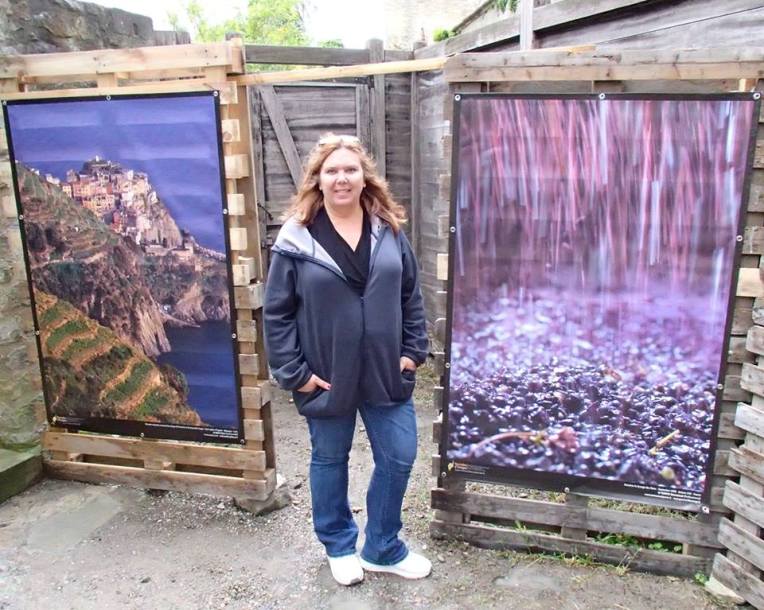
Some of the photos were “blown-up” and displayed outside the gallery so I can share some of those below.

Tracy outside the exhibition with two photos displayed inside. Eighth Annual Terroirs d'Images International Photo Exposition.
Tracy outside the exhibition with two photos displayed inside. Eighth Annual Terroirs d’Images International Photo Exposition.

This slideshow requires JavaScript.

Carcassonne: Equiaude Parade and Cheval en Fête (Horse Festival)

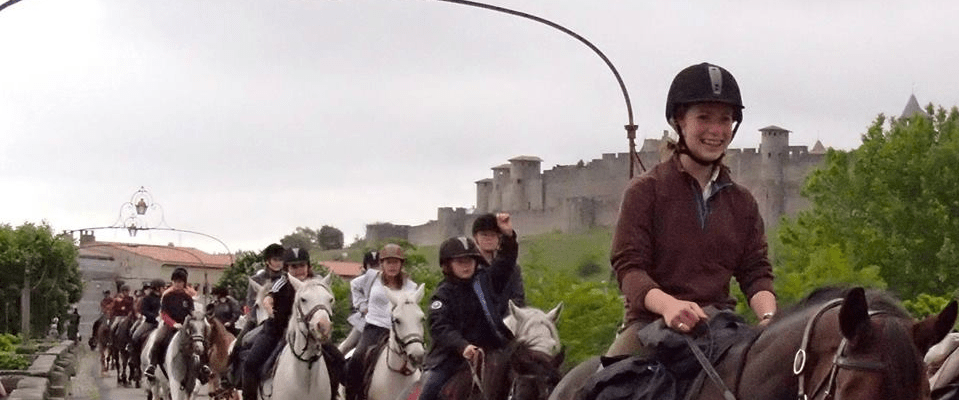
We had a great time at the Cheval en Fête (Horse Festival) today.  We watched more than 100 riders participate in the Equiaude Equestrian Parade.  The cavaliers rode from the medieval citadel of la Cité de Carcassonne, down and across du Pont Vieux (the Old Bridge), around Square Gambetta, through the streets of Carcassonne, and ending at the Hippodrome de la Fajeolle.
Equiaude Equestrian Parade passing over the Pont Vieux (Old Bridge) with la Cité de Carcassonne in the background.

The participants ranged from mature to the very young.  There appeared to be several riding schools with groups of young people in matching shirts singing together as they rode.  Riders were using western saddles, dressage saddles, Australian saddles, and jumping saddles and there was a couple of horse-drawn carriages also participating.  With the municipal police taking front and rear of the procession for safety, the parade passed through town with the children happily waving to spectators.

The parade is part of a two-day equestrian competition at Carcassonne’s hippodrome.  The Equiaude Parade (Equi = equestrian, Aude = our department in France) is anticipated in Carcassonne like the annual Reno Rodeo Cattle Drive.

Equiaude Equestrian Parade

It was odd not to see iconic American Mustangs or Quarter Horses among the horses, but there were some beautiful Arabians and Thoroughbreds, with ponies and horse/mule hybrids for the children.  While I’ve been in a saddle fewer times than I have fingers, Tracy is a former horsewoman who explained tack and horses breds as they passed.

The part we enjoyed the most was the smiles and laughter of all the young riders as they enjoyed being the center of the attention while waving to the spectators and singing in unison.

This slideshow requires JavaScript.

Carcassonne: Monet-Goyon Vintage Motorcycle

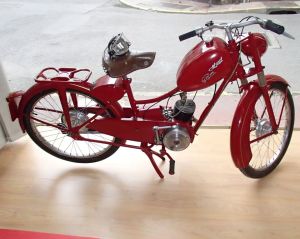
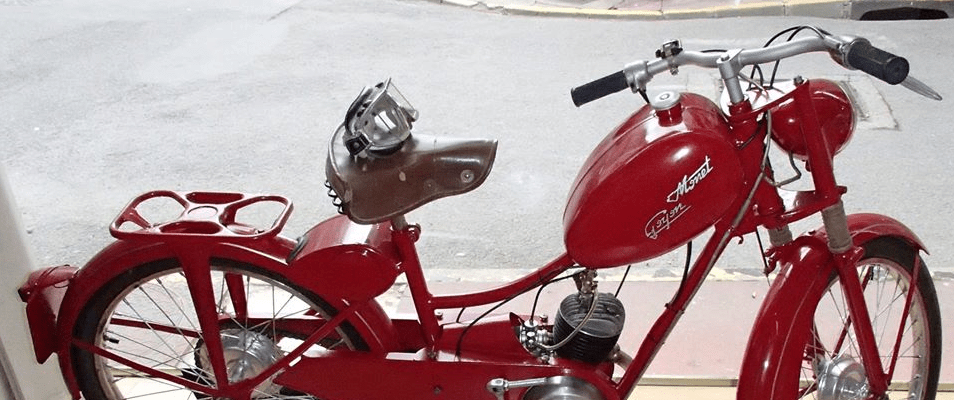
There I was “walking around the neighborhood” when I spotted this vintage Monet-Goyon motorcycle in the window of an insurance agency. I knew I had to get photos for my brother, Gary, who has always been a motorcycle enthusiast.   After a bit of a struggle getting the proprietor to understand my inadequate French, he was happy to let me take some photos of this beautifully restored classic motorcycle.  The insurance agency apparently is also a sponsor of the Circuit des Remparts, a race for classic Grand Prix and Formula 2 cars in Angoulême.  The annual event also hosts a Concours d’Élégance gathering of  vintage and prestigious cars, a “Hot August Nights” event for classic French and European cars.

Monet-Goyon 100 cc Motorcycle, circa 1954

Monet-Goyon motorcycles were made in France from about 1917 to 1959.  The factory was located in Mâcon, in the department of Saône-et-Loire in the region of Burgundy.

After researching online and getting information from Gary, I learned that Monet-Goyon motorcycles were widely used in France.  The Mâcon factory  (which also built Koehler Escoffier motorcycles) produced numerous Villiers (British brand 2 stroke engines) and MAG (Swiss brand 4 stroke engines) powered motorcycles up until 1939.  After the end of World War II, Monet-Goyon resumed production of small displacement motorcycles and scooters until finally closing its doors at the end of the 1950’s.

I believe this model is a Monet-Goyon 100cc S2G-1954G.  Fun little discovery and I’ve added the Circuit des Remparts and its Concours d’Élégance to my list of “Events to Attend” in France.

This slideshow requires JavaScript.