Getting A French Bank Account

A project I started in the first few weeks after we arrived in Carcassonne was setting up a French bank account.  This wasn’t the same as those people you read about in the news with numbered foreign bank accounts in Switzerland, the Cayman Islands, Bermuda, or Luxembourg as a tax dodge.  Our  intentions is to follow the financial rules and to stay under the $10,000 maximum balance in a foreign account that would require a FBAR, or “Report of Foreign Bank and Financial Accounts,” Treasury Form TD F 90-22.1 be filed with the US IRS.

We wanted a French bank account for three common sense reasons.

The first reason was that to minimize foreign transaction and conversion fees from our US bank.  An international wire transfer currently has a flat $35.00 fee compared to being “nickel and dimed” with withdrawals and conversion fees  every time we patronize French ATMs and businesses with our US bank cards. Being on a fixed income we want to minimize the monthly fees that we can control.  It would be less expensive for us to transfer one larger amount of cash into a French bank account and use a local debit card for purchases.

Secondly is that France was one of the innovators of the “Chip and Pin” style, EMV credit/debit card.  (EMV is Europay – Mastercard – Visa, a global standard for integrated circuit cards and “IC” card capable “point of sale terminals” and ATMs used to authenticate credit and debit card transactions.)  While a traditional US style cards will work in many ATMs and at some businesses in France, many businesses will only accept the “Chip and PIN” style card or not understand how to “swipe” a traditional US card.  We wanted greater flexibility in our day-to-day life and our US bank is not issuing “Chip and PIN” cards yet.  Regular US cards (with some exceptions) are not scheduled to transition to “Chip and PIN” EMV technology until 2015-2017.   On their recent visit to France, Adam and Liz found their US cards worked at the ATM but not in restaurants or clubs.

Finally, there are times when technology fails and an ATM or business does not get a response back from international data lines and computers with US-based cards.  We wanted a back-up in the event of sunspots, earthquakes, satellite outages, volcanos, undersea cable breaks, or the “Blue Screen of Death.” I like  “belt and suspender” redundancy.  We also wanted a backup in case our US card is lost or stolen.

The process of setting up a French bank account took about 12 weeks for us to complete from beginning to end.  Because our US bank is Bank of America, we selected French bank BNP Paribas (the fourth largest bank in the world) who is Bank of America’s foreign partner in France.  Because of this affiliation, Bank of America will waive some fees.

We made an appointment at the local BNP and met with a very helpful bilingual bank officer.  The only snag was that she was bilingual in French and Spanish. (We are very close to Spain in Carcassonne.)   Between our rudimentary French, my old police Spanish, basic Italian, Google Translate, and our bank officer’s very basic English we started the process for a bank account with the “Chip and PIN” style debit cards referred to as Carte Bleue.  We left the meeting with the paperwork started, but we needed to return with additional documentation of our residency.

Between our first and second appointment to the bank we had our meeting with OFII (L’Office Français de l’Immigration et de l’Intégration – French Immigration) which (after a medical exam, chest x-ray, and application review) granted us our Titre de Sejour (resident permits) to upgrade our original visas.

Titre de Sejour
Titre de Sejour

On our second appointment at the bank we brought photocopies of our Titre de Sejour and a detailed copy of our lease with rent receipts to prove our residency in Carcassonne.  What our bank officer normally needed by bank policy was also a utility bill (gas, electricity, a land-line telephone)  as further proof of residency at the address.  We explained (often using pantomime, Italian, and pidgin French) that all the utilities were in our landlord’s name and without a local bank account we could not start a utility account.  After conferring with her bank manager the solution was found to send us a registered letter at our address to sign and return as final proof of residency.  A very elegant and helpful solution.  We appreciated that the bank’s management could “think outside the box” and work with our odd circumstances.  In anticipation of the final approval by the bank manager, our bank officer finished the paperwork, assigned us an account number, and told us to return once the registered letter was signed to pick up the bank cards.

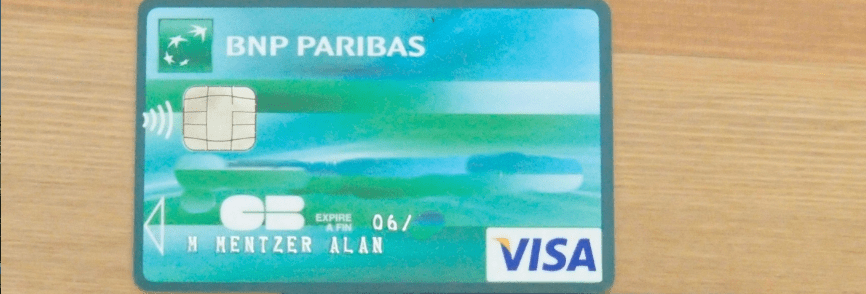
The registered letter arrived three days later which we signed and had the receipt sent back to the bank.  Soon after claim tickets for our Carte Bleue debit cards arrived in the mail along with “Welcome Customer” letters from BNP.

Now for the confusing part.  We went to the back to pick up the cards and were told that they hadn’t arrived from the manufacturer yet and to come back in a week.  A week later we were told the same thing.  The third week we were getting worried that with our inadequate French, we had missed a step in the process.  Should we have made an initial deposit into the account before the bank would release the cards?  The fourth week later we spoke with our Bank Officer who was able to convey that because of the internal electronics it takes the manufacturer four to six weeks to make the cards and asked us to be patient and the bank would call us when the cards arrived.

In the mean time our son Adam and his fiancée Liz arrived for a visit and we put the bank cards concerns on hold and had a great visit with them.  The day after Adam and Liz left, we received a call from the bank (I stumbled through the telephone conversation in French) that our cards had arrived.  After a short walk to the bank (with lunch on the way) we were proud owners of our Cartes Bleue and had officially established a functioning bank account in France.  It took two appointments over six weeks and six weeks of waiting for the cards to be manufacturer and arrive at the bank.

Another small step in establishing our expat life in Europe. Now we will work on the online International Transfer process with Bank of America. We expect to have everything set up, validated, and our first wire transfer completed by the middle of August – just in time for our Camino trip!
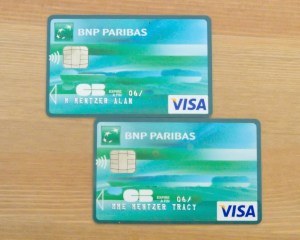
Alan and Tracy's Cartes Bleue
Alan and Tracy’s Cartes Bleue

Paris: CDG, Notre-Dame, Les Invalides, and Eiffel Tower

We needed to pick up Adam and Liz from Aéroport Paris–Charles de Gaulle (Charles de Gaulle – Paris Airport – CDG).  We  were off on the Métro de Paris (subway) to the RER (Réseau Express Régional – Regional Express Network) “B” line to its final stop at the International Terminal at CDG.  The airport is a city unto itself,  it is the seventh busiest airport in the world, the second busiest in Europe, and handles in excess of  61 million passengers annually.  Our fear was that we had never met anyone arriving at CDG before and had visions of Adam and Liz wandering in “airport limbo” for hours until we could locate them.  However the airport staff was very helpful and we simply waited at the arrival gate for Delta for Adam and Liz to clear Customs and Passport control.  Thirty minutes after their plane set down we saw their happy, jet-lagged faces.

Liz and Adam on the Paris Métro
Métro de Paris (Subway) Sign

There are many approaches to dealing with jet-lag.  Adam and Liz wanted to power through the day.  So back on the RER and Métro to the hotel to drop off bags and then back on the Métro to Île de la Cité, the island the River Seine, to explore Cathédrale Notre-Dame de Paris (Notre-Dame Cathedral).

This slideshow requires JavaScript.

Notre-Dame is celebrating its 850 year anniversary.  Cathédrale Notre-Dame de Paris (French for “Our Lady of Paris” – Notre-Dame Cathedral) is a historic Roman Catholic Marian cathedral located on the Île de la Cité.  The cathedral is widely considered to be one of the finest examples of French Gothic architecture and is among the largest and well-known churches in the world.  The cathedral’s treasury is notable for its reliquary which houses some of Catholicism’s most important relics including the purported Crown of Thorns, a fragment of the True Cross, and one of the Holy Nails.

This slideshow requires JavaScript.

The Cathedral’s stained glass windows were amazing and the quality of the colors has to be experienced to be believed.  The Flying Buttresses on the exterior walls were graceful and added to the beauty of the exterior.  We could have spent days exploring the architecture and art inside Cathédrale Notre-Dame de Paris.

After a quick lunch and several glasses of wine to fortify ourselves, we started walking along the Left Bank of the Seine heading toward Les Invalides.  In retrospect the Métro would have been faster and easier on our feet, but every block held amazing architecture or public art.

This slideshow requires JavaScript.

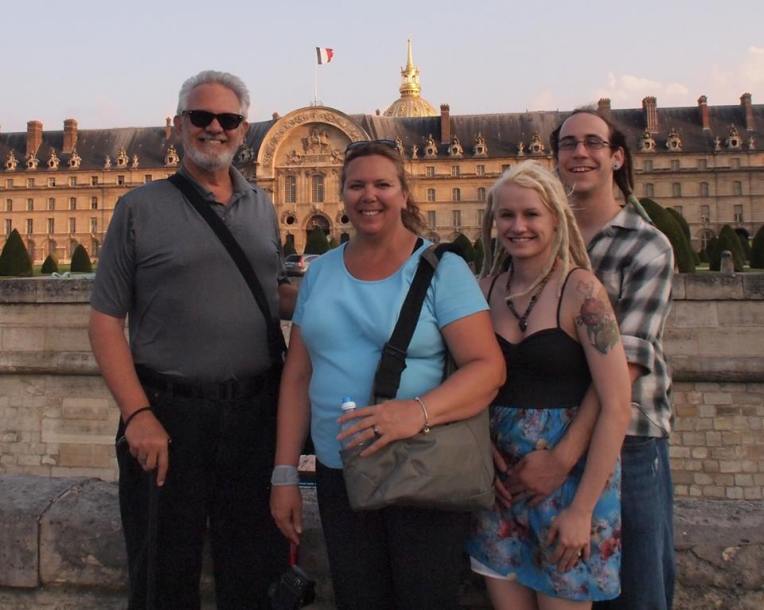
Finally reaching L’Hôtel National des Invalides (The National Residence of the Invalids), informally known simply as Les Invalides,  we find a large park and series of buildings dedicated to French Military history and veteran.  The complex’s name comes from its original purpose as a hospital and retirement home for war veterans.  There are three museums on the grounds, the Musée de l’Armée (Army Museum), Musée des Plans-Reliefs (museum with three-dimensional models of battles), and the Musée d’Histoire Contemporaine (Museum of Contemporary History which started as the Library-Museum of the War.)  Located on the site are the graves for many of France’s war heroes, including Napoleon Bonaparte.

Alan, Tracy, Liz, and Adam in front of L'Hôtel National des Invalides
Alan, Tracy, Liz, and Adam in front of L’Hôtel National des Invalides

This slideshow requires JavaScript.

From Les Invalides we could see La Tour Eiffel (the Eiffel Tower) through the surrounding buildings, our next stop.  We had made reservations to go up into the tower for this evening as it was the only time available.  Reservations fill very quickly to go to up to the observation areas.

Eiffel Tower seen from the 7th arrondissement

The wrought iron Eiffel Tower is named for engineer Gustave Eiffel who built the tower as an attraction to the 1889 World’s Fair.  Originally intended to be a temporary attraction, but it quickly became the iconic symbol of France and Paris that remains today.  The Tower is the tallest structure in Paris and the second tallest in France.  At 1,063 feet it is taller that the Washington Monument (555 feet) and Space Needle (605 feet) and was the tallest structure in the world for 41 years until the Chrysler Building was completed in New York in 1930.   (With its current communication antenna the Eiffel Tower is currently 17 feet taller than the Chrysler Building.)  “Impressive” and “awe-inspiring” are perfect descriptions as the tower is much larger than we expected.  We arrived at twilight to be able to watch night fall over the “City of Light” from the observation platform.  At 11 pm we were also treated with light show of lights sparkling all over the Eiffel Tower.

This slideshow requires JavaScript.

Adam and Liz had by now been awake about 48 hours straight, so it was now time to head to the Métro to get them some well deserved rest.  Passing dozens of unlicensed souvenir hawkers, each offering the same wonderfully cheesy, glowing, blinking Eiffel Tower models, we finally made it back to our hotel in the Montmartre district. The “last chance to get a blinking Eiffel Tower” had already become the humorous theme to the kids’ trip. It would continue until they left, with a comment about maybe being able to get one of the most desired souvenirs in Paris before they got on the plane to return home.

Paris: Travel and Sacré-Cœur Basilica

Adam and Liz were flying into Aéroport Paris–Charles de Gaulle (Charles De Gaulle Airport – Paris) so we needed to travel to the other side of France to meet them.  Tracy and I elected to not get a car when we moved to France and because we were traveling with Kiara the Chihuahua using RyanAir or EasyJet (the discount airlines) was not an option.  So we made use of SNCF’s (Société Nationale des Chemins de fer Français – French National Railroad Company) regional trains and the newly available Ouigo high-speed train.  The Ouigo is a subsidiary of SNCF and is basically a stripped TGV (Train à Grande Vitesse) high-speed train without a club car designed to compete with the discount airlines.  The trains happily accept Kiara which made her and us very happy.  The Ouigo was comfortable and quiet and we enjoyed a very rural view of France that reminded us of Kansas and Nebraska with lots of grain fields and vineyards.

SNCF Train
SNCF Train
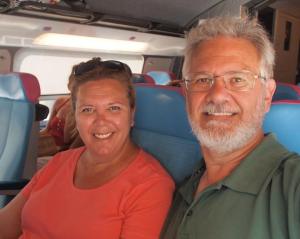
Tracy and Alan traveling by rail
Tracy and Kiara waiting for the train

Another reason for the Ouigo’s discount fare is its use of secondary train stations.  We arrived at the train station at Marne-la-Vallée – Chessy outside Paris only to realize that Marne-la-Vallée is the station for Disneyland-Paris.  We hadn’t realized that walking out the station door would put us immediately at the entrance to Disneyland.  We caught the RER (Réseau Express Régional – Regional Express Network) commuter train from Marne-la-Vallée to Paris and then the famous Paris Métropolitain (subway) to our hotel in the Montmartre district of Paris in the 18th arrondissement, a Right Bank arts neighborhood.

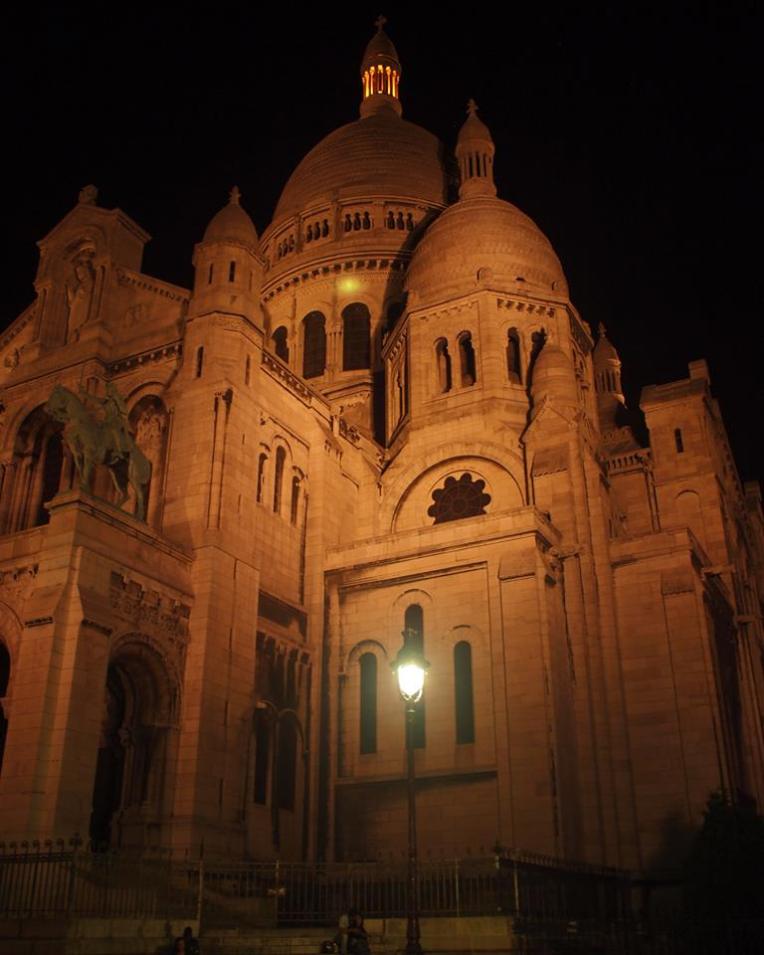
We arrived a day earlier than Adam and Liz’s arrival, so we did an evening stroll to visit Sacré-Cœur Basilica.  Located at the summit of the Butte Montmartre, the highest point in the Paris, the Basilica of the Sacred Heart of Paris, more commonly called Sacré-Cœur Basilica, is a Roman Catholic church and minor basilica, dedicated to the Sacred Heart of Jesus.  Built of white travertine stone, the Basilica is brilliantly illuminated and stunning at night.

Sacré-Cœur Basilica
Sacré-Cœur Basilica
Sacré-Cœur Basilica
Sacré-Cœur Basilica

The Basilica complex has a large garden area and  a fountain. There is an amazing panoramic view overlooking Paris from the Basilica and garden.  The Basilica complex is a favorite meeting place for young people with more than a hundred on the grounds socializing as we explored. To reach the top of Butte Montmartre there is a steep series of stairs with over 300 steps or a funicular railway.  The funicular has two parallel tracks with one car on each: one car going up counter-balancing the other car coming down.  In a minute and a half the funicular travels 354 horizontal feet and climbs the 35% gradient 118 vertical feet to the top of Butte Montmartre.  It is well worth the cost of one Métro ticket to enjoy a ride to the top.  The funicular transports about two million passengers each year.

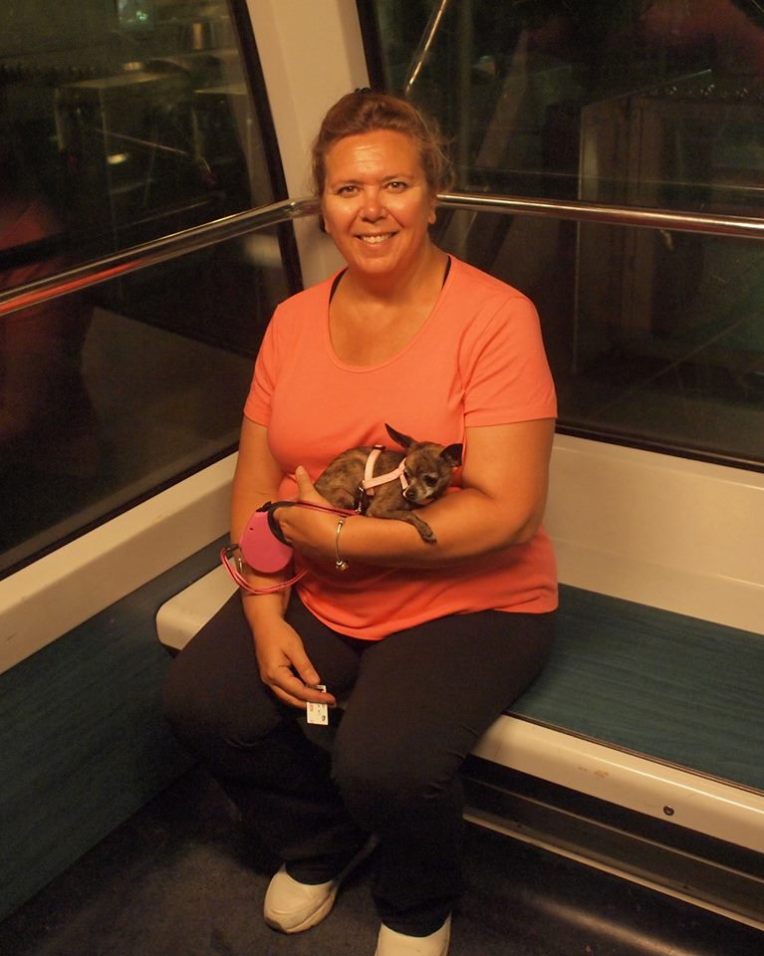
Tracy and Kiara on the Montmartre Funicular
Montmartre Funicular

With Sacré-Cœur Basilica around the corner from our hotel enjoyed the beauty of the Basilica on the hill above us and we later returned to share the sight with Adam and Liz.

View of Paris from Sacré-Cœur Basilica (Wikimedia Commons)
View of Paris from Sacré-Cœur Basilica
(Wikimedia Commons)

Our First Visitors: Adam and Liz Travel to France

We were thrilled to have our first visitors since we started our expat life abroad.

Our youngest son Adam and his fiancée Liz spent 18 days with us.  We combined the visit with travel to Paris, Barcelona, the Mediterranean Sea, and sharing our adopted home in Carcassonne.  I plan to write about their visit by breaking it up into an individual blog postings for each of the different locations we enjoyed exploring together.

Alan, Tracy, Liz, and Adam in front of the Pyramid at the Louvre Museum in Paris

It was such a pleasure to share our new life with Adam and Liz (and to congratulate Adam on earning his bachelor degree just a few weeks previous to their visit.)  We explored shared interests in great cities, history, cultures, lifestyles, art, travel, architecture and enjoyed conversation, food, and drink.  Adam and Liz are vegetarians so we had an opportunity to examine a totally different food culture in our travels than we had previously had a chance to try.  Adam juggled on the streets of Paris, Liz sampled Sangria in Barcelona, we splashed in the Mediterranean, Adam and Liz demonstrated their Spanish language skills, we celebrated Adam’s 22 birthday (and Adam and Liz attended a performance of his favorite band that just happened to be in town on his birthday for Festival de Carcassonne), and all of us (including Kiara) watched France’s biggest fireworks extravaganza for Bastille Day with the medieval city of Carcassonne as a backdrop.

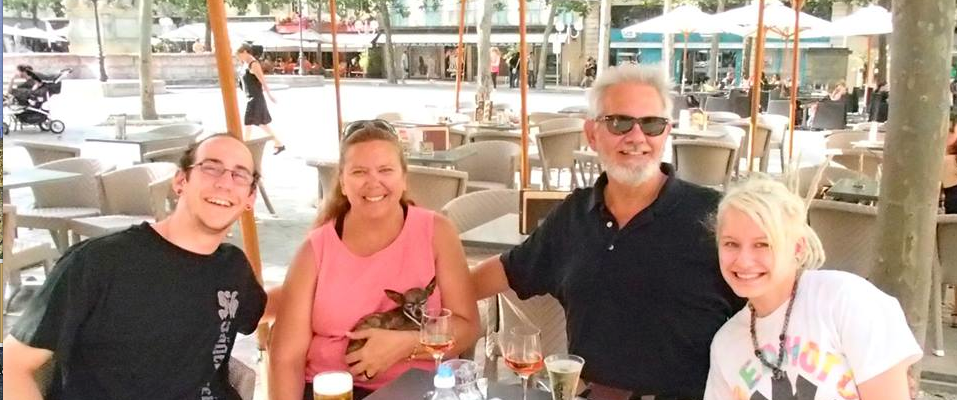
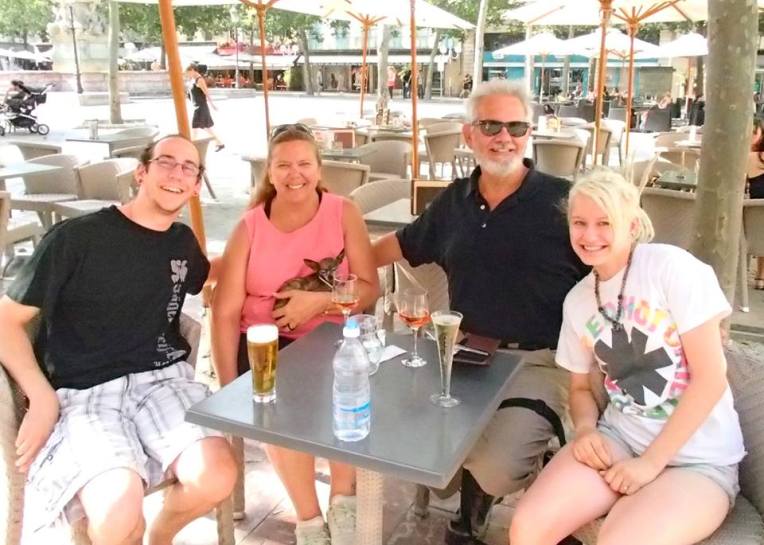
Adam, Tracy, Kiara, Alan, and Liz having a wine, beer, and champagne break in Place Carnot in the Bastide of Carcassonne

All in all, it was a spectacular visit which made us look forward to our next visitors.

French Baking, Part 1: Éclair

So what about French pastries?  Are they really as good as their reputation?  The answer is:  Absolutely!

Going to a real pâtisserie is an amazing experience.  One of the modern laments in France in that neighborhood bakeries are getting fewer and fewer because of the growing number of supermarkets and that many bakeries attempt to be both a pâtisserie (pastry bakery) and boulangerie (bread bakery.)   It is a commonly held belief that a pâtissier (pastry chef) and a boulanger (baker), while both well-respected as professionals, have totally different skill sets.  Purists argue a good boulanger cannot also be a good pâtissier.  Visiting dedicated pâtisseries and trying their pastries have made me a believer of that assertion.

Pâtisserie
Pâtisserie

I thought I would discuss the classic French pastry, the éclair, first.  An éclair is made with pâte à choux, a light pastry dough.  The reason a pâtisserie’s expertise is required is that éclairs are baked without using any rising agent.  The pâtisserie uses only the moisture in the pâte à choux dough to create steam that “puffs” the pastry.

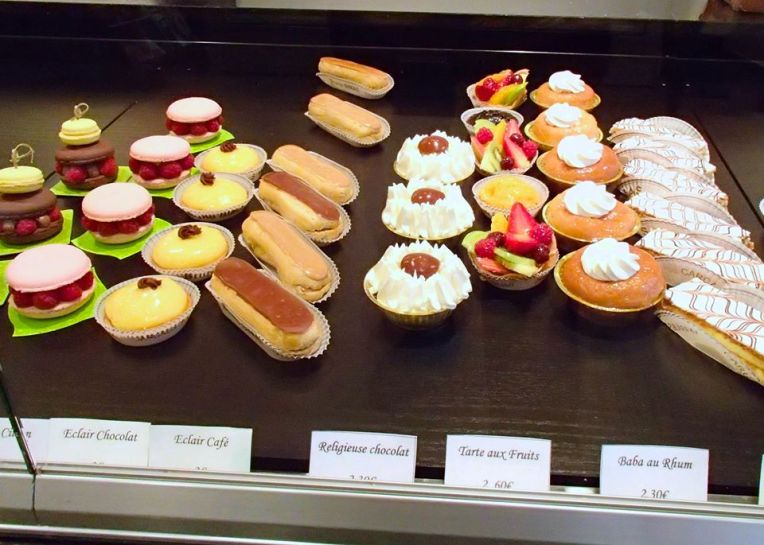
I visited my neighborhood pâtisserie saw and smelled some incredible treats on display.  The window had large empty spaces from early rising shoppers.

Pâtisserie Display
Pâtisserie Display
Pâtisserie Display
Pâtisserie Display

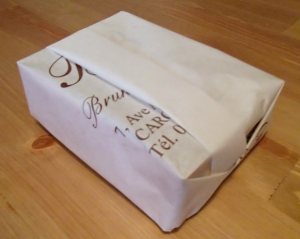
I purchased two éclairs and the pâtisserie proceeded to carefully box and wrap the pastries, in Tracy’s words, “like a Christmas gift from Nordstroms.”

Éclair Box
Éclair Box

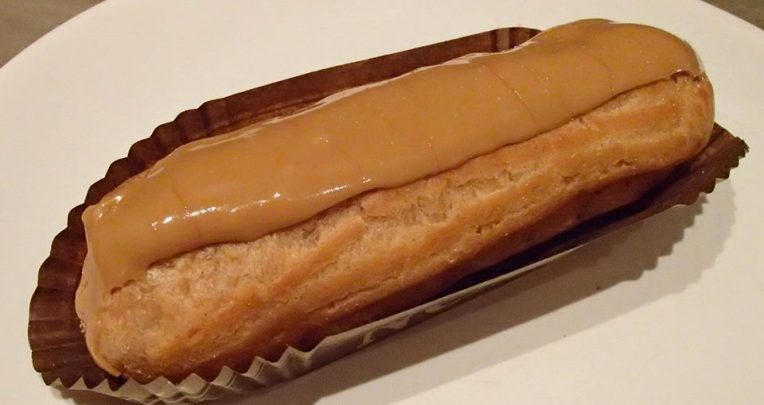
So how do they taste? Incredibly good!  The  éclair’s exterior is tan and crisp with layers of soft pastry inside.  The filling is actually custard, rich and thick, not whipped cream or pudding.  Chocolate and coffee iced éclairs are the most common with matching chocolate and coffee custard filling inside.  The richness of the pastry and custard make a single éclair a complete treat.  Melt in your mouth delicious.

Éclair
Éclair

Credencials: Camino de Santiago de Compostela Pilgrimage

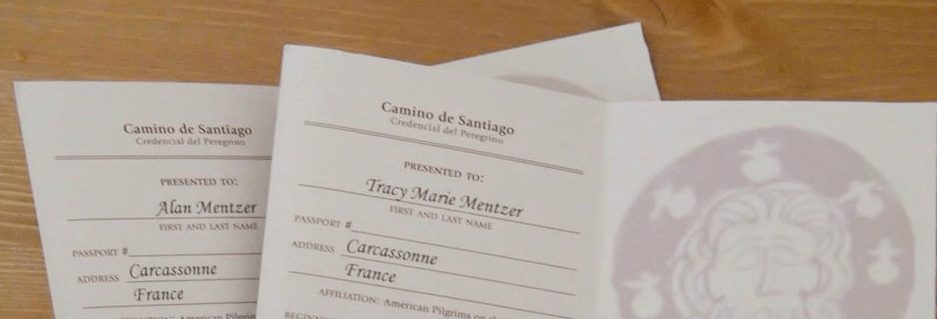
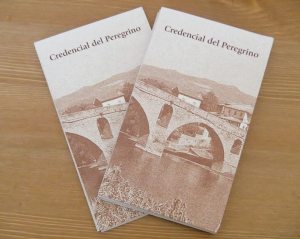
Tracy and I received our Credencials del Peregrino (Pilgrims’ Passports) this week from American Pilgrims on the Camino, a non-profit organization that facilitates and assists North American pilgrims, particularly those in the United States. (http://www.americanpilgrims.com/)  Credencials are also available from other authorized organizations, confraternities, and at pilgrims offices on the route.

Credencial del Peregrino

The credencials are part of the thousand-year old tradition of the Camino de Santiago.  The credencial is a modern version of letters of safe-conduct letters or letters of introductions carried by medieval pilgrims.  The document shows that you are a bona fide pilgrim and entitled to have access to low-cost albergues and refugios (hostels.) The credencial is also used to authenticate your process by dated sellos (stamps, similar to a passport stamps) being added along the way.

Sello Stamps  (Wikimedia Commons)
Sello Stamps
(Wikimedia Commons)

Pilgrims normally need to obtain one sello per day from alburgues, churches, town halls, or police stations to document their progress. To ensure pilgrims are actually walking the route and not making use of motor transportation, over the last 100 kilometers pilgrims are required to get two sellos each day.  (Pilgrims using bicycles or horses must obtain two sellos daily from 200 kilometers outside Santiago de Compostela.)  We are hoping walk enough miles daily on our 500 mile (800 kilometers) trek as to not run out of room for sellos and require us having to obtain a second credencial to allow for additional sellos.

Credencial del Peregrino

At the conclusion of the pilgrimage and reaching Santiago de Compostela we will need to present ourselves at the Cathedral’s Pilgrims Office to have our credencials reviewed prior to being awarded a Compostela. The Compostela is a certificate of accomplishment that is presented to pilgrims who complete at least the last 100 kilometers of the Camino de Santiago and have undertaken the pilgrimage for spiritual or religious motivations.  The Compostela dates back to the early middle ages and its text is still in the original Latin.  There are over 100,000 Compostelas awarded every year to pilgrims from more than 100 countries.  For those pilgrims completing the Camino, but not for spiritual or religious reasons, a Certificate of Completion is alternatively issued in Spanish.

We are now about eight weeks out from our departure date and we are getting very anxious to start walking the Camino.

French Beverages, Part 6: Suze

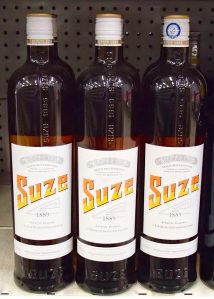
Suze is a bitter wine based  aperitif made from distilling the roots of the gentian plant and sold by the Pernod-Ricard Liqueur Company.  Suze is the fifth most popular aperitif in France.  Apparently this 15% ABV liqueur has recently also become available for purchase in the United States.

Suze was created by Fernand Moureaux in Paris in 1885, but not marketed until 1889.  Suze is known for its slender amber bottle, designed in 1896 by Henri Porte.  A Suze bottle is the subject of Picasso’s 1912 cubist image “Verre et bouteille de Suze” (Glass and Bottle of Suze) that is currently on displayed at the Mildred Lane Kemper Art Museum located on the campus at Washington University in St. Louis, Missouri.  http://www.kemperartmuseum.wustl.edu/collection/explore/artwork/1105

According to Pernod-Richard, who owns the brand, “The origin of the name “Suze” is disputed. According to the first theory, it was named after Fernand Moureaux’s sister-in-law, whose name was Suzanne and who loved the aperitif. Second theory: the drink was named after a little river in Switzerland, one of the first countries to adopt the drink.”

Suze

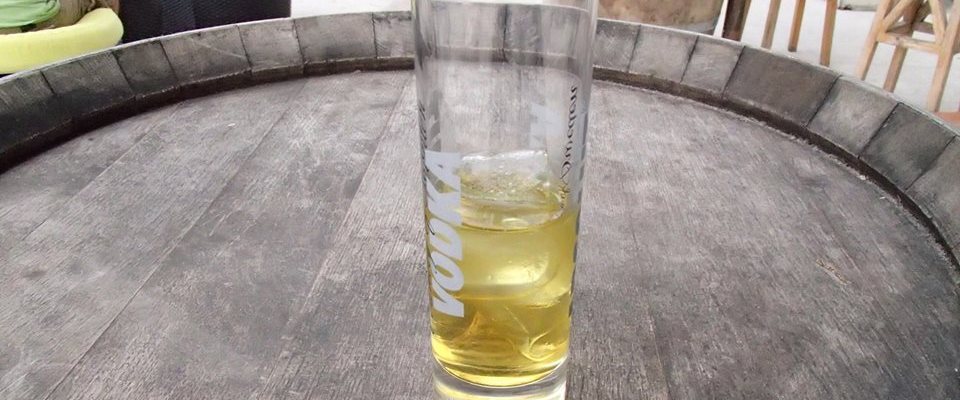
With the history behind Suze, I was looking forward to trying it.  In Carcassonne, I was served Suze as two ounces of the chartreuse colored liqueur over  ice.

What do I think?  Once was enough.  It has a very distinct bitter taste that was unpleasant  for me.  While not actually tasting “burnt,” it’s the word that first came into my mind.  I really cannot think of ever wanting another.  I don’t dislike strong liquors or liqueurs straight, in fact I prefer my Scotch and other whiskeys “neat,” but there was nothing redeeming in the taste of Suze for me.

At the Suze website,  www.suze.com, there are some Suze based cocktails that might mitigate the taste.  But I believe if you have to hide the taste of a liqueur you have to ask yourself, “Why am I drinking this?”

Bottles of Suze
Bottles of Suze

Getting Ready: Camino de Santiago de Compostela Pilgrimage

Ten weeks until departure.

Sometimes the universe presents a chain of events that require that you “make a leap of faith” and embrace it.

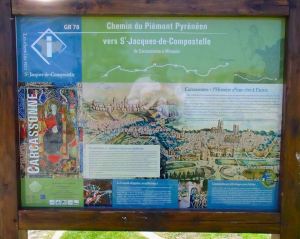
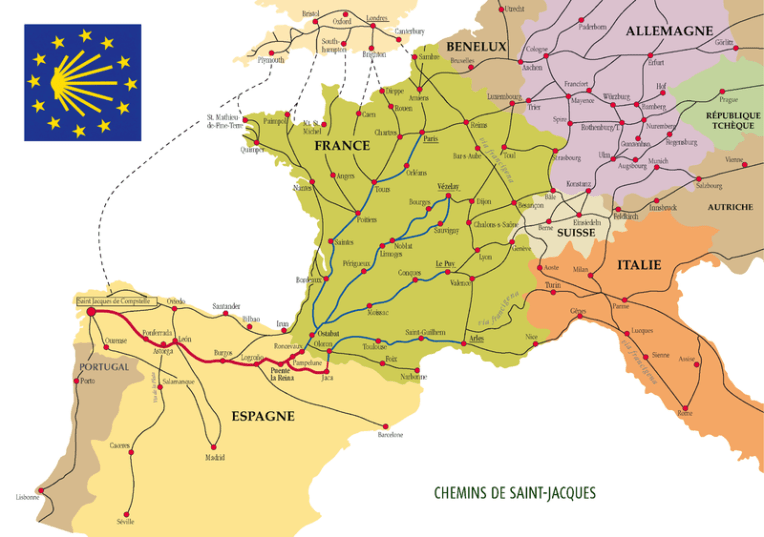
Recently fate led us to being on one of the secondary routes of the Camino de Santiago de Compostela pilgrimage trail. While living in Carcassonne we slowly realized that the start of the  Chemin du Piémont Pyrénéen branch of  Les Chemins de Saint-Jacques-de-Compostele (the French name for the Camino de Santiago de Compostela) was right at the end of our block.

Chemin du Piémont Pyrénéen

El Camino de Santiago de Compostela or The Way of Saint James is a series of pilgrimage trails across Europe all leading to Santiago de Compostela Cathedral in Galicia, Spain which Christian tradition holds is the resting place for Saint James the Greater, one of Jesus of Nazareth’s disciples.  Dating back 1,200 years, pilgrims of all faiths and backgrounds have been walking the Santiago de Compostela for religious, spiritual, or cultural reasons; for enlightenment; as penance; or as a personal challenge.

Map of Camino de Santiago - Chemins de Saint Jacques  From Wikimedia Commons
Map of Camino de Santiago – Chemins de Saint Jacques
From Wikimedia Commons

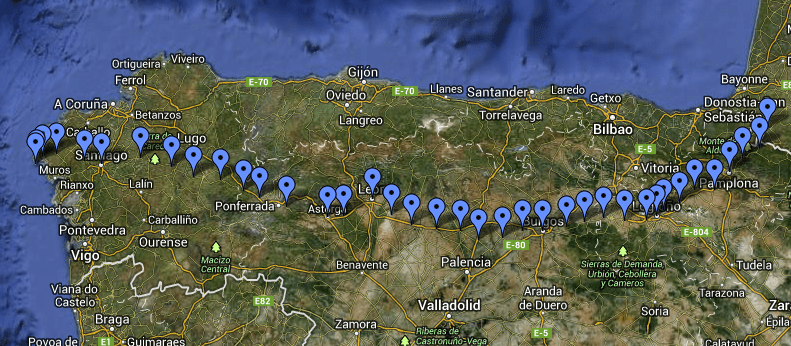
Tracy and I (with Kiara the micro-dog) have decided starting August 26 we will begin the pilgrimage and backpack the 500 miles (800 kilometer) path from Saint-Jean-Pied-de-Port on France’s Western border; over the Pyrenees Mountains and through Basque country; passing through the cities of Pamplona (famous for the “Running of the Bulls and Hemingway’s “The Sun Also Rises”), Logroño, Burgo, and León; across the Meseta plains; into the green hills of Galicia; and ending at the UNESCO World Heritage Site of the city of Santiago de Compostela and its cathedral.  The trek should take us a minimum of five weeks.

Camino de Santiago - The French Route (Google Maps)
Camino de Santiago – The French Route
(Google Maps)
Our preparations so far:
1.  Our hiking equipment has been obtained, most importantly our boots.  The number one issue we hear from every guidebook, website, and blog is to have shoes appropriate for you and to break those shoes in thoroughly.  I’m an old Boy Scout who has sprained his ankles frequently in the past so I’m an advocate of wearing boots for ankle support although there are many supporter of wearing lightweight hiking shoes for the Camino.  The hiking gear we didn’t bring to France was purchased at Decathlon Sports in Carcassonne (a French sports megastore.)  Many of the products we obtained are made by Quechua, a French version of “The North Face.”  We will post our final equipment list in a later blog.
Tracy's Camino Gear
Tracy’s Camino Gear
2.  We requested our credencial, our pilgrim’s passport, from American Pilgrims on the Camino (http://www.americanpilgrims.com), the United States’ confraternity for Camino pilgrims.  The credencial allows us to stay at pilgrim albergues and refugio (hostels along the route) and to authenticate our progress with sellos stamps (like a passport stamps) at albergues, churches, town halls, and police stations along the way.
3.  We researched and obtained guidebooks that explain the various routes, history, and provide maps of the Camino.  We selected John Brierley’s A Pilgrim’s Guide to the Camino de Santiago, the Confraternity of Saint James’ The Camino Francés: St-Jean-Pied-de-Port to Santiago de Compostela, and CaminoGuide.net’s Camino Francés.  We wanted some alternative views but  plan to only bring one guide with us on the Camino.  We have been reading blogs and forums about walking the Camino, we both greatly enjoyed and recommend http://www.girlsontheway.com/.
4.  We selected the Camino Francés as our route (Saint-Jean-Pied-de-Port, France to Santiago de Compostela, Spain across the entire Northern end of Spain), picked our departure date as the last week in August, and made hotel and train reservations for Saint-Jean-Pied-de-Port where we will start the journey.  We decided on a final night in a hotel to be well rested before our departure.  The hotel is located near the Pilgrim’s Office so we can arrange our final details before leaving.
5.  We have started a daily training regimen that includes walking the biggest hill nearby, the road to the medieval city of la Cité de Carcassonne.  The training is also part of our process to “break in” our boots and get acclimatized to carrying backpacks, something I did all through my youth and young adulthood but an activity I haven’t done in more than a decade.
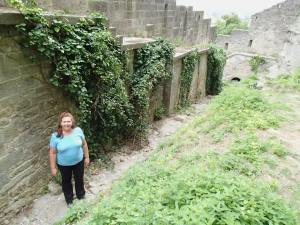
Tracy hiking the barbicane at la Cité de Carcassonne
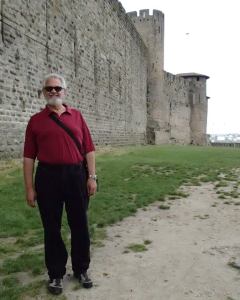
Alan hiking the bailey in la Cité de Carcassonne

6.  We obtained a chest carrier for Kiara.  Yes, Kiara the Chihuahua is traveling the Camino with us.  We understand that many albergues do not allow dogs, but we intend to camp whenever that occurs.  Kiara will do some daily walking, but most of her traveling will be as a passenger on her “beasts of burden” (the two of us) like the horseback pilgrims who also travel the Camino.

So our Camino preparations continue and we will post more updates as we go.

Tracy's boot over the scallop shell sign marking the Camino
Tracy’s boot over the scallop shell sign marking the Camino

French Beverages, Part 5: Martini Blanc and Martini Rouge

No, these are not my beloved gin Martini (two ounces Bombay Sapphire Gin, scant capful of Martini & Rossi Dry Vermouth, shaken until freezing cold, with three blue cheese stuffed olives added) or James Bond’s famous vodka Martini ( . . . with a thin slice of lemon, shaken, not stirred.)

These classic French before-dinner drinks are simply a glass of white or red vermouth.  While vermouth is most commonly just a mixer in the US, in Europe it is also served as a stand alone aperitif of 2 to 3 ounces (6 to 9 centilitre) either neat, chilled, or over ice.  Vermouth is a fortified wine (13-24% alcohol content), that has been aromatized by infusing it with botanicals: spices and herbs, the most notable of which is wormwood.  The modern version of vermouth was created in Turin, Italy in 1768.  Vermouth quickly became a popular drink at the Turin Royal Court and its popularity spread throughout Europe from there.

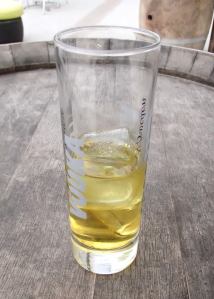
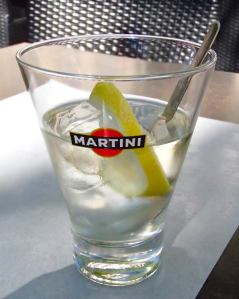
Martini Blanc (Martini White)

Martini Blanc
Martini Blanc

Here in Carcassonne I am served two ounces of Martini Bianco vermouth over ice with a slice of lemon with a small spoon in a specific Martini Logo glass.  The spoon is used to stir the drink to cool the vermouth.  This is sweet vermouth with a slightly bitter citrus taste and an undertaste of vanilla.

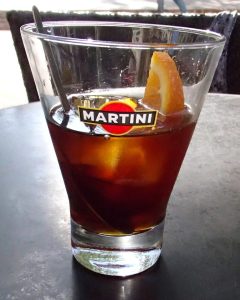
Martini Rouge (Martini Red)

Martini Rouge
Martini Rouge

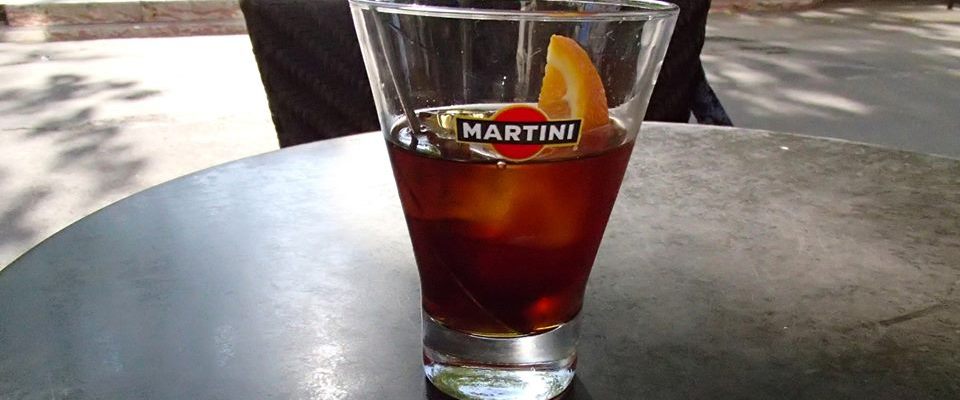
The Rouge version of the Martini has two ounces of Martini Rosso vermouth poured over ice with a slice of orange.  Like the Blanc, it is served in a Martini Logo glass with a small spoon.  Another sweet vermouth, but this one has notes of slightly bitter orange.

The Italian vermouth Cinzano and French vermouth Noilly Prat are widely available in France.   There are also straw-colored dry and rosé vermouths choices available.

So what do I think?  I would be happy to accept a Martini Rouge from a host as an aperitif at a gathering.  It’s pleasant, refreshing, and I would prefer the Rouge to the Blanc.  The Rouge has more of a “wine-like” quality to its flavor than the Blanc.

I enjoyed both drinks, although while having them it brought back the memory of the pained look on Bill Murray’s face in the film “Groundhog Day” when he is forced to drink Andie MacDowell’s character’s favorite drink, “Sweet vermouth on the rocks with a twist.”  These would not be my “go to” beverages.

With all said and done,  I really prefer to have my vermouth as a few drops of dry vermouth added to a traditional gin Martini.  In order to get that classic Martini cocktail in France one must specifically order a “Dry Martini” or a Martini sec.

Gin Martini
Gin Martini