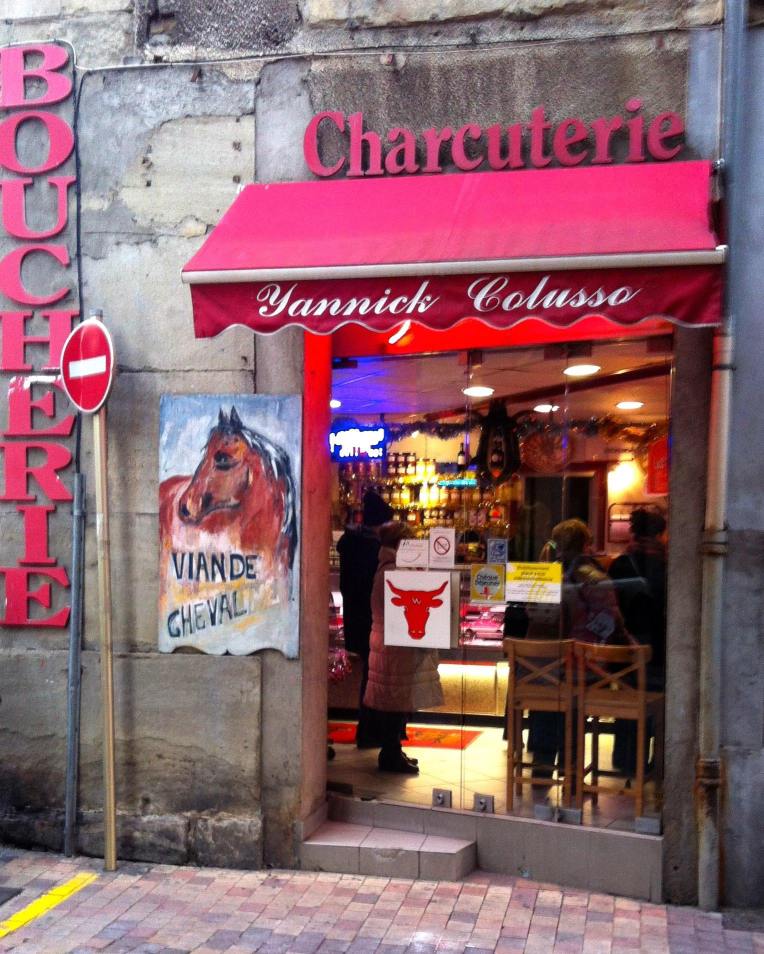
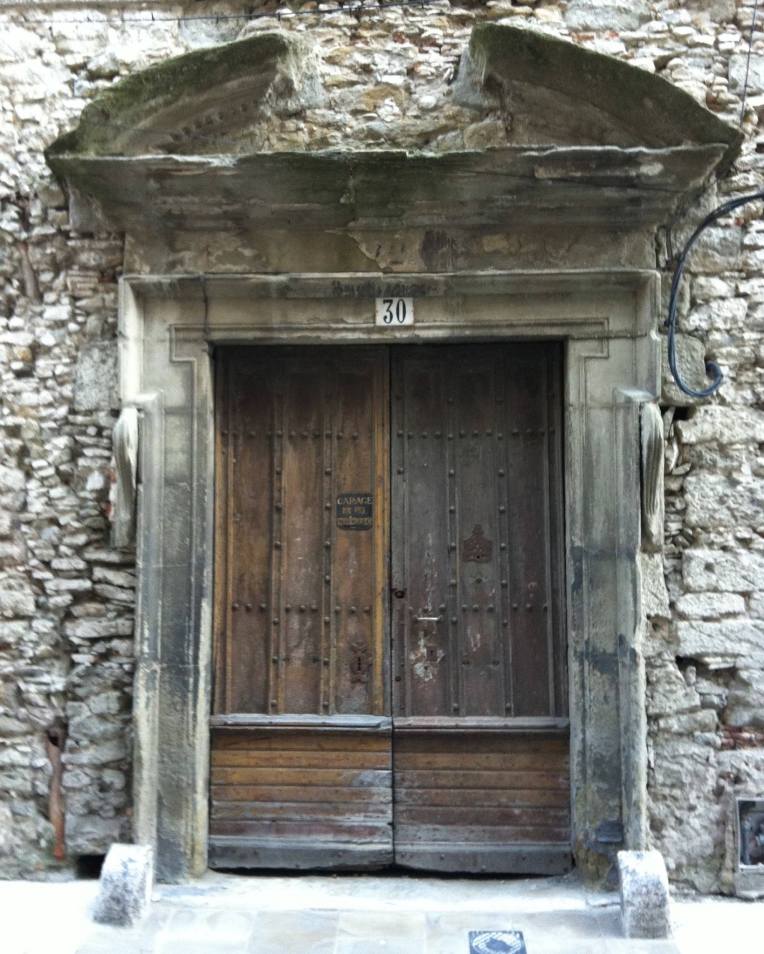
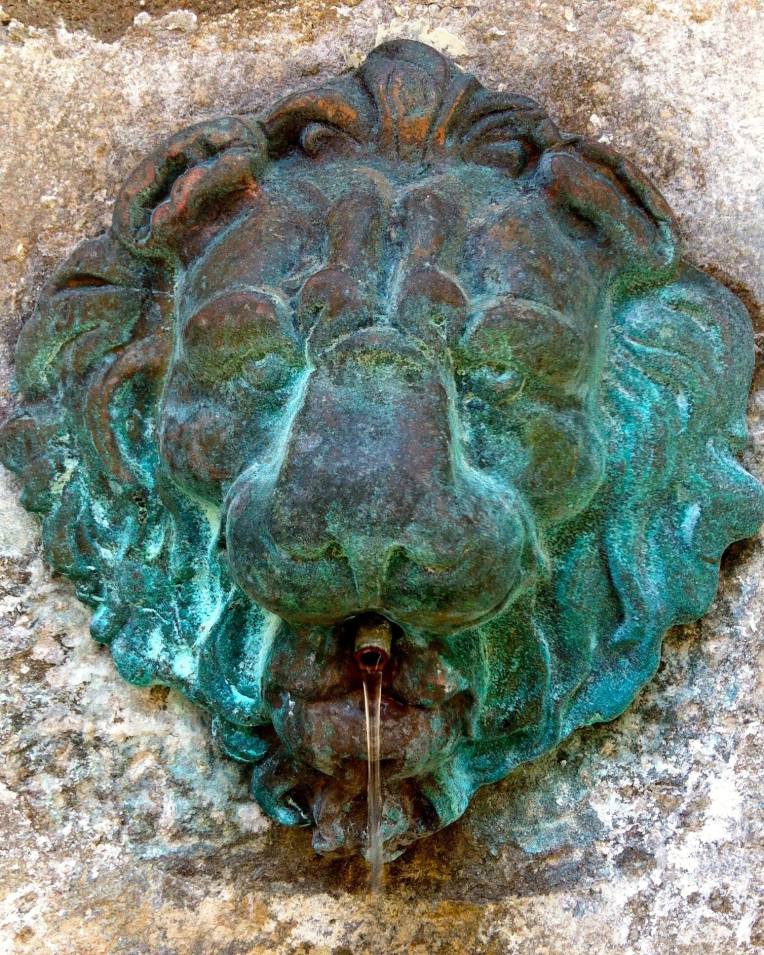
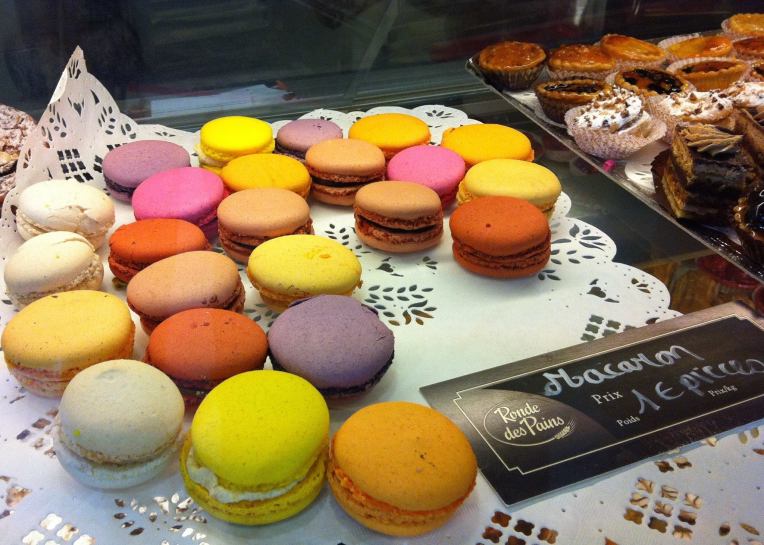
Fifteen photos taken “just walking around the neighborhood” in the Ville Basse (the lower city) of Carcassonne.
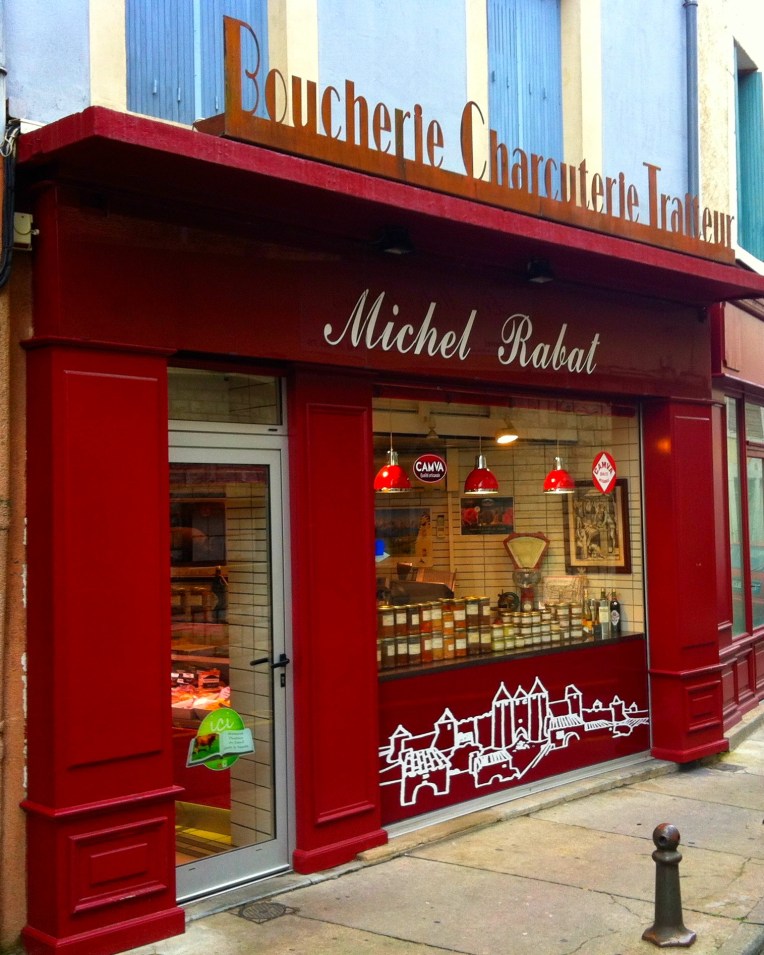

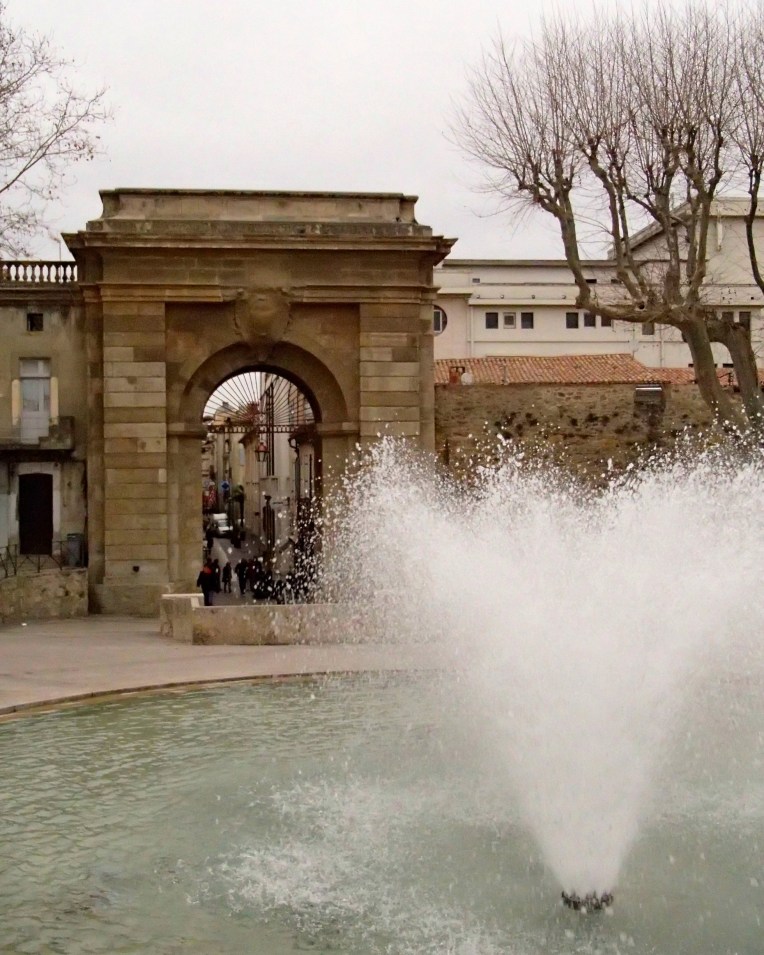


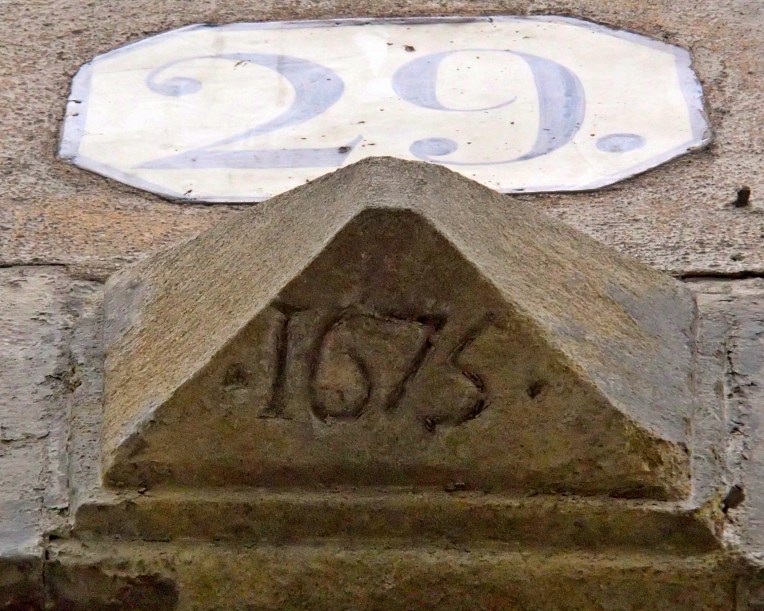



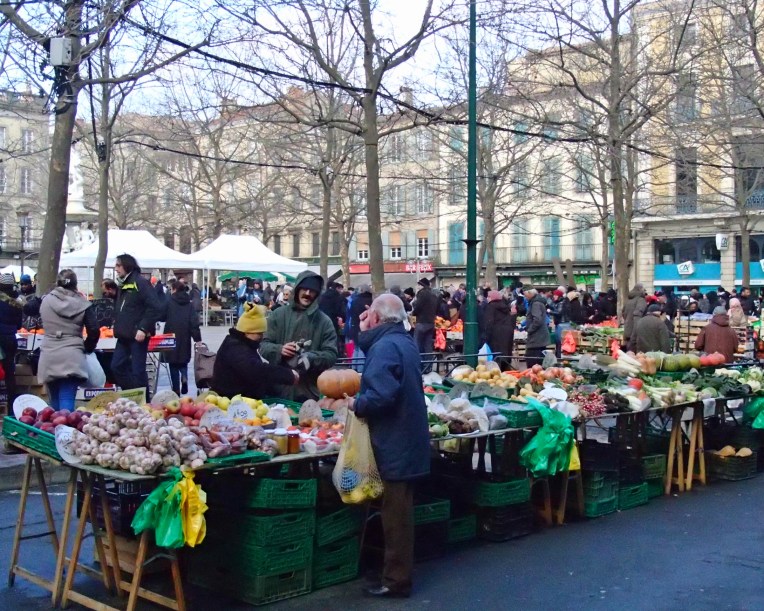


Fifteen photos taken “just walking around the neighborhood” in the Ville Basse (the lower city) of Carcassonne.
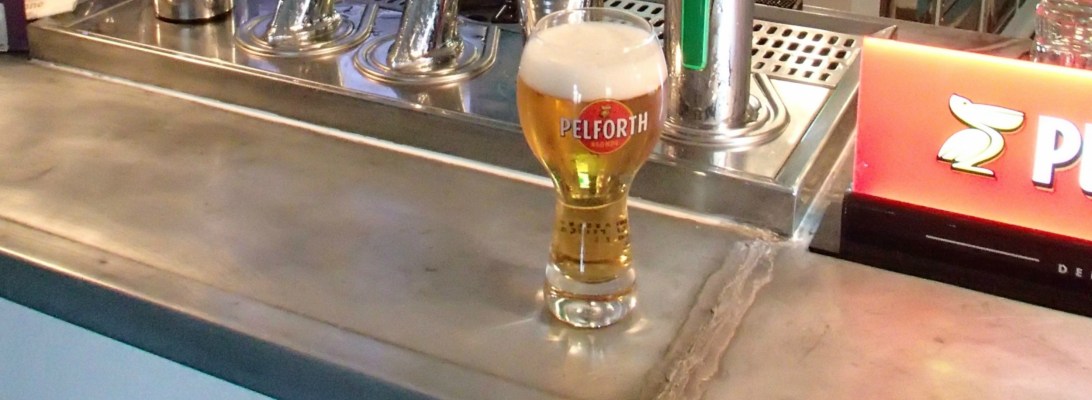
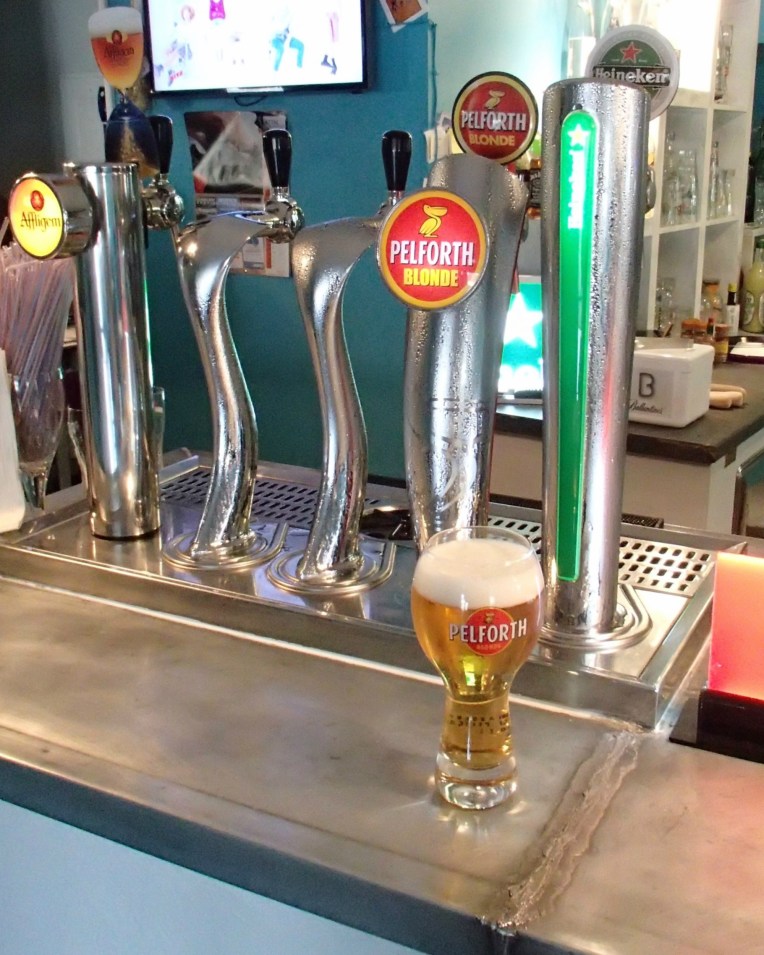
I like that a French colloquialism for a bistro, café, or bar is “le zinc” because of the classic zinc countertops that were common in pre-World War II France. Zinc countertops in cafés go back centuries in France. The revered French author, Emile Zola, in his 1873 book “The Belly of Paris” used the expression “le zinc.” The slang phrase, “Rendez-vous à ‘le zinc’,” translates as “Meet me at the café.” So common were zinc countertops that there were even special soaps for cleaning “le zinc” followed with applying a coating of beeswax to protect its patina.
Although many zinc countertops in French cafés were confiscated during World War II by occupying forces with the metal being recycled into the Nazi war industries, you can still find vintage zinc counters. It has even become fashionable for contemporary bistros looking for a historic ambiance to have brand-new “le zinc” countertops fabricated.

Fifteen photos taken “just walking around the neighborhood” on the way up to the Cité Médiévale de Carcassonne after a light dusting of snow in Carcassonne. This week has been the first snow Tracy and I have seen in our last two years in Carcassonne.
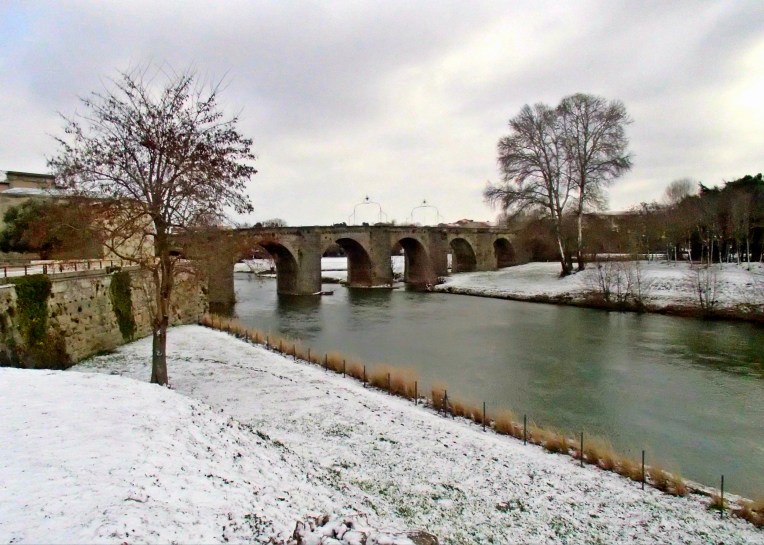


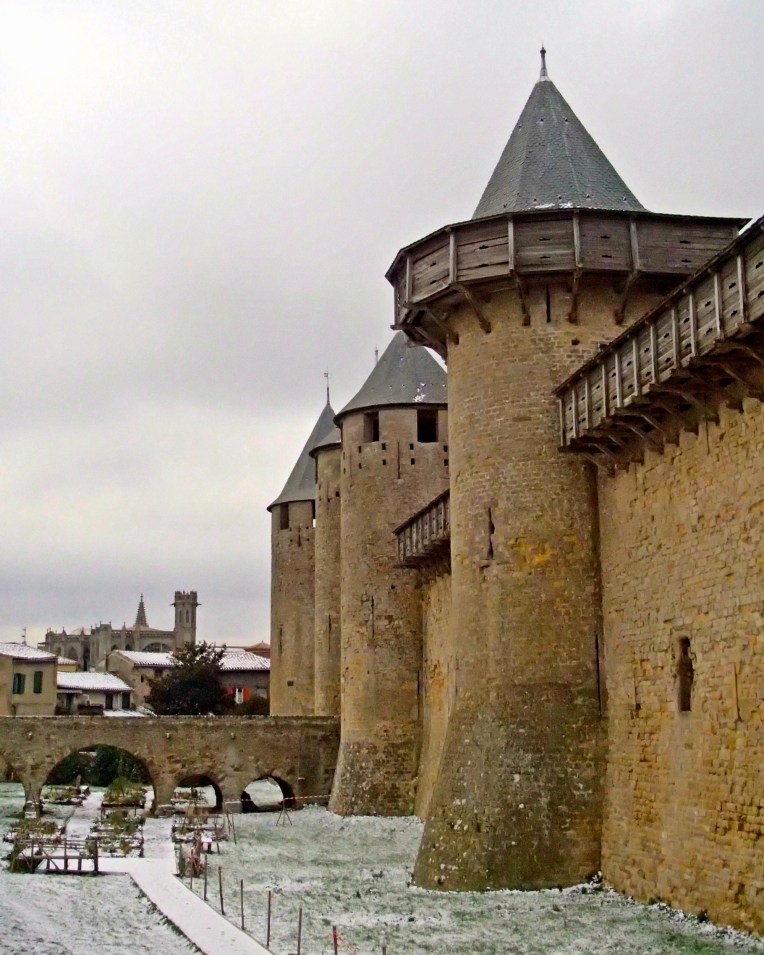
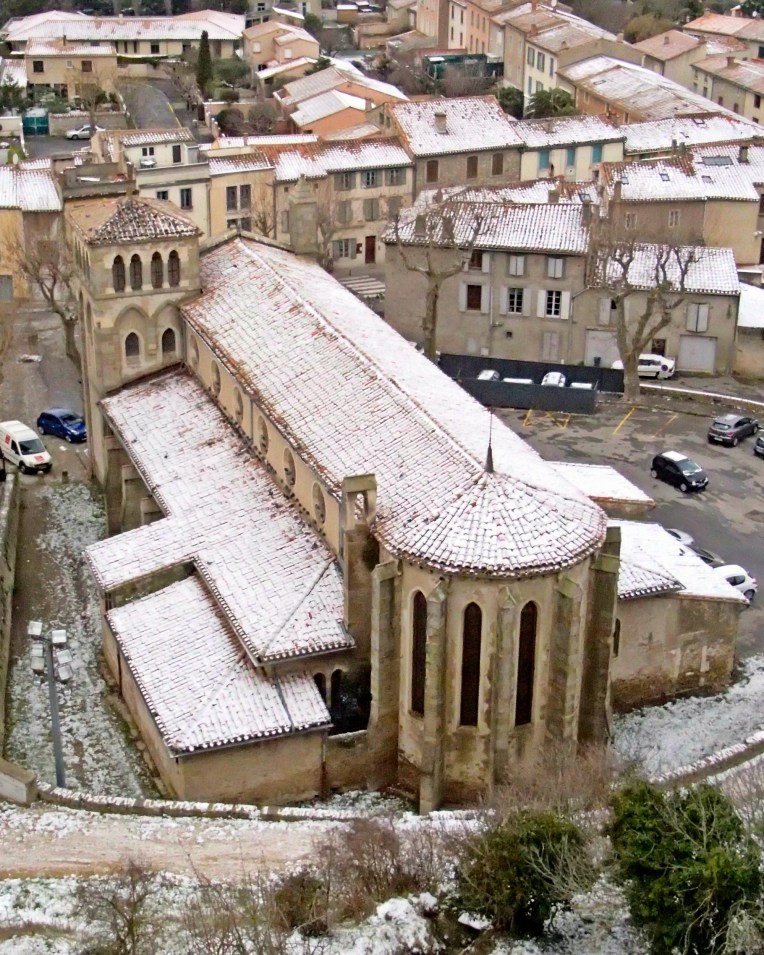
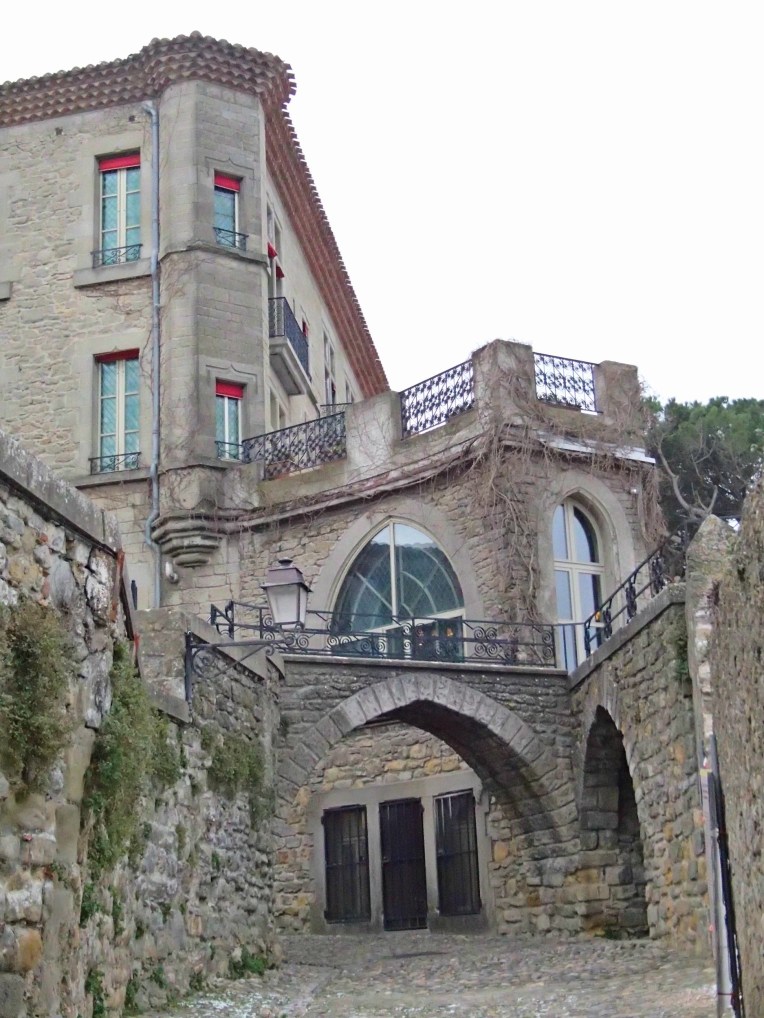
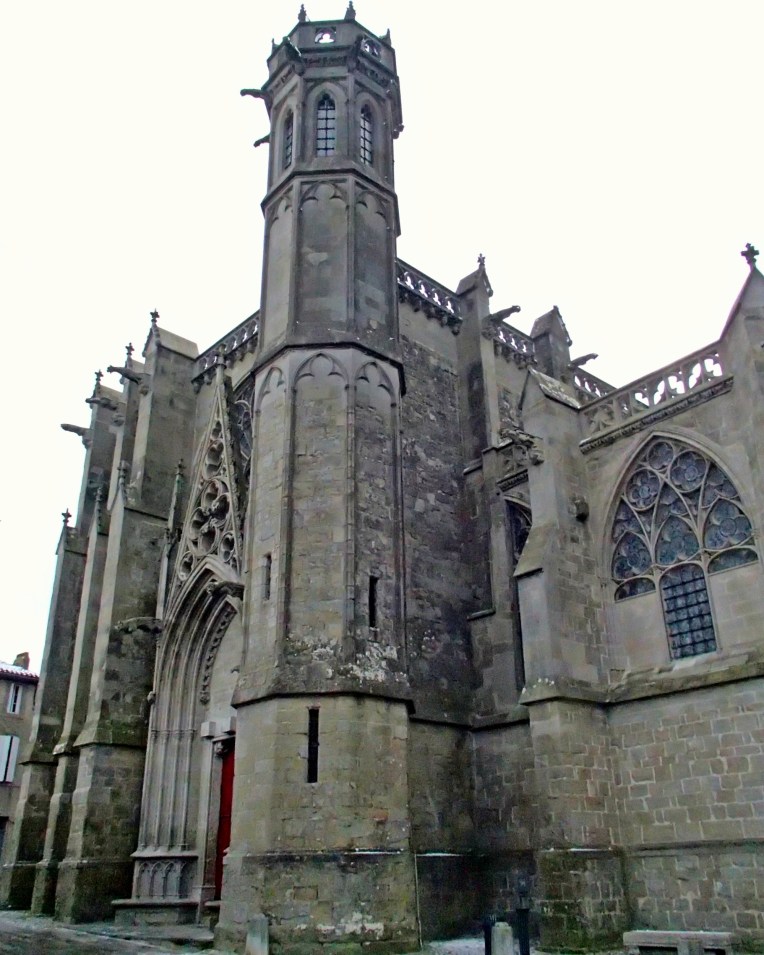

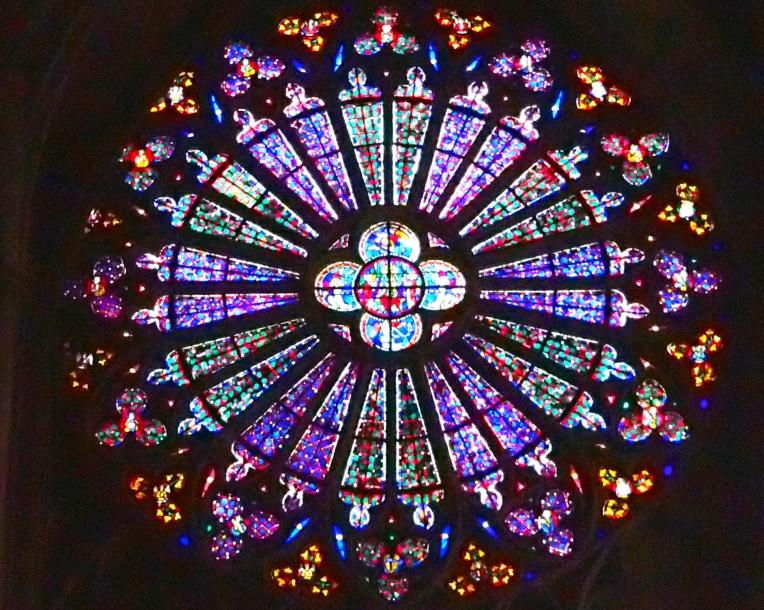
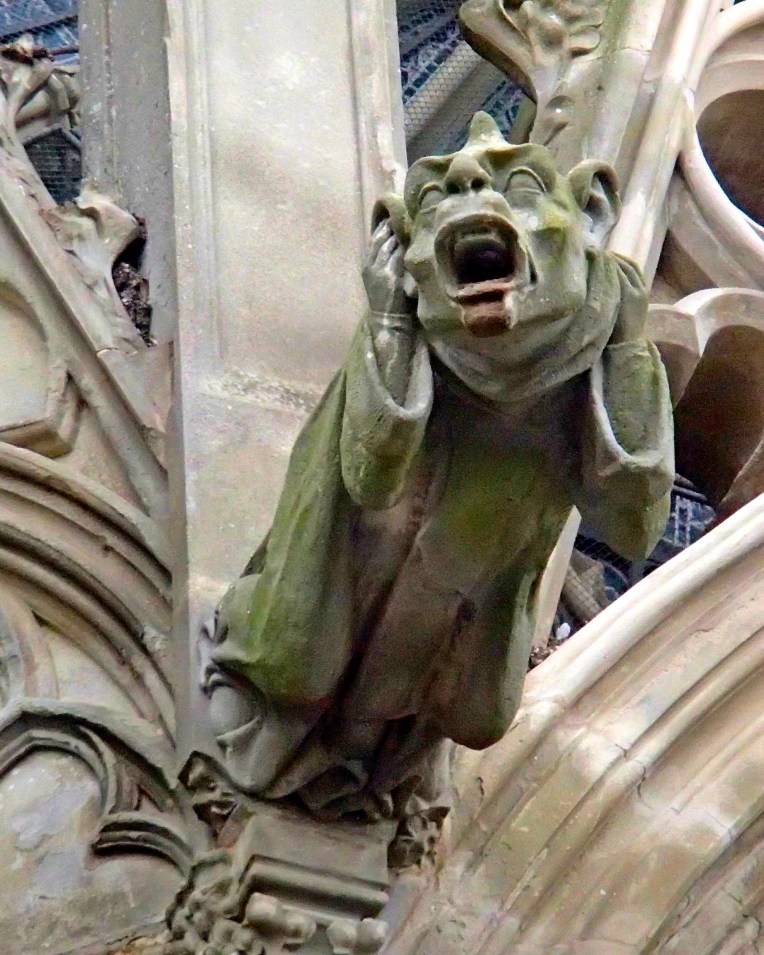
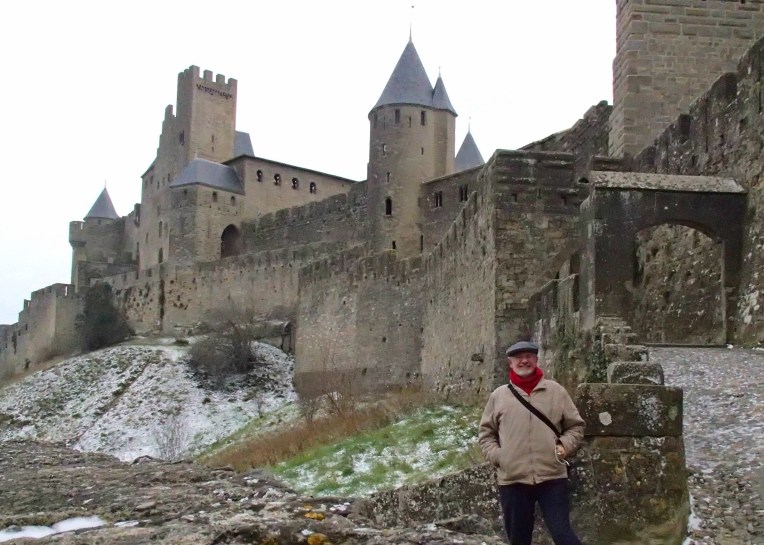

Thirteen photos taken “just walking around the neighborhood” in the Ville Basse (the lower city) of Carcassonne.
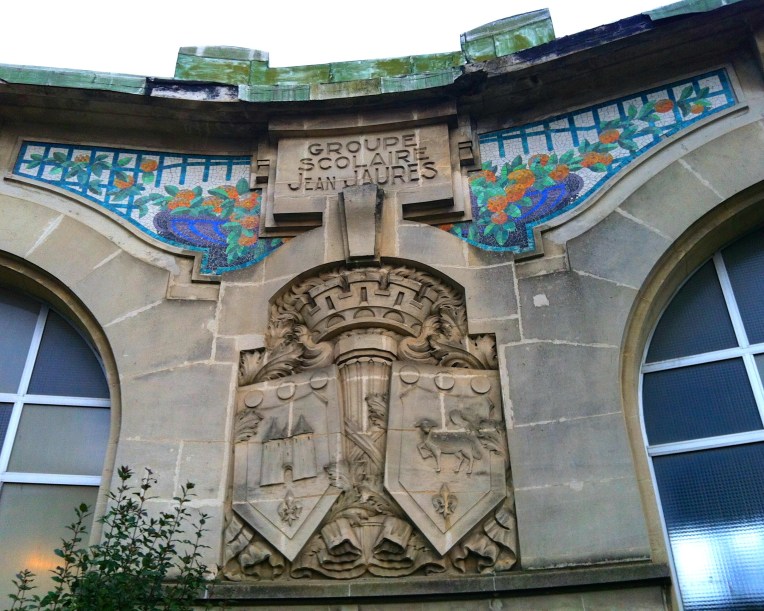


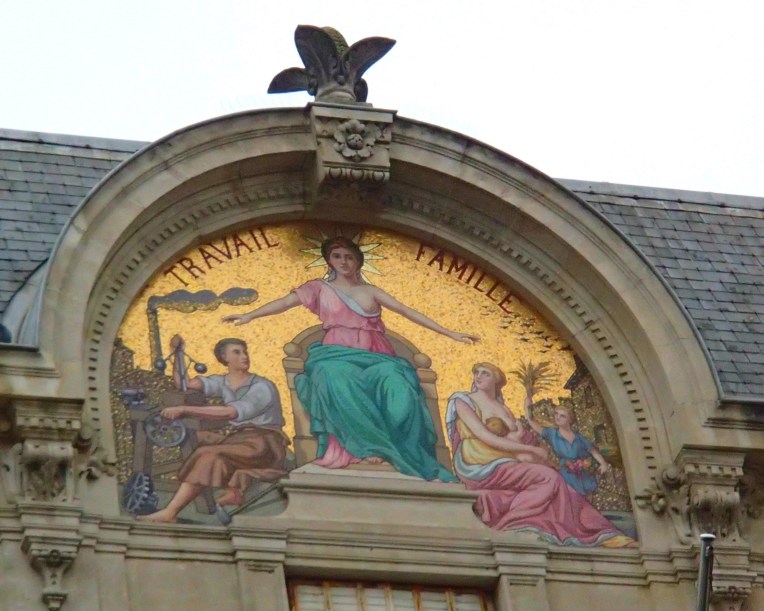

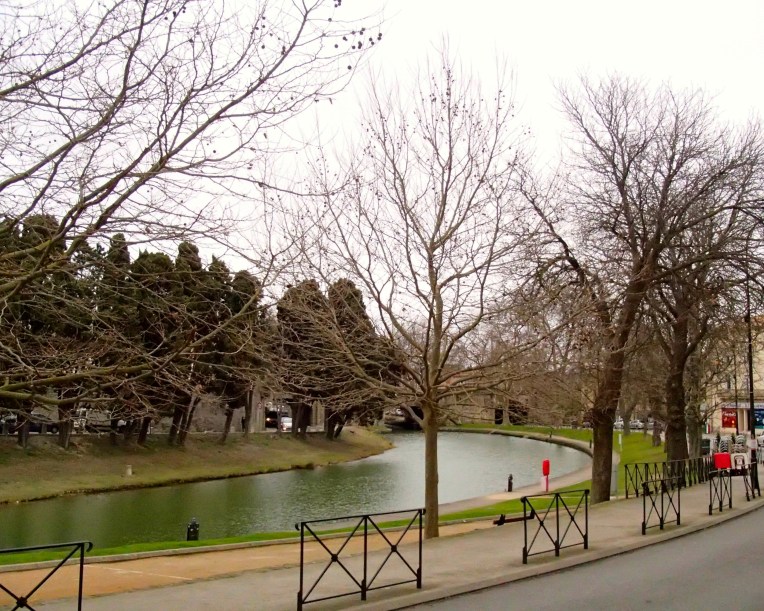
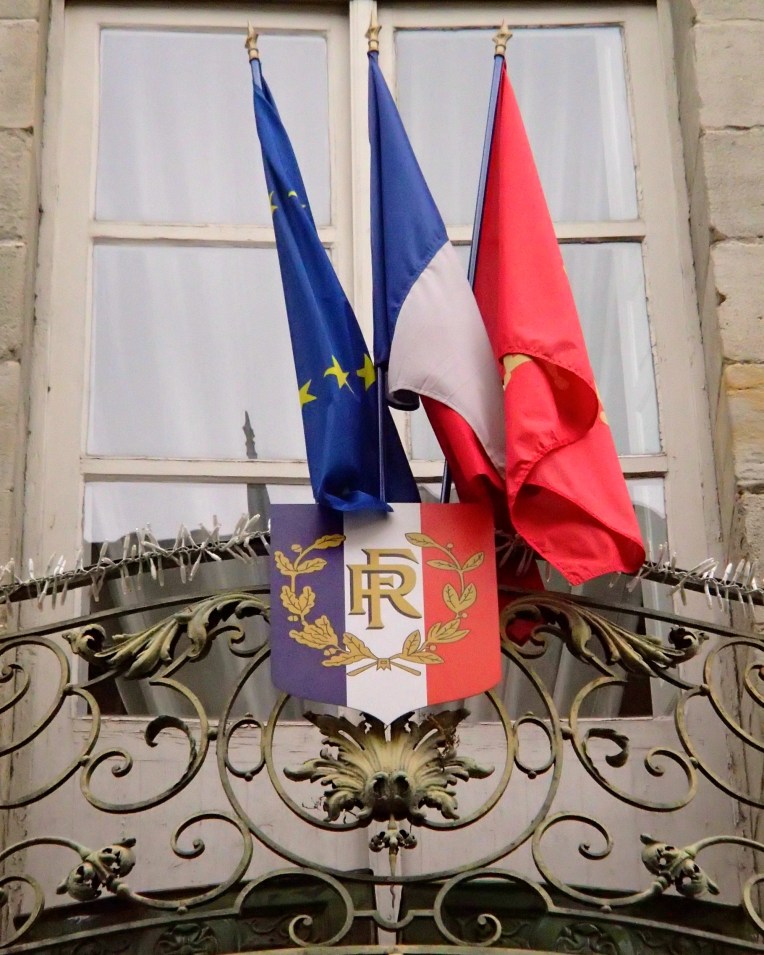
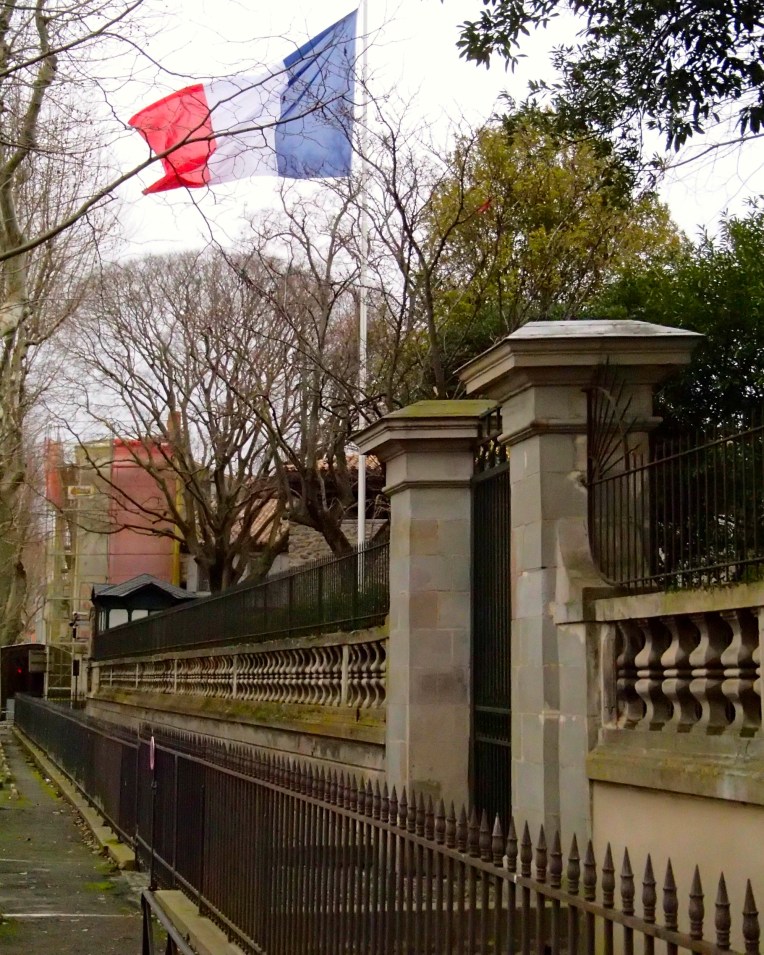
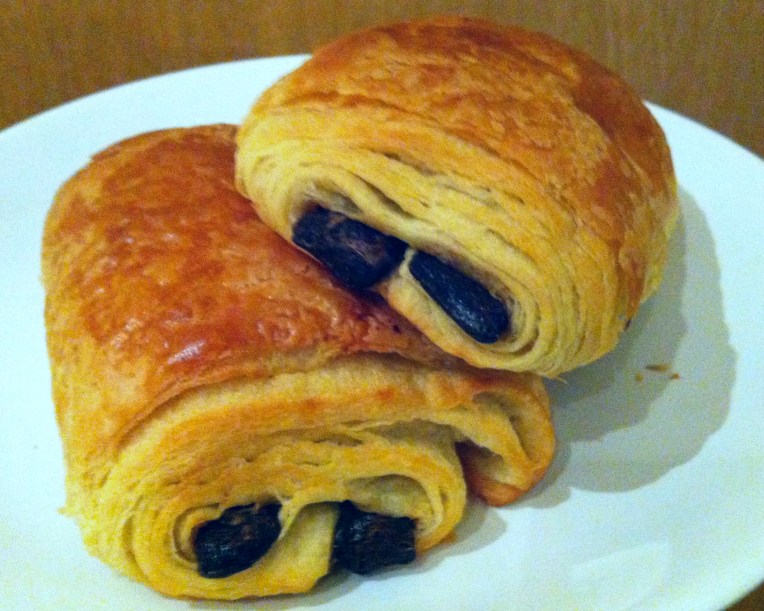
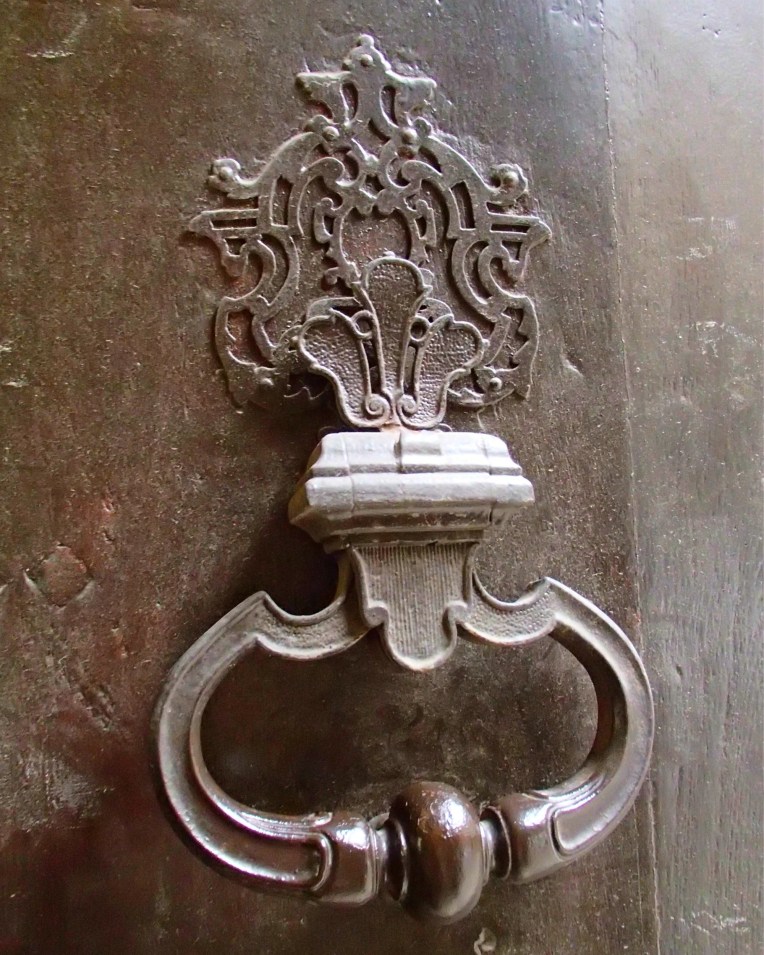


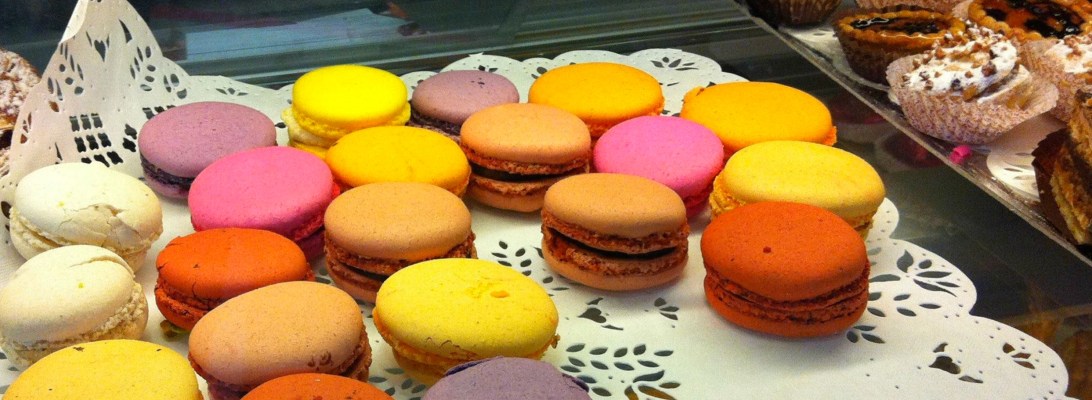
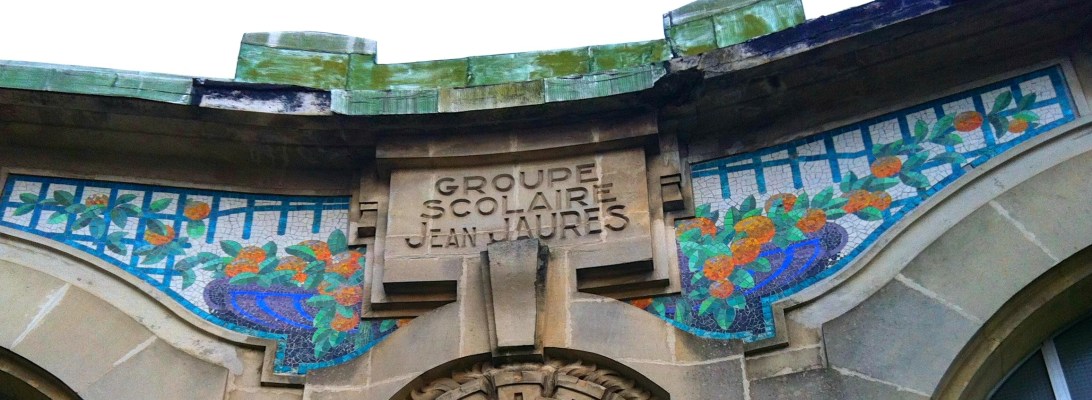
Seven photos taken “just walking around the neighborhood” in the Ville Basse (the lower city) of Carcassonne.
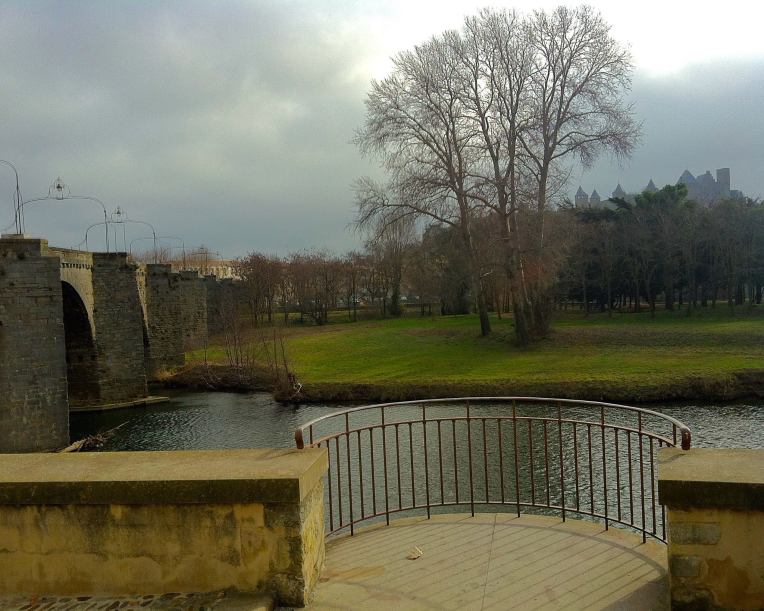


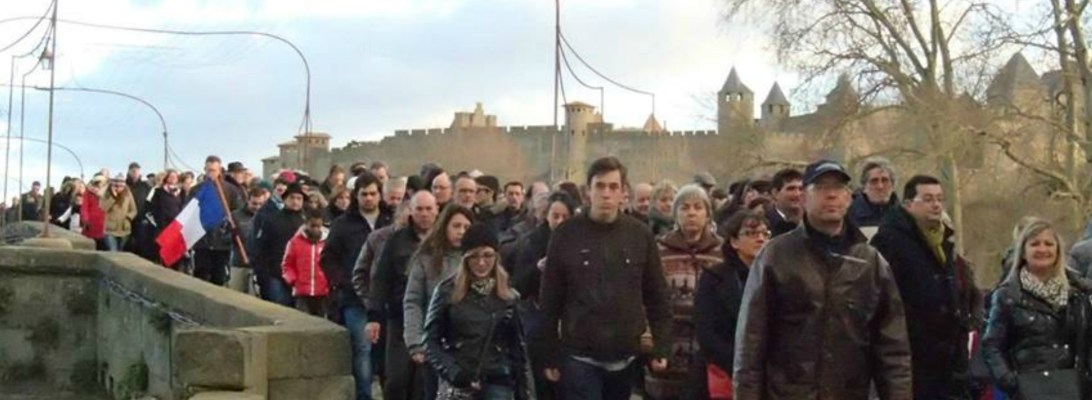
On Saturday and Sunday, January 6 and 7, about 3.7 million residents of France, with 1.5 million in Paris alone, conducted national Unity Rallies in memorial to the victims of the Charlie Hebdo magazine and the Hyper Cacher kosher grocery store in Paris.
Twenty thousand marched in Carcassonne, a community of about 50,000 residents. The tragedy created a consolidating influence similar to what occurred in the US after the 9/11 attacks, Oklahoma City Bombing, and Boston Marathon Bombing. There was very much a “United we stand, divided we fall.” message being conveyed.
Alan participated in the one hour event that included a “Blanc Marche” or White March from the Jacobin Gate to La Cite de Carcassonne, while Tracy and Sami stayed in and watched the Paris Unity Rally live via an online link.
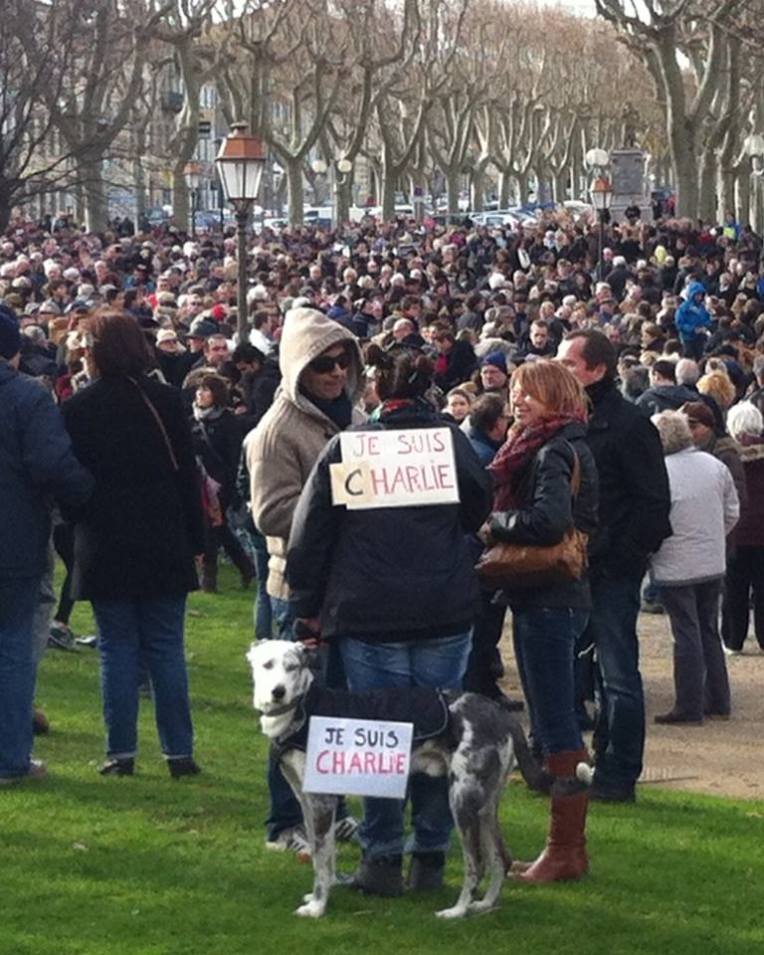


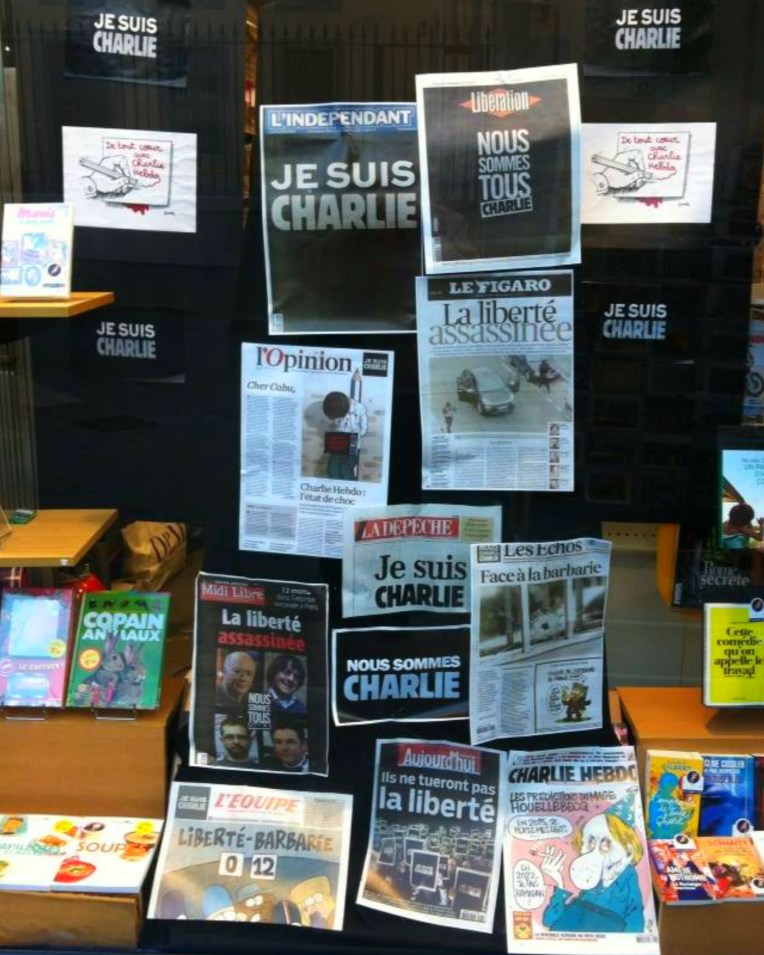
After the mass murder of 12 people at the Charlie Hebdo magazine office in Paris on January 7, 2015, there has been an outpouring of support for the Freedom of Expression and journalism, whether satire or straight news reporting, in France. It started as a hashtag on Twitter of #JeSuisCharlie (I am Charlie) to show support to the victims and survivors of this terrible act of terrorism. #JeSuisCharlie soon moved to the front page of newspapers around the country and to people and businesses posting “Je Suis Charlie” in their windows. We were pleased to see “Je Suis Charlie” posted around Carcassonne which has also hosted Unity Rallies advocating free expression and in memory of the victims.


I recently had a friend ask how speaking French was going for me. He had assumed that with nearly two years in France I would be near fluent with French. It has been about a year after my first post on this topic (Learning to Speak French in France) and I have to admit to coming up extremely short on my goal to “speak French as well as a five year old child” by the end of 2014.
While Tracy tells me I have made some good progress speaking French, that progress is not nearly the fluency of a five year old French child. An honest self-assessment is that I was not consistent enough in my language studies over the past year. Like many “New Years Resolutions” I began to slip in my studies about April and was “hot and cold” for the rest of the year with my language work.
I have friends who were foreign exchange students who after six months were on their way to speaking their new languages well. I think the biggest difference was that those friends really were “totally immersed” with a host family that often didn’t speak English and the “sink or swim” daily survival motivation greatly helped. With Tracy and I as a couple of living abroad, the majority of my conversations are in English with her.
The start of 2015 is a good time to reassess, consider changes to my learning strategies, and re-commit to learning to speak French well.
Part of this re-motivation is reminding myself why I want to learn French. If I have managed to function in France for nearly two years without a good proficiency in French, why bother?
The first reason is to really develop meaningful friendships and to really understand people in our new home, I need to be able to communicate beyond the “Me Tarzan, you Jane” or the set formula (“Je voudrais un . . . ” I would like . . . ) levels of “getting by.” Even only being able to speak and understand concrete concepts in French would greatly broadens our interaction with French people. Some of our expat neighbors have developed wonderful relationships with local French people. This is denied to us because of the communication barrier.
The second reason is that,“(t)he French have the lowest level of English proficiency out of all the nationalities in the European Union.” Only about 39% of residents in France can hold a conversation in English with the greatest English proficiency being found in major cities. The number of English-speakers in France has slightly declined in recent years. To function well in France I need a greater command of the French language. While we have been able to locate an English-speaking doctor, ophthalmologist, veterinarian, and pharmacist, we have struggled with communications issues with our visa renewals, health insurance, and our banker. We are living in France, we need to learn to speak French.
Finally, I am having “glimmers of a breakthrough” with learning French. I like the challenge of learning to speak and understand the second-most spoken language in the world after English. French and English are the only two languages spoken on all five continents with French being an official language in 29 countries and one of the six official languages of the United Nations. I hope learning French will be a good tool for our future travel and helpful with better understanding other Romance languages like Spanish and Italian.
I just read an extremely motivating article in Time Magazine, “The Secret to Learning a Foreign Language as an Adult.” The author, David Bailey, described his process which he claims allowed him to learn French to conversational fluency in 17 days. I wanted to immediately dismiss the claim, but the author had prior fluency in another Romance language to build upon and he described a committed and intense regimen to achieve his goal. While I’m not Mr. Bailey, it is motivating to see what is possible in rapidly obtaining mastery of a new language with hard work. My personal goals are not nearly as ambitious.
So what are my goals and how do I plan to achieve them in 2015?
GOALS:
1. I am repeating my 2014 goal of being able to speak and understand French as well as a five year old by the end of 2015. I want to be able to have basic conversation about concrete concepts with the correct use of elementary grammar and tenses.
2. I will take and pass the Diplôme d’études en Langue Française (Diploma in French Studies – DELF) at the A1 level (beginning basic user) in 2015 and then prepare to take the A2 level (elementary basic user.) This is a “hard” quantitative goal to add to my more subjective goal of being able to communicate as well as a five year old.
PROCESS FOR 2015:
There is a lot of research into second-language acquisition and that the process for learning another language later in life is more difficult for adults than children due to the reduced “plasticity” of the mind with age. (The Science of Learning a New Language (and How to Use It).
My approach is to continue to use different methodologies to involve different learning modes.
1. I will study French language an hour a day, 20 days a month (Monday through Friday with make-up time on the weekend for any missed days.) I often incorporate the audio lesson with walking Sami the MinPin in the park where I can freely repeat the lessons out loud.

2. With the recommendation of a friend I met on the Camino de Santiago, I’ve added the Michel Thomas Method French audio program (http://www.michelthomas.com/how-it-works.php), to my learning process. Both Tracy and I have been impressed with the methodology and the speed of acquisition with the Michel Thomas program. It’s a very enjoyable and engaging way to learn. Its emphasis is on relaxed listening only and the use of a text and notes are discouraged. In the “The Secret to Learning a Foreign Language as an Adult” article Mr. Bailey’s also described his use of the Michel Thomas program too.

3. I am continuing to use Coffee Break French (http://radiolingua.com/shows/french/coffee-break-french/). I especially like its practical short scenario-based lessons and the PDF lesson notes that allows me to practice reading as well as speaking French.
4. I will maintain using the Pimsleur French program (http://www.pimsleur.com/Learn-French) for its methodology of “spaced repetition” for building vocabulary. Pimsleur is the most formal and traditional of these three audio second-language acquisition programs. The Pimsleur program is the most demanding to maintain focus with throughout its 30 minute lessons.

5. I’ve added a DELF A1 study guide, Reussir le Delf A1 book and CD. The text is designed for students preparing for the DELF A1 examination. The guide was developed with Centre International d’études Pédagogiques (International Centre for Studies in Education – CIEP) who administers the DELF proficiency level exams. The downside is that the guide is completely in French and I have to figure out any questions myself.

There is also a language school in Argelès-sur-Mer, where we are moving in April 2015. That school offers a preparation workshop for taking the DELF A1 test. I need to research, but the workshop may be worth the time and cost. I also intend to investigate the language schools in nearby Perpignan, but most of those schools are priced for tourists and not retirees’ budgets.
For supplemental learning I am making a point of reading and translating at least one article in a French newspaper daily and using “close-captioning” on television to both hear and see French simultaneously. I haven’t been using the French TV previously, but I believe it will help me further “train my ear” to understanding French better and to speak with the correct pacing.
I wrote in my last year’s blog post about second-language acquisition, “The programs I picked are certainly not the . . . only options, but these are the learning programs I selected for my personal andragogy (adult self-learning) and learning style. The biggest success factors I think for any adult second-language learner is their motivation and perseverance. There is no “Magic Bullet” of the perfect learning program, no “learn French in just 10 days.” Learners must be consistent and actively involved in their self-education like any other pursuit – golf, cooking, knitting, playing a musical instrument – there is no passive approach to mastery”
For 2015 I believe I need to follow my own advice about “motivation and perseverance” and maintain consistency in my study efforts.
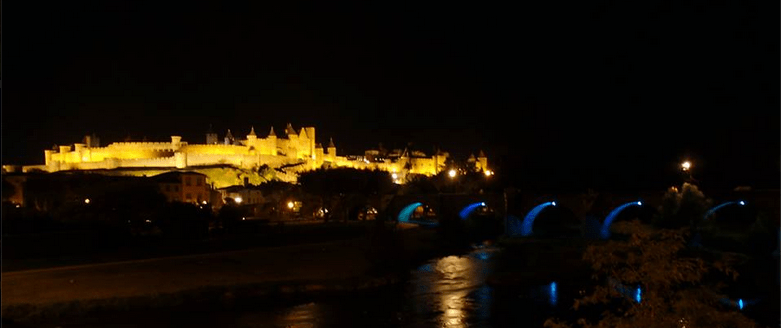
After visiting Paris and Normandy we finally had the opportunity to share with Deb and Gerry our home in Carcassonne and to walk up the hill from our apartment to explore the medieval double-walled city, la Cité de Carcassonne. We enjoyed the three kilometers walk around the walls of la Cité, viewed its 52 towers, saw the count’s château, and visited the many shops, restaurants, and hotels within. The citadel of la Cité is a UNESCO World Heritage Site.
For Tracy and I it is, “The view that never gets old.”

We took advantage of having a car to see one of the many Cathar castles that are scattered throughout the region, the ruins of the Château de Montségur. It is a legacy of the Albigensian Crusade (1209–1229), a 20-year military campaign initiated by Pope Innocent III to purge the Cathar sect from the Languedoc region in the south of France. The ruins of Montségur are at the top of 1,200 metres (3,900 feet) pog (an Occitan word meaning “peak, hill, mountain”) near the start the Pyrenees Mountain range.
The trip had the double purpose of “warming up” Tracy and Deb for their upcoming trek on the Camino de Santiago across Spain.
After their climb to the top of Montségur, we headed over to the town of Mirepoix. The small village of Mirepoix has managed to retain the classic architecture and charm of its original town square but with updated shops and businesses. The city is known for its overhanging arcade which has 150 individually carved wooden heads. A quaint place for a relaxing afternoon.
The time had come to split up. We drove to St. Jean-Pied-de-Port to deliver Tracy and Deb at the traditional start of the Camino Francés of the Camino de Santiago, the 1200 year old pilgrimage route of the 800 kilometers (500 miles) long Camino de Santiag0 (The Way of Saint James). Deb was limited to only having two weeks to hike, so they planned to walk the first 164 kilometers (102 miles) over the Pyrenees Mountains and through the Basque country of Navarre to Logroño, Spain, then skip ahead by train to Sarria, and finish the last 107 kilometers (67 miles) hiking through the Galicia region to Compostela de Santiago.
Gerry and I (with a continuous “comedy of errors” of finding our way along the French highways) continued on to Paris (after a brief overnight stop in Limoges.) Gerry and I enjoyed a final evening in Paris with a “Steak frites” (Steak and French fried potatoes) in the Montmartre district in the 18th arrondissement. We admired the sight of the Basilique du Sacré-Cœur, watched the unruly crush of bicycles, scooters, motorcycles, cars, trucks, and buses work their way (miraculously without a single collision) through the intersection near the Avner Métro station, and had a final ice cream. The next morning Gerry took the RER B to Charles DeGaulle Airport for his flight back to California and I caught The RER A to Marne-la-Vallée – Chessy and my Ouigo TVG train home to Carcassone.

Part 2: France with Deb and Gerry: Mont Saint-Michel, Normandy
Part 3: France with Deb and Gerry: Omaha Beach, Normandy American Cemetery and Memorial
 An Italian Point Of View