Tracy made a wonderful traditional US style Christmas dinner for us with turkey, mashed potatoes, gravy, corn, but with the French touches of Muscat de Noël wine and a Bûche de Noël cake. New Years Eve 2015-2016 dinner was then up to me to make a proper French Réveillon dinner . . . or at least as proper of a Réveillon dinner as this US Expat can figure out, shop, cook, and serve.
Réveillon is the traditional dinner that people in French-speaking countries celebrate the night before Christmas and New Year’s Day. Some of the traditional foods vary by region but can include turkey with chestnut stuffing, caviar or smoked salmon on blinis, oysters, foie gras, lobster, and coquille Saint Jacques (scallops). (More descriptions of Réveillon dishes with “food porn” photos at “The Local-France” Ten dishes that make up a French Christmas feast. )
For our New Year’s Eve Réveillon dinner I prepared:
Roasted Magret de Canard (oven roasted duck breast.)
Grilled Boudin Blanc de porc with truffles. (White pork sausage with black truffles.) Boudin Blanc in France are made with milk while the Boudin Blanc made in Cajun Louisiana is made with pork and rice stuffing.
Pan-fried Foie Gras (Duck Liver.) (I have previously learned the trick to remove the battery from the smoke alarm when cooking Foie Gras. The high heat pan and high fat content of the Foie Gras can trigger the smoke detector.)
Quiche Lorraine with bacon, cheese and scallops in place of Coquille Saint Jacques for our seafood course. (A purchased quiche since I didn’t think I would have enough time to cook everything.
A canapés and cheese plate including Catalan Sausage, duck breast, Foie Gras, Chevre (goat cheese), Brie, Fourme d’Ambert (raw cow’s milk blue cheese), with Rondelé de Président Ail de Garonne & Fines Herbes (creamed cheese spread) and small toasts. Several of these cheeses are contraband and cannot be imported into the US.
For dessert a Bûche de Noël au chocolat (chocolate cream “Yule Log” cake with layers of crystallized sugar filling) purchased from our nearby pâtissier.
And, of course, Champagne. (What’s the point of living in France without toasting the New Year with real French champagne?)
Our canine children, Sami and Lou, enjoyed a bite of duck with their dinners too. Sami especially loves Canard!
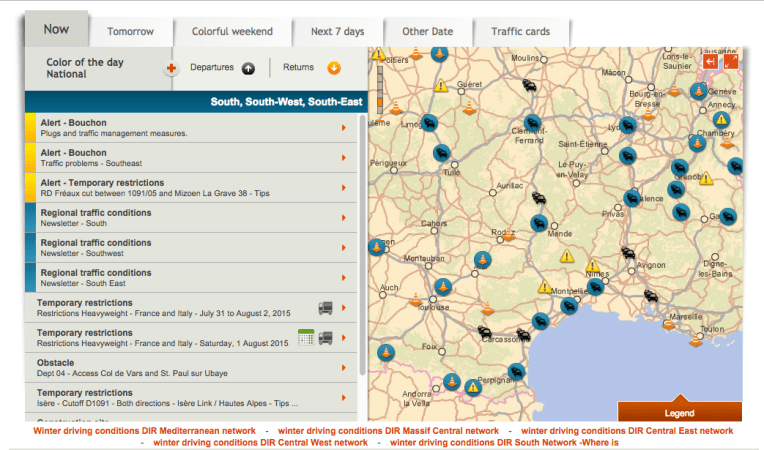
Today is Saturday, August 1, 2015, the biggest traffic day of the year in France. Why?
“Samedi Noir” (Black Saturday) is the changeover between the juillettistes(families that take their annual vacations in July) and the aoûtiens (families that take their annual vacation in August). “Le chassé-croisé des juillettistes et des aoûtiens,” is the cross-over of July and August vacationers and an annual “event” usually on the last Saturday of July.
Traffic stopped on highway. Sous licence CC BY-SA 2.5 via Wikimedia Commons –
It’s like the US Memorial Day weekend traffic, squared, because of France’s centralized highway system. Millions of French travelers are on the road today, some heading home after holidays and others on the way to their vacation destinations. It is called “Les jours de grands départs” (the days of great departures) across France.
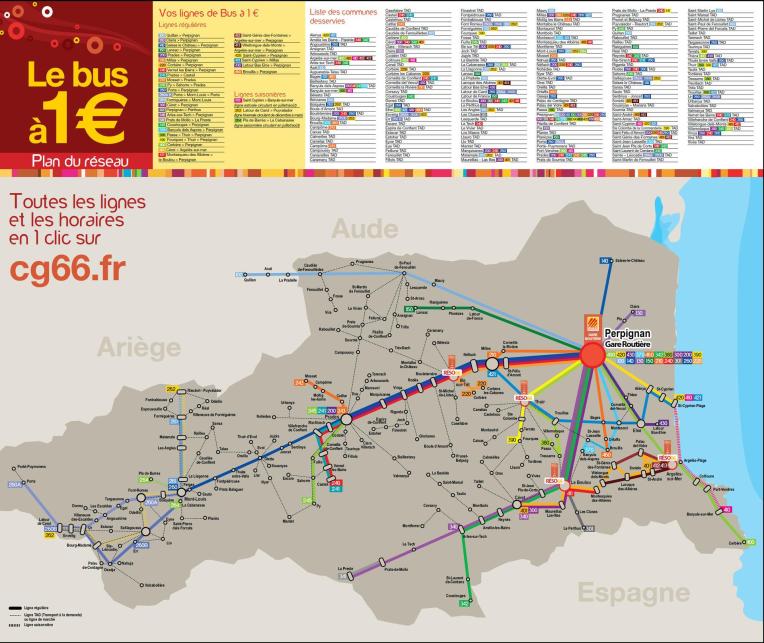
One of the biggest bonuses with living in Argelès-sur-Mer within the Pyrénées-Orientales Department has been Le Bus à 1€ (the €1 Bus), a public transportation system providing bus service throughout the department with dozens of bus routes to scores of cities. This is an amazingly useful and economical way for Tracy and I to travel since we have elected not to buy a car.
Our transportation for the day.
With a €1 Bus stop 100 yards from our front door, it is actually more convenient for us to take the €1 Bus to Perpignan to go to the large supermarket shopping there than to walk to the smaller supermarket that is in Argelès. The current bus schedule list 19 buses a day from Argelès to Perpignan, Monday through Saturday, starting at 6:50 am until 8:40 pm. There is a reduced bus schedule on Sundays. In July and August there are additional routes during the summer season connecting the small beach towns along the Côte Vermeille. Additionally there is an expanded schedules for regular routes during these peak summer months.
1€ Bus Schedules
The €1 Bus service is provided by the Conseil Général des Pyrénées-Orientales, an elected board of 31 Conseillers Généraux (one for each of the 31 Cantons of the Pyrénées-Orientales) and a Chairman. Members of the Conseiller Général are elected for a 6 year term. The Conseil Général decides public policy at the department level similar to the role and responsibilities of a county commission in the United States.
1€ Bus Map
For the price of a single Euro each (currently about $1.11), we can reach nearly anywhere in the Pyrénées-Orientales. The tickets also allow transfers for two hours to other bus routes traveling in the same direction within the €1 Bus system. That means we can take the bus from Argelès to Perpignan for €1, do some shopping, get on a different bus still outbound within the two-hour transfer time limit, and go to Prade for lunch. A return ticket for €1 each will bring us back to Argelès. A traveler would spend more on gasoline than the €2 cost of a round-trip on the bus. (Currently gasoline costs about €1.37 a liter, about $1.50. There are 3.8 liters to a gallon, so gasoline would cost about $5.70 a gallon.)
1€ Bus Tickets
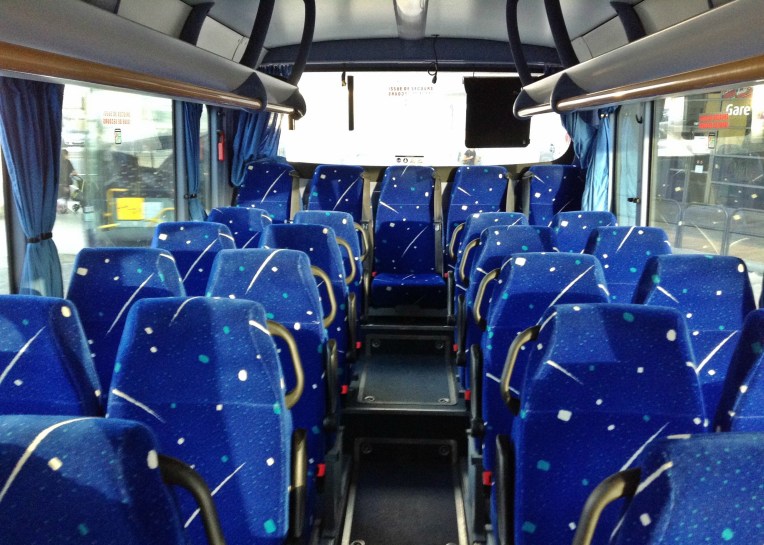
The buses are clean, modern, and comfortable motor coaches. They are dog-friendly and Sami the MinPin can travel with us with the use of a travel bag while she is inside the bus. There are overhead racks for backpacks and under-the-bus-carriage storage for large suitcases or even bicycles. There are even several “Réso 66” stops, “Park and Ride” locations where commuters to park their cars for free and let the bus drive them to work or school. The bus drivers are friendly and helpful, but pretty much they exclusively speak French (if the drivers do speak a second language it’s most probably Spanish or Catalan.) But between our very basic French language skills, pointing at the stop we want on the map, or showing the driver a promotional brochure for a tourist sight, we have not had any problem communicating. (And there is always the red “Stop” button to indicate that you want off the bus.)
€1 Bus Interior
Tracy and I have been making great use of the €1 Bus for our Micro-Adventures. With just €4, a camera, a bottle of water, an inquisitive MinPin, and a picnic lunch, we have an entire day’s entertainment exploring in the Pyrénées-Orientales.
Tracy enjoying one of our Micro-Adventures at Les Orgues d’Ille-sur-Têt, which we reached by the €1 Bus
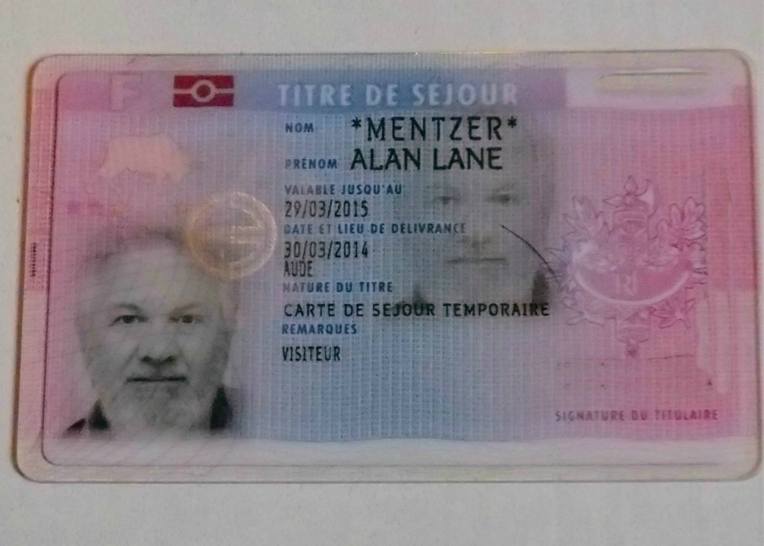
While we were doing our final preparations to move from Carcassonne to Argelès-sur-Mer, we received an e-mail from our future landlord that our letters from the Préfecture des Pyrénées–Orientales notifying us that our Cartes de Séjour (residency permits) were ready for pick-up. We decided to wait the until we completed our move before we would go to collect our new cards. It had taken the Préfecture about three weeks to officially approve and produce our new Cartes de Séjour.
We moved to our new residence, unpacked, settled-in, completed and submitted our US tax return, shopped for kitchen basics, found the local open-air market, got to know Argelès-sur-Mer’s public transportation system, met a couple from Collioure for drinks, and even hosted friends overnight who were on a vacation through France.
We sorted out the “€1 Bus” schedule to Perpignan and left early on a Thursday morning with the documents the notification letter said were required: our passports, current Cartes de Séjour, €106 payment each in timbres fiscaux (tax stamps), and the notification letter. I double-checked the letter and we headed to the Préfecture des Pyrénées–Orientales in Perpignan.
“Le Bus à €1” – Conseil Général Pyrénées–Orientales
The trip went flawlessly . . . almost. We correctly figured out the regional bus schedule from Argelès to Perpignan, we remembered the path from the station to the prefecture without error, we successfully planned enough transit time to enjoy a leisurely cup of café crème in a nearby cafe, and we were waiting at the right door when the immigration office opened for business. We were feeling very pleased with our skills navigating life as “strangers in a strange land.”
However, I made the embarrassing and very rookie error while reading our notification letters and mis-translated “mercredi et vendredi” (Wednesday and Friday) as “du mercredi au vendredi” (Wednesday through Friday.) That day was, of course, a Thursday. So we spent the remainder of the day exploring Perpignan, took photos, enjoying a nice lunch before catching the bus back to Argelès.
The next day, Friday, we repeated our inadvertent “trial run” and returned to the Préfecture des Pyrénées–Orientales in Perpignan. This time everything did go flawlessly. We enjoyed our morning café crème, was near the front of the line when the Préfecture’s immigration opened, and the receptionist gave us the first two numbers to be called to the service windows. Tracy had our documents well-organized and our immigration official very professionally processed our forms and payment and issued us our new Cartes de Séjour with receipts complete with digital photos should we lose our cards.
It took eleven minutes from walking into the Préfecture to walking back out with our new Cartes de Séjour tucked in our wallets. We are now all set for another year of living in France.
Ten photos taken “just walking around the neighborhood” in the Ville Basse (the lower city) of Carcassonne.
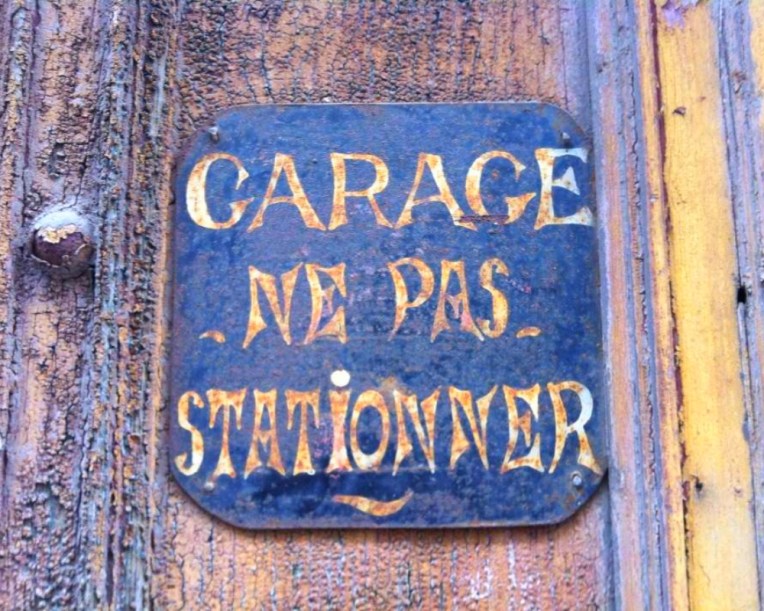
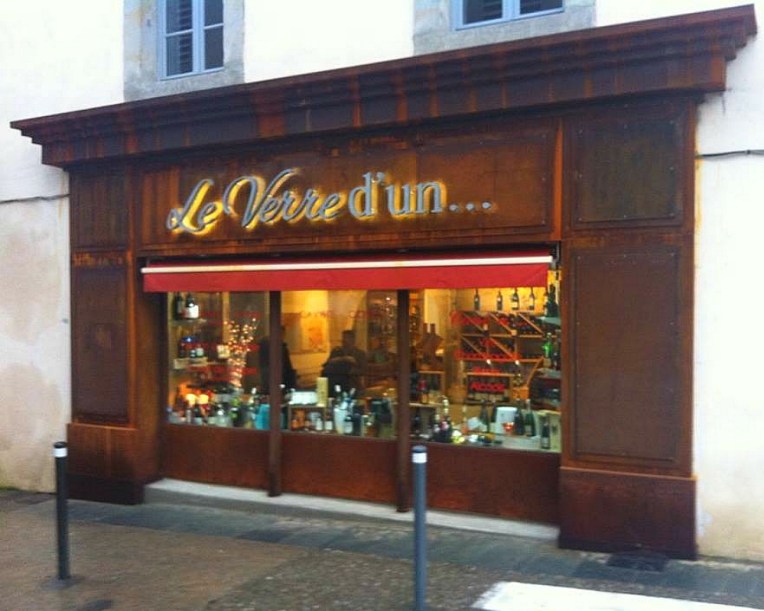
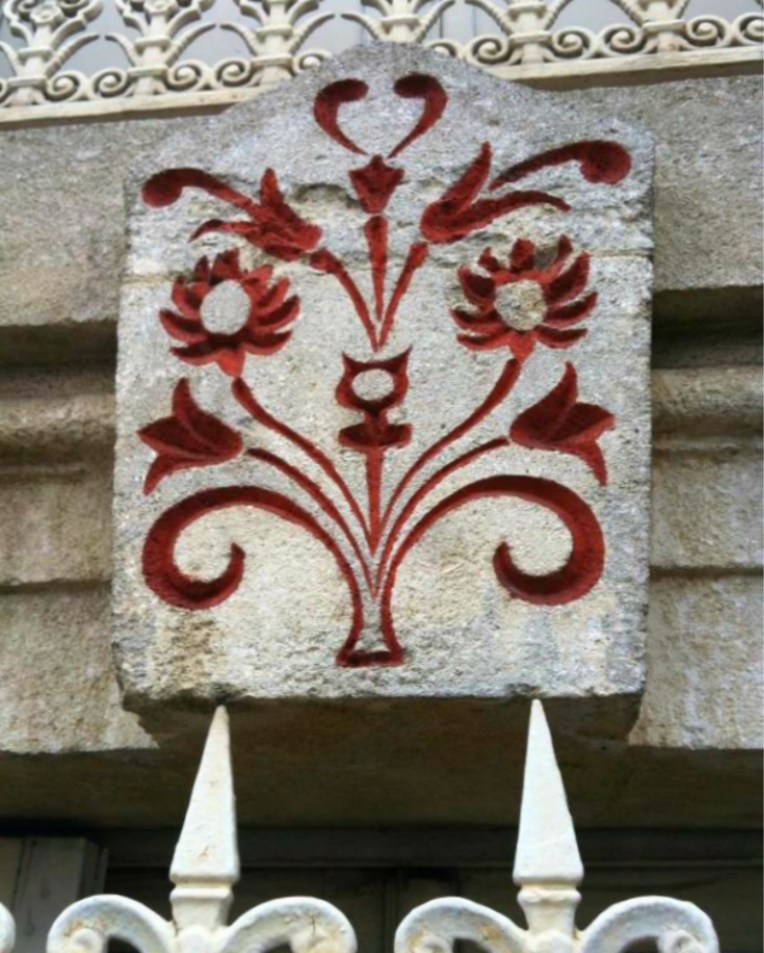
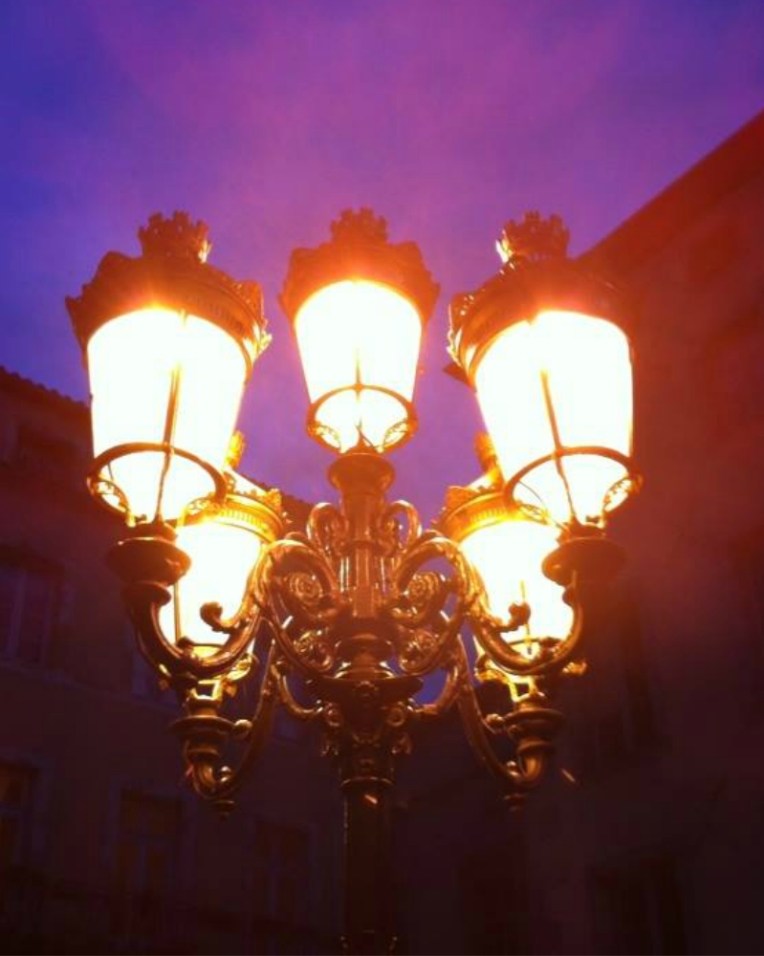
Antique “No Parking” sign on a garage along Rue Jean Bringer.Menu board from Lard et au Cochon restaurant on Rue Denisse.Spring flowers in the market.Menu board from Briocherie-Pâtisserie Arpin on Place Carnot (the town square).The solar eclipse through the clouds at the fountain and Porte des Jacobins à Carcassonne (Jacobin Gate).Menu board from the wine bar, Lâche Pas La Grappe on Rue du Pont Vieux.The iron façade of wine bar, Le Verre d’Un, on Rue de Verdun.Decorative stonework above the windows of a residence on Boulevard Barbes.Lamps at Place Carnot (the town square.)Bee investigating a lily offered in the market at Place Carnot (the town square.)
Nine photos taken “just walking around the neighborhood” in the Ville Basse (the lower city) of Carcassonne.
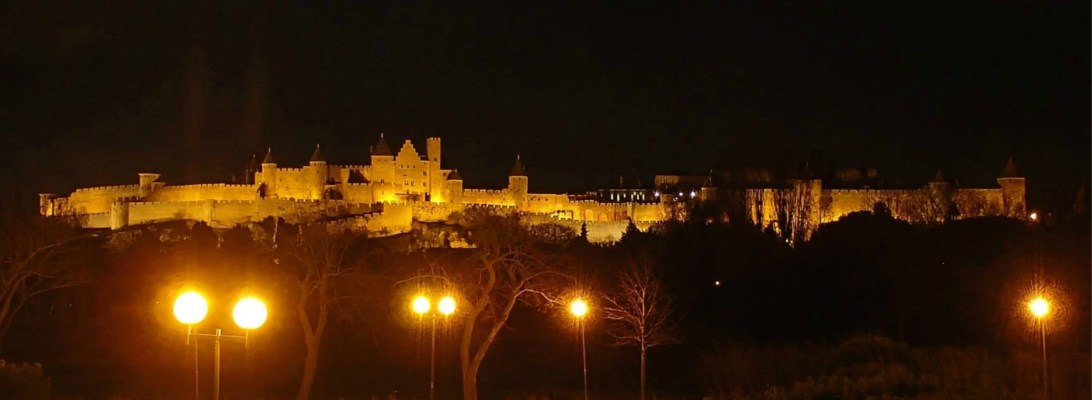
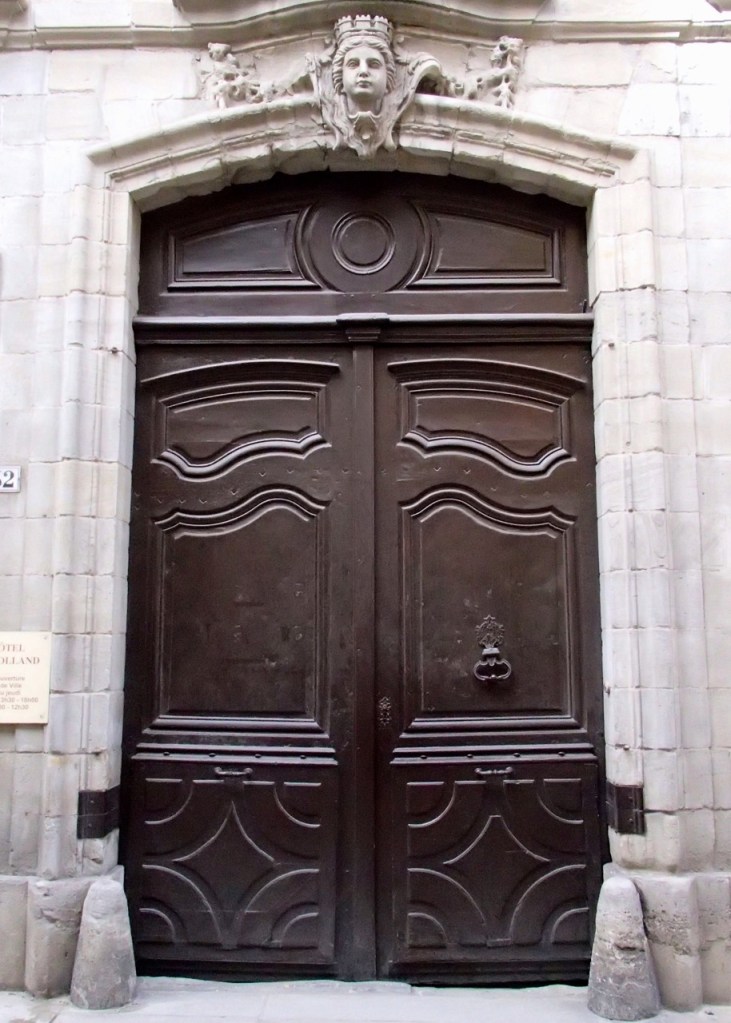
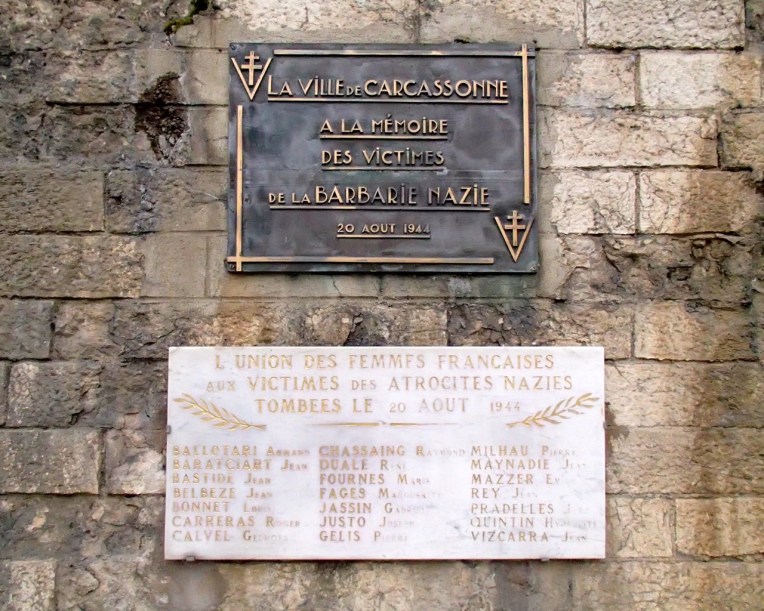
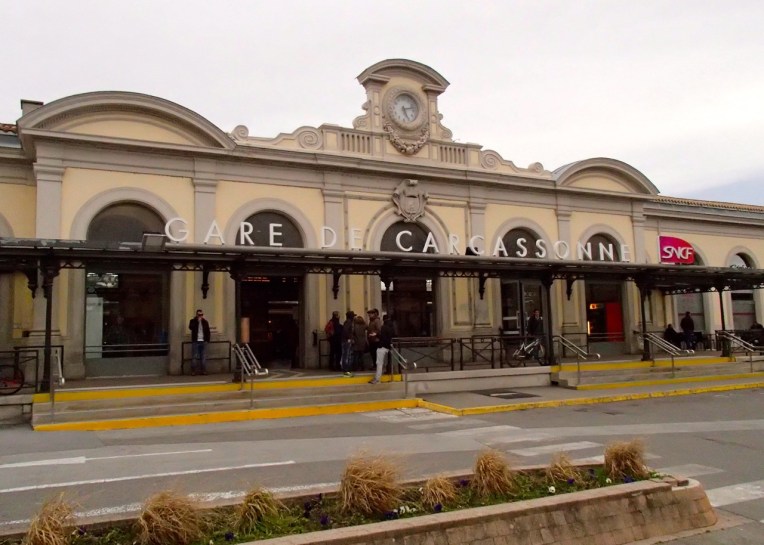
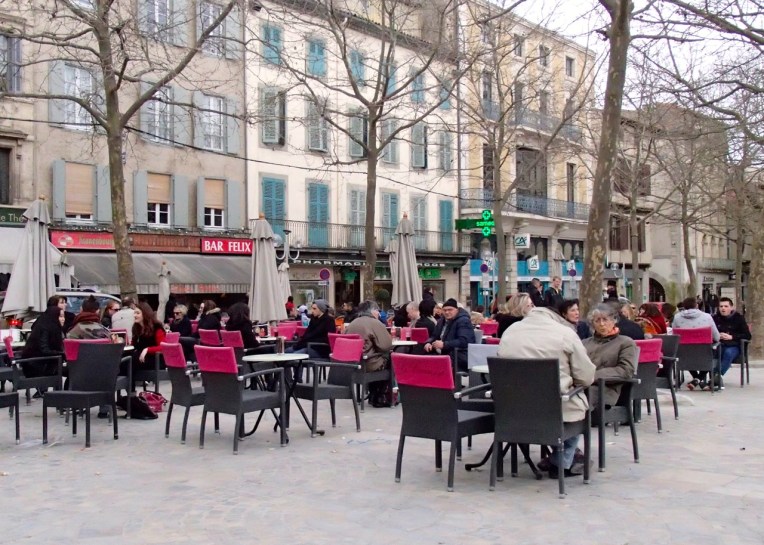
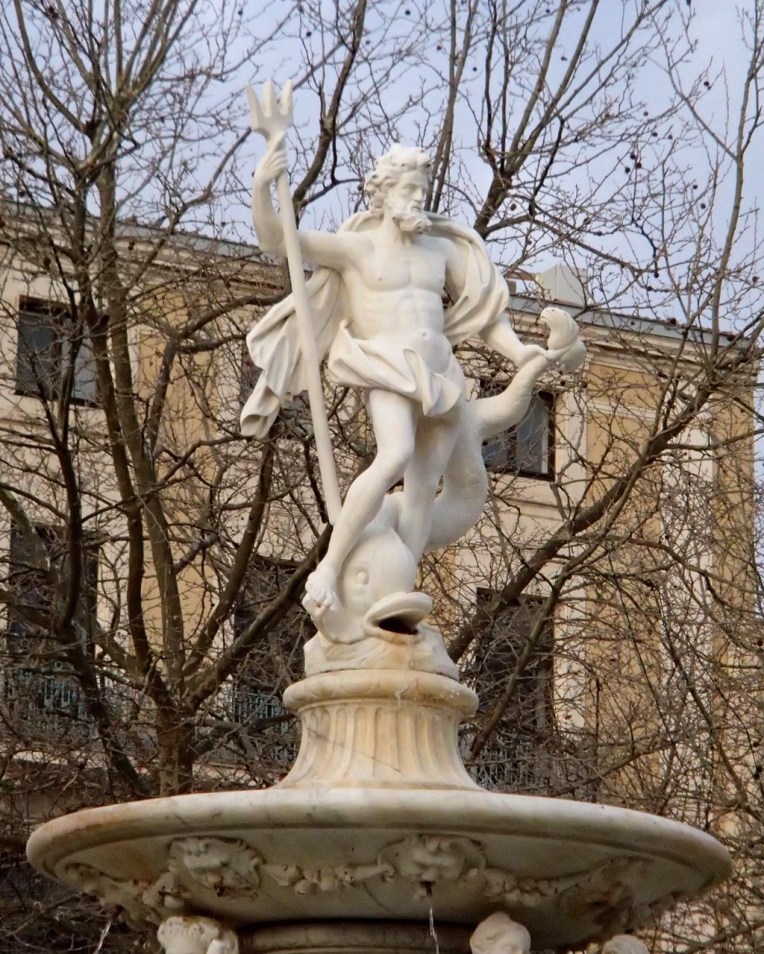
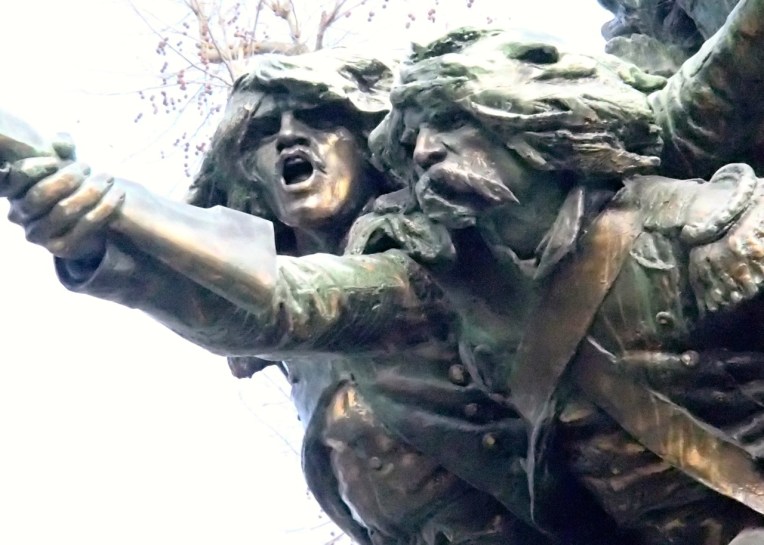
Full moon over the Cité de Carcassonne seen rom the Quai Bellevue.Entrance to the Hôtel de Rolland, the Hôtel de ville de Carcassonne.Sami the MinPin has a hero in the neighborhood. Another MinPin that rides with her Dad (a local insurance agent whose office is around the corner) on his motorcycle.Tributes to victims of Nazi atrocities.Gare de Carcassonne (Train Station).Patrons enjoying the cafes in Place Carnot (the town square.)House number on Rue Basse.Statue of Neptune above the fountain in Place Carnot (the town square.)Detail of René Phileas Carillon’s “In Square for the Fatherland,” also called “The Audois” (1912), Memorial of the 1870 War at Place Davilla.
The issue we expected to deal with was that we were moving to the city of Argelès-sur-Mer during the same week that our current Cartes de Séjourexpire. The new city is in a different department than where we currently live (a department is one of the three levels of government below the national level, between regions and communes.) These administrative levels of French government are roughly analogous as US states to French regions, US counties to French departments, and US cities to French communes. Because of the change in physical location we had the question, “Do we renew in our current department or at the one where we will actually be living for the duration of the permit?”
After double-checking with both prefectures (a prefecture being the government office that performs national level business at the local level – think visiting a “Federal Building” in the US) we learned that the Préfecture des Pyrénées–Orientales would prefer to handle our renewal (although the Préfecture de l’Aude very kindly told us they would be happy to help and do the renewal if there was any problems.) So after two visits to the Préfecturedel’Aude and a couple of e-mails to the Préfecture des Pyrénées–Orientales I was a finally able to request an appointment date.
“Take a Number”
We now knew “when” and “where,” the next step was “what.” Although immigration is performed by the national government, we have been told that there is some discretion at the individual préfet offices in issuing renewals for Cartes de Séjour. The Préfecture de l’Aude provides an in-house form and check-list of “what” supporting documents are required. Not knowing “what” documents the Préfecture des Pyrénées–Orientales may require and in an attempt to avoid a four-hour round-trip train ride to Perpignan, I requested the correct renewal forms and check-list from that préfet by mail and by e-mail. Yes, I know it’s redundant for both, but I wanted to make sure I received a response so that we had plenty of time to acquire all the supporting documents before the appointment. I’m sure anyone who has ever gotten turned away at a window at the Department of Motor Vehicles because of a forgotten document can relate.
The Préfecture des Pyrénées–Orientales very promptly responded with a confirmation date for our renewal appointment, the renewal forms required, and a list of supporting documents that need to accompany the renewal application. The forms themselves simply asked for identification information (i.e. name, date of birth, address, nationality, and such) and the required documents is a short list (the originals to be brought with us and copies to be attached to the application):
1. Current Carte de Séjour (residency permit) that is being renewed.
Carte de Sejour
2. Passport with copies of pages with identification information, expiration dates, entry stamps, and visas.
3. Marriage certificate since our passports do not confirm marital status. This document was not specifically on our list from the Préfecture des Pyrénées–Orientales but marital status was mentioned on the copies of passport pages. A marriage certificate was also not on the required document list at our previous renewal, but was requested during that appointment. We always opt for the “better safe than sorry” theory so the marriage certificate was included with our application. We carry our dossier file to all government meetings, our dossier file is a binder-briefcase that contains all our important documents in case an additional document is requested.
4. Birth certificate.
5. Proof of the location of residency with a utility bill and our landlord’s identification information. Our new landlord was happy to provide that information as was our current landlord during last year’s renewal.
6. Three recent passport-style photographs. There are passport photo machines in a dozen locations around Carcassonne. Photos are required with almost all government applications.
7. €106 payment each in timbres fiscaux (tax stamps.) The tax stamps are sold in specific Tabacs (tobacco and convenience stores.)
Tax Stamps (timbres fiscaux)
8. Proof of financial independence equivalent to 12 times the monthly French minimum wage (in our case with bank statements and pension confirmation letter from the Nevada Public Employees Retirement System [NV PERS] as retirees.)
9. Sworn handwritten attestation not to exercise any occupation in France. (There was actually an attestation on the form that could be filled in.)
10. Self-addressed, stamped envelopes.
All of these documents and items were then obtained over January and February. In several cases it takes a couple of weeks to process the requests plus transit time in the mail. Some agencies or companies will only mail to our “official” US address and then that document has to be re-mailed to us in France, which Tracy’s sister graciously handles for us.
Tracy (AKA the “Queen of Organization”) arranged and organized our applications exactly in the order of the checklist we were provided. There was one folder for me and one for her in the event we saw separate officials rather than together as a couple. (We have so far always had “couple” appointments.)
Carte de Sejour Renewal Paperwork
On our appointment date of March 2 we traveled by train the 114 kilometers (71 miles) to Perpignan. Since this was the first time we have visited Perpignan, we built-in a “cushion” of extra time in order to locate the Préfecture des Pyrénées–Orientales, do a bit of sight-seeing, and enjoy a leisurely lunch before our appointment.
The train trip included beautiful views of the snow-capped Pyrénées mountains and flocks of pink flamingo on the salt marches between Narbonne and Port-la-Nouvelle
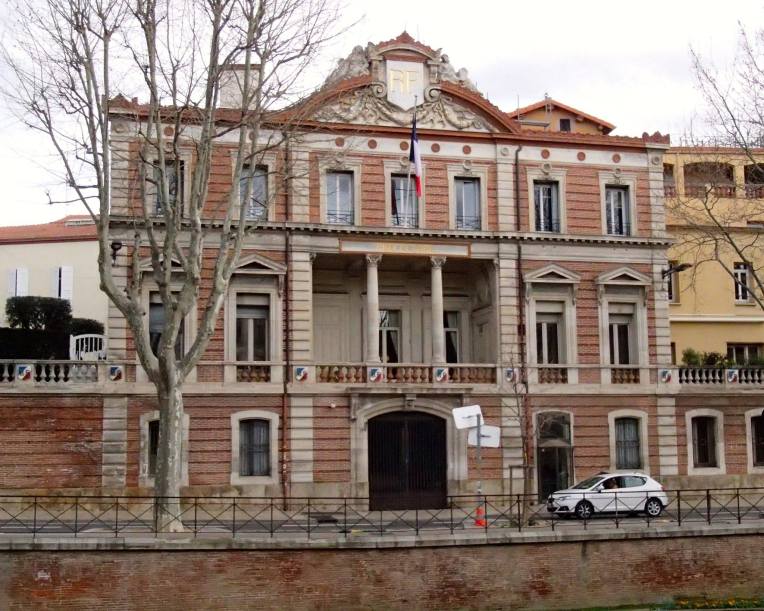
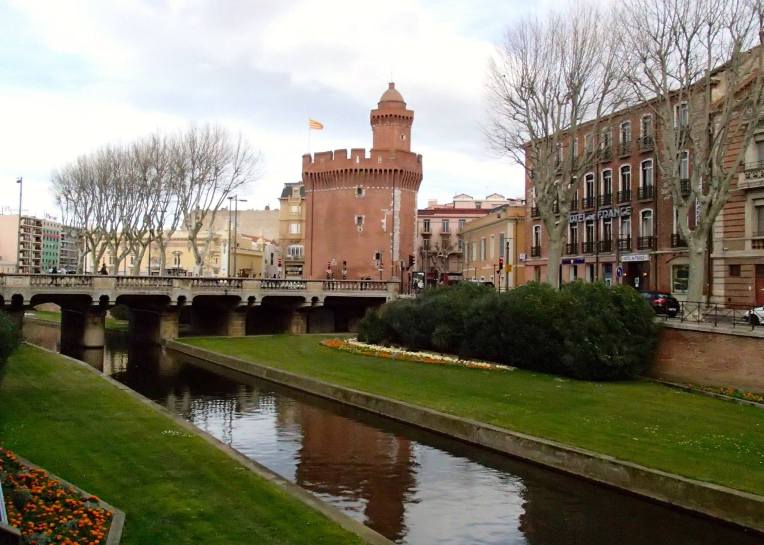
Préfet des Pyrénées-Orientales, Perpignan.The Bassa river and the Castillet in Perpignan
Just before our 2 pm appointment, we went to the Prefectures’ information desk to check-in. A very friendly staff person (speaking both French and English) explained that renewal office was located around the corner at a Prefecture annex in the Hôtel D’Ortaffa. Once we checked in at the reception desk, we were directed to a waiting room and we noticed immediately that there was an electronic display board with numbers and the other patrons were holding number slips. I went back to double-check with the receptionist if I needed a number. Another patron kindly explained to Tracy that there were two waiting areas, one with check-in numbers and a second with appointments to be called by name. Tracy called me back from the reception desk and we moved to the second waiting room. It is always little things like this that seem to cause us the most confusion.
Hôtel D’Ortaffa, PerpignanAfter a
After a twenty-minute wait we met with our immigration representative, a very patient woman who spoke no English. Almost immediately the discussion about “issues” with our renewal applications started.
The first issue: We are moving to Argelès-sur-Mer the day after our current Cartes de Sejours expire. This means we are moving between departments. Our representative first believed that we needed to apply for our renewal in Carcassonne. I was prepared with the e-mailin which I had previously confirmed where to apply for renewal. That seemed to fix the problem quite nicely.
Second issue: We had no proof we were living in Argelès-sur-Mer. Of course not, we haven’t moved yet. However, once we produced our current rental agreement and receipts she shook her head and mentioned that our stuff from Carcassonne didn’t work there. We then pointed out the address for the upcoming residence. Our representative pointed out that the residence was described as a “holiday” property. We indicated the arrival and departure dates on the lease. Our rep ran upstairs and had her supervisor approve it. She came back smiling and saying, “Okay, Okay.”
Third issue: Normally residency is proven with a utility bill in the name of the applicant. But with the Argelès-sur-Mer rental property, like our current home in Carcassonne, the utilities are in our landlords’ names. We produced a copy of the utility bill for the Argelès-sur-Mer property and a copy of our new landlord’s passport as the utilities holder. Our new rental home is a form of duplex. The landlord lives on the opposite side of the property with her entrance on a parallel street opposite from our entrance. The two units have the same number, but use different street addresses. The utility bill, although it is for both properties, is mailed to the landlord’s address. After many attempts in our limited French to explain the architecture of the buildings, Tracy solved the concern with a quick sketch of the two unit’s adjacent floor plans. Oddly, that seemed to work just fine.
Fourth issue: Our pre-addressed envelopes for pick-up notification were made out to our current Carcassonne address. (We assumed that notification would come prior to the 30 days we had before we moved.) Our representative insisted that the address be changed to the new address and kindly provided “white-out” tape for Tracy to change them. We are hopeful that we will have mail upon arrival.
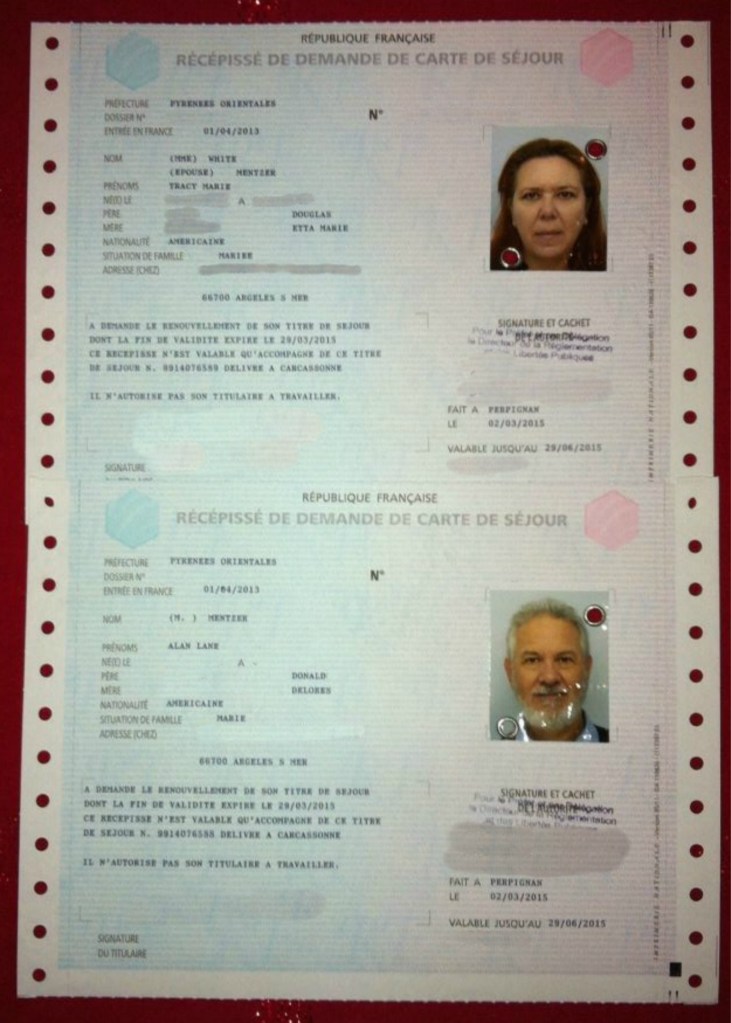
With those issues resolved, the representative accepted our renewal applications for final approval, took our digital fingerprints to confirm our identities, and prepared our Récépissés de Demande de Titre de Séjour (receipt of application for residency permits) that serve as temporary Cartes de Sejours.
Surprise fifth issue: Although the Prefecture’s checklist for the application asked us to bring three passport-style photos each, our representative needed four photos to complete the application process. Easy to fix, we always keep extras in the dossier.
Our representative had us sign our paperwork, issued us our Récépissés de Demande de Titre de Séjour, and advised us that once we received our notification letters we needed to return with our timbres fiscaux (tax stamps), passports, and Récépissés de Demande de Titre de Séjour to collect our Cartes de Sejours for 2015-2016 with our new Argelès-sur-Mer address.
Récépissés de Demande de Titre de Séjour 2015
Success! Although we were getting apprehensive in the middle of our meeting, our representative handled everything with relative expediency. Relieved, we happily walked back to the Perpignan train station with our Récépissés tucked safely inside our dossier. There was even time for a celebratory beer at a café before we boarded the train back to Carcassonne and start packing for our move.
Our biggest lesson: if there is any confusion in terminology. i.e. vacation rental, or addresses that don’t match for utility bills, it needs to be addressed prior to the appointment. A lot of the confusion could have been easily resolved with a letter from the landlord that indicated the dates and duration of our stay, that it would be our permanent address during those dates, that she owned both properties and covered them under one utility bill, and that our utilities were included in the rental price.
Tracy and my retirement system requires pension payments be made into an US bank, so we have a logistical issue of how we get funds to France. Also, being on a fixed-income, we want to get money to us in France in the most cost-effective manner possible. Everyone has seen bank service charges and ATM fees quickly add-up over time, bleeding funds from bank accounts that we would rather keep for ourselves.
Euros Currency
Contrary to my original expectations before we moved overseas, there are no “global banks” in the US. There are international banks like Barclays, HSBC, Halifax, UBS, and Deutsche Bank with branches in the US, but you cannot deposit money in an US branch of an international bank and simply withdraw funds in another country without fees. Banks in the US are state and federally regulated and are separate legal entities from their European home branches.
1.) Currency exchange before leaving. When we still lived in the US and would travel internationally, we would pre-order foreign currency ahead of time so we would have the local money when we arrived at our destination. Our US bank is Bank of America and its online banking web site has a link to easily order foreign currency. Larger orders of foreign currency would be shipped and held for pick-up at the local bank branch. The exchange rate is good and a request took just a couple of days to fill. Doing the exchange before leaving let us have the local currency in our pocket for immediate needs like eating and transportation. Carrying more than $10,000 by a family into or out of the US has to be reported to US Customs and Border Protection. (Currency / Monetary Instruments – Amount that can be brought into or leave the U.S.)
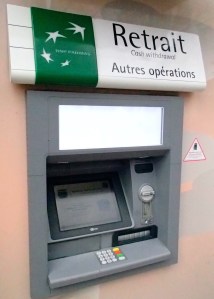
2.) ATM. If you are already in Europe, one of the easiest way to obtain local currency is at a bank’s ATM machine. (Make sure before to leave on your trip you give your bank a travel notification that will be making purchases abroad so the bank won’t disallow foreign transactions because of “suspicious activity.” Also be aware that many international ATMs accept only a four digit PIN, the PIN may not be able to start with “zero,” and often the keypads will not have letters – only numbers.) Most US banks have specific “partner institutions” abroad that if you use their ATMs you can minimize fees. For example, Bank of America’s current partner institution in France is BNP Paribas. Bank of America’s foreign transaction webpage explains costs in greater detail:
“When you use a foreign ATM, you could be charged a variety of fees, including non-bank ATM usage fees, ATM operator access fees, and international transaction fees for conversion to U.S. dollars. One way to limit such fees is to use your Bank of America ATM or debit card at one of our international partner ATMs. This enables you to avoid the Non-Bank of America ATM $5 usage fee for each withdrawal, transfer or balance inquiry as well as the ATM operator access fee. Keep in mind that when you use your debit card to withdraw money from an international ATM, Bank of America will assess an international transaction fee of 3% of the converted U.S. dollar amount. Foreign ATM operators may offer to do your currency conversion for you, but they may charge a higher fee for conversion. You can refuse the foreign ATM conversion and be assessed the 3% Bank of America international transaction fee instead.”
BNP ATM
ATM fees at a non-partner institution can add-up, but are still much more cost-effective than the rates at currency-exchange businesses or exchanging cash at a hotel desk. The currency-exchange businesses are notorious for poor exchange rates, handling fees, and very expensive commissions. A loss of up to a 1/3 of the value of your US money at a currency-exchange business is not unusual. Do not bring US cash to Europe with the intention of exchanging it at a local bank. When our son Casey recently arrived in Paris with US cash, he attempted to exchange US dollars at a couple of local banks. The banks all referred Casey to currency-exchange businesses (with the resulting loss of value due to poor exchange rates and high commissions.) The Paris banks only exchange foreign currency for their account holders. Even when I took the US dollars to a Paris branch of Tracy and my French bank we were told we had to go to a specific bank branch to exchange the funds. Once at that branch we learned the US cash had to be deposited into our French bank account and would be unavailable for withdrawal for week. I wondered if we could have exchanged the US currency at all if we weren’t in a major city like Paris.
3.) Credit and debit cards. Major credit and debit cards are generally accepted throughout Europe, while not always at small shops and cafes which may be “cash only” businesses. It’s always smart to keep some cash in your pocket to avoid embarrassment. US credit card companies often impose a surcharges on foreign transactions and conversation fees for purchases made abroad.
While US cards nearly always work in European ATM machines, there is sometimes the issue of whether or not a business can accept an US “swipe and sign” credit card because the “chip and PIN” “smart” EMV cards have been the norm in France for 20 years and the rest of Europe for almost as long. Some European businesses point-of-sale devices, lack the ability to “swipe” a current US credit or debit card. Tracy and I will normally use our French cards for European purchases and US cards for US businesses to minimize foreign transaction fees. US banks and credit card issuers have started to issue “chip and sign” “smart” debit and credit cards at the customer’s request. We have updated all our US credit and debit cards (Visa, MasterCard, American Express) to “chip and sign” “smart” cards to broaden where our cards can be accepted in Europe. The European “chip and PIN” cards from US issuers will be coming several years in the future as US businesses have to first upgrade their infrastructure to accept “chip and PIN” cards.
“American Express smart card” by Source (WP:NFCC#4). Licensed under Fair use via Wikipedia –
4.) PayPal. We have occasionally used PayPal to transfer money “person-to-person” to our adult children in the US. We have found it convenient to send money by PayPal so that an adult child can access funds almost immediately. (i.e. Payday is tomorrow, but a car tire needs to be replaced today.) It is simple for the recipient to transfer cash from a PayPal account over into their checking account. There is no delay compared to mailing a check from France to the US or waiting more than a week for a bank transfer to process. There are zero fees for us to send money using PayPal, but the fees for receiving money from one US account to another US account, up to $3,000, is 3.4% plus $0.30. So sending $100 on our end will be $96.30 when it arrives at its destination. We have also used PayPal to transfer a “first month” deposit to a landlord in France. 5.) International Wire Transfer. Tracy and I have been using wire transfers to move more substantial funds from our US bank to our French bank account. (Getting A French Bank Account.) International bank wire transfers are reliable, safe, and in our experience they takes 7 to 10 days to process. Bank of America’s Online Banking web site has all the links to transfer money by wire to an oversea bank account. To set up the first wire transfer we had to request from our French bank its “Society for Worldwide Interbank Financial Telecommunication – Bank Identifier Code” (its SWIFT-BIC number) and “International Bank Account Number (its IBAN number)” to correctly receive the money in our French bank account. After the initial wire transfer our Bank of America web site retained the SWIFT-BIC and IBAN information for future transfers. As additional security for transfers larger that $1,000, Bank of America will also provide two-factor authentication with a SafePass card. The SafePass card will generate a six-digit one time use code number that is used to authorize an online wire transfer request over $1,000. With Bank of America there is a fee of $35 to send a wire transfer. At the “other end of the wire,” BNP Paribas will charge us €18 to accept the wire. Depending on transfer rates, there is a cost of about $55 to send yourself money with a wire transfer. Built into the wire transfer is an additional cost because the bank uses the premium currency exchange rate which is much less advantageous than the mid-market, interbank exchange rate you see posted to currency exchange rate sites like XE or on Google. That can add up to a 5% additional cost to a transaction because of the bank’s premium “adjusted exchange rate.” Our goal was not to have transfers every month so we can minimize the transfer fees. Like visiting the ATM machine, it is better to pay for only 4 or 6 transfer fees a year rather than paying for a monthly wire transfer.
Bank of America SafePass Card
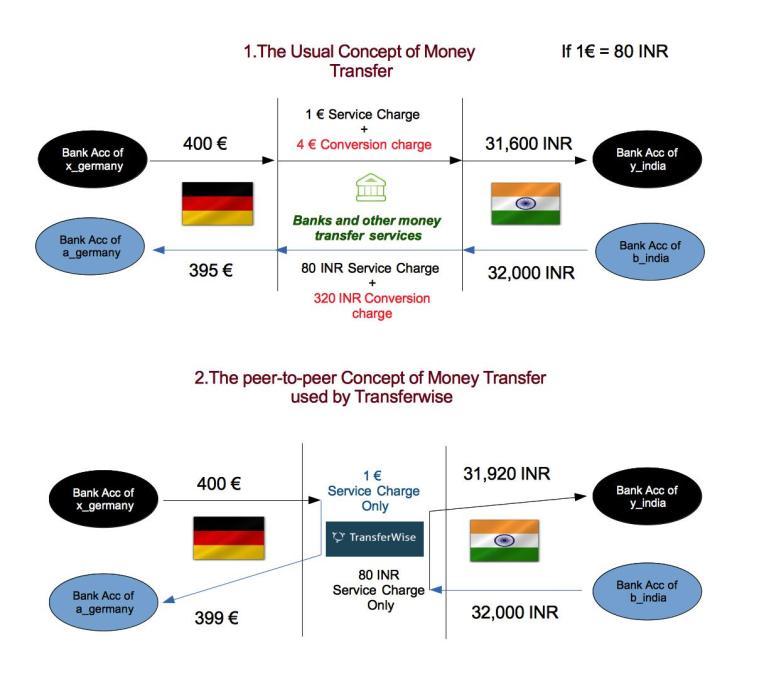
6.) Peer-to-Peer Transfer While we have had no problems with the wire transfer, we are always looking for ways to reduce our transfer costs further. We have started using London-based financial company TransferWise as our P2P money transfer service in the place of a bank wire transfer. The process is simple to perform online and funds have been available for us within five days rather than the 7 to 10 we previously had with bank wire transfers. TransferWise is sometimes referred to as “the Skype of money transfers” because one of its founders, TaavetHinrikus, who was one of the original members of the Skype development team. TransferWise has been providing Peer-to-Peer money transfer services since January 2011. TransferWise is a registered money service business with the British Revenue and Customs department and fully authorized by the UK Financial Conduct Authority (FCA) as a payments institution.
“TransferWise is making inroads as a foreign exchange service, with a twist: it doesn’t exchange any money. Instead, it pairs people who want to get rid of a currency with those who want to get hold of it. If Alice in the UK sends £10 to Bob in Ireland and at the same time Charlie in Ireland sends €12 to Diane in the UK, then the money doesn’t cross any borders at all; Charlie just sends his money to Bob, and Alice sends hers to Diane. That lets the firm slim its fees down to a minimal level, charging less than £5 to send £1,000 overseas.”
TransferWise eliminates currency conversion fees and international transfer fees for clients. The start-up company has $58 million in investors as of January 2015. In its first four years of operations, TransferWise has transferred roughly $4.5 billion through its platform saving users about $200 million in banking fees usually incurred when moving money abroad.
With a $2,000 transfer we save the $35 fee sending a wire transfer from our US bank account, the € 18 fee receiving the wire into our French bank account (about a $55 saving), and we get the midrange exchange rate from TransferWise rather than the lower “bank adjusted” exchange rate which is a hidden cost to sending a traditional wire transfer. TransferWise charges €1 or 0.5% (whichever is larger) in an equivalent amount in the customer’s currency. TransferWise makes its profits with exchange volume, reduced infrastructure, and avoiding the fees inherent in international transfers. And it is a growing business model, there are now other P2P currency exchange companies including CurrencyFair, MidPoint, Kantox, and PeerFX.
Any other issues?
Traveler Cheques. Traveler Cheques are pretty much obsolete and it’s difficult to find businesses that want to accept them. ATMs and debit cards have replaced the Traveler Cheque in Europe. I understand Traveler Cheques can still be useful in visiting China.
We keep a close eye on Foreign Account Tax Compliance Act (FATCA) issues. Congress passed FATCA in 2010 to deter tax evasion by making it more difficult for U.S. taxpayers to conceal assets held in offshore accounts by international shell corporations. The law requires foreign financial institutions to report to the Internal Revenue Service about their US clients’ accounts. The unintentional side effect of the law has been that rather than deal with the costs, additional paperwork, and potential penalties by the US government, many European banks have elected to close the accounts of US expats. (Time Magazine: Swiss Banks Tell American Expats to Empty Their Accounts, The Guardian: ‘I was terrified we’d lose all our money’: banks tell US customers they won’t work with Americans, Forbes: 10 Facts About FATCA, America’s Manifest Destiny Law Changing Banking Worldwide.) So far BNP Paribus is keeping us as customers and providing good service for us.
That is a peek at the complexity of our financial lives as expats. It’s a “moving target” for us trying to stay on top of the rapidly evolving global financial picture.
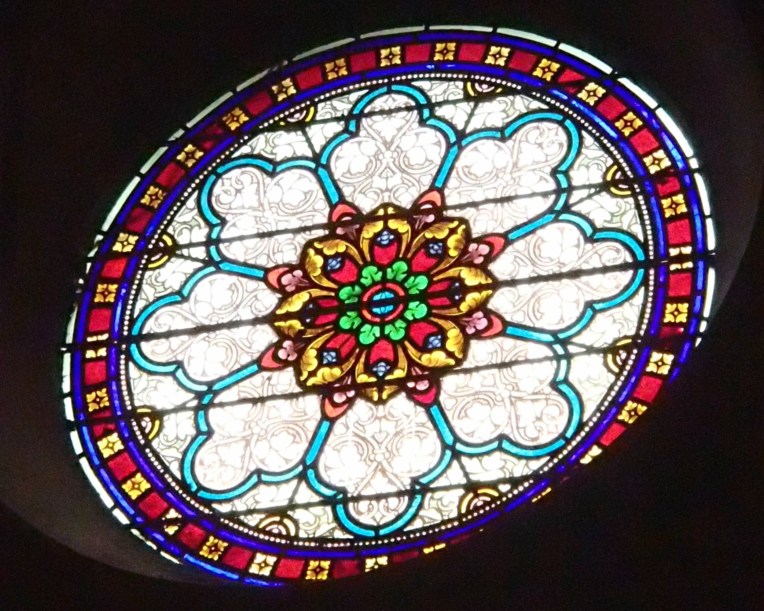
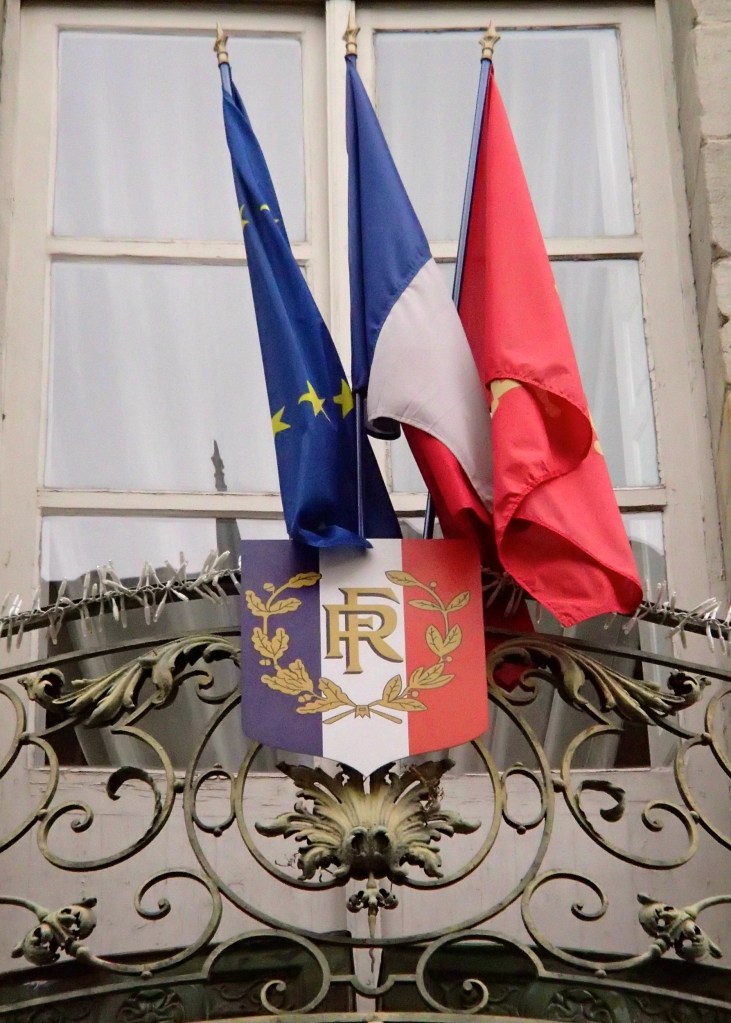
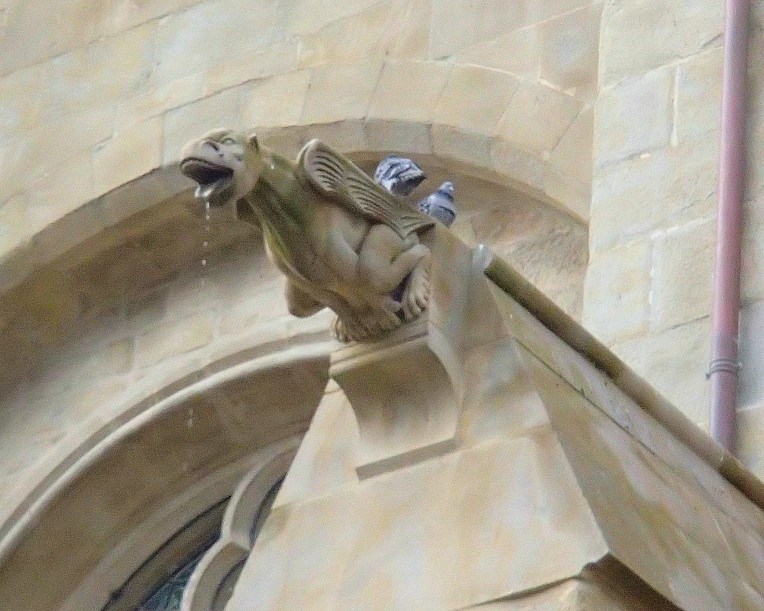
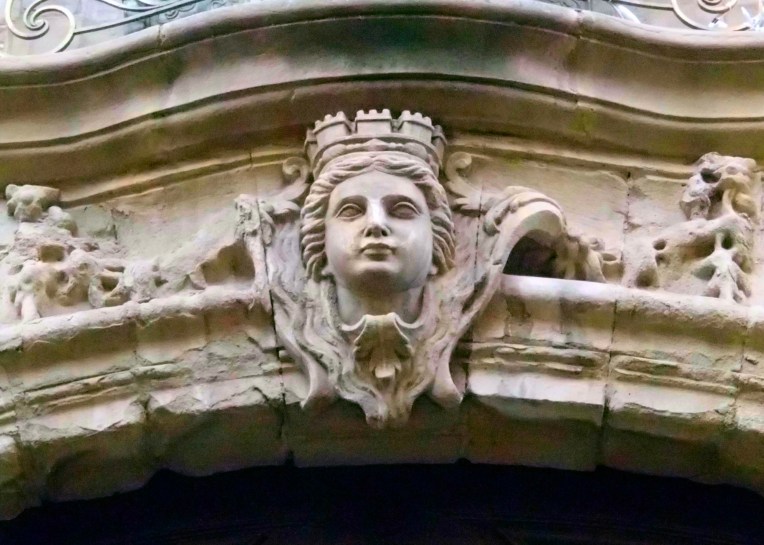
Twelve photos taken “just walking around the neighborhood” in the Ville Basse (the lower city) of Carcassonne.
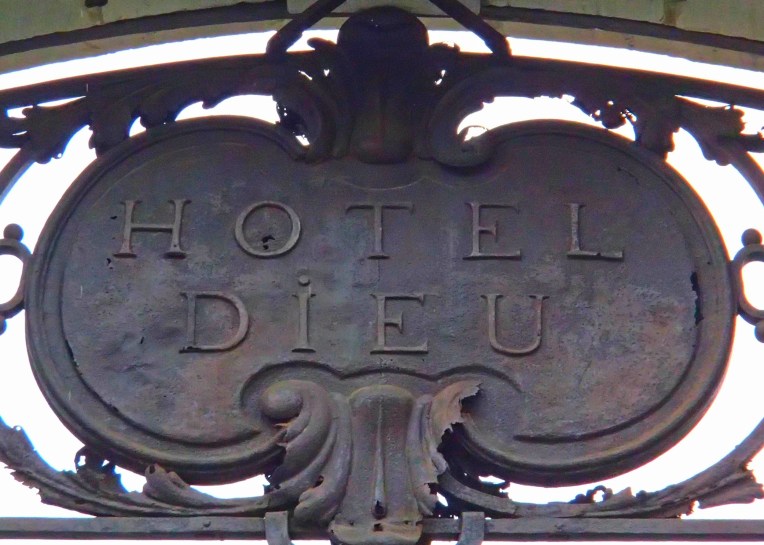
Stained glass window in the 13th century Carmelite Chapel.Door bell chain at the front door of a home on the Rue de Verdun.A café espresso in the Bar Tabac de la Poste on the Rue Barbès.Ornamental lintel above the entrance to the offices of the Diocèse de Carcassonne et Narbonne (Roman Catholic Diocese of Carcassonne and Narbonne). The Diocese was established in 533.The flags of the European Union, France, and the Languedoc-Roussillon region above the entrance to Hôtel de Rolland, an 18th century hôtel particulier which is now the Mairie (town Hall) on Rue Aimé Ramond.Ornamental lintel with the bishop’s coat of arms above the entrance to the offices of the Diocèse de Carcassonne et Narbonne (Roman Catholic Diocese of Carcassonne and Narbonne). The Diocese was established in 533.Decorative gate into a courtyard along the Rue de la Gaffe.Rain water falling from the mouth of a gargoyle on the side of the Cathédrale Saint-Michel de Carcassonne.Chou vert (green cabbage) offered for sale in the open-air market in Place Carnot (the town square.)Ornamental lintel above the entrance to Hôtel de Rolland, an 18th century hôtel particulier which is now the Mairie (Town Hall) on Rue Aimé RamondMulticolored lights illuminating the front of the Musée des Beaux-Arts (Museum of Fine Arts.)The antique sign above the entrance to the former Hôtel Dieu (God’s Hotel) which was built in 1772 as a city hospital. The hospital was demolished in 1977 and all that remains today is the entrance gate and Le Dôme, the former bell tower to the hospital’s chapel.































 An Italian Point Of View
